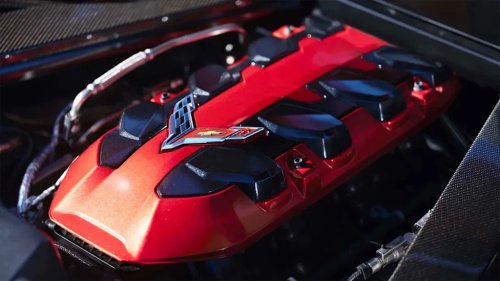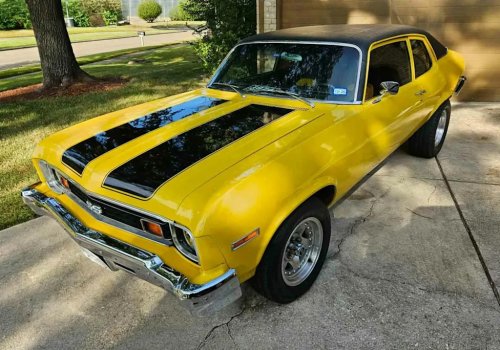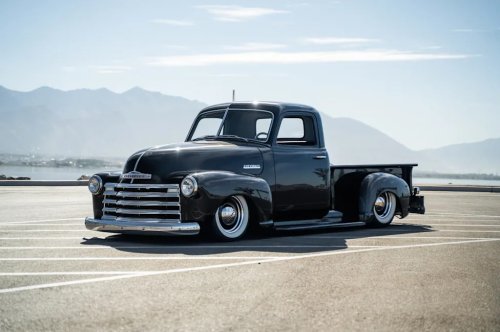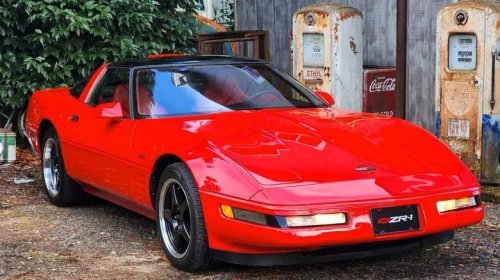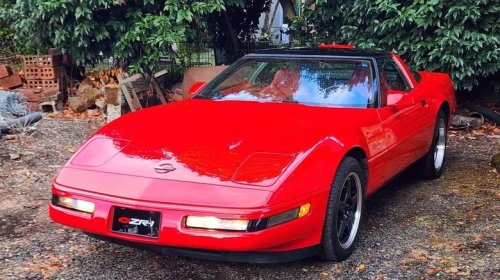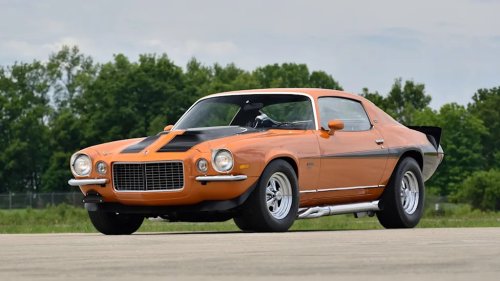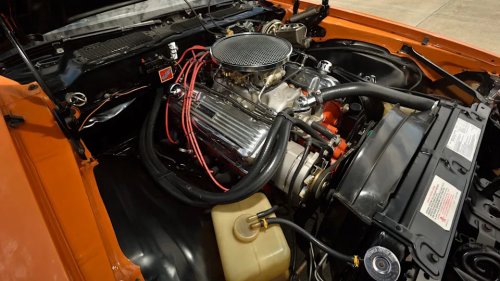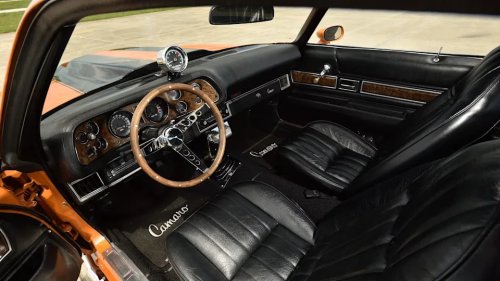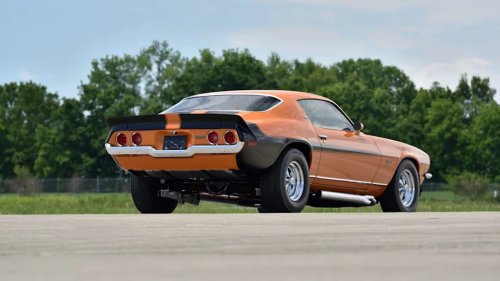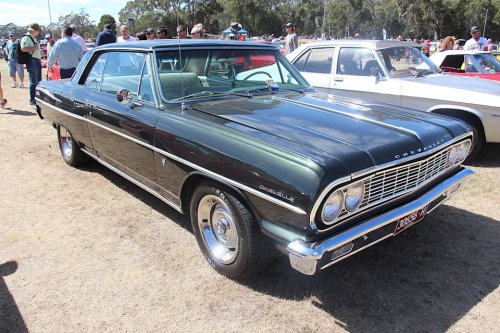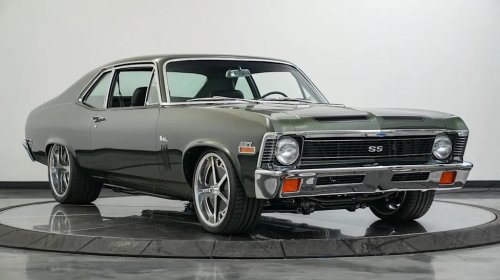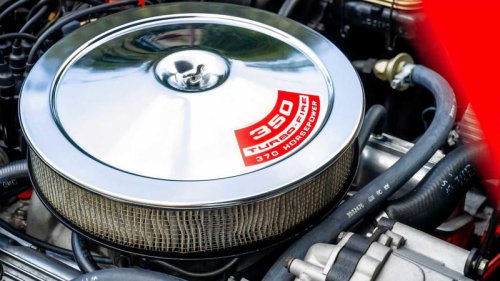
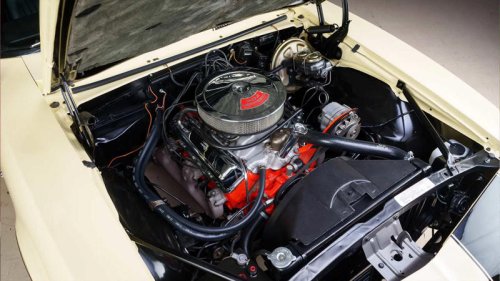
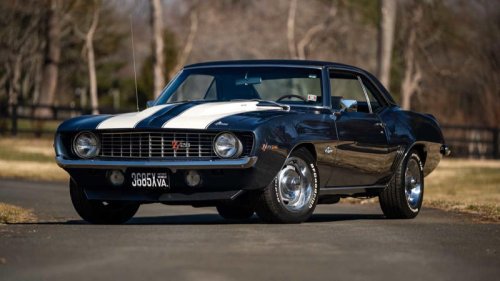
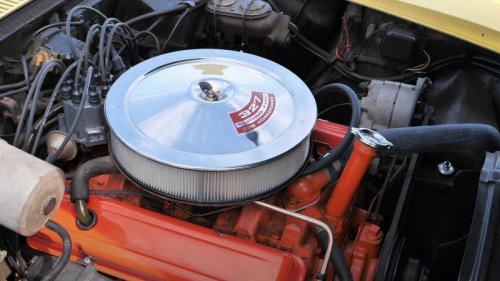
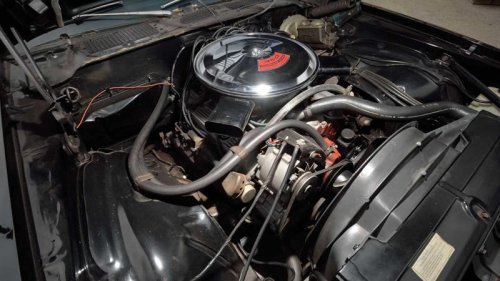
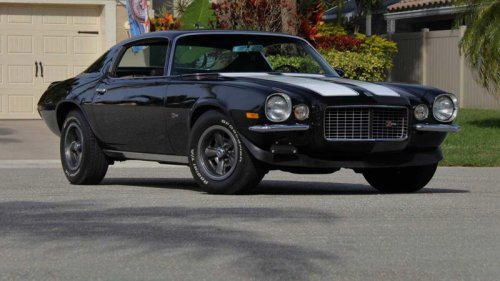
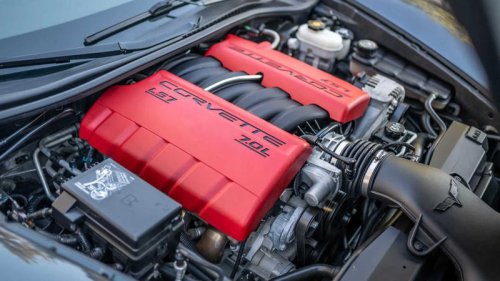



















In the world of American Muscle, one saying has remained true, and that there is "no replacement for displacement." For decades, if you wanted more power in your vehicle, the answer was simple: you build a bigger engine.These engines can go as big as 454 cubic inches (7.4 liters) or the Ford 427 (7.0-liter) powerhouses in the Shelby Cobra and Ford GT40.But Chevrolet has a long, storied history of going against the bigger-displacement logic. While most key players were looking at who had the biggest engines, Chevy was busy refining its Small Block V8s. The engineers decided to focus on efficient, higher-revving engines that could take down some of the very best cars at the time. Compared to their counterparts, these engines were smaller but could punch way above the weight of what their displacement suggested at the time. In this article, we dive into the three legendary Chevy small block engines that proved this. Why Smaller Engines Are Capable Of Making Big Power Bring a Trailer Today, small engines that make big power have become the norm. We see four-cylinder engines with turbochargers now making over 400 horsepower. But back in the 60s and 70s, most V8s could only dream of making such power. To get big power, you needed a big V8 engine, but for Chevrolet, the engineers also had to rely on mechanical ingenuity to make power and have these cars perform exceptionally well.The big secret here was the power-to-weight ratio of these cars and their massive improvement in volumetric efficiency compared to other engines. Big block engines were heavy and added significant weight to the front of the car. The small block, in comparison, was much lighter, which made the cars nimble and balanced. To make up for having a smaller displacement engine, Chevy focused on three things to improve its efficiency:Airflow: This engine had high-performance cylinder heads and aggressive intake manifolds that allowed this engine to breathe way better than the competition. This is what makes the current Ford Coyote V8 so good. Compression: These engines had a much higher compression ratio than the competition, most times exceeding 11.0:1, when most muscle cars were around 9.0:1. In the small block, each squeeze had more power than most big blocks. RPM: The small block traded some grunt and low-end torque for more power at the mid-range and high end. It did this by revving higher at 7,500 rpm when most cars were capped at just 6,000 rpm. With the addition of solid lifters, forged internals, and high-flow carburetors, these Chevrolet small blocks didn't just make good power, they had a good exhaust note to accompany it. The DZ 302 Was An Underdog Racing Engine Via: Bring a Trailer If there was one small block engine that showcased the "rev-happy" nature of the small block, it is the DZ 302. This particular engine was born out of the need to go racing. Its goal was to specifically compete in the SCCA Trans Am series—which had a 305-cubic-inch displacement limit. The answer was the 302 (4.9-liter) engine, which was a mishmash of some of Chevy's best parts.Chevy took a 327 block (5.4-liter) and dropped in a short-stroke 283 (4.6-liter) crankshaft; the engineers kept the cylinder bore the same but reduced the stroke length. The result was an engine that loved to rev since it had to travel up and down less. While most V8s of this era would start to struggle at 5,000 rpm, the 302 was just getting started to breathe in more air. Officially, this engine was rated at 290 horsepower, but soon enough, most people discovered that with a few minor tweaks, it could easily produce as much as 350 horsepower. Engines prepped for competition use made as much as 465 horsepower. This Engine Powered The Camaro Z28 Mecum Since this engine was originally built to race, it made sense that it was put under the hood of the 1967-1969 Camaro Z28. This car is what you call a race car for the road, it was the lighter, track-ready version of the regular Camaro meant to dominate road courses, but there were some trade-offs. On the road, the 302 lacked the low-end torque of bigger engines, so if you were used to big-displacement engines with massive torque, this engine lacked most of that. It needed a skilled driver who knew how to keep the revs high and extract the power from it.But once you're in the power band, the Z28 comes to life and turns into a weapon. You can carve through twisty roads in this car, with the engine screaming away as it leaves others behind. This wasn't the nature of muscle cars back in the day, but the Z28 was different, and this DZ 302 made all that possible. It took Ford until 1969 to bring a worthy competitor for this car with the Boss 302 Mustang. The Z28 remains one of the most sought-after cars today, and the DZ 302 is still an engine loved by most for its mechanical genius. The L79 327 Was Made For The Streets TFLclassics YouTube Channel While the 302 was a racing engine adapted for street use, the L79 327 V8 was perhaps the sweet spot—the best of both worlds, you might say. The original 327 (5.4-liter) block was introduced in 1962, but the L79 came out in 1965 and was the first small block that showed you could have a high-performance, reliable engine in a street package. The L79 made 350 horsepower, which was a healthy number for this engine.This was achieved by adding a high-performance hydraulic camshaft instead of the solid lifters in the 302. This change meant less maintenance was needed to keep this engine running. It also had a compression ratio of 11.0:1, forged pistons, forged steel connecting rods, and crankshaft. This engine was a joy to drive on the road, it had enough torque to get you going and enough pulling power at the top end to make sure you were ahead at the quarter mile. It Powered The Beautiful C2 Corvette The L79 was an optional engine famously used in the C2 Corvette(1963–1967), this was the first car to get this engine. In a sports car like the Corvette, the 327 gave the car perfect balance when it comes to handling and power delivery. The 427 big block Vettes were definitely faster, but they were nose-heavy. The ones with 327 could do the straight line thing, but absolutely shine on backroads. It was also available in the C3 Corvette for 1968 only.Beyond the Corvette, the L79 found its way into the Chevy II/Nova. A small, lightweight Nova with L79 making 350 horsepower, it was a sleeper in every sense of the word. They looked like cars driven by the elderly, but put your foot down, and it could humiliate a Pontiac GTO or Ford Mustang at a drag strip. The Nova didn't have the looks, but it had one of Chevy's best engines. The 350 LT1 Was Refined But Made More Power Via: Mecum Auctions By the 1970s, the muscle car era was reaching its peak, and emissions regulations and high insurance premiums on very fast, big-displacement engines were threatening to slow down the progress of these cars. However, Chevrolet already had an engine suitable for this situation with the LT1 350. The 350 cubic inch (5.7-liter) engine became the gold standard for Chevy. This engine was first seen in the 1967 Camaro as the L48. The LT1 would first appear in 1970. It was the "holy grail" of the 350 family, taking lessons from the 302 and 327 applied in a larger engine. It had a high 11:1 compression ratio but a lower redline at 6,500 rpm. It Was One Of The Last High-Compression Small Blocks Mecum The 1970 LT1 produced a staggering 370 horsepower and 380 pound-feet of torque in the Corvette (and 360 horsepower in the Camaro Z28). It was a force to be reckoned with and one of the best small-block engines of its time, but this didn't last long. At this time, the government mandated lower-octane unleaded fuel and tighter emissions, so high-compression cars didn't stand a chance. The LT1's power began to drop to 330 horsepower and 360 pound-feet of torque in 1971, with a drop in compression from 11.0:1 to 9.0:1. In 1972, the LT1 only made 255 horsepower and 280 pound-feet of torque before it was killed off. The LT1 was the "last stand" of the high-compression era. It showed how refined a small block could be, but still absolutely dominate the competition when needed. It remains one of the most respected Small Block V8s ever produced. Why These Engines Still Matter Via: Bring a Trailer You might wonder why we still talk about these old engines that are about 50 years old at this point. The simple answer is their engineering DNA. The DZ 302, L79 327, and LT1 350 engines set the basic foundation we see in modern Chevrolet engines like the LS and LT. Even the mid-engine C8 Corvette still uses the philosophy of this engine in its LT2 and newly released LS6 engine in the Grand Sport. These engines are all about efficiency and have always prioritized airflow optimization in a relatively compact package. Some of these engines may have big displacement at 6.2 liters but are compact compared to Ford's 5.0-liter Coyotes.But beyond that, the tales of these engines and the cars they powered are still being told. Cars that defined generations, from the iconic Camaros and Corvettes to lesser-known cars like the Chevy Nova. These cars and their small block would embarrass cars with much bigger engines. These engines were responsible for giving the LS the simplistic and bulletproof reputation they have today. When you talk about engines that deserve to be in the Hall of Fame, these Chevy small-blocks will undoubtedly have a spot.Sources: Chevrolet, Carbuzz