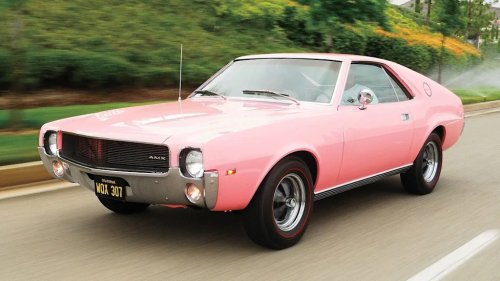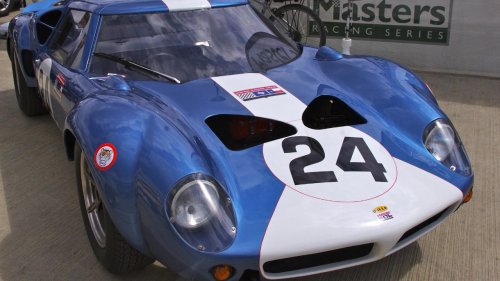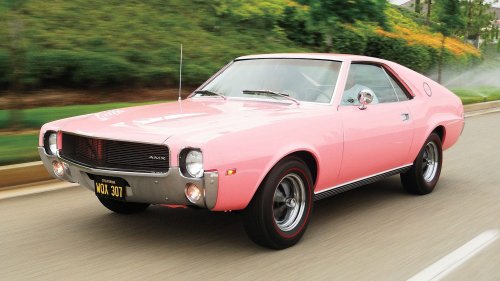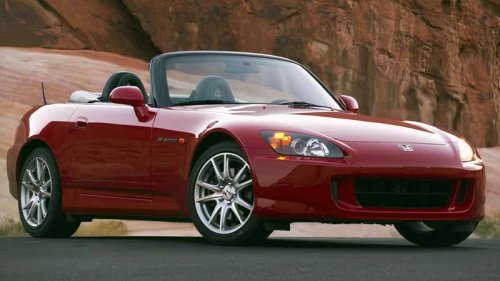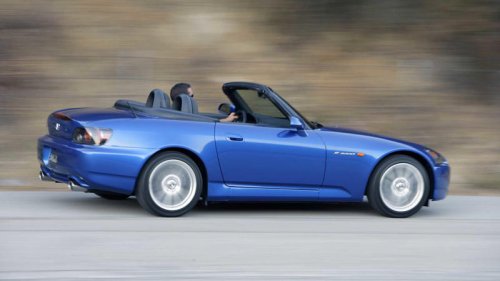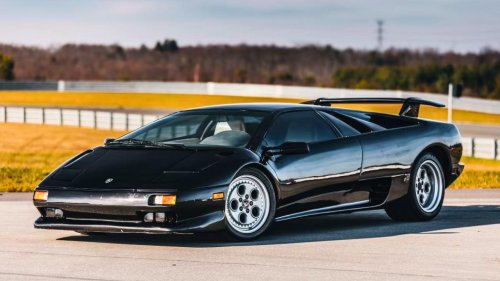
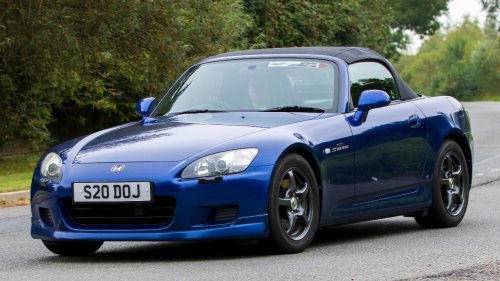
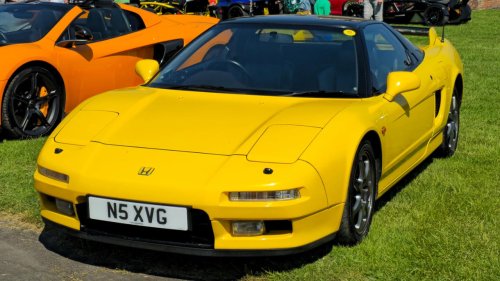
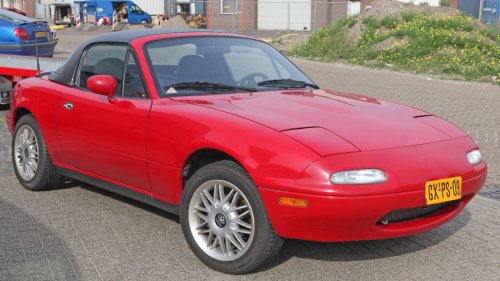
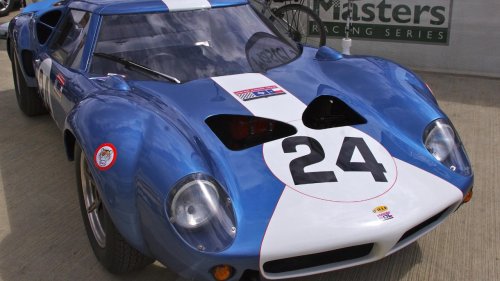
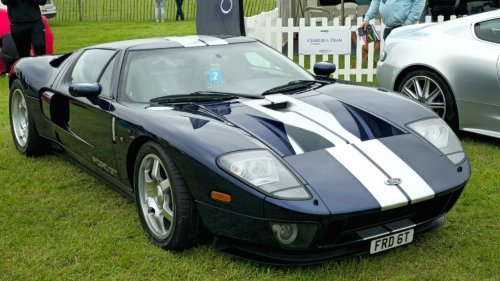
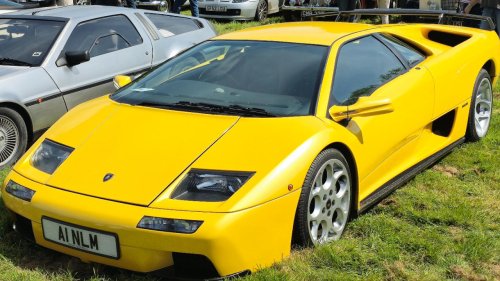
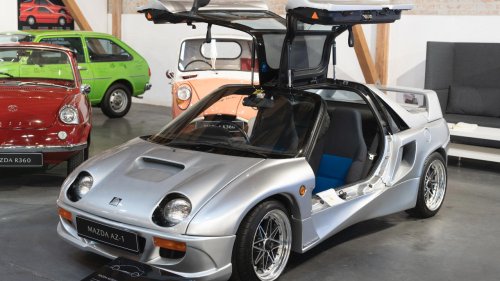
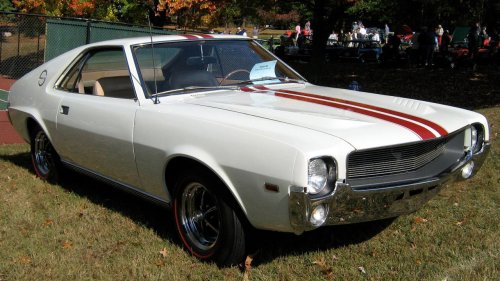








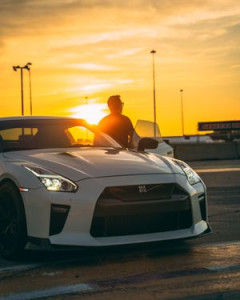










10 Classic Sports Cars That Have Tremendous Value NowFinding the right classic sports car is a bit like spotting a rare piece of history on four wheels. Some cars were legends from day one, while others took a little longer to get the respect they deserved. But one thing’s for sure—values on certain classics are climbing fast, and if you’ve been paying attention, you’ve probably seen some of these price tags go through the roof. Maybe it’s nostalgia, maybe it’s rarity, or maybe people are just realizing how good these cars really were. Whatever the reason, if you had one of these sitting in your garage a decade ago, you’re looking at a serious payday now. From high-revving Japanese icons to American muscle sleepers, these are the classic sports cars that have skyrocketed in value—and they’re only going up from here.Honda S2000If you’ve been keeping an eye on the market, you’ve probably noticed the Honda S2000 creeping up in value. And for good reason. Built from 1999 to 2009, this thing was a proper driver’s car with a high-revving VTEC inline-four that loved to scream past 8,000 RPM. It was Honda’s way of celebrating its 50th anniversary, and they didn’t hold back. The AP1 came with the legendary 2.0-liter F20C, while the later AP2 got a slight bump in displacement to 2.2 liters. But what really set the S2000 apart was its six-speed manual transmission. The shifts? Razor-sharp. The handling? Dialed in. It’s no wonder these are skyrocketing in price—good luck finding a clean one that hasn’t been thrashed.First Generation Honda NSXIf there’s one Japanese car that changed the way the world looked at supercars, it’s the Honda NSX. Built from 1990 to 2005, it wasn’t just another fast car—it was an everyday supercar with real-world reliability. Developed with input from Ayrton Senna himself, Honda took its F1 experience and packed it into a sleek, mid-engine masterpiece.Under the hood, you had Honda’s buttery smooth V6, either the 3.0-liter C30A or the later 3.2-liter C32B. The final NSX-R GT pushed 290 horsepower, which might not seem like much today, but back then, it was enough to take on the best from Ferrari. Now? These things are gold, with prices climbing higher than ever.Mazda RX-7 FDThe FD RX-7 isn’t just another sports car—it’s a legend. Built from 1991 to 2002, it was the last hurrah for Mazda’s rotary-powered coupes, and they went all out. The heart of the beast was the 1.3-liter 13B-REW twin-rotor engine, producing 252 horsepower when it debuted. By the time production ended, Mazda had cranked it up to 276 horsepower, making it an absolute weapon on the road. Of course, the RX-7 wasn’t just about numbers. It was about how it felt. The lightweight chassis, perfect weight distribution, and that unmistakable rotary scream made it one of the purest driver’s cars ever built. With values soaring, if you’ve ever dreamed of owning one, now’s the time—before they hit Skyline GT-R levels of pricing.Lola Mk6You might not hear the Lola Mk6 mentioned in the same breath as the big-name classics, but without it, the Ford GT40 might never have existed. Built between 1962 and 1963, this British beast packed a 4.7-liter Ford V8 and was a true pioneer in mid-engine sports car design. It even made an appearance at the 1963 Le Mans 24 Hours, proving its potential on the world stage. Unfortunately, the Mk6 never got the chance to fully realize its capabilities. But Ford saw something special in it, snatched one up, and used it as the foundation for what would become the GT40. Thanks to Ford v Ferrari, more collectors are waking up to its significance, and prices are following suit. If you can find one, you’re sitting on a piece of racing history.2004 Ford GTThe 2016 Ford GT might be the modern poster child, but the 2004 model still holds its own as one of the most sought-after American supercars ever made. With styling that paid homage to the original GT40, it packed a brutal 5.4-liter supercharged V8 under the rear deck, cranking out 550 horsepower and 500 lb-ft of torque.This thing wasn’t just fast—it was a rocket. It hit 0-62 mph in just 3.8 seconds and topped out at 205 mph. Ford only built 4,038 of them between 2004 and 2006, making it an instant collector’s item. If you’ve got the cash, grabbing one now might be a smart move, because prices aren’t coming down anytime soon.1990 Lamborghini DiabloThe Lamborghini Diablo might not have the same level of fame as the Miura or Countach, but that doesn’t mean it’s any less of a monster. Built from 1990 to 2001, it was the last Lambo designed before Audi stepped in and changed everything. This was Lamborghini at its rawest—no fancy electronics, just a massive V12 and a whole lot of attitude. Throughout its production run, the Diablo saw several versions, all with a naturally aspirated V12 ranging from 5.7 to 6.0 liters. The Diablo SV and VT Roadster were the highlights, packing 510 horsepower and 428 lb-ft of torque. Whether in rear-wheel drive or all-wheel drive, the Diablo wasn’t just about speed—it was about making an entrance.Mazda Autozam AZ-1If you’ve never heard of the Mazda Autozam AZ-1, you’re not alone. But trust me, this tiny Kei car is starting to gain serious recognition. Originally a Suzuki project before Mazda took over, the AZ-1 was a mid-engine, gullwing-doored micro-supercar that looked like it came straight out of an anime.Under the hood—or technically, behind the seats—you got a 657 cc turbocharged inline-three that made a modest 64 horsepower. That might not sound like much, but when the whole car weighs under 1,600 pounds, it’s all you need for some serious fun. As interest in rare JDM gems keeps climbing, the AZ-1’s days as an “affordable” classic are numbered.AMC AMXAMC might not get the same love as Ford or Chevy, but back in the day, they built some seriously underrated muscle cars. The AMC AMX was one of their best—a short-wheelbase, two-seater GT-style coupe built from 1968 to 1970. While most muscle cars of the era were growing in size, the AMX kept it tight and aggressive. Under the hood, you had your pick of AMC’s V8 lineup, starting with a 4.8-liter making 255 horsepower and going up to the 6.4-liter 390 V8 pumping out 340 horsepower. Production numbers were low, which means AMXs are rare today. If you can find one, you’re looking at a unique piece of American muscle history that’s only getting more valuable.Mazda Miata MX-5 NAThe original Miata didn’t just succeed—it completely revived the roadster market. When Mazda introduced the MX-5 NA in 1989, it was a game-changer. Small, light, and perfectly balanced, it brought back the kind of top-down driving fun that British roadsters once ruled. But unlike those old-school roadsters, the Miata was actually reliable. Power came from a 1.6-liter or 1.8-liter inline-four, which wasn’t exactly a powerhouse, but that wasn’t the point. This car was all about handling—quick, responsive, and endlessly tossable. Oh, and let’s not forget the pop-up headlights, a feature that makes early Miatas even more desirable today. If you want a true driver’s car, an NA Miata is still one of the best deals out there—but prices are climbing fast.