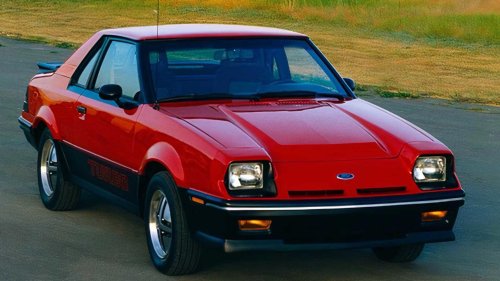
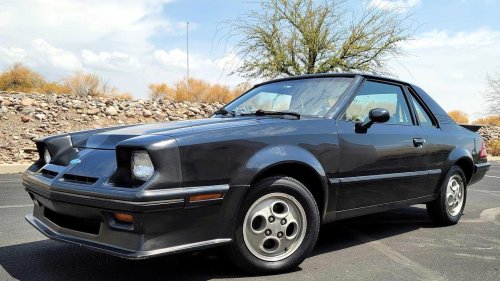
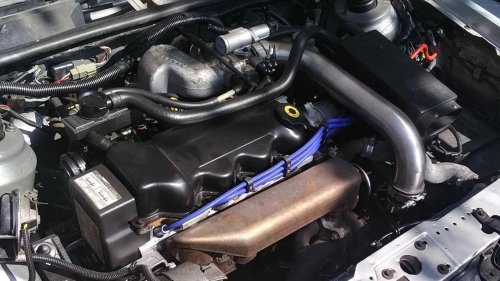
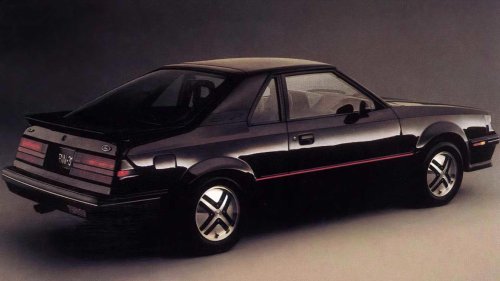




















In the early 1980s, American sports cars were at a crossroads. The golden age of V8-powered muscle cars had already faded. Strict emissions regulations, rising fuel prices, and growing demand for efficiency forced automakers to rethink performance. By this time, the Chevrolet Corvette remained one of the few surviving icons, but even it had gone through a rough patch in the late 1970s with reduced power and increased weight. Meanwhile, imports like the Datsun 280ZX and Porsche 924 were gaining traction in the U.S. by offering balanced handling, better fuel economy, and more refined driving experiences.At Ford, performance offerings were in transition. The Mustang had just entered the Fox-body era in 1979, improving on its Mustang II predecessor with better handling and lighter weight. However, most of Ford’s lineup prioritized practicality over performance. Compact front-wheel-drive cars like the Escort and Tempo were economical but lacked any real driving excitement. Ford needed something different that would attract younger drivers looking for a fun, affordable car that didn’t carry the size or the thirst for gasoline of traditional American coupes.This era also saw a shift in what defined a “sports car.” Rear-wheel drive and V8 power no longer defined the segment alone. Agile, efficient, and lighter vehicles were taking over. American manufacturers began experimenting with smaller formats, turbocharging, and front-wheel drive to compete in an evolving market. One of these experiments came from within Ford’s compact car division. It was a two-seat sports car that most have forgotten, but its ambition was very real. Ford EXP Turbo Coupe: America’s Forgotten Attempt At A Modern Sports Car Via: Ford The Ford EXP Turbo Coupe debuted as a bold idea in a cautious era. Based on the front-wheel-drive Escort platform, the EXP took the fundamentals of Ford’s compact economy car and reshaped them into a sleek two-seater aimed at younger, efficiency-minded drivers who still wanted a sense of flair. Ford marketed it as a “personal sports coupe,” a format more common in European markets at the time. With its sloping roofline, recessed headlamps, and minimal overhangs, the EXP looked more modern than most of its domestic competition.The first EXP arrived in 1982 with a naturally aspirated 1.6-liter inline-four, producing only 70 hp. While fuel-efficient, it lacked the performance to back up its sporty looks. As sales lagged, Ford introduced a turbocharged version in 1984. The EXP Turbo Coupe delivered 120 hp and 120 lb-ft of torque, thanks to a Garrett T3 turbo and a compression ratio of 8.0:1. Curb weight came in at around 2,350 pounds, giving it a competitive power-to-weight ratio for the time.Via: Bring a Trailer Despite the improvements, the EXP struggled to find a place in the market. The Mustang, with more aggressive styling and stronger aftermarket support, continued to dominate Ford’s performance image. Meanwhile, imports like the Honda CR-X and Volkswagen Scirocco offered sharper handling, better refinement, and more cohesive branding. The EXP was caught in a marketing gap: it was too sporty for economy buyers, but not compelling enough for enthusiasts.Still, the EXP Turbo Coupe deserves credit for attempting to change what an American sports car could be. It combined front-wheel drive, turbocharging, and compact dimensions at a time when most domestic performance cars still relied on traditional layouts. In hindsight, it reflected a shift in thinking that would later influence models like and Ford Focus ST. It wasn’t a hit, but it wasn’t without vision. The EXP Turbo Improved Power Output From 70 HP To 120 HP Via: HemmingsThe Ford EXP began life with modest ambitions. Early models used a 1.6-liter CVH (Compound Valve-angle Hemispherical) inline-four, producing just 70 hp and 85 lb-ft of torque. It shared much of its mechanical DNA with the Ford Escort, including the front-wheel-drive layout and basic suspension geometry. While efficient, the naturally aspirated EXP lacked the performance needed to match its sporty styling.Ford addressed this in 1984 with the introduction of the EXP Turbo Coupe. It retained the 1.6-liter CVH block but added a Garrett T3 turbocharger, low-compression pistons, and revised engine tuning. Power jumped to 120 hp and 120 lb-ft of torque. While these figures may seem modest today, they gave the 2,350-pound EXP a usable power-to-weight ratio, especially in a segment dominated by sub-100 hp economy cars.The EXP Turbo Coupe offered several transmission options, including a 5-speed manual that best suited the turbo’s power delivery. A 4-speed manual and 3-speed automatic were also available, though these dulled performance and reduced driver engagement. The five-speed-equipped EXP Turbo Coupe could reach 60 mph in 9.2 seconds, according to Hemmings,, putting it in the same range as early Volkswagen GTIs and Honda CR-Xs.Ford also improved the suspension over the base Escort. The EXP featured stiffer springs, revised dampers, and larger sway bars to sharpen handling. Brakes were upgraded with larger front discs to handle the increased performance. Later models even benefited from interior and exterior refreshes that helped close the gap with sportier imports.While the EXP Turbo Coupe never led its class in outright speed, its combination of compact dimensions, forced induction, and front-wheel-drive packaging gave American drivers a different kind of sports coupe experience. It reflected Ford’s effort to innovate within the changing performance landscape of the 1980s. It Was America's First FWD, Turbocharged, Two-Seat Sports Car Via: FordThe 1984 Ford EXP Turbo Coupe holds the distinction of being the first American production car to combine front-wheel drive, turbocharging, and a dedicated two-seat layout. It arrived at a time when most domestic performance cars still relied on rear-wheel drive and larger engines. Ford’s decision to build a lightweight, compact turbo coupe based on the Escort platform marked a shift in thinking. With 120 hp moving a featherweight sports car, the EXP Turbo offered a new type of American driving experience that is more responsive than raw, more agile than overpowered.While it never gained mainstream popularity, the EXP Turbo’s formula has since become more accepted. Automakers like Dodge with the Neon SRT-4 and later Ford models like the Focus ST embraced turbocharged, front-wheel-drive layouts with success. The EXP helped set the stage for that evolution, even if it didn’t get credit at the time.Today, collectors and younger enthusiasts are giving cars like the EXP a second look. The market for obscure 1980s coupes has grown, with clean examples of cars like the EXP, Honda CR-X, and VW Scirocco steadily rising in value. These models offer character, analog engagement, and unique styling that stands apart from modern homogenized designs.The EXP’s original mission was to deliver efficient fun in a lightweight, sporty package which feels relevant again. In the modern era of downsizing and efficient motoring, Ford could revive this formula with a compact two-seat focused on nimble handling and immediate torque. The original EXP Turbo Coupe may have arrived early, but its philosophy fits right into today’s performance conversation.