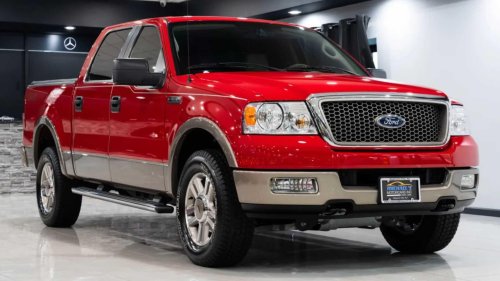
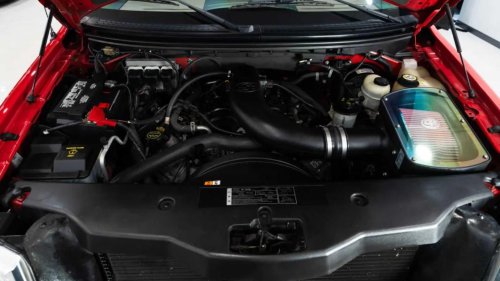




















Jump LinksThe Ford F-150 is one of the most storied vehicles in automotive history. For the longest time, it's not only been America's bestselling truck, but it's earned a reputation with contractors, fleets, families and small businesses due to its reliability and its ever-present capability. Many of these vehicles could run well past 200,000 miles with little more than routine servicing along the way.But occasionally, some significant issues arise that could lead to controversy. And such was the case with the company's 5.4-liter Triton V8 during the first decade of the century. Here was an engine that should certainly have been a safe and conservative choice for Ford, as an integral part of the company's long-running modular V8 family. And while it had already proven itself well in other trucks, all that previous reputation came to naught when the Triton V8 reputation collapsed in dramatic fashion.As it turns out, something relatively simple proved very dramatic, and for many owners, permanently poisoned their view of Ford's once trusted V8.Find [[default_name]] and more cars for sale on our MarketplaceShop Now The Spark Plug Design That Turned Routine Maintenance Into A Mechanical Nightmare Bring a Trailer.The reputation of the Triton V8 went south quickly due to a single and seemingly minor engineering decision that turned sour. The engine didn't throw any rods or destroy its bearings, but instead, spark plugs were at the center of one of the most infamous service nightmares in modern truck history.Ford introduced a different spark plug strategy with its 5.4-liter three-valve engine for the 2004 model year F-150. Now, instead of using conventional one-piece spark plugs, the company decided to use an unusual two-piece design. You'd thread the upper portion into the cylinder head as normal, but the lower section (with the ground electrode) had a separate steel shell that sat within the head, leading to the problem. Ford thought that this would help the company meet emissions and combustion requirements, and it packaged the plugs deep into the cylinder head.Sadly, the design turned out to be disastrous. Over tens of thousands of miles, carbon deposits built up on the exposed lower sleeve of the plug. This area was difficult to clean or inspect, especially as the plug sat deep inside the head. So, with heat cycles and long service intervals, together with the stop-start duty cycles typical of a vehicle like the F-150, problems arose. It was now very difficult to remove the plug using normal procedures, as the lower shell locked in place. This meant that the upper portion would come away, but the lower sleeve snapped off and remained lodged within the cylinder head.Suddenly, a simple tune-up turned into a major incident, and technicians would need to use special tools or soak the area in chemicals to try and extract the remains. Needless to say, this would take a lot of time, adding to the expenditure. And in the worst-case scenario, the sleeve might even break off further or damage the threads within the aluminum head. If that happened, technicians would have to remove the head entirely, and a bill that should have been in the low hundreds of dollars could easily balloon into the thousands.Beyond removal issues, some plugs could eject from the head under combustion pressure, leading to severe damage like bent valves or hydrolock.The situation got significantly worse for Ford as plugs getting stuck were not occasional events. Inevitably, the drama became predictable as it was highly likely that these plugs would break on high-mileage F-150s as they came close to their factory recommended service intervals. So, service shops developed entire procedures to help minimize the risk, such as soaking the plugs overnight in solvents or carefully shimmying them back and forth in small increments to see if they could overcome the issue.For a truck that Ford marketed on durability and easy ownership, this was a disaster. Basic maintenance work could quickly turn into destroyed cylinder heads and an unpredictable bill. This meant that dealer service departments, independent shops, and the community in general came to fear the Triton V8 when it was approaching middle age. The Architecture Of The F-150's Triton Made The Problem Inevitable Bring a Trailer. The 5.4-liter Triton, as installed in the 2004 to 2008 F-150, used a three-valve layout that required deep plug wells, and this tended to trap heat deep within the head to accelerate carbon formation and prompt the plugs to seize over time. This wasn't the case with earlier two-valve Triton engines as they were able to use conventional one-piece spark plugs and shallower plug wells, and consequently, carbon did not build up as badly, leading to removal problems.While those engines also suffered a separate type of plug issue, they were generally dependable and would often run for hundreds of thousands of miles with minimal drama, Ford felt that a three-valve redesign would improve power and efficiency. But sadly, it also introduced a significant level of service complexity that the company appears to have underestimated.The very nature of the Ford F-150 contributed to the problem, as this type of truck would often spend long periods of time idling on job sites, operating in warm conditions, or towing heavy loads. That type of activity would encourage carbon accumulation around the lower sleeve of the plug. And, when you added extended service intervals where plugs were sitting far longer than they used to, the odds were clearly stacked against a clean extraction.The consequences were not very good for Ford from a service perspective, as dealers needed to invest in special extraction tools and train technicians so they could deal with the thorny problem. Some independent shops turned customers away when they arrived with such trucks, being wary of liability. And if an owner attempted this themselves, they might quickly learn the hard way what could happen if the plug broke off in situ. So, all this developed quickly into a crisis for Ford, especially as the sheer number of F-150s on the road meant that this problem was far from manageable and impossible to contain. The Fallout And The F-150 Ownership Crisis Bring a Trailer. Complaints quickly piled up and Ford was forced to issue technical service bulletins that described specific procedures for dealing with these spark plugs. Within these documents, Ford acknowledged that the plugs could break and gave step-by-step instructions to try and reduce the risk. For example, it advised technicians to remove the plugs only if the engine was completely cold and to use chemical cleaners to dissolve the carbon.It also advised the use of special tools in the case of a fracture. While all this information was very useful, it also served as an implicit admission of a systemic problem, and perhaps inevitably, this led to legal fallout. Lawyers reportedly filed class-action lawsuits, claiming that Ford knowingly sold these vehicles with a defective spark plug design.These cases rumbled through the courts and eventually settled outside, but perhaps even worse, the public narrative was already set. Customers no longer saw the Triton V8 as the dependable workhorse that it once was, but as something that could come back to bite them at the time of its first plug change. Why The Triton's Reputation Never Recovered Even After Ford Fixed The Hardware. Bring a Trailer. It took some time for Ford to finally address the issue and revise the engine's spark plug design. It made changes to the cylinder heads in later model years, but by the time that happened, the damage was done. The Triton name was no longer synonymous with reputation and trust, but it had become shorthand for expensive maintenance headaches, and no amount of quiet engineering update could fix that perception.The used truck market proved particularly brutal for Ford, and even those revised trucks took a hammering as buyers struggled to distinguish between early and later versions. Many chose to avoid the engine altogether, and this episode influenced Ford's broader strategy. Soon it would turn to new powertrain branding using EcoBoost turbo engines and later the Coyote V8 as symbols of how it had progressed. Eventually, the Triton name faded from its marketing materials, with its solid reputation definitely well in the past.Looking beyond the spark-prep problem, the 5.4-liter Triton was genuinely a durable engine. It would often run well past 200,000 miles, and bottom-end failures were very rare. But nevertheless, that durability was completely overshadowed by the fear that something as simple as changing the plugs could turn into a catastrophe.The Ford F-150 survived the spark plug drama linked to its Triton V8 power plant because its strength extended far beyond the single engine option. But for the Triton V8 itself, the outcome was not as good. It never escaped the shadow of that design flaw and gave all engine designers that followed something to think about. Now, such designers needed to look very carefully at packaging solutions when chasing performance gains in case they undermined the ownership experience that mattered most of all.