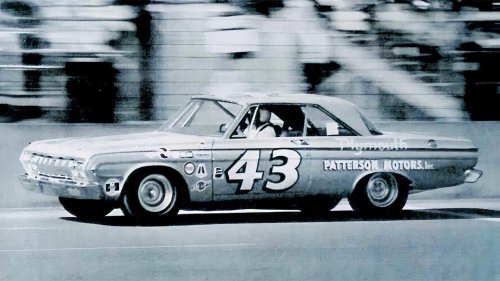
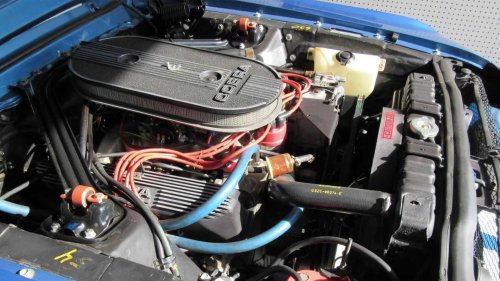
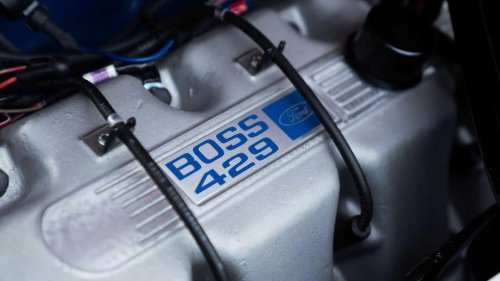
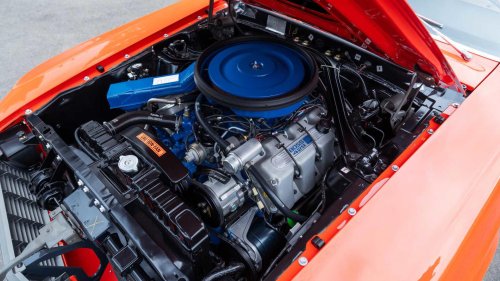
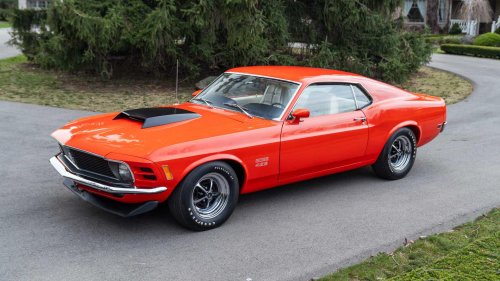
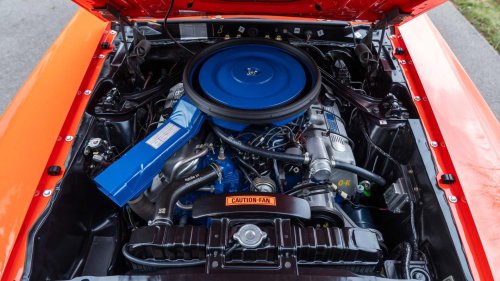
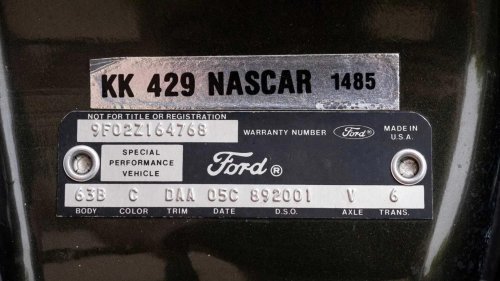
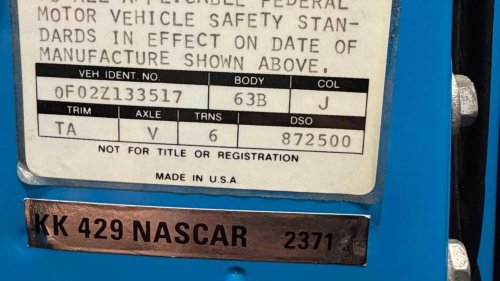
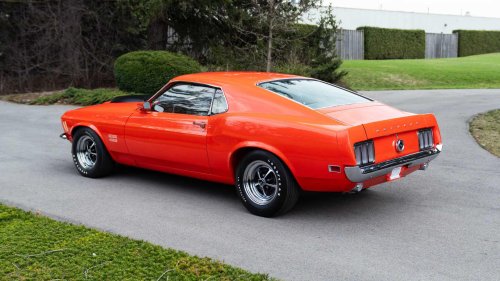
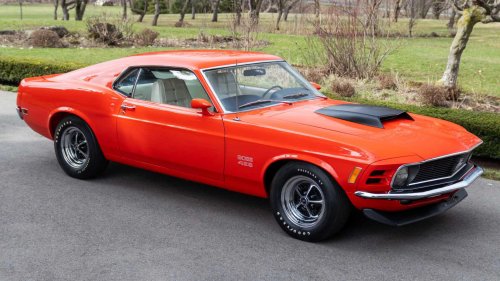
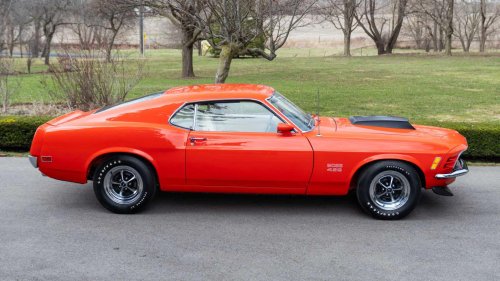
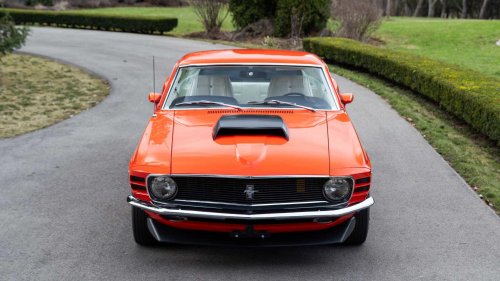
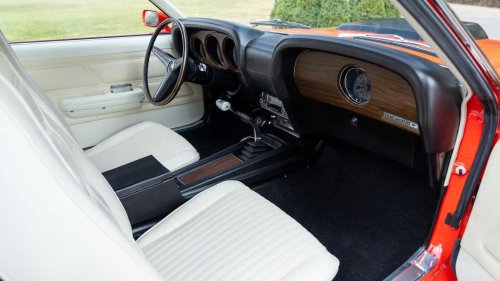
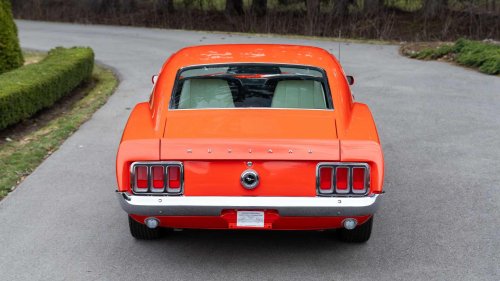
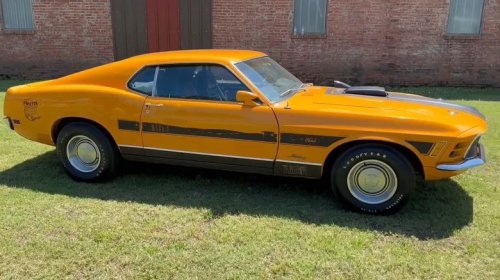
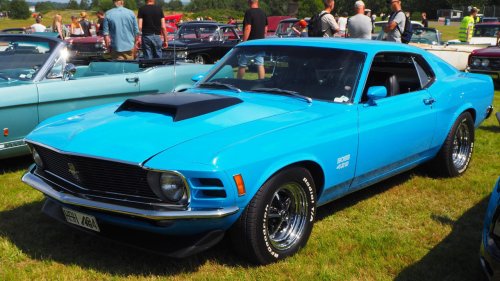
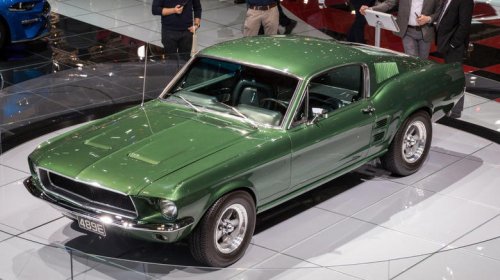
At Daytona in the late 1960s, the sound of a Chrysler Hemi at full throttle wasn't just loud. It was a message to rivals that Mopar was winning, and Ford's engineers knew it.The 427-cubic-inch big-block had carried Ford through some of its best NASCAR seasons, but by 1968 that engine had hit a wall. Chrysler kept pulling further ahead, both on the superspeedways and on showroom floors. If you can't win on Sunday, how will you sell on Monday?Ford's answer was a hand-built engine by a specialist crew in Brighton, Michigan. A facility most fans have never heard of, working on a project few knew existed. What they produced would become one of the most misunderstood and rarest engines in American muscle history. The Hemi Problem Ford Couldn't Ignore ChryslerChrysler showed up to the 1964 Daytona 500 with the 426 Hemi and finished first, second, and third. Ford's engineers didn't just lose a race. They lost the blueprint for what winning in NASCAR was going to look like for years to come.The 426 Hemi was officially rated at 425 horsepower and 490 pound-feet of torque, which made it the measuring stick for every performance engineer in Detroit. On the street and on the superspeedways, it was setting the terms of the argument.Ford's answer at the time was the FE 427 V8, the "side-oiler," a race-bred engine that had delivered real results. But by the early months of 1968, it had more or less reached its developmental limits. Ford needed something new, and they needed it quickly.Bring a Trailer Ford had already tried to leap ahead of the Hemi with the 427 SOHC, known as the Cammer, a highly advanced engine with a single overhead cam design. When Ford submitted it for NASCAR approval, it was turned down for being too exotic and for having no production car equivalent. It was a dead end before it ever raced.That rejection put Ford back at square one. NASCAR's homologation rules required that any engine used in competition had to be available in a production car sold to the public. It wasn't enough to build something fast. You actually had to sell it.Chrysler had already learned this lesson. When the Hemi initially had no street-legal equivalent, NASCAR banned it. Chrysler pulled out of the 1965 season rather than comply. The boycott hurt attendance badly enough that NASCAR reversed course, but only on the condition that Chrysler build a production version and sell close to 1,000 units to the public, and Chrysler returned to racing the ovals by July.Ford was watching all of this unfold. They had six consecutive Manufacturers' Championships behind them and a Hemi-shaped problem in front of them. The only way through it was to build something the rulebook couldn't ignore. Ford's Answer to the Hemi Was Built in Secret Mecum Ford started from scratch with a new engine based on the 385-series architecture, a modern platform, purpose-built for what the 427 could no longer do. It was completed in the fall of 1968 with one goal: to give Ford-backed NASCAR teams a successor to the 427 that could actually beat the Hemi. During development it collected a string of unofficial names—"Blue Racer," "Twisted Hemi," "Shotgun"—before it was officially called the Boss 429.Mecum The key design move was a redesigned combustion chamber with valves angled and canted into a revised wedge-shaped cylinder head. It was close enough to Chrysler's hemispherical layout to earn the nickname "semi-hemi," but it wasn't a copy. Ford's engineers took the scenic route to the same destination.The 426 Hemi used a true hemispherical chamber, where the valves sat in a dome-shaped space that allowed very large valve sizes and excellent airflow. Ford's semi-hemi achieved comparable breathing efficiency through angled valves in a modified wedge design. A layout that was easier to manufacture and tune without giving up much at the top of the rev range. It was a practical solution built to win races, not to mirror what Chrysler had done.Mecum For homologation, Ford chose the Mustang over larger platforms like the Torino or Fairlane. Putting a NASCAR engine in America's most recognized pony car sent a message that no Torino ever could.The "Boss" name came from designer Larry Shinoda, who had recently joined Ford from GM. When colleagues asked what he was working on, he jokingly called it "the boss's car"—a nod to Ford's newly hired president, Bunkie Knudsen. Why Every Boss 429 Was Hand-Built In A Specialist Facility Mecum Ford had an engine but didn't have a Mustang that could fit it. The stock Mustang engine bay was over two inches too narrow for the Boss 429. The engine simply wouldn't go in without major surgery to the car's front structure. Ford needed someone who could do that work at scale, and do it right.Every Boss 429 Mustang started as a partially built body at Ford's Rouge plant, then was shipped to Kar Kraft in Brighton, Michigan. Kar Kraft wasn't a general-purpose modification shop. They were Ford's specialist engineering contractor, the same outfit that had helped build the Le Mans-winning GT40. Ford trusted them with the hard problems.The solution Kar Kraft developed was to move the entire front suspension outward a full inch on each side, creating the clearance the engine needed. That required completely new shock towers, a widened strut tower brace, new upper and lower suspension arms, and heavy-duty uprights and springs. These weren't small adjustments, they were structural changes to a production car, done by hand on every single unit.Bring a TrailerThe battery was relocated to the trunk to improve weight distribution, a rear sway bar was added, and a functional hood scoop was cut into the bodywork to feed air to the engine. Air conditioning was deleted entirely, the Boss 429 left no physical room for a compressor. If you wanted cold air, you bought a different Mustang.Every completed car received two identifiers: a standard Ford serial number and a KK number from Kar Kraft, along with a NASCAR identification plate stamped inside the driver's door jamb. KK #1201 was the first Boss 429 built and KK #2558 was the last.Bring a TrailerThe Boss 429 wasn't trying to look like a race car. It carried documentation proving it was one. The earliest cars off the line, particularly the first 50 units, are now considered especially valuable by collectors because they show Kar Kraft's build process still being refined in real time. The imperfections of the first cars are part of what makes them rare. The Production Numbers That Make The Boss 429 So Hard To Find Today MecumFord's official figures for the Boss 429 were 375 hp and 450 lb-ft of torque. Those numbers were widely considered to be deliberately conservative, likely tied to the growing concern over insurance rate increases on high-horsepower factory cars. The engine on paper and the engine in practice were two very different things. Actual output was believed to be well over 500 horsepower.Both the Boss 429 and the 426 Hemi were broadly accepted to be understated from the factory, with real-world output running well above what the window sticker claimed on both sides of the rivalry. Ford and Chrysler were playing the same game. Keep the official numbers modest, and let the stopwatch tell the real story. In the hands of a skilled engine builder, the Boss 429 could reportedly produce 620 horsepower or more.Mecum Ford also gave buyers a way to lean further into the strip-ready intent. Ordering the 3.91 Traction-Lok rear axle, standard on every Boss 429, automatically brought along an engine oil cooler and relocated horns to make room for it. In practical terms, every Boss 429 left the factory with the core Drag Pack components already in place.On the 1970 model specifically, the Drag Pack appeared formally on the invoice, while 1969 cars received the same setup as standard equipment without the option being listed by name. Buyers who wanted even taller gearing could specify a 4.30 Detroit Locker rear end, choice that made the car's intentions about as subtle as the hood scoop.Mecum The production numbers are just as striking. Across both model years, Ford built exactly 1,358 total Boss 429 units—859 in 1969 and 499 in 1970. That figure covers all variants: approximately 1,355 Mustangs, plus two Mercury Cougars. Two model years, fewer than 1,400 cars, every one of them hand-modified in Brighton, Michigan.What those numbers don't capture is how many no longer exist in their original form. In the years after production ended, some early S-code engines were pulled and repurposed—used for drag racing or tractor pulls at a time when nobody was thinking about collector value. Documentation disappeared with the drivetrains. Today, the pool of verifiable numbers-matching Boss 429s is meaningfully smaller than the production total suggests, and that gap only adds to what the surviving examples command. How A NASCAR Homologation Mustang Became A Half-Million Dollar Collector Car Mecum The Boss 429 didn't disappear after the Mustang production run ended. The engine made its NASCAR race debut on March 30, 1969, at Atlanta, where Cale Yarborough driving a Wood Brothers Mercury took the engine's first win straight out of the box. It went on to collect 26 NASCAR victories in 1969 before Ford pulled back its factory support. Ford continued running the Boss 429 in NASCAR all the way through 1974, when the series cut the displacement limit to 358 cubic inches and ended the big-block era in stock car racing for good.Mecum The engine earned its record on the track. The market has spent the last two decades catching up to what that record is worth.According to Hagerty's valuations, a '69 Boss 429 in Concours condition is worth approximately $428,000 with values rising by 7.3% over the last 12 months. An Excellent condition example sits at around $325,000, and even a Fair-condition car carries a valuation of roughly $133,000. A 1970 Boss 429 falls between $414,000 and $301,000 in Concours to Excellent condition today.The Boss 429 was one of the standout performers in Hagerty's American Muscle index in early 2025, gaining around 12 percent in value during a period when many comparable cars were flat or losing ground.None of this is news to serious collectors or Ford historians. The Boss 429 is thoroughly documented in factory archives, in Marti Reports, in the KK number stamped into every car's door jamb. The enthusiast community has known exactly what this engine is for decades.MecumCasual fans who grew up with the modern Mustang GT or the Shelby GT500 often have no frame of reference for a street-legal NASCAR homologation engine built by an outside contractor in Michigan and sold with a race identification plate on the door. The Boss 429 doesn't fit neatly into the usual muscle car story, and that's precisely what makes it worth knowing. A car that came with its own paper trail stamped into the body, built for one specific purpose, in numbers small enough that finding a clean original today takes real effort, and that's the entire point.Sources: Mecum Auctions, Hagerty, Marti Report,