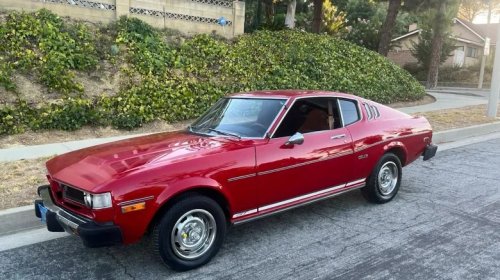
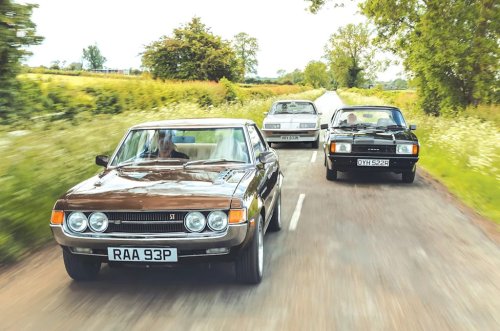
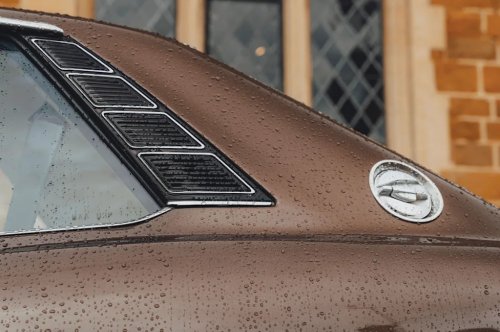
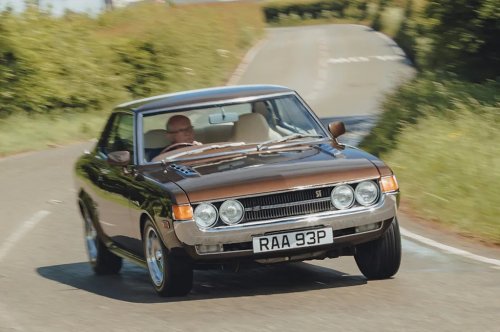
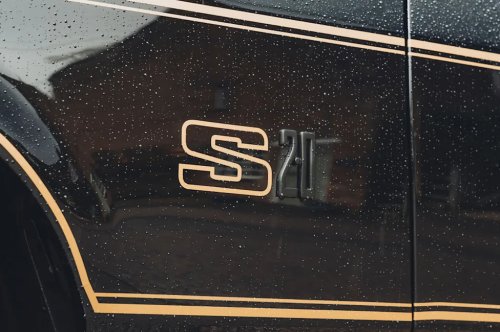
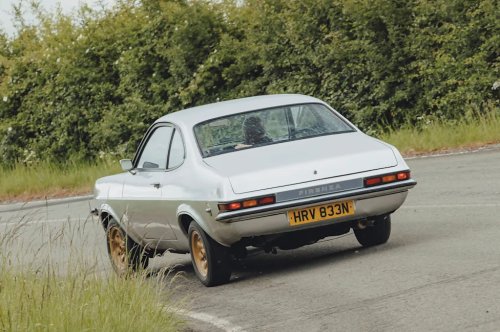
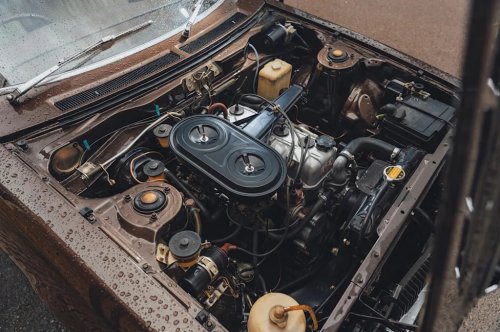
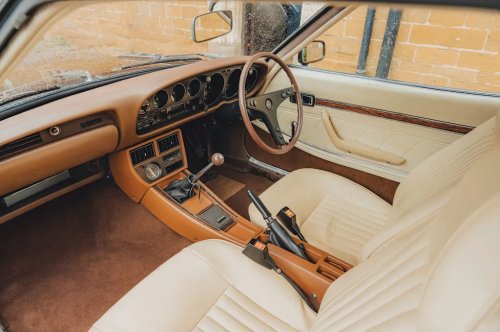
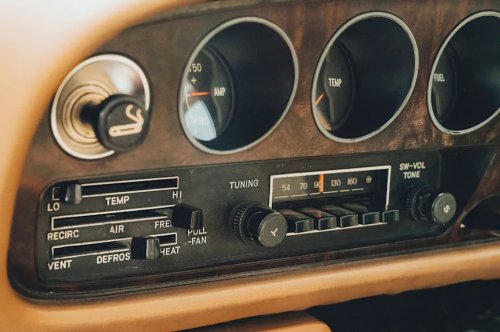
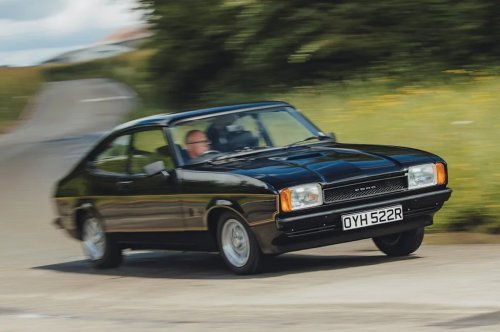
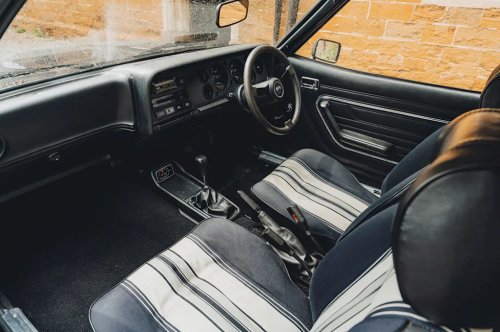
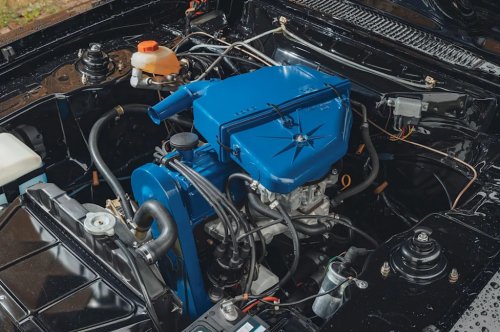
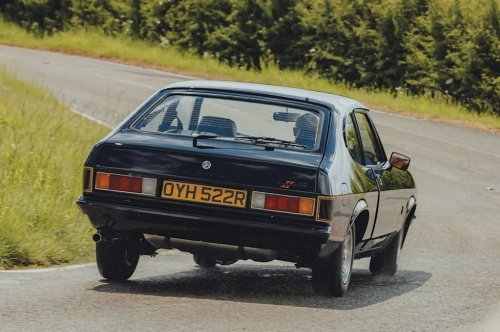
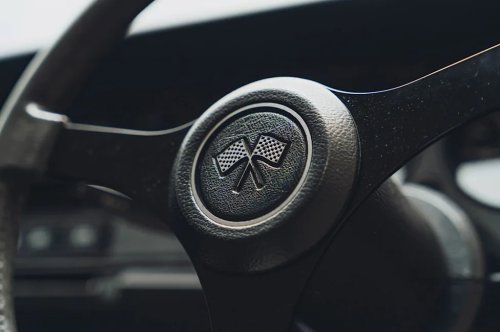
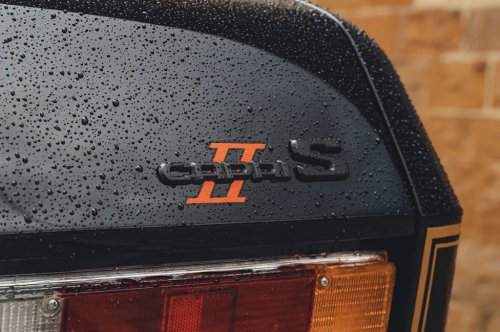
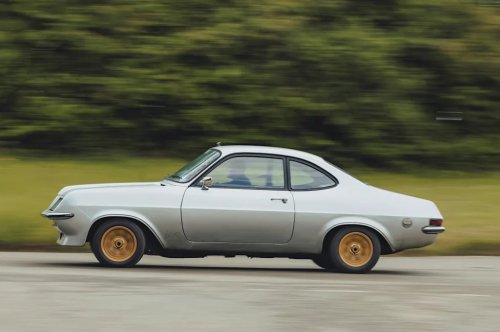
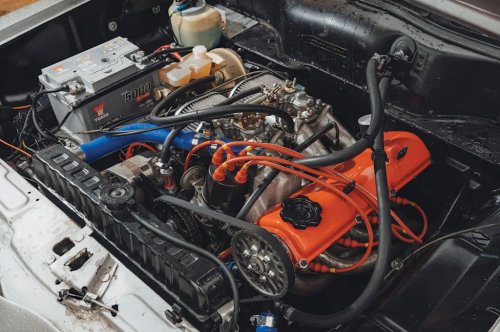
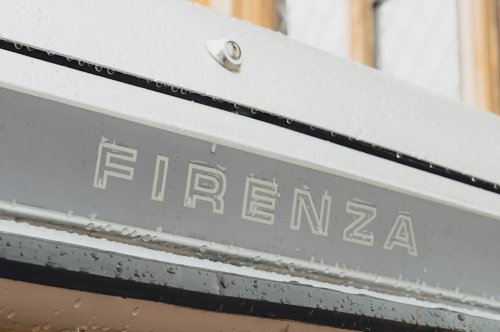
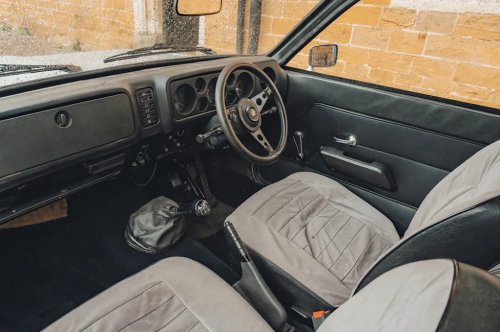
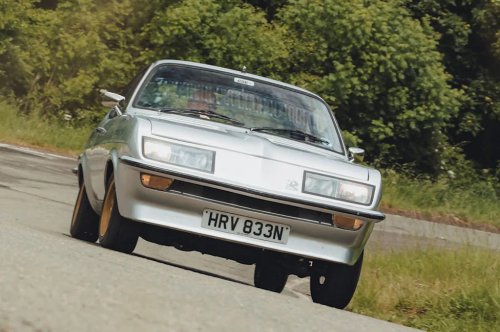
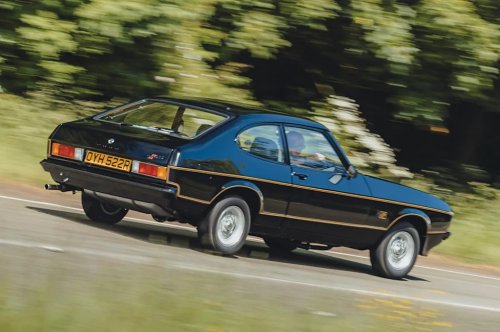
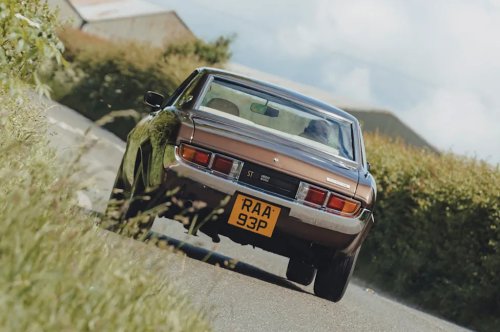
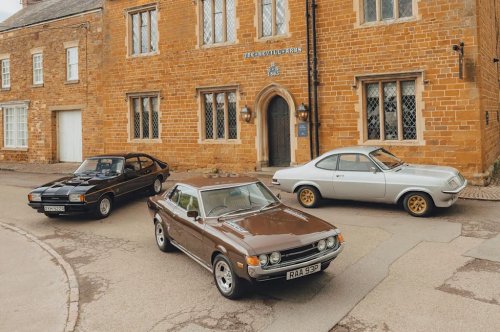
Classic & Sports Car – Ford Capri II vs Toyota Celica vs Vauxhall Firenza: style on a budgetIn 1973, the arrival of a new Toyota Crown raised eyebrows in our middle-England cul-de-sac, where the driveways of most houses were decorated with conservatively styled British automotive products, plus the occasional Fiat or Renault.But even these daring, European entries were wholly conventional in comparison to the Japanese Crown.Our neighbour Heinz Minor's memorable example was finished in orange, it was vast and, to an impressionable eight-year-old, its neo-American design smacked of the Detroit metal that served as a backdrop to every American detective show on television at the time.Classic & Sports Car – Ford Capri II vs Toyota Celica vs Vauxhall Firenza: style on a budgetFestooned with gadgets and switches inside, the Crown purred into life without drama every morning as Heinz would leave for work, its impregnable reliability anathema to his co-residents.AdvertisementAdvertisementSure, after a year its body panels were oxidising, and the British car press was rightly sniffy about the Toyota's dubious handling.But there was no doubt that the Japanese had started to carve a niche in Britain and Europe with their durable, easy to live with and generously appointed motor cars.The invasion had begun.The Celica, being more compact and not quite so glitzy, was a more palatable entry from Toyota into the hearts and minds of British car buyers.Classic & Sports Car – Ford Capri II vs Toyota Celica vs Vauxhall Firenza: style on a budgetIt arrived at a time when the concept of a practical four-seater coupé, powered by a fairly frugal four-cylinder motor, found appeal among drivers looking for sexier styling and decent performance, yet with little compromise versus a saloon.AdvertisementAdvertisementFord had mastered the class years before with the launch of the Capri in 1969, and by 1974 its revised model brought greater modernity and the added versatility of a rear hatch.Arch-rival Vauxhall had also joined the fray in 1971 with the Viva-based Firenza; two years later it launched the more gutsy 'Droopsnoot' model, adding further allure to the range.Classic & Sports Car – Ford Capri II vs Toyota Celica vs Vauxhall Firenza: style on a budgetBut, while all three contenders targeted similar buyers, they each offered a very different ownership experience.Toyota had launched the Celica (and the Carina saloon, with which it shared a platform and most mechanicals) at the Tokyo motor show in October 1970.AdvertisementAdvertisementThe Celica hit the UK showrooms in May the following year, priced at £1351, just £60 more than the equivalent Capri – the 1600 GT – at the time.But its fulsome kit levels more than compensated: a steering lock, heated rear windscreen, pushbutton radio, clock, hazard flashers, tinted glass and a well-stocked instrument cluster were all standard.Classic & Sports Car – Ford Capri II vs Toyota Celica vs Vauxhall Firenza: style on a budgetWith its 'pony car' design, the Celica looked cool and was very much en vogue, belying its rather more humble Carina underpinnings.Power came from a five-bearing version of Toyota's 1588cc, short-stroke, four-cylinder 2T engine, with an aluminium-alloy cylinder head and hemispherical combustion chambers, while the valvegear was operated by crossover pushrods from a single, high-mounted side camshaft.AdvertisementAdvertisementTwin Mikuni-Solex sidedraught carburettors gave the engine a lift over the Carina's single-carb set-up, with a 100bhp maximum arriving at 6000rpm and 109lb ft at 4200rpm.Enough, according to Autocar, to hit 60mph in 11.5 secs and go on to 105mph.Classic & Sports Car – Ford Capri II vs Toyota Celica vs Vauxhall Firenza: style on a budgetUnderneath, the Celica's suspension was by MacPherson struts up front and by a well-located, four-link live axle with coil springs at the rear.'Our' car, belonging to serial Celica owner Phil Williamson, is a late TA22-series model registered in 1976, a year before production switched to the next-generation car.It picks up the mid-cycle revisions made in 1974, including larger pads for its front brake discs, a sealed cooling system and flared wheelarches.AdvertisementAdvertisementA new design of 13in steel wheel was also introduced at the time, but Phil has since fitted age-appropriate 14in Wolfrace slot-mags – a common upgrade.Classic & Sports Car – Ford Capri II vs Toyota Celica vs Vauxhall Firenza: style on a budgetOf our trio photographed here, the Toyota Celica is by far the most Americanised in visual terms, unsurprising given that market's importance to the manufacturer.But that's by no means a criticism, and to my eyes at least its deep C-pillars, flush-fitting bumpers and pillarless glasshouse make it the prettiest car here, especially when viewed in profile.That extends to the cabin, too: trimmed throughout, here in a mix of cream and brown, with not an inch of metal showing, the Celica's interior looks like something from the class above and knocks the efforts of Vauxhall and Ford into the weeds.Classic & Sports Car – Ford Capri II vs Toyota Celica vs Vauxhall Firenza: style on a budgetIn the driver's seat, you face an attractive three-spoke steering wheel, with a choice of horn buttons – for town or country – on each spoke.AdvertisementAdvertisementA broad instrument binnacle, with two main and three auxiliary dials, is logically laid out and sits atop a high transmission tunnel and centre stack, looking sporty and focused for the driver.Which is not quite the impression you get as you drive away.Despite having the sweetest gearshift of the trio (this car features the optional five-speed 'box), the Celica's manual recirculating-ball steering, while pleasantly light, inspires little confidence from the off. Classic & Sports Car – Ford Capri II vs Toyota Celica vs Vauxhall Firenza: style on a budgetThere's play around the straight-ahead, while on turn-in the steering reveals little about what the front wheels are doing.Combined with moderate grip from both of the axles when you start to explore the car's limits, it somehow flies in the face of the Celica's aesthetic. AdvertisementAdvertisementTreat this classic car as a cruiser, however, and the Toyota starts to make much more sense.The driving position is excellent, and as you work your way through the light and precise gearshift, the twin-carb, four-cylinder engine sounds and feels peppy, with minimal vibration and a willingness to spin towards its 6500rpm redline.Classic & Sports Car – Ford Capri II vs Toyota Celica vs Vauxhall Firenza: style on a budgetYou'd never call this Toyota fast (a more potent, double-overhead-cam GT model joined the ST in 1973), but that hardly matters.The pleasure you derive is more from how well-engineered everything feels, from when you press down on the light and progressive clutch, to flicking up the Celica's right-hand indicator stalk; there's a general cohesiveness in the controls that's hard enough to find in a modern car, let alone one from 50 years ago.AdvertisementAdvertisementBy the time Ford launched the Capri II in 1974, it was hot on the Celica's tail for user-friendliness.Philip Thomas Clark's original design had looked exotic, glamorous and perfectly in keeping with the burgeoning jet-set age; it really did have buyers believing it was the car they had always promised themselves.Classic & Sports Car – Ford Capri II vs Toyota Celica vs Vauxhall Firenza: style on a budgetAnd, like the launch of the Mustang in the United States, it was a particularly astute marketing ploy, because beneath the Capri's rakish bodywork lay very basic, tried-and-tested underpinnings, making it cheap to produce and simple to maintain.Independent suspension by MacPherson struts looked after the front end, while a live axle supported by cart springs was the none-too-sophisticated arrangement at the rear – and it didn't change throughout the Capri's long career.AdvertisementAdvertisementThe Ford Capri II was the result of the one major redesign the model had during its 17-year life (1978's Capri MkIII was more of a cosmetic facelift).Classic & Sports Car – Ford Capri II vs Toyota Celica vs Vauxhall Firenza: style on a budgetIntroduced in February 1974, the new version of the Capri was identifiable visually by its more rectangular headlights, its shorter bonnet and the large, opening rear hatch that brought added practicality for families.Inside, the Capri II had a slightly more salubrious cabin, as well as a refreshed and more modern-looking dashboard and instruments, plus a smaller steering wheel.Mechanically, the most important change was the adoption of the 100bhp, 2-litre, four-cylinder Pinto engine, which replaced the aged and not particularly refined 2-litre V4 that had served the car through its first generation.Classic & Sports Car – Ford Capri II vs Toyota Celica vs Vauxhall Firenza: style on a budgetThe new, overhead-camshaft unit provided an important improvement to the Capri's drivability and performance, with Ford now claiming a 0-60mph time of 10.4 secs and a maximum speed of 106mph.Peter Todd's impeccably restored 1977 2.0S is – quite literally – a shining example of a Capri from its prime era.Purchased new by an RAF pilot, it eventually went with him to a posting in Germany for some years.After suffering ill health in 1999, the owner put the car into storage for the next 20 years, eventually selling it to Peter in 2019.The Capri then underwent a full nut-and-bolt restoration to the condition you see here.Classic & Sports Car – Ford Capri II vs Toyota Celica vs Vauxhall Firenza: style on a budgetWhile it isn't a limited-edition JPS model, the Capri's black bodywork with gold pinstriping certainly looks the part, adding to a more aggressive and purposeful stance than the Celica.Inside, as with the Toyota, the driving position of the Ford is first-class, with the small, three-spoke steering wheel embossed in the centre with twin chequered flags to provide a veneer of sportiness.The slab of dashboard behind it is quite bland after the Celica's, but the S model's rather fetching striped fabric trim – along with the practicality of split, folding rear seats – goes some way to compensate for this.Classic & Sports Car – Ford Capri II vs Toyota Celica vs Vauxhall Firenza: style on a budgetOn the road, the Capri immediately feels like a more substantial car.From the weight of its steering to the way its chassis interacts with the road's surface (although it is barely 80kg/176lb heavier than the lighter-feeling Celica).Pick up speed across our fast B-road test route and, while there's an abundance of grip from the chunky, 13in 175/70 Pirelli tyres – actually, a bit too much of it to be truly entertaining through the twisties – the Capri's old-school rear end runs out of ideas relatively early on, which in turn tempers your enthusiasm.Subjectively, the Capri's Pinto feels torquier at lower revs versus the Toyota, although there's little between them on paper: the Ford's 113lb ft at 4000rpm just pips the Celica's 109lb ft at 4200rpm.Classic & Sports Car – Ford Capri II vs Toyota Celica vs Vauxhall Firenza: style on a budgetThat is just as well, though, since the Ford engine, working through a typically slick and enjoyable four-speed gearbox, starts to sound agricultural when extended.But keep it below 4000rpm, enjoy the view over the long, power-bulged bonnet and the Capri would make a superb long-distance companion.Which was not what Vauxhall had in mind when it introduced the HP (High Performance) Firenza, known as the Droopsnoot.The Firenza had first been conceived to take on the Capri, arriving in the UK in 1971 with a range of engines from 1159cc to (the following year) 1759, 1975 and 2279cc, all based on the Viva HC saloon's platform.Classic & Sports Car – Ford Capri II vs Toyota Celica vs Vauxhall Firenza: style on a budgetHowever, in 1973 the larger-engined Firenzas were renamed Magnum Coupés, leaving the new HP Firenza as the sole bearer of the nameplate.This was no one-off special edition, either, with Vauxhall seeing it as the cornerstone of its return to motorsport, supported by the DTV (Dealer Team Vauxhall) network and the likes of tuner Bill Blydenstein and legendary driver Gerry Marshall.The new model was even launched to much fanfare at Thruxton Circuit, with a non-championship race for pro drivers all piloting stock HPFs.Vauxhall had done a proper job in separating the Droopsnoot from the Magnum, too.Classic & Sports Car – Ford Capri II vs Toyota Celica vs Vauxhall Firenza: style on a budgetLuton's 2.3-litre, overhead-cam, slant-four engine was uprated with twin Stromberg 175CD-2SE carburettors, plus hand-finished combustion chambers, inlet tracts and valve throats to make 131bhp – 21bhp more than the Magnum's equivalent unit.Delivered to the four-link, coil-sprung live axle through a ZF five-speed gearbox, it was also the first Griffin-badged car with a fifth ratio, and the first to achieve a sub-10-second 0-60mph time – of 9.4 secs – on the way to a top speed of 120mph.The Firenza's chassis was upgraded with stiffer springs and dampers, plus bigger brakes, while Vauxhall's American design chief, Wayne Cherry, created the signature streamlined nosecone, which begat the Droopsnoot epithet.Classic & Sports Car – Ford Capri II vs Toyota Celica vs Vauxhall Firenza: style on a budgetMade from moulded, glassfibre-reinforced plastic, the distinctive appendage, incorporating a set of four Cibié headlights, was said to improve aerodynamics, but it also provided Britain's '70s automotive landscape with one of its most memorable styling cues.Alas, Vauxhall's ambitious plans to sell 1000 HP Firenzas per year were scuppered by the Yom Kippur War and the ensuing oil crisis; in the end, just 235 of them were produced, a number which included 14 prototypes and 14 export models.Clive Cannon's 1975-registered car that you see photographed here is thought to be one of only 50-60 that survive today.Classic & Sports Car – Ford Capri II vs Toyota Celica vs Vauxhall Firenza: style on a budgetSold new to DTV driver John Haden and campaigned as a rally car in its early days, it has been owned by Clive for the past 15 years, during which time it has been subtly modified in keeping with what many would have done in period.As such, the Stromberg carburettors have been replaced by Weber 45s, and the cylinder head is a works item with a high-lift camshaft.Externally, it presents yet another contrasting design approach: its lower body betrays the HPF's modest, Viva-derived origins, but the graceful sweep of its glasshouse in profile sets it apart from the urbane saloon.The Avon Safety Wheels (here gold rather than the original grey) add another unique touch.Classic & Sports Car – Ford Capri II vs Toyota Celica vs Vauxhall Firenza: style on a budgetInside, while the dashboard and binnacle appear the most modern from our trio, the material quality, appointments and build quality of the Vauxhall cabin are a step or three down from the Ford and Toyota, not helped by swathes of cheap black vinyl throughout.You tend to let that pass on start-up, though.Engage a dog-leg first in the ZF 'box and start to motor off, and you soon realise the HPF is a force to be reckoned with.Its hardcore, brutish demeanour demands greater physical effort to drive quickly after the Capri and Celica, from the agricultural quality of the ZF's shift to the weight of, and kickback through, the wheel.Classic & Sports Car – Ford Capri II vs Toyota Celica vs Vauxhall Firenza: style on a budgetThat it's by far the fastest and most capable car across our test route comes as no surprise.It dispatches short straights accompanied by a glorious, Weber-induced snarl from the slant-four motor, brakes powerfully on the approach to bends, and corners adroitly, with minimal body movement and a nicely balanced transition from under- to oversteer on tighter corners.There's no doubt that this car demands your absolute effort and attention but, having driven many miles in a standard model in the past, it's safe to say that a regular HPF would be around 20% less focused and intense than this example.Classic & Sports Car – Ford Capri II vs Toyota Celica vs Vauxhall Firenza: style on a budgetNonetheless, the Vauxhall Firenza remains the wild card of our featured trio.In period it was also the most expensive of these three, too, costing £2625 in October 1974, when both the Ford Capri (the 2000GT at the time) and the Toyota Celica were priced at less than £2000.Financial considerations aside, all three were, in one form or another, practical, four-seater, two-door coupés from the same class, each offering a markedly different approach to the same concept. And each charming in its own way.The question is: which to choose today? Ford Capri II 2.0S, Toyota Celica 1600 ST or Vauxhall HP Firenza?Classic & Sports Car – Ford Capri II vs Toyota Celica vs Vauxhall Firenza: style on a budgetFor rarity and driver engagement the Vauxhall HP Firenza stands alone, even in standard guise, rather than the tweaked example we're driving today.Meanwhile, I have to admire the Ford Capri for its no-nonsense technology, and also for the comfort and practicality of its cabin.But the intelligently engineered and neatly styled Toyota Celica wins the day for being the best real-world classic car.Images: Max EdlestonThanks to: Capri Mk2 Register; Droop Snoot GroupFactfilesClassic & Sports Car – Ford Capri II vs Toyota Celica vs Vauxhall Firenza: style on a budgetFord Capri II 2.0SSold/number built 1974-'78/568,357Construction steel monocoqueEngine all-iron, sohc 1993cc 'four', single twin-choke Weber 32/36 carburettorMax power 98bhp @ 5200rpmMax torque 113lb ft @ 4000rpmTransmission four-speed manual, RWDSuspension: front independent, by MacPherson struts, lower links rear live axle, semi-elliptic leaf springs, telescopic dampers; anti-roll bar f/rSteering rack and pinionBrakes discs front, drums rear, with servoLength 14ft 3in (4343mm)Width 5ft 7in (1701mm)Height 4ft 3in (1295mm)Wheelbase 8ft 5in (2565mm)Weight 2304lb (1045kg)0-60mph 10.8 secsTop speed 106mphMpg 25.6Price new £1963 (1974) Toyota Celica 1600 STSold/number built 1970-'77/1.1 million (est, all Celica Mk1s)Construction steel monocoqueEngine iron-block, alloy-head, sohc 1588cc 'four', twin 40mm Mikuni-Solex carburettorsMax power 100bhp @ 6000rpmMax torque 109lb ft @ 4200rpmTransmission five-speed manual, RWDSuspension: front independent, by MacPherson struts, anti-roll bar rear live axle, four trailing links, Panhard rod, coil springs, telescopic dampersSteering recirculating ballBrakes discs front, drums rear, with servoLength 13ft 4in (4064mm)Width 5ft 3in (1600mm)Height 4ft 4in (1320mm)Wheelbase 7ft 11½in (2425mm)Weight 2128lb (966kg)0-60mph 11.5 secsTop speed 105mphMpg 28Price new £1806 (1974) Vauxhall HP FirenzaSold/number built 1973-'75/235Construction steel monocoqueEngine iron-block, alloy-head, sohc 2279cc 'four', twin Stromberg 175CD-2SE carburettorsMax power 131bhp @ 5500rpmMax torque 145lb ft @ 3500rpmTransmission five-speed manual, RWDSuspension: front independent, by double wishbones rear live axle, trailing and semi-trailing links; coil springs, telescopic dampers, anti-roll bar f/rSteering rack and pinionBrakes discs front, drums rear, with servoLength 13ft 6in (4114mm)Width 5ft 4in (1625mm)Height 4ft 7in (1397mm)Wheelbase 8ft 1in (2463mm)Weight 2237lb (1015kg)0-60mph 9.4 secsTop speed 120mphMpg 22Price new £2625 (1974) We hope you enjoyed reading. Please click the 'Follow' button for more super stories from Classic & Sports Car.



















 +68 others