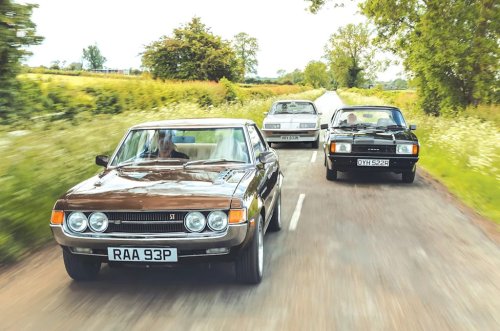
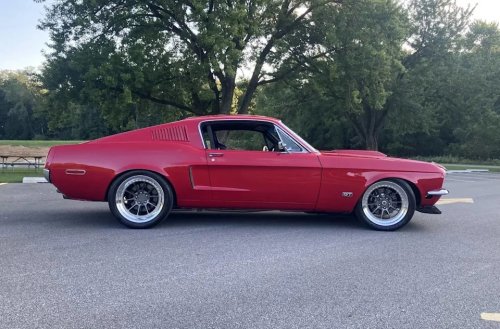
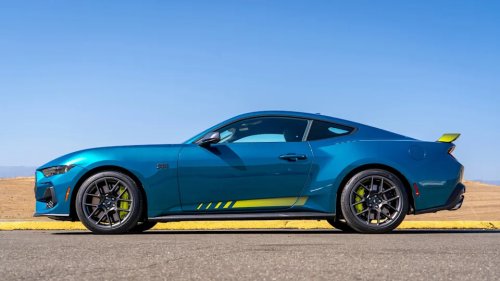
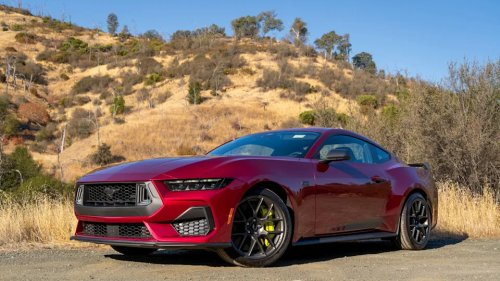
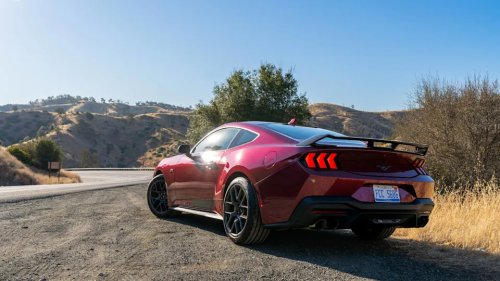
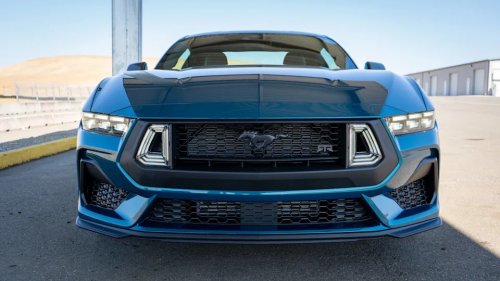
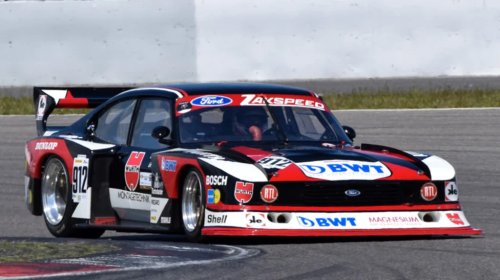
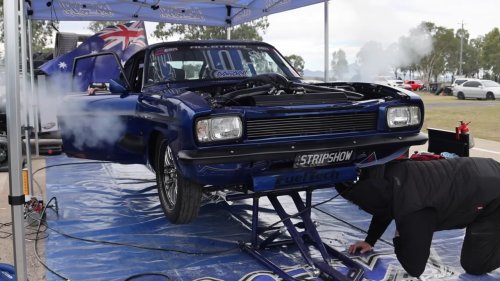
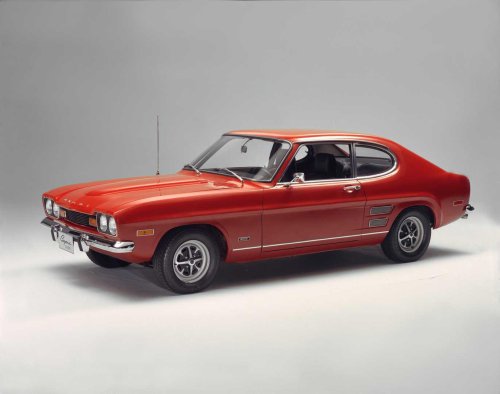
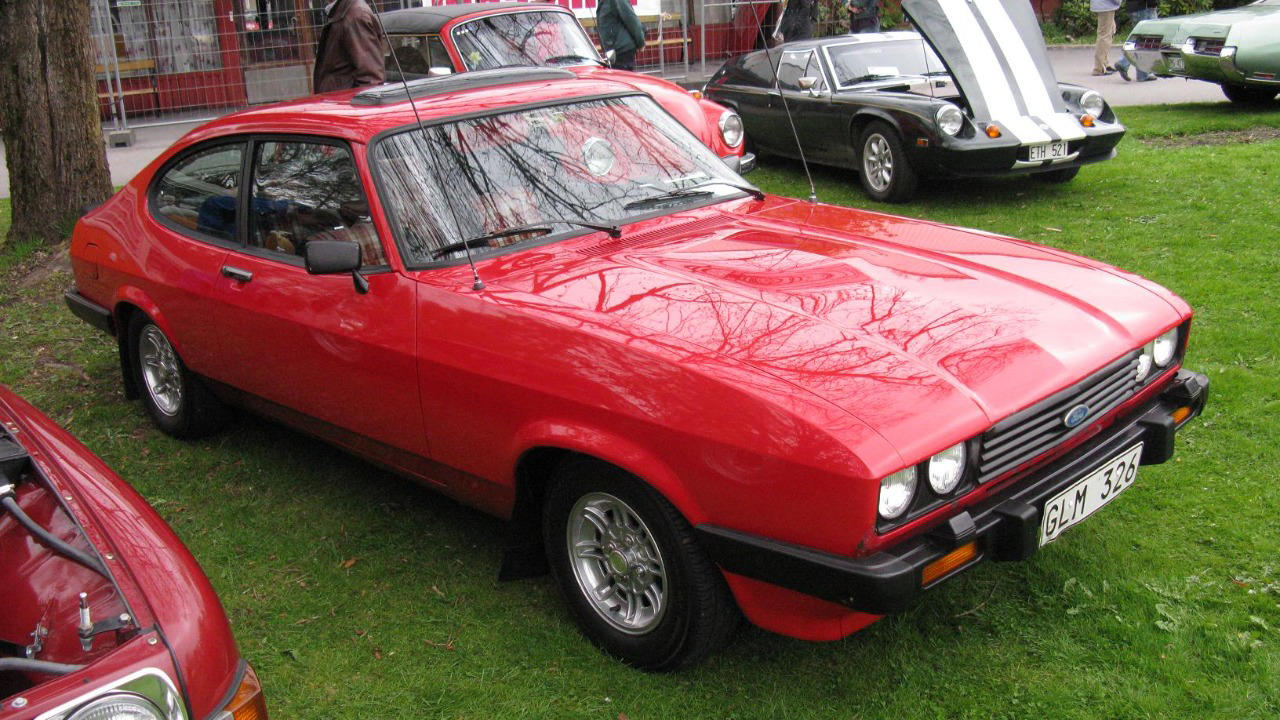
How the 1968 Ford Capri conquered EuropeThe original Ford Capri arrived at a moment when Europe was ready to trade drab family saloons for something that looked like it belonged on a poster, yet still fit a tight driveway and tighter budget. Marketed as “the car you always promised yourself,” it turned a very American idea of the pony car into a shape and price that worked from Kent to Cologne, and in the process it quietly took over the continent’s coupé market. I want to trace how that 1968 project, born from corporate envy and clever engineering, became the car that so many drivers still remember as Europe’s own Mustang. From American envy to a European fastback Ford had already watched the Ford Mustang rewrite the rulebook in the United States, and inside the company there was a clear sense of “why not us” on the other side of the Atlantic. Executives in Europe were, as one account puts it, reeling from the success in North America, and that mood pushed them to create a car that could echo the Mustang’s appeal without copying its bulk or thirst, a project that would become the Capri. The idea was simple but sharp: a long bonnet, a fastback roof and a short tail, wrapped around mechanical parts that were already proven in European showrooms, so the glamour could be sold at a family-car price. That strategy came to a head when Ford’s Capri was unveiled to the press at the Brussels Motor Show, a launch that signalled the company’s first fastback sports model designed specifically for Europe rather than adapted from Detroit thinking. Production of the Capri had already begun in November 1968, so the car that sat under the lights in Brussels was not a fragile prototype but a ready-to-build product that could be shipped to dealers almost immediately. By the time Jan rolled around and the stands opened, Ford had turned its American-inspired ambition into a very European coupé that was poised to reach buyers across multiple markets. Designing “the car you always promised yourself” What made the Capri feel so different was not just its silhouette but the way it blended aspiration with everyday reality. The marketing line about being the car you always promised yourself was more than a slogan, it captured the way the car looked exotic in the driveway yet shared engines and running gear with humbler Fords, which kept servicing simple and prices within reach. In period photographs and enthusiast histories such as Ford Capri Histoire, the early Ford Capri Coupes are celebrated for that balance of glamour and practicality, a coupé you could justify to your accountant and still admire from the kitchen window. Under the skin, the Capri was deliberately conservative, which was exactly the point. Mechanically, the Capri was typical contemporary Ford, with a mix of four and six cylinder engines and a layout that engineers already understood, but the bodywork turned those ingredients into something that felt special. Later analysis of the model’s evolution notes how tail lamps were enlarged and no longer shared with the Escort, and how details like larger headlamps and revised suspension tuning kept the shape fresh without losing its core character. The result was a car that looked like a mini grand tourer but behaved like a well sorted family car, which is precisely what many European buyers wanted. How Ford tailored a pony car for Europe Ford’s real genius with the Capri was to translate the pony car formula into something that suited European roads, fuel prices and tax rules. In the United States, the Ford Mustang could afford to be big and brash, but in Europe the same approach would have been a sales disaster, so planners focused on compact dimensions, light weight and a wide spread of engine sizes. Contemporary commentary describes the Ford Capri as Europe’s answer to the Ford Mustang and notes that this approach, with modest base engines and more powerful options on top, was far better suited for many European markets than a single thirsty V8. The engineering followed the same logic. Suspension layouts borrowed ideas from American muscle, with one account pointing out that, like the Camaro, the new coupé used staggered rear dampers and MacPherson struts up front to keep the car stable under braking and cornering. At the same time, the Capri’s Anglo Germanic heritage, with design and production shared between British and German operations, made it feel at home from the start in very different countries across Europe. That mix of familiar mechanicals and a distinctly European driving feel helped the Capri become an instant hit across Europe rather than a niche curiosity. Sales shock and a classless following Once the Capri reached showrooms, the response was immediate and emphatic. Despite some early complaints about refinement, the first year of Capri sales in Europe reached 156,000 units, a figure noted as the most of any European Ford model ever produced at that point. Other retrospectives underline the same point, describing how the first Capris were set to go into production by November 1968 and how the car went on to be a Major Success In Europe, with Capris remaining in production until they were finally discontinued in late 1986. For a coupé, those are family-sedan numbers, and they show just how effectively Ford had read the market. What fascinates me is how broad that market turned out to be. Enthusiast histories talk about how Ford’s European marketers asked themselves, “if the Yanks can do it, why not us,” then they sold millions of them, and that throwaway line captures the way the Capri cut across class lines. In the UK in particular, writers have described it as a classless coupé that could be found outside suburban semis and in company car parks, helped by the way the new coupé’s chassis, like the Camaro, combined everyday comfort with enough poise that it would not shimmy on the brakes. The Capri did not just sell in big numbers, it embedded itself in everyday European life. Racing, reputation and the RS3100 halo Success on the road quickly spilled over into motorsport, where Ford saw the Capri as a natural standard bearer. Touring car and Group 2 racing demanded more power and grip than the regular models could offer, which is where the specialist variants came in. Because the Capri RS2600’s Cologne V6 had already been enlarged to its maximum capacity, Ford turned to Cosworth Engineerin to develop a new engine package that would underpin the RS3100, a homologation special built so the Capri could keep winning in Group 2 racing back in May 1973. That car, with its flared arches and tuned V6, gave the whole range a performance halo that showroom brochures were quick to exploit. The Capri’s reputation as a driver’s car was also reinforced by the way it was discussed in contemporary and later reviews. A detailed period style assessment, for instance, notes that the new Capri offered a choice of five engine sizes to run the gamut from savings to sizzle, with the top of the line GT pitched as the enthusiast’s pick. Another retrospective, framed as a Carshow Classic, describes the 1969 Ford Capri as The European Mustang Ford Always Promised Itself and stresses how mechanically the Capri was typical Ford but tuned to feel more agile and engaging. Those accounts help explain why the car still looms large in enthusiast circles today, long after the last RS3100 left the track. More from Fast Lane Only: 10 underrated V8s still worth hunting down Police notice this before you even roll window down



















 +56 others