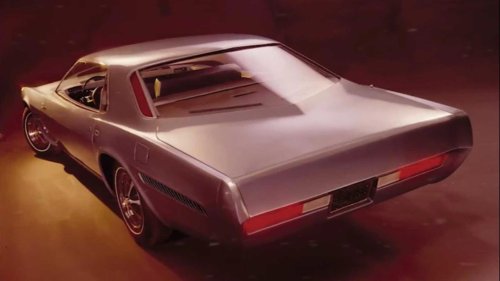
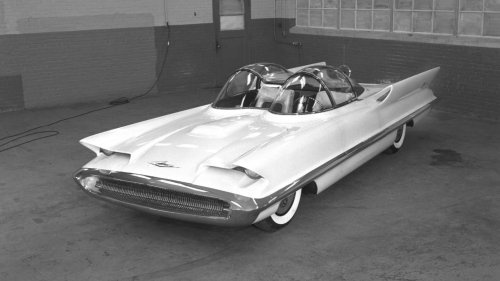
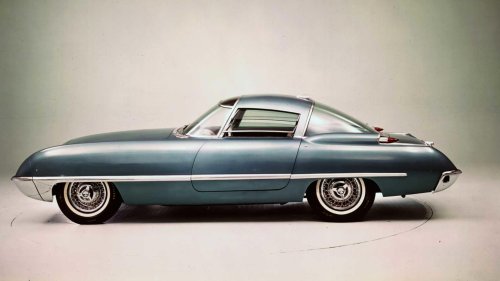
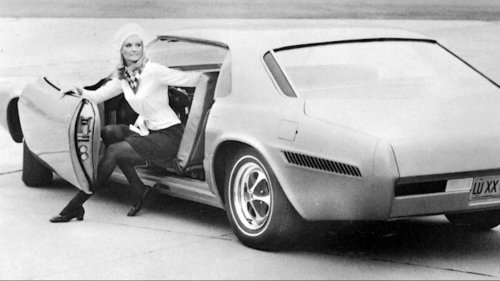
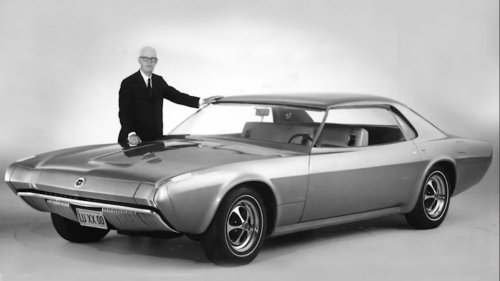
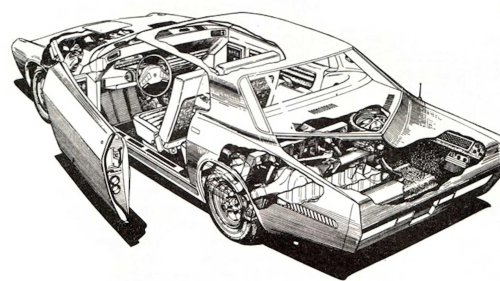
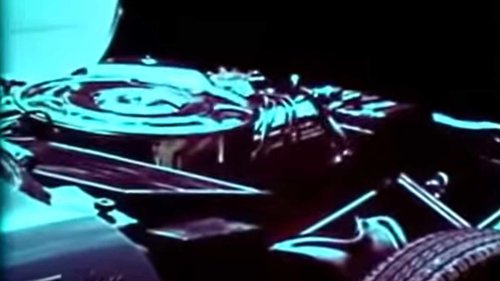
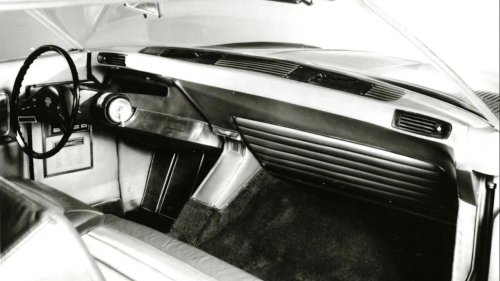
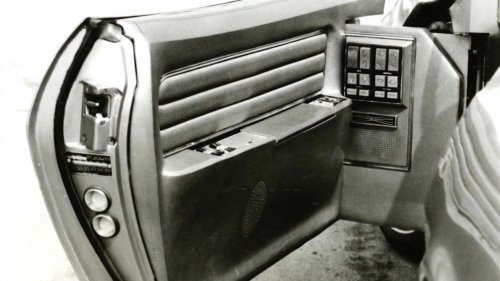
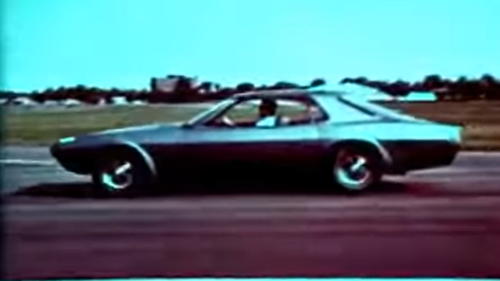



















These days, we all know what a concept car is. For those who may have occupied the underside of a rock for a while, a concept car is a model that automakers use to showcase things like future design plans, new powertrains, or simply to show the world what the designers were capable of when they had fewer limits. The first model to be considered a "concept car" was the Buick Y-Job, introduced in 1938. It was a design experiment that showcased Buick's future direction in terms of styling.However, while the Y-Job debuted in the late 1930s, the actual term "concept car" didn't arrive for another 30 years. The brand to pioneer the term was Ford with the Techna. The project came about in the late 1960s as the automaker's first attempt to show the motoring world a slew of potential technology in areas such as packaging, styling, and luxury. As a whole, the Techna concept was informally referred to as Ford's Dream Car. A contemporary technical paper about the model might be the first official use of "concept car" to describe a vehicle like this, according to research from Mac's Motor City Garage. Ford's Pioneering Vision YT: RETRO CARS Quick Facts About The Ford Techna Concept Introduced in 1968 Revealed at the New York International Auto Show Powered by a 427 cubic-inch (CID) V8 Marketed by Ford's media division as a concept car Never went into production While the Techna marked the first time that any automaker referred to a futuristic or upcoming, unfinished model as a "concept," Ford's experience with design studies and showcasing cutting-edge technology with one-off, display-only models stretches back much further than 1968. Ford's first forays into conceptual models really took flight in the 1950s, with models like the Lincoln Futura, which was later converted into the Batmobile for the original Batman television series. We also can't forget to mention the 1953 Ford X-100 "Dream Car", and the Ford FX-Atmos, a rocket-inspired model built in 1954.Ford Once the 1960s arrived and automotive styling began to quickly abandon the late 1950s' automobile styling, such as tail fins, Ford showed no signs of slowing down with new, novel automobile designs. In 1962, Ford introduced the Ford Mustang I, a conceptual model meant to serve as a design study for the then-upcoming Mustang. However, the Mustang I looked virtually nothing like the Mustang we all think of. It even had flip-up headlights and a slant-nosed look, a stark contrast to the production Mustang's stout front end and uncovered headlights.Ford A year after the Mustang I's debut came the Ford Twister, and while it also boasted a unique look, it wasn't meant as a design study in the same sense as the Mustang I. There was also the Ford Maxima, Cougar 406, and the Turbine Truck. In short, Ford had no shortage of conceptual models to dazzle the public by any stretch, but none of these models carried the term "concept" in their official literature. Ford's Techna-Logical Marvel YT: RETRO CARS By 1968, Ford was preparing to unveil yet another series of conceptual models for the new model year. The Torino Machete, Thunderbird, Fiera, and Ranger III were all slated to debut at various points throughout the year, and all were intended to showcase to the world what Ford was capable of in terms of powertrains and designs. However, 1968 also marked the introduction of the Techna, which was a much bigger deal than those other aforementioned four models.YT: RETRO CARS The Techna concept was the brainchild of Harold C. McDonald, the man pictured next to the Techna in the photo above. At the time, McDonald was Ford's vice president of engineering, and the Techna was his personal endeavor. His idea was to combine the attitude of a muscle car in looks with the opulence of a luxury car. Sprinkled into Techna's recipe were a slew of new, then-futuristic technologies, some of which are commonplace today. Numerous gadgets seen on and within the Techna, though, did not withstand the test of time. After all, when was the last time you saw a production car with an inspection hatch? All About The Techna YT: RETRO CARSFord claimed that over 50 separate pieces of novel technology were showcased with the Techna concept, many of which were hidden underneath its hood. First, we'll go through its powertrain, which boasts a 427 CID V8. Of course, the 427 motor is nothing new or special in itself, as it was used by several Ford models produced at the time. However, the Techna's unique version of the powerplant is what made its powertrain so special. The engine could be accessed via either the Techna's clamshell hood assembly or a small inspection hatch built into it.YT: RETRO CARS For starters, the mill was entirely cast from aluminum. While this wasn't much of a new idea at the time, very few production cars actually utilized aluminum construction. The Techna's 427 CID engine also featured a dual-overhead camshaft and a 24-valve layout, another feat of engineering rarely seen in vehicles meant for the road at the time. In addition, each of the Techna 427's eight combustion chambers had its own throttle body. The engine was intended as a testbed for a Le Mans-qualified engine, although rule changes regarding displacement rendered the mill obsolete.Speaking of racing, the Techna's bones were based on Ford's Mark IV Le Mans-bred chassis design, which consisted of a steel honeycomb for better rigidity and durability. However, while its undercarriage was race-inspired, the suspension system was virtually identical to the one found underneath the large Ford Galaxie.YT: RETRO CARSInside, the Techna's tech prowess began to shine through. Its doors, for example, boasted a dual-hinged design, meaning they could open straight out by moving away from the body in a parallel orientation, rather than the conventional doors we're familiar with. Reportedly, this allowed the doors to fully open with just 18 inches of clearance from obstacles, such as other cars in a parking lot. Its windshield was structurally reinforced, and its dashboard was designed to be both impact-resistant and minimalist, thereby preventing driver distraction. Interior space was maximized thanks to the Techna's drivetrain being canted to one side by 12 degrees. The Techna was a rarity for concept cars. Unlike most, the model was fully functional and could be driven on US roadways.YT: RETRO CARS While few confirmed figures exist, we'll flesh out the info that we can find regarding the 1968 Ford Techna concept's specs in the table below:*Specs courtesy of Mac's Motor City Garage Never Meant For Production YT: Duluth XperimentUnlike many concept cars over the years, the Techna was never intended for mass production. The model itself would have proved too expensive to produce. However, the Techna's true purpose was to showcase those 50 technological marvels, some of which were covered above. In essence, the Techna can be considered a medium through which these technologies gained recognition, such as its parallel-opening doors and structural windshield.After Techna made its rounds of the American auto show circuit, it was quietly set aside for further study, as the vehicle was still an active project. The company even put the machine on display in the automaker's historical collection. While its groundbreaking testbed days are long over, the Techna still stands tall in automotive history as the first literal concept car.