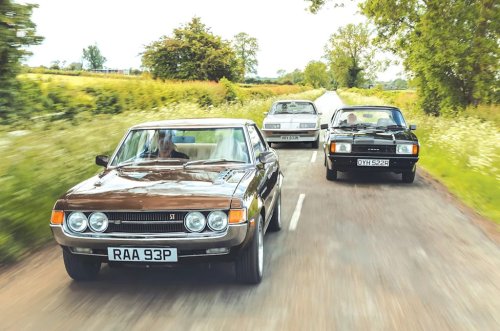
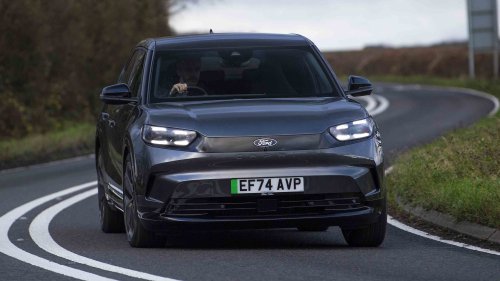
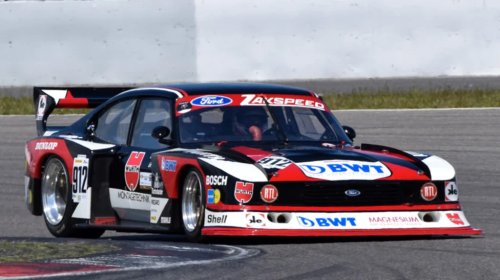
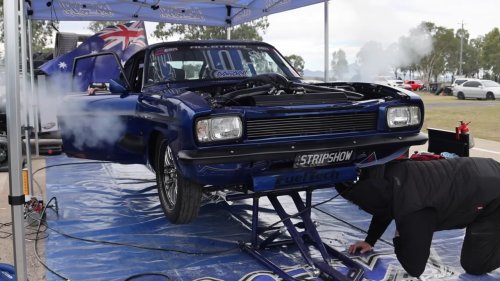
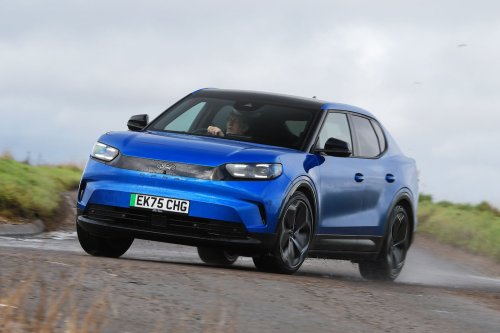
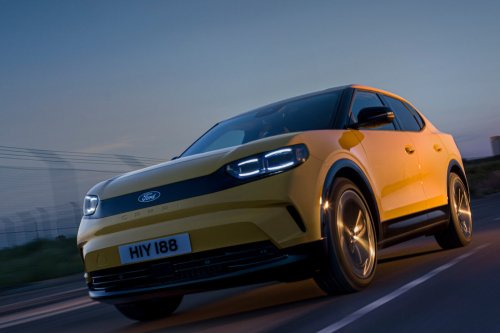
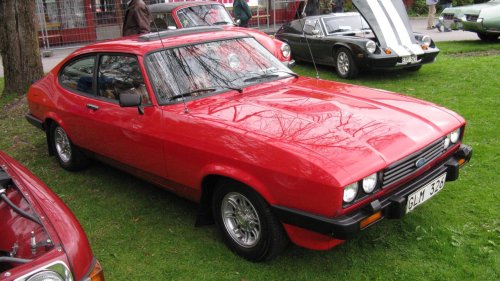
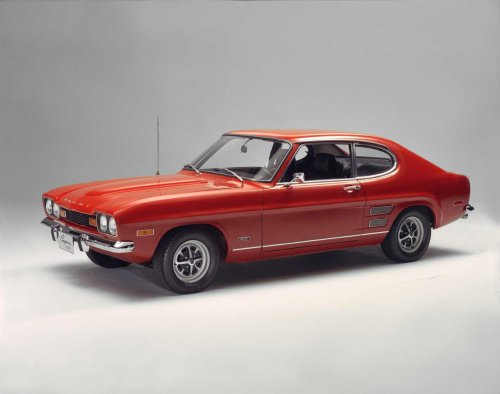
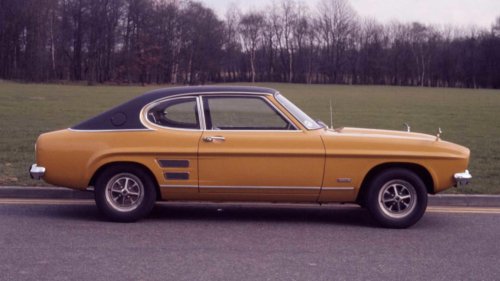
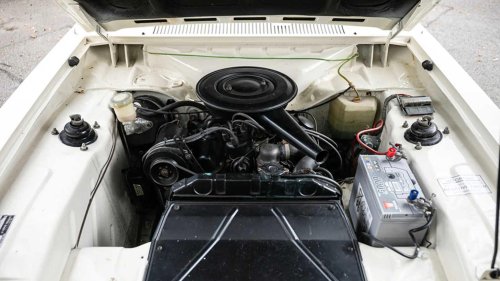
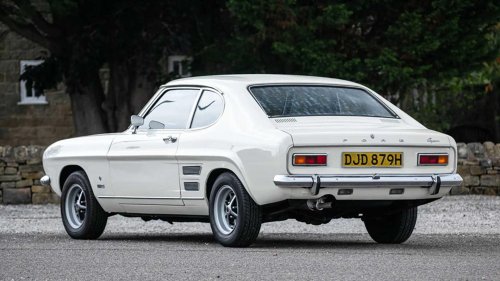
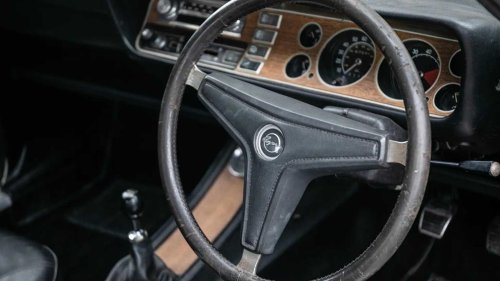
There are plenty of classic coupes on sale in the United States, but for some folks, these models might lack the rarity and special sauce to justify the purchase. Instead, these customers might want to import a two-door car that was never natively available in the US. If you're the type of person who wants a machine that's relatively straightforward to run but can still garner impressed nods from fellow gearheads, then the Ford Capri is a captivating option. More specifically, you could opt for the rare model with a V4 engine.The V4-equipped Capri was only built for around five years before more modern power plant configurations replaced the engine, making it a rather out-there example of a classic that was never offered in the US. The Capri stands out as an exotic alternative to the usual Mustangs and Camaros you'd find when scouring the classifieds, though US examples never featured the V4 found in Europe.This piece explores the background and technical makeup of the Ford Capri V4, which was available in various guises between 1969 and 1974. We also investigate the value of used models. Plus, we check out the recent revival of the Capri nameplate in Europe. The Capri Was Europe's Mustang Ford The story of the Capri begins in the early 1960s, when the Ford Mustang was developed for the American market. Designed to appeal to younger buyers looking to take on the big, wide world in style, the two-door coupe or drop-top struck a chord with its target market. The car was an immediate success, becoming the fastest-selling car in history. Feeling it could replicate the Mustang's success elsewhere, Ford's European arm pushed to develop a similar model to be sold throughout the continent.The result, christened the Capri, debuted in 1969. Ford envisioned it as a two-door coupe that would not only be fun to drive and look excellent, but also be affordable to buy and run. While the Capri didn't quite change the game in Europe as much as its Mustang cousin had overseas, the car still enjoyed a successful near-20-year production run across three generations.Still, Ford sold around 400,000 Capris in the first two years of production. It found particular favor in the UK and ended up being built for that market for a full two years after the Capri was axed from the rest of Europe in 1984. Its demise came as a result of the hot hatch boom, with these cars offering similar, if not superior, performance and greater practicality.The Capri even made the trip to the US between 1970 and 1978. The car was initially marketed simply as the 'Capri,' through the Lincoln-Mercury dealer network. Later, the nameplate became part of the Mercury lineup. The Capri Was Offered With A Distinctive V4 Engine Ford While Capris came equipped with the expected inline-four and V6 options from Fords of the era, the first-gen model was a little different. Ford offered a range of V4 engines under the hood of the coupe, though these were eventually replaced by the popular Pinto inline-four power plant in Europe for 1972. The V4s were included in the Capri range for a little longer, though they bit the dust once the second-gen Capri was released in 1974. The V4 was never offered for the US market, with the region only getting inline-four and V6 mills.Aside from the Capri, the V4 engines were also used in other popular Ford models of the era, such as the Consul sedan and Transit van. The Swedish marque Saab even made use of them, following a brief spell assisting Ford in developing the Taunus V4 powerplant, it cut a deal to use them in its 95, 96, and Sonnet coupe offerings. The V4 Provided Decent Performance For The Era Iconic Auctioneers A total of four different V4 engines found homes under the hood of the first-gen Capri. European-market cars used the Ford Cologne-designed Taunus engine, available in 1.3-, 1.5-, and 1.7-liter configurations. The most powerful of the lot was the Essex 2.0-liter engine, which Ford of Great Britain developed at its Dagenham plant. With 91 horsepower on tap, the engine granted the Capri some decent performance, given that the car tipped the scales at around 2,000 pounds, depending on the specification.The V4 was naturally unbalanced, so Ford got around this by including a single balancer shaft to smooth it out enough to use without shaking your fillings out during everyday use. All V4-equipped Capri models came with a four-speed manual transmission, which channeled the available grunt to the rear wheels. The engine struggled to rev out much, with the redline coming in surprisingly early at 5,500 rpm on the Essex unit, though the 104 lb-ft torque figure made up for this. The Capri Combined Mass-Produced Components With An Engaging Drive Iconic Auctioneers To keep the Capri's purchase and running costs down, Ford largely based it on the Cortina sedan. The Capri used modified underpinnings from the four-door model. They also shared the front MacPherson strut suspension setup that allowed for engaging handling for the time, but the primitive live rear axle setup doesn't stack up particularly well compared to more contemporary machines. The common foundations meant that Ford could sell it at a lower price, and the design looked good, so most buyers were happy. V4-Powered Capris Are Relatively Affordable Iconic Auctioneers If you want to bring your own V4-equipped Capri across the Atlantic, then you shouldn't have to hand over as much cash as you'd maybe expect. Given the configuration of the roads found in the US, you'd be best off tracking down the more powerful 2.0-liter Essex versions of the first-gen Capri. These would be most commonly found in the UK, but left-hand-drive examples were available in European markets.According to the Classic Valuer, Capri 2000 GT XLRs, the range-topping variant of the 2.0-liter V4 model, has an average sale value of around $21,500. On top of this, you'd need to budget around $5,000 to ship the machine across the ocean to reach US shores. They're pretty luxurious as affordable coupes go, too. The XLR Capri came with a leather steering wheel, reclining vinyl seats, and even a dipped rearview mirror. If other classic options like the Mustang seem a little too obvious for your tastes, tracking down a tidy V4-powered Capri could well be your route to salvation. The Capri Is Back, But Not In The Way You'd Expect Ford After the Capri was discontinued from the UK market in 1986, the nameplate was dormant for nearly four decades before eventually being resurrected by Ford in 2024. Don't get too excited, though, as the new Capri is about as similar to the original as the Mustang Mach-E is to a standard Mustang. Ford of Europe developed the new Capri as an SUV with an electric powertrain. Yep, no sleek coupe body or interesting V4 power plant here, just a generic SUV that would be difficult to spot in a crowded parking lot.It's not even a Ford underneath, given it's built upon Volkswagen's Group MEB platform. This essentially makes it a VW ID.4 with a new dress, far removed from the trendy, cool original Capri. The name was chosen to give some pedigree to Ford's latest European-focused SUV, though only those with the shortest of sight could be fooled by that one. The wait for a proper Capri revival, therefore, continues, though at least the venerable Mustang is available in Europe to make up for it.




















 +67 others