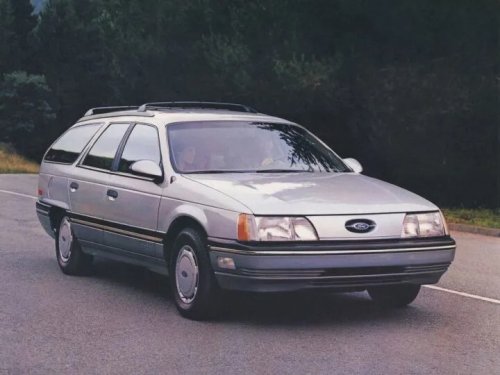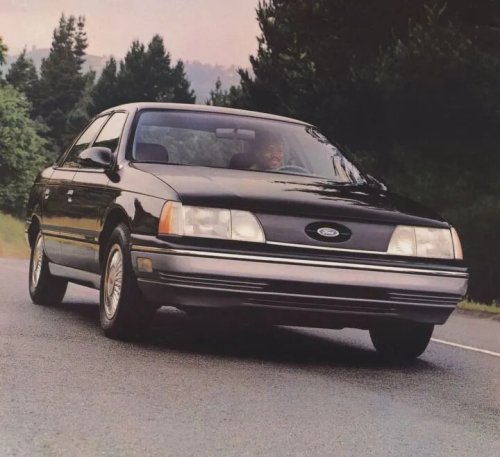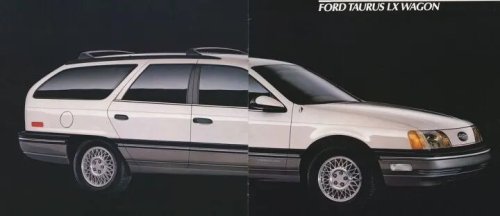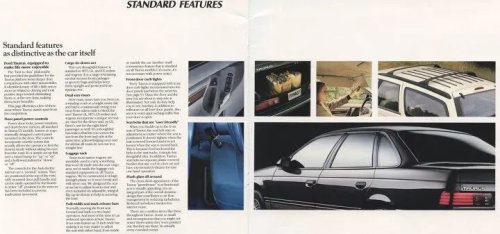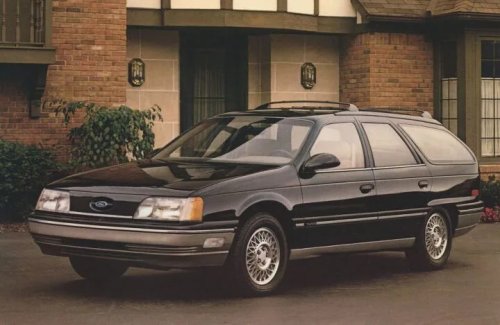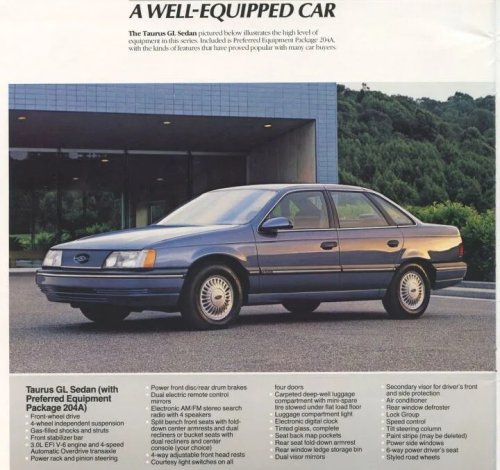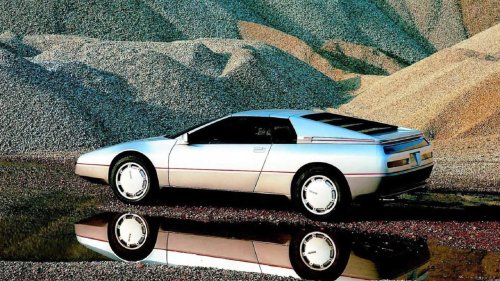
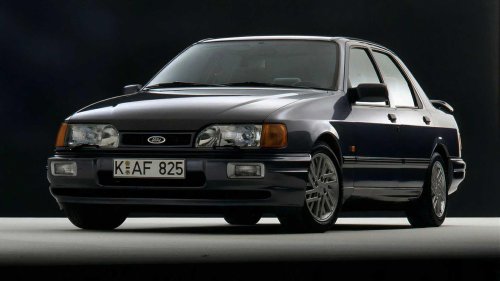
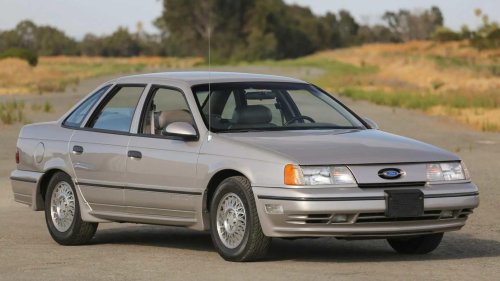
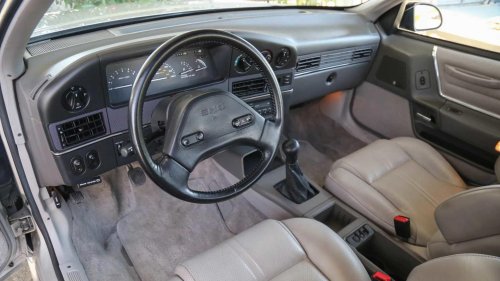
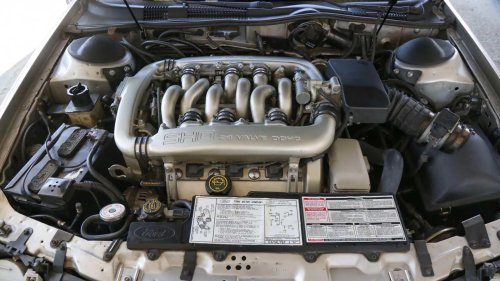
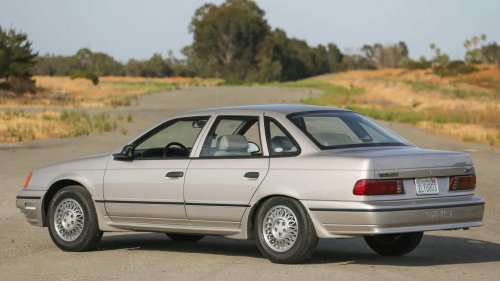



















Ford and Yamaha might be on two opposite sides of the world but, in the 1980s, they collaborated on what could conceivably be called the ultimate sleeper. This V6-engined monster looked every bit the willing family sedan to most, but was actually a 220 hp beast that could run a quarter mile in 15.2 seconds and go on to hit 143 mph if given permission. But despite the car’s incredible power and performance, it’s relatively forgotten about today. Ford Needed A Performance Hero During A Difficult Era ItaldesignBy the mid-1980s, Ford was in somewhat of a no-man’s-land. Japanese cars had overtaken it in terms of fuel efficiency and reliability, while many European imports were being viewed as more exciting from a performance and technology perspective. Even its iconic Mustang was looking slightly second-rate, as a directionless Ford even considered making it front-wheel-drive.None of its cars had that real star power, and while it had even embarked on a highly secret project to create a mid-engined sports car in the Ford GN34 / Ford Maya, it ultimately killed the car as priorities shifted toward more profitable programs like the Ford Explorer. Not all parts of the concept would be shelved, though, as Ford would hold on to - and eventually use - one crucial component from the concept. Family Sedans Were Becoming Faster Than Anyone Expected Ford Heritage Vault, Ford MediaWhile Ford was unsure of its direction, family sedans were going through a renaissance. The boring, utilitarian cars necessitated by the fuel crises of the 1970s were gone and, with technology improving, the family sedan could be both fast and practical.Ford entered the fun family car market with the Sierra in 1982 (while the Merkur XR4Ti, a North American model it was based on, was sold in 1985) and saw great success, releasing the homologation special Sierra RS Cosworth in 1986 so it could take on Group A racing. But the Sierra was for the European market, and Ford needed something for the Americans. So, taking an engine from the canceled GN34 project, it created a car so crazy that it would become the ultimate sleeper. The Ford Taurus SHO Quietly Changed Everything Via: Bring A TrailerWhen Ford launched the Taurus in 1985, it was a revolution. It eschewed the typical chrome grille, instead going for a more aerodynamic silhouette, while the interior curved around the driver in a cockpit style and power could be up to 140 hp if buyers opted for the 3.0-Liter Vulcan V6 engine. It was so popular from the outset that it sold over 236,000 cars in its first year, clearing a further 370,000 each year between 1987–1989. Ford also had a Yamaha-developed 3.0-Liter DOHC V6 originally intended for its performance Taurus program. So, in 1989, it put it to use.The car that would come from it was the Ford Taurus SHO. The first car from Ford’s Super High Output (SHO) department, it turned the first-gen Taurus into the ultimate sleeper. Power increased from 140 hp to 220 hp, the redline went from 5,200 rpm to 7,000 rpm, and, as Ford didn’t have an automatic gearbox capable of dealing with the prodigious power created by that Yamaha engine, the SHO became a five-speed manual.There were some aesthetic tweaks too, though these were on the subtler side to emphasize the SHO’s sleeper status. The hood of the Taurus SHO, for example, actually belonged to a Mercury Sable, while the lower side cladding on the SHO was the same color as the body (compared to black on the regular Taurus). The body, doors, and silhouette remained the same, but the undiscerning eye wouldn’t easily recognize that one car had 57% more power than the other.Via: Bring A TrailerThe Taurus’ interior was already popular, but the SHO’s received some more blink-and-you’ll-miss-them upgrades. The seats, aware that you’re going to be thrown around more, had bolstering on the edges to keep you in place, while the rev counter went up to 8,000 rpm to allow that 7,000 rpm redline.With that unbridled power and understated design tweaks, it was everything that a driver could want from a sleeper. The problem was, that’s not always what people want. The relatively tame aesthetic changes for the SHO meant that many didn’t realize the car’s true power. Sales exceeded expectations in the first year, the car shifting 15,519 units, but petered out to around 8,000 for the next two. The Taurus SHO’s Secret Lay Under The Hood Via: Bring A TrailerThe true secret behind the first-gen Taurus SHO was its 3.0-Liter Yamaha V6 engine. Ford needed a halo car in the mid-1980s, but knew that none of its existing V6 engines would meet the performance targets it had in mind. At the same time, Yamaha had an established reputation for creating high-RPM engines and lightweight engineering, so Ford handed it the 3.0-Liter Vulcan V6 to work on.Yamaha fettled the engine to give it Dual Overhead Cam Shaft (DOHC) cylinder heads to increase RPM and horsepower, developed new intake and breathing characteristics, and manufactured the new engines in Japan. What it created was an engine with 220 hp, 200 lb-ft of torque, smooth power delivery and a vastly increased redline, making the car feel overall more alive and pliable.Ford would ultimately move away from that 3.0-Liter Yamaha V6 part-way through the second generation, replacing it with a 3.2-Liter Yamaha V6 to offer an automatic option for buyers. This would change to a 3.4-Liter Yamaha V8 for the car’s third generation but, with sales numbers falling to the mid-3,000s by 1998, the car was retired a year later. It would return some 20 years later, but this time with Ford’s 3.5-Liter Ecoboost V6. The Taurus SHO Proved America Could Build A World-Class Sports Sedan Via: Bring A TrailerThe Taurus SHO played the role of the sleeper perhaps too well. It was a car that had so much power hidden under such an unassuming shell that potential customers and dealerships ignored it because they simply didn’t know what lay underneath. While contemporary competitors like the Dodge Spirit R/T, BMW 5 Series, and Mercedes-Benz 300E wore their performance more on their sleeve, the Taurus hid it under its borrowed hood, and perhaps suffered because of it.Today, the first-gen Taurus SHO remains a popular choice for those who know it. Prices don’t quite reflect the dedicated cult following that the car has, with cars going for around $7,000 on average, though particularly good examples can fetch closer to $20,000.While it might not have gone on to become a fully-fledged sales powerhouse, the car remains a prime example of where Ford was in the late 1980s. It was a push forward into aerodynamics, unexpected performance, and proof that Detroit could challenge Europe. And while it might not be remembered as well today, it certainly achieved what it set out to.Sources: Ford, Taurus Club, Classic.com