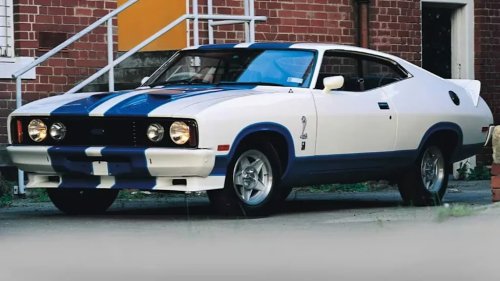
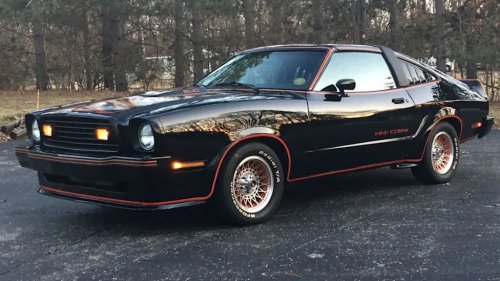
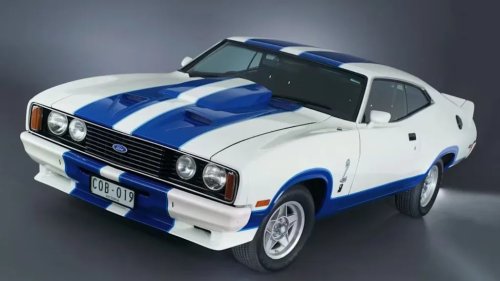
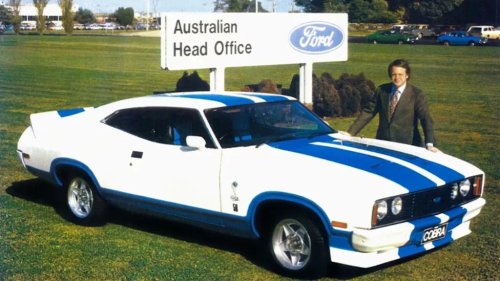
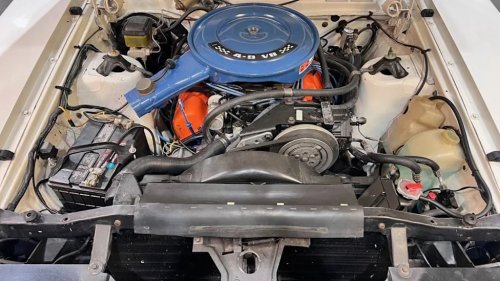
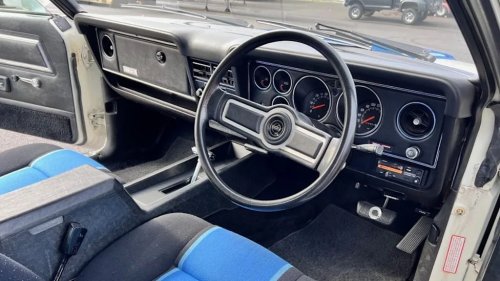
Photo Courtesy: Autorepublika.Ford Australia did not set out to create a museum piece. In 1978, it had a problem: the big Falcon hardtop was nearing the end of the line, the next XD Falcon would not offer a two-door coupe, and hundreds of XC Hardtop body shells still needed a future.The answer became one of Australia's most recognizable performance cars. The Ford Falcon Cobra turned a factory headache into a 400-car V8 statement with Shelby-inspired graphics, Cleveland power, Bathurst connections, and a fixed production count that collectors still care about today.It arrived at a moment when American muscle was losing strength under emissions rules, fuel prices, insurance pressure, and changing buyer priorities. Detroit was moving into the Malaise Era. Broadmeadows still had one more loud, blue-striped coupe left to build.AdvertisementAdvertisementThe Falcon Cobra proved the big V8 coupe still had a pulse outside Detroit.America Was Moving Away From Muscle CarsPhoto Courtesy: Matthew P / Flickr / Public Domain / Wikimedia Commons.The late 1970s were a difficult period for the American auto industry. Emissions laws, fuel prices, insurance costs, and economic uncertainty pushed manufacturers toward smaller, lighter, and more efficient cars.That change reshaped models that had once stood for affordable performance. The Ford Mustang is one of the clearest examples.By the Mustang II era, the car had become smaller and less powerful than the first-generation models that made it famous. The 1978 King Cobra looked dramatic, with its front air dam, rear spoiler, stripes, and hood snake, but its 302-cubic-inch V8 produced about 139 horsepower.AdvertisementAdvertisementThe Mustang II generation also brought four-cylinder power into the Mustang lineup, reflecting the new priorities of the decade. Performance was no longer the easy selling point it had been during the golden age of American muscle.Australia Still Had Room For A Big V8 CoupePhoto Courtesy: Autorepublika.Australia followed its own path. Local regulations and market conditions were changing there too, but buyers still had an appetite for large rear-wheel-drive sedans and coupes with V8 engines.The Ford Falcon had already built a serious performance reputation on Australian roads and racetracks. GT and GS versions helped give the nameplate credibility, especially through Mount Panorama and Bathurst touring car history.By 1978, the XC-generation Falcon was nearing the end of its life. Ford Australia was preparing the next-generation XD Falcon, and the new model would not continue the two-door hardtop coupe body style.AdvertisementAdvertisementThat left Ford with a practical problem. Several hundred XC Hardtop body shells were still in the system, and a normal run of regular coupes was unlikely to clear them quickly.A Factory Problem Became A CobraPhoto Courtesy: Autorepublika.Ford Australia had roughly 400 unsold XC Hardtop bodies to deal with. Instead of letting the final big Falcon coupes fade out quietly, the company turned them into a limited-edition performance model.One long-told version of the story says Ford considered a Playboy-themed special with black paint and magazine-inspired graphics before rejecting the idea. The plan that survived was much better suited to Ford's performance image.Edsel Ford II, then working in Ford Australia management, is widely credited with pushing the Shelby-inspired Cobra idea. The concept was simple and powerful: take the last Falcon hardtops, give them bold American-style racing graphics, and connect them to Ford's local performance identity.AdvertisementAdvertisementThe result was the 1978 Ford Falcon Cobra. What began as a way to move leftover bodies became one of the most famous Australian Ford special editions ever built.The Cobra Look Was Impossible To MissAll 400 Falcon Cobra models wore the same basic visual identity: white bodywork, wide blue racing stripes over the hood, roof, and trunk, and large Cobra graphics along the sides.Ford also added front and rear spoilers, 15-inch Globe Bathurst wheels, dual exhaust, and a more purposeful stance. The car looked like a road-going race special even when fitted with the smaller engine.Inside, the Cobra used black trim with blue-striped cloth inserts that matched the exterior theme. Each car also received an individually numbered plaque, marking its place in the 400-car production run.AdvertisementAdvertisementThat detail helped turn the Cobra into a collectible almost immediately. It was not simply another Falcon trim level. It was a final-run hardtop special with a clear identity, a fixed build count, and a story buyers could understand at a glance.Two Cleveland V8 Engines Were OfferedPhoto Courtesy: Autorepublika.The mechanical package came from Ford's V8 parts bin. Ford built 200 Cobras with the 351-cubic-inch, 5.8-liter Cleveland V8, rated at 217 horsepower.The other 200 used the smaller 302-cubic-inch, 4.9-liter Cleveland V8, rated at 202 horsepower. Both engines were available with either a four-speed manual transmission or a three-speed automatic, although manual cars were much rarer.Those numbers may look modest by modern standards, but they were strong in the late 1970s. At the same time, many American performance cars were struggling to deliver even 150 horsepower.AdvertisementAdvertisementThe Falcon Cobra also had hardware to support the image. Equipment varied by build and specification, but the Cobra story included serious pieces such as four-wheel power disc brakes, limited-slip differential availability, 15-inch Globe Bathurst wheels, front and rear spoilers, and dual exhaust.It was not just a decal package. The Cobra had enough mechanical substance to make the visual drama feel earned.The Option 97 Cars Were Built For BathurstThe rarest version was the Option 97, often called the Bathurst Cobra. Ford built 30 of these cars, generally tied to build numbers 002 through 031, to homologate parts for Australian touring car racing.These cars used the 351-cubic-inch V8 and received several competition-focused upgrades. The Bathurst-spec hardware included reinforced suspension areas, revised rear wheel housings, special cooling equipment, transmission oil cooling, a functional rear-facing hood scoop, and Scheel front seats.AdvertisementAdvertisementThe Cobra story is closely tied to Bathurst, although one important detail is often confused. Ford's famous formation finish came in 1977, before the Cobra road car arrived, when Allan Moffat and Jacky Ickx led Colin Bond and Alan Hamilton across the line in Ford Falcon XC Hardtops.The 1978 Bathurst 1000 itself was won by Peter Brock and Jim Richards in a Holden Torana A9X. The Falcon Cobra still became part of Ford's Bathurst mythology, but its legend is strongest as a limited road car and homologation special rather than as the winner of that race.Collectors Now Treat It Like Australian RoyaltyPhoto Courtesy: Autorepublika.The Falcon Cobra sold quickly through Ford's dealer network, despite early concerns that its American-inspired name and graphics might not connect with local buyers. In reality, the timing helped make the car special.It arrived when big V8 coupes were disappearing, and it gave Ford fans one final dramatic version of the XC Hardtop before the body style vanished.AdvertisementAdvertisementToday, original Falcon Cobras are highly prized among Australian muscle car collectors. Strong standard Cobras can bring serious six-figure Australian-dollar money, while genuine Option 97 Bathurst cars sit much higher because of their rarity, specification, and motorsport link.That is a serious legacy for a car that began life as a creative solution to unused body shells.Australia Kept The Muscle Car Spirit AliveThe Ford Falcon Cobra was never just a way to clear unused coupe bodies. It became a cultural moment for Australian performance cars and a loud final statement from Ford's big hardtop era.It also challenged the idea that a true muscle car had to come from Detroit. The Cobra used a simple recipe: a large two-door body, rear-wheel drive, a V8 engine, bold graphics, and just enough racing connection to make the story last.AdvertisementAdvertisementIn a decade when American performance was fading, Australia briefly carried the torch. The Falcon Cobra was not a copy of the American muscle car dream. It was that idea translated through Australian roads, Australian racing, and one of Ford Australia's most memorable final acts.This article was originally published by Autorepublika.com and is republished with permission. It has been reviewed and edited by Guessing Headlights.If you want more stories like this, follow Guessing Headlights on Yahoo so you don't miss what's coming next.



















 +53 others