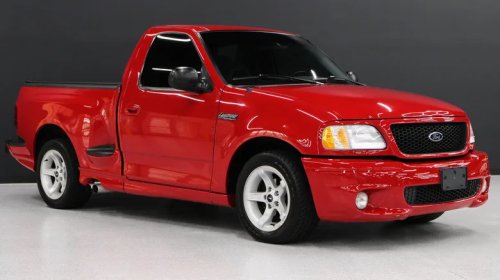
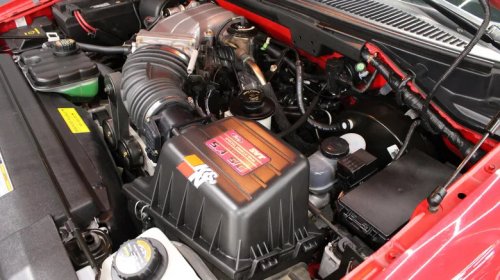
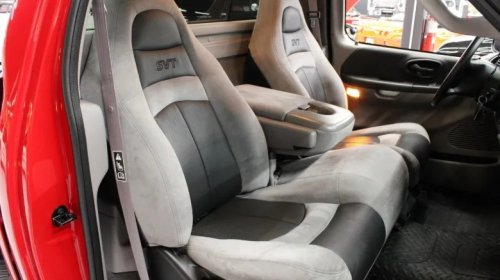
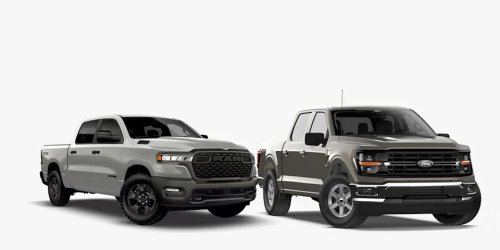
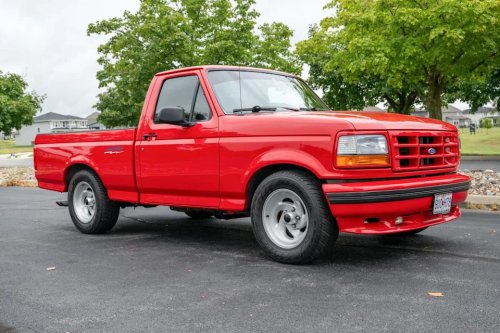
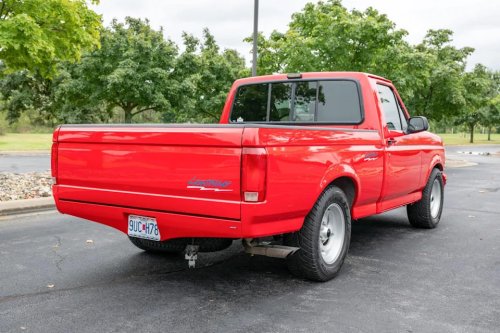
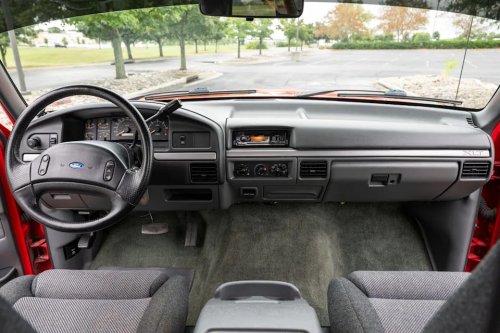
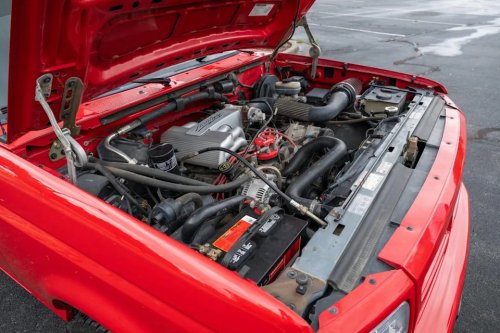
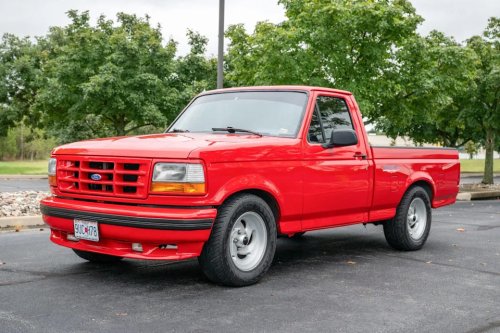
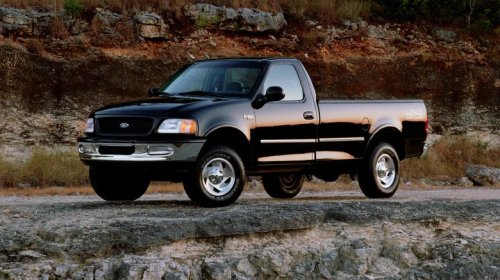
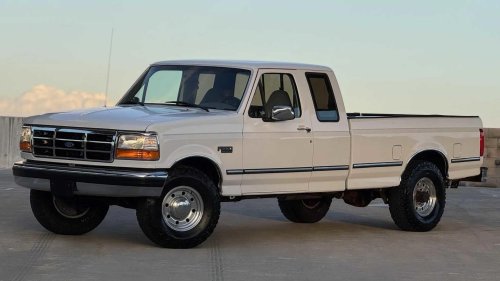
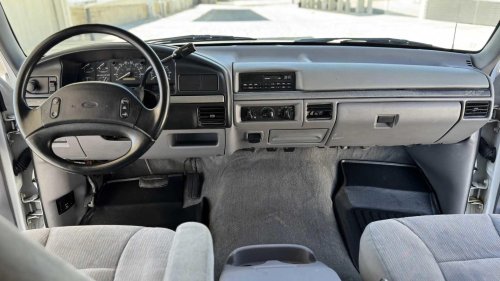
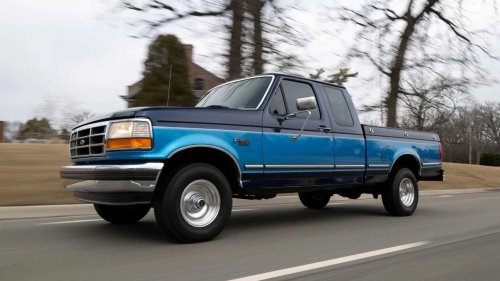
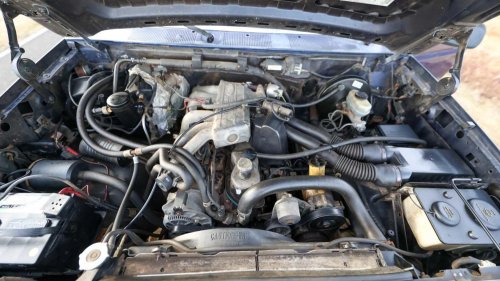
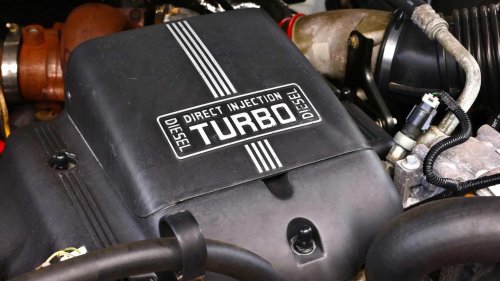
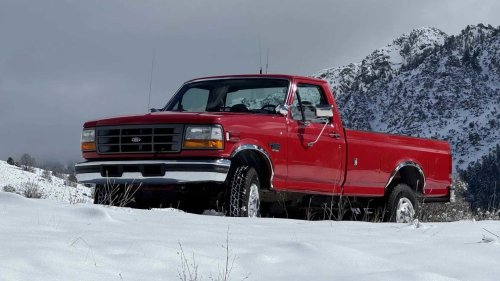
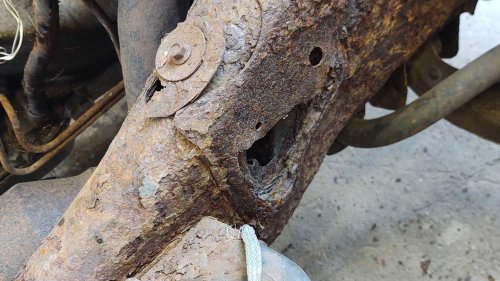
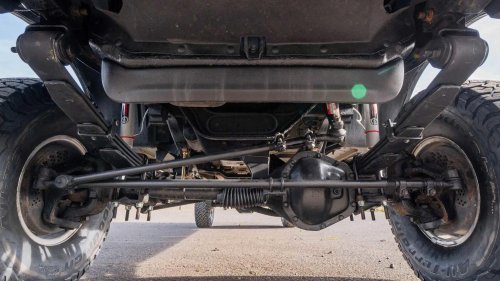
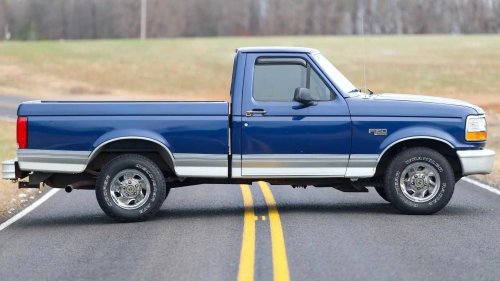
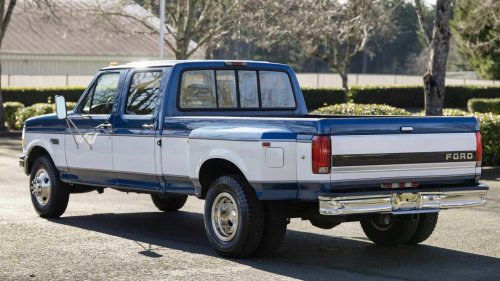
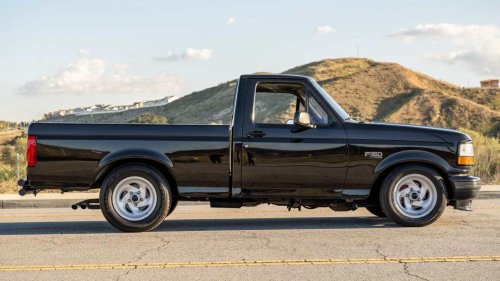
Jump LinksThe Golden Generation Of The F-SeriesPush Rod Power PrevailsTough From the Ground UpClassic Style Meets Capability And ReliabilityAffordability And Real World ValueWhat does OBS mean?What year is the OBS F-150?Is a 1997 F-150 an OBS?While today's full-size trucks like the Ford F-150 and the Ram 1500 push boundaries with advanced technology, turbocharged power and luxury features, one classic truck continues to capture the hearts of enthusiasts and truck buyers. The OBS F-150 and its bigger brothers remain popular with truck buyers even though they haven't been in production for 30 years.These old body style trucks represent the last era of simple, rugged, no-frills pickup trucks. With modern trucks becoming increasingly powerful and user-friendly, they are also complex and expensive. The question remains: how is the classic OBS Ford F-Series still a popular choice in 2026?The new truck MSRP may be different depending on location. Prices for pre-owned OBS Ford F-Series are dependent on age, location, mileage and overall condition. The OBS Ford Truck: Defining An Icon The Golden Generation Of The F-Series Bring A Trailer Pickup trucks have made massive changes over the decades, for better or worse. The modern-day pickup truck has morphed into a family-hauling daily driver loaded with plush interiors and tons of tech. There was a time when trucks were still viewed purely as tools for work. They were mechanically simple, and had function over-form design characteristics. The simplicity and classic lines of older trucks have not been forgotten.The OBS Ford F-Series is a great example of this phenomenon. These iconic trucks are a near perfect balance of modern mechanical reliability, timeless, and rugged design. The term 'OBS' simply stands for 'old body style,' although the definition of what an actual OBS Ford truck is may be open to interpretation. It's safe to say that the most popular OBS truck was produced between 1992 and 1997. To break it down even further, the final year for the OBS F-150 was 1996, while the F-250/F-350 maintained the old body style until 1997. Interestingly, the F-250 shared the new body style of the F-150 for one year only in 1998, until the Super Duty trucks were introduced in 1999.Bring A Trailer While the overall chassis architecture that underpinned the OBS was basically unchanged from the 1987 model year, the 1992 trucks, also referred to as the "Aero nose" trucks, have a revised front end with redesigned grill and headlights. Equally important as the classic aesthetics of the OBS trucks, are its blend of modern advancements like fuel injection, rear wheel anti-lock brakes, overdrive transmissions, and airbags. Loved by people who appreciate simplicity, the OBS F-Series trucks also lack the generous amounts of tech, large screens, and CAN Bus systems that have infiltrated late model cars and trucks. These systems are highly complex, requiring special diagnostic equipment and in-depth training to be able to understand and repair. The lack of these sophisticated user interfaces and engine control systems fuels many truck owners' desire for a truck that will simply help get a weekend project to the finish line, or be effective at the job site. Built Simple, Built Strong: The OBS Truck Reliability Story Push Rod Power Prevails Bring A TrailerModern engines heavily rely on variable valve timing, complex turbocharging systems, and direct fuel injection. In contrast, the OBS trucks were equipped with some of the most straightforward and reliable engines Ford has ever produced. These were all traditional overhead-valve, cam-in-block designs that used pushrods to actuate the valves.Bring A Trailer The base engine was the legendary 4.9-liter (300 cid) inline six-cylinder. Known for its copious low-end torque and exceptional durability, this engine earned a near-mythical reputation for racking up hundreds of thousands of miles with little more than basic maintenance. It was available across the F-150, F-250, E-Series vans, and the full-size Bronco product lines.The smallest V8 option was the 5.0 liter (302 cid) V8. This engine saw wide use in the OBS truck line up, but it was also a staple in cars like the Ford Mustang, Crown Victoria, Lincoln Town Car and the Mercury Grand Marquis. Highly capable and responsive, the 5.0-liter became one of Ford's most versatile small-block V8s.A step-up in power was the 5.8-liter (351 cid) V8. While it shared the basic architecture as the 5.0-liter, the 351 was not simply a bored or stroked version of the 5.0-liter. It featured a taller deck height, thicker cylinder walls, and reinforced main webbing for added strength. Like the 4.9-liter inline six, it was praised for strong low-end torque and was a favorite among F-250 buyers.For those needing maximum capability, Ford offered the 7.5-liter (460 cid) big block V8. This was reserved for the F-250 and F-350 trucks and the E-250 and E-350 full-size vans. This massive V8 was the top gasoline power plant and was also commonly found in E-Series-based motorhomes and other heavy-duty applications.Bring A Trailer Finally, there was the 7.3-liter Powerstroke diesel. The Powersrtroke evolved from the earlier International/Navistar 6.9-liter and 7.3-liter naturally aspirated diesel V8s. The normally aspirated 7.3-liter debuted in 1988. However, in 1994 a whole new 7.3-liter emerged, known as the Powerstoke. The new 7.3-liter Powerstroke had a turbocharger and a hydraulically actuated electronic unit injection system or simply, HEUI. The HEUI system was a huge improvement to the old indirect injection (IDI) system of the old 6.9- and 7.3-liter engines. This direct injection technology, which used high-pressure oil to fire individual injectors, dramatically improved power, efficiency, and drivability. The new Powerstroke marked a true turning point for Fords heavy-duty diesel trucks. Tough From the Ground Up Bring A Trailer Built in a time before the hydro-formed frame, the OBS trucks were designed with a 'C' section frame. Typical for the era, the C section allowed for some flex, and it kept the weight of the truck down. Later models use a hydro-formed frame which does significantly increase frame strength and torsional rigidity, but that extra strength can come at a cost. Some earlier versions of the hydro-formed frames are known for serious rust issues. The 11th generation F-150 is a prime example of just how destructive rust can be on the frame of a truck. A hydro-formed frame will trap much more water and contaminants inside, enabling conditions for severe rust to occur.Aaron Bersée/CarBuzz/Valnet The OBS Fords also used a simple yet rugged suspension set-up. For the F-150, F-250 and the rear-wheel-drive F-350 trucks, Ford's iconic twin 'I' beam set-up was used. Ford touted the twin I beam suspension to be superior to a traditional straight axle, torsion bar or short-arm-long-arm (SLA) independent front suspension (IFS). Fords unique IFS design employed two separate I-beam axles, one for each front wheel. These I beam axles would pivot independently of the truck's frame. Weight was suspended by coil springs and damping was left up to a traditional shock absorber. However, the four-wheel-drive F-250 trucks used leaf springs instead of coil springs. This setup was rugged, excellent for heavy loads, provided good ground clearance, excellent articulation for off-road driving, and was simple to maintain. Unfortunately, the twin I beam suspension did not offer the best ride, and the steering felt less refined.Bring A Trailer The heavy duty F-350 used a more traditional solid front axle with leaf spring set-up. The F-350 got the much revered Dana 60 front axle. This was a brutish front axle that was built for extreme use. Many off-road enthusiasts seek out the Dana 60 for its durability, as it is capable of taking serious abuse without failure. The leaf springs were also rated for heavy hauling, leaving much to be desired for a comfortable ride. These trucks were built with high quality components that would prove to last the lifetime of the truck, ride quality was sacrificed for rugged durability, and heavy-duty use. Why Ford OBS Trucks Are Still Loved Today Classic Style Meets Capability And Reliability Bring A Trailer One of the biggest reasons OBS Ford trucks continue to attract potential buyers is their exceptional reliability and mechanical simplicity. These trucks have straightforward engine designs and basic electronic features when compared to a late model truck. Many of these older push-rod engines are well known to run for hundreds of thousands of miles with basic maintenance. Engine components and accessories are easily accessible, and comparatively inexpensive. General repairs can mostly be performed with basic tools, avoiding the need for heavy diagnostic equipment or specialized dealer-only tools.In contrast, judging by the large number of recalls and manufacturer's technical service bulletins, the late model pickup has traded reliability and durability for cutting-edge tech and complicated drivetrains. Yes, these modern features improve efficiency, comfort and safety, but they also introduce more points of failure and higher repair costs. Affordability And Real World Value Bring A Trailer For the reasons mentioned above, the OBS F-Series trucks still offer outstanding value in today's market. With new half-ton truck prices now averaging $58,000 according to Kelley Blue Book (recent transaction data), investing in an OBS Ford truck for a mere $8,000 to $20,000 seems like a slam dunk. It's worth noting that depending on the make and model, a new truck can lose 15–20% of its original value in the first year, and 50–55% of its value after the first five years of ownership. The OBS is basically done depreciating for the most part. Depending on the condition, many OBS Ford trucks have seen appreciation in their older age. Of course, that is completely dependent on the model and condition.Ultimately, the combination of lower purchase price, affordable upkeep, and proven reliability appeal to many who may feel that the modern, feature-heavy, high-priced trucks lack the hard-working character that made pickup trucks so valuable in the first place. FAQs ford f150 lightining side black What does OBS mean? OBS stands for 'old body style.' It is the name for Ford trucks made from 1992 to 1996. What year is the OBS F-150? This is open to interpretation. Some people think that the OBS F-150 could be any truck manufactured from 1987 to 1996, while others feel that a true OBS F-150 was made from 1992 to 1996. Is a 1997 F-150 an OBS? No, 1997 is the first year for the new, curvy body style of the F-150. It was also the point where Ford started using the 4.6-liter modular V8 and the 4.2-liter Essex V6. Both were overhead camshaft engines.


















 +26 others