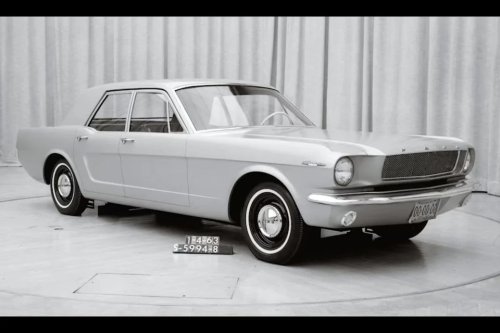
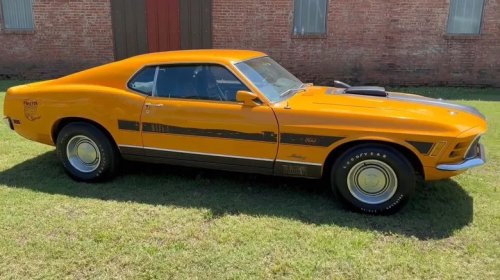
The Ford project car that introduced ideas later used across the industryAcross more than a century of experimentation, Ford has used one-off project cars to test ideas that later filtered into mass production. Some of those concepts flopped in the moment yet quietly shaped how the wider auto industry thinks about design, manufacturing, and technology. The most influential Ford experiments linked bold engineering with changing consumer expectations and then forced rivals to respond. Viewed from today’s transition to electric and software-defined vehicles, the company’s past project cars read like a rough draft of the modern automobile. They previewed new ways to build cars, package technology, and manage risk when a big bet fails in public. How a Ford experiment rewrote the rules of car making Ford’s culture of experimental projects began long before the modern idea of a “concept car.” Henry Ford used early prototypes as rolling testbeds for his obsession with efficient production. His approach to interchangeable parts and the moving assembly line allowed the company to build the Model T in volumes that were unprecedented at the time, and those methods quickly became a template for the rest of the industry, as detailed in profiles of Henry Ford. The project cars of that era were less about styling and more about proving that cars could be built the same way every time. That focus on process carried into later decades. Internal “skunkworks” projects in Dearborn treated the car as a system that could be broken down into standardized modules. This thinking anticipated modern platform strategies, where a single architecture supports sedans, crossovers, and performance models. Industry retrospectives on auto industry disrupters point to Ford’s willingness to treat manufacturing itself as a laboratory, not just the styling studio. Many experiments failed commercially, yet even missteps pushed the industry forward. The Edsel program, for example, became a textbook case of how ambitious product planning can go wrong. Analyses of why the Edsel highlight Ford’s attempt to create a new midrange brand packed with advanced features and distinctive design. The car’s commercial collapse forced Detroit to rethink market research, dealer coordination, and the risks of over-segmentation. Those lessons shaped how later project cars were scoped and marketed, not only at Ford but across rival brands. On the performance side, Ford’s experimental Mustangs in the 1960s showed how a mainstream platform could host radical hardware. Builders who dissect the 1966 Mustang point out how its relatively simple chassis became a canvas for new suspension layouts, weight distribution tricks, and powertrain swaps. That same logic underpins modern performance divisions, where halo versions of family cars test technologies that later appear in ordinary trims. Why that Ford project car still shapes current industry debates The core idea behind Ford’s most influential project cars was simple: use a single vehicle to compress years of learning about technology, manufacturing, and consumer behavior. That playbook is highly visible in today’s shift to electric vehicles and digital services. Ford’s recent EV efforts in China show how the company is again treating certain models as strategic experiments. Reporting on electric vehicles in describes how global automakers are adjusting product plans, supply chains, and partnerships to keep pace with fast-moving local competitors. In that context, a Ford project car can act as a live test of new battery chemistries, software architectures, or pricing models that might later spread to global lineups if they succeed. The environmental dimension is another link between earlier Ford experiments and current industry priorities. Where Henry Ford focused on material efficiency to cut costs, modern project cars treat sustainability as both a regulatory requirement and a selling point. Work by other automakers on high recycling rates, such as Audi’s effort to show how car parts can, illustrates how deeply the industry is rethinking materials. Ford’s own test vehicles now routinely trial recycled plastics, low-carbon steel, and battery packs designed for second-life use, continuing the tradition of using one car to probe the limits of manufacturing practice. Project cars also shape how companies think about software and automation. The industry watched closely as early self-driving prototypes, including Google’s driverless car, validated sensor suites and mapping strategies that have since become standard. Ford’s internal equivalents, even when not shown publicly, serve a similar role. They let engineers test over-the-air update systems, driver-assistance features, and data monetization schemes in a contained environment before those systems reach paying customers. What keeps Ford’s experimental heritage relevant is the way it blends technical ambition with hard lessons about the market. The Edsel story still informs how teams evaluate whether a project car’s styling and feature mix will resonate with buyers or confuse them. Mustang experiments remind planners that enthusiasts can be powerful early adopters for new hardware. Assembly line prototypes from Henry Ford’s era continue to influence how engineers think about scaling a breakthrough from a one-off to millions of units. How Ford’s next wave of project cars could influence the wider market Looking ahead, Ford’s most consequential project cars are likely to sit at the intersection of electrification, software, and sustainability. The company faces intense pressure in China, where domestic brands rapidly iterate on EV platforms and digital ecosystems. Analysts who track Ford’s EV strategy describe a competitive environment that punishes slow product cycles. That reality encourages Ford to use dedicated experimental vehicles to validate new battery suppliers, charging interfaces, and user experience concepts at speed. Future Ford project cars are also poised to become testbeds for circular economy ideas. With regulators in Europe and other regions pushing for higher recycled content and end-of-life recovery, the kind of work that shows how many components can be will likely inform Ford’s own experiments. A single prototype might combine easily separable body panels, standardized fasteners, and modular battery packs designed for quick removal, all aimed at reducing waste and improving residual value. Software-defined vehicles add another layer. Ford’s next generation of project cars can trial subscription-based features, data-driven maintenance, and semi-autonomous driving modes in a controlled way. By limiting those experiments to a specific fleet, the company can study driver behavior, pricing tolerance, and safety outcomes before those systems reach mass-market models. The experience of early autonomous programs such as Google’s prototypes suggests that public acceptance hinges as much on clear communication and predictable behavior as on technical capability. There is also a cultural dimension inside Ford. Histories of Henry Ford’s management describe an organization that could be both visionary and rigid. Modern project cars offer a way to preserve the inventive side while reducing the risk of top-down bets that ignore market signals, a problem that contributed to the Edsel’s fate. By structuring experiments with clear success metrics and rapid feedback loops, Ford can avoid repeating earlier mistakes while still pushing boundaries. For the broader industry, the stakes are larger than any single Ford model. When one of the world’s most storied automakers validates a new production technique, a novel interior layout, or an unconventional business model through a high-profile project car, competitors take notice. Some will copy the idea directly, others will adapt it to their own platforms, and a few will try to leapfrog it. The result is a faster cycle of innovation that traces back to a handful of experimental vehicles. That is why the story of a Ford project car that quietly seeded ideas across the industry matters now. It shows how a company can use a single machine to test the future of manufacturing, sustainability, and software, then spread those lessons far beyond its own showrooms. As the next generation of Ford experiments rolls out, the rest of the auto world will again be watching for clues about where the car is headed next. More from Fast Lane Only Unboxing the WWII Jeep in a Crate 15 rare Chevys collectors are quietly buying 10 underrated V8s still worth hunting down Police notice this before you even roll window down *Research for this article included AI assistance, with all final content reviewed by human editors



















 +25 others