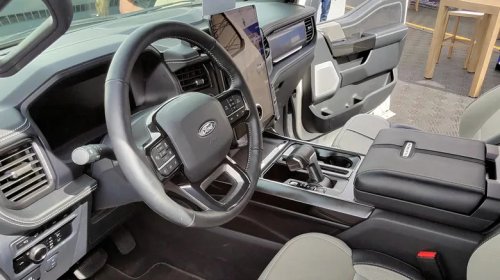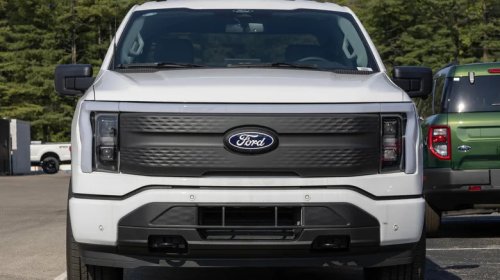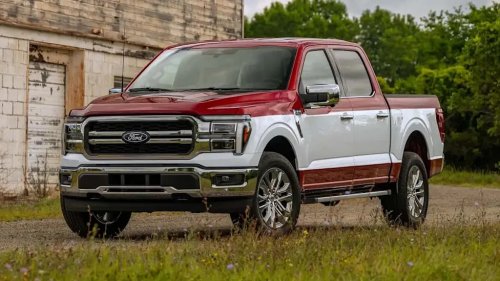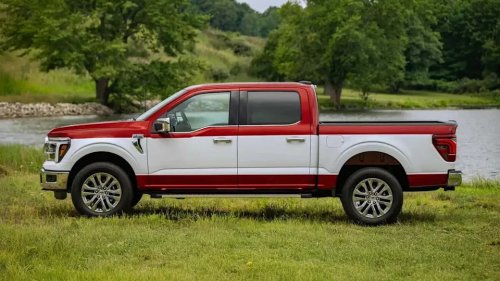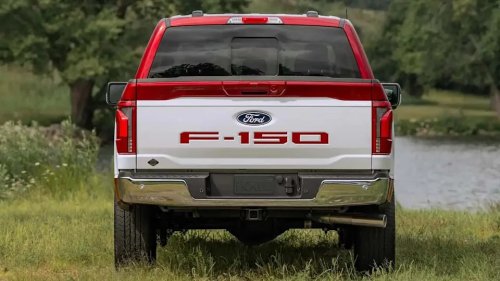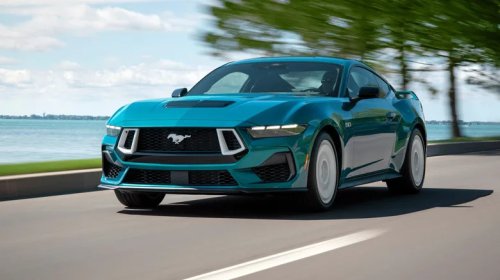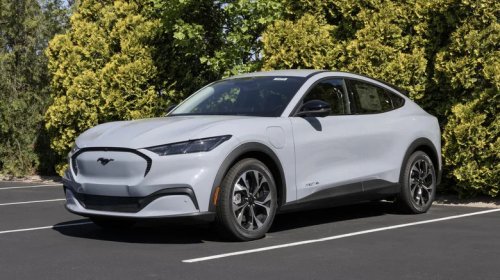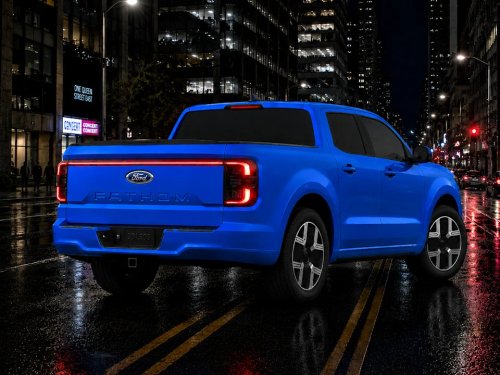
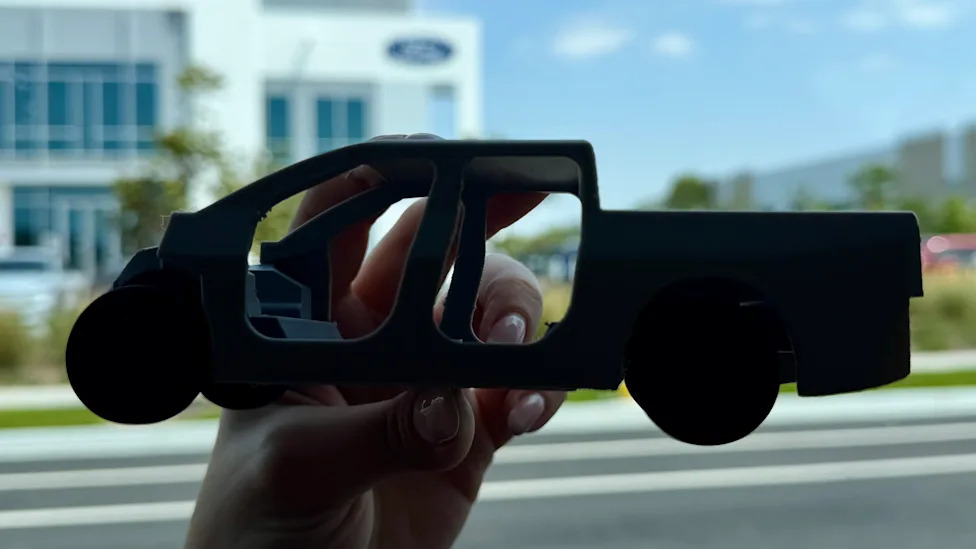



















When you buy through links on our articles, Future and its syndication partners may earn a commission.Credit: Ford / Tom's GuideWestern legacy automakers are facing a lot of pressure. Overseas, EV makers are churning out high-tech electric vehicles faster and cheaper than ever. Back home, startups like Slate Auto are grabbing attention with stripped-down $25,000 electric trucks that ditch the bells and whistles in favor of pure affordability.That leaves companies like Ford with a tough challenge: building an EV that's both high-tech and genuinely affordable.AdvertisementAdvertisementA few months ago, I toured Ford's EV Development Center in Long Beach, where engineers gave me an early look at the technology and philosophy behind what was clearly destined to become the promised low-cost electric truck. But the company was still keeping many details under wraps.Today, Ford is pulling the curtain back a little further. The Ford Fathom is a midsize electric pickup starting at $28,350. It's built on Ford's all-new Universal Electric Vehicle (UEV) Platform, a complete rethink of how the company designs EVs. If the impending launch goes according to plan, it could be exactly what Ford needs to compete with the wave of low-cost electric vehicles coming from Chinese automakers and emerging startups.What is Ford Fathom?Taking lessons learned from first-generation EVs like the F-150 Lightning and Mustang Mach-E, Ford set out with a clear mandate for the UEV platform: hit the heart of the affordable market without stripping away what drivers actually want."You have to be relentlessly focused on efficiency to be able to take cost out of a platform without taking features and content out," said Kay Hart, General Manager of Ford Model e. "It was never going to be, for us, a stripped-down vehicle. It was always going to be high-tech, adaptable, and delivering value by taking costs out where customers don't care."AdvertisementAdvertisementThat strategy seemingly puts Ford in direct contrast with Slate, the buzzy startup taking a radically different approach by cutting traditional features like power windows and built-in infotainment to reach a lower price point."It was never going to be, for us, a stripped-down vehicle."Every Fathom comes equipped with a large, high-resolution touchscreen, digital car key support, bi-directional power capability, and full compatibility with Apple CarPlay and Android Auto. It has more interior passenger volume than a Toyota RAV4 (seating five adults), complemented by both a frunk and the traditional truck bed.But the biggest surprise I saw on the spec sheet might be standard BlueCruise capability. On my own F-150, getting BlueCruise required stepping up to a more expensive trim level. (And while over-reliance on hands-free driving technology has sparked plenty of debate, I can say from experience that it's been incredibly effective for the high number of highway miles I bank.)What does Fathom mean?Rather than sticking with a standard alphanumeric code, Ford said it spent nine months searching for a name that captured both human connection and technical achievement.AdvertisementAdvertisementWhile the word 'fathom' historically referred to nautical depth or the six-foot span of a person's outstretched arms, for Ford, it represents something deeper."Fathom is really about the sense of intellectual depth and understanding, reaching a new level of innovation because you're doing something that hasn't been done before," Hart said. "We've thoroughly gotten to the bottom of it. The key thing I want customers to see is the value they're getting for the vehicle. Not just a price point, but the value and content you get for that price point."From Long Beach to LouisvilleWhen I toured Ford's Long Beach lab, the engineering team rallied around one key phrase: "the best part is no part."That effort to strip away complexity directly powers the manufacturing process. The Fathom will be the first vehicle assembled using Ford's new assembly tree manufacturing process at the Louisville Assembly Plant.AdvertisementAdvertisementInstead of following a traditional, step-by-step assembly process inside a hollow shell, Ford builds major modular components independently before bringing them together in the final stages of production. This approach is made possible by innovations like a 48-volt zonal wiring system, which eliminates roughly 4,000 feet of wiring throughout the vehicle."The beauty of having that entire team focused on one platform, one delivery... that is what is bringing the value to customers and the cost down on this platform," Hart said.Ford Fathom: What comes nextCredit: FutureIf Ford is successful in its delivery of a $28,350 EV pickup loaded with BlueCruise, bi-directional charging, and standard screens, it can reset expectations for the North American auto market. It proves that legacy manufacturers can re-engineer their supply chains and assembly lines to stand toe-to-toe with global EV rivals.Pre-orders don't open until early 2027, with customer deliveries scheduled for fall 2027. Over the next year and a half, the competitive landscape will continue to shift rapidly as international competitors and domestic startups expand.AdvertisementAdvertisementWhat's more, pulling off 48-volt zonal hardware, large screens, and hands-free driving technology at a sub-$30,000 price point will require near-faultless supply-chain execution.But if Ford executes cleanly on its pricing and timeline promises, the Fathom could serve as the blueprint for how Western automakers survive and win the low-cost EV revolution.More from Tom's GuideI drove the Subaru Forester and Mazda CX-5 for weekThis heavy duty power bank inflates tires and jump-starts your carAudi completely redesigned the turn signal with the Q9 and SQ9