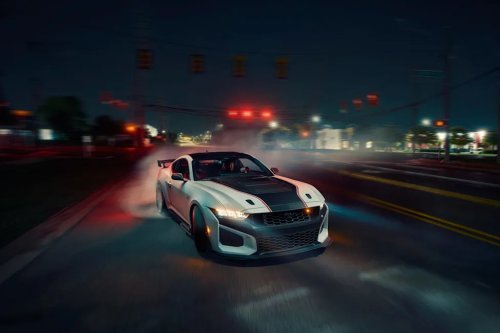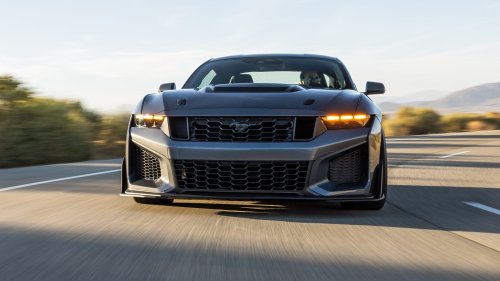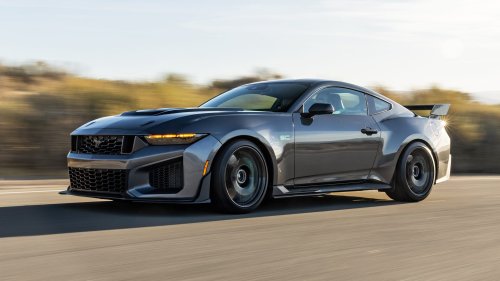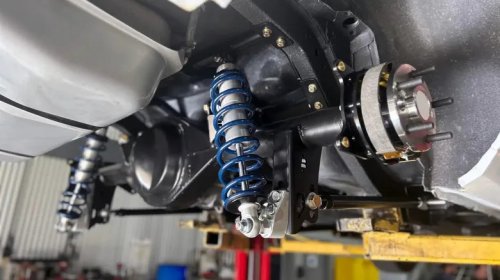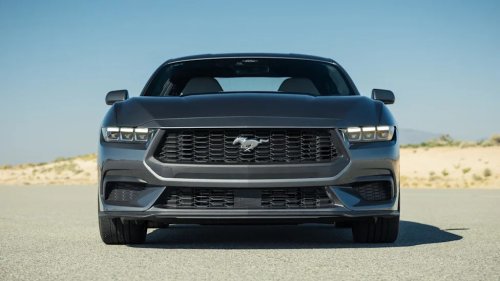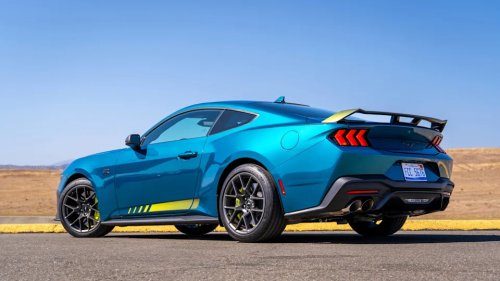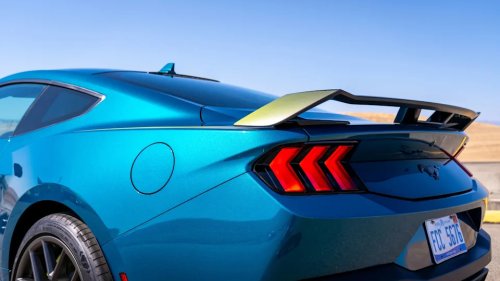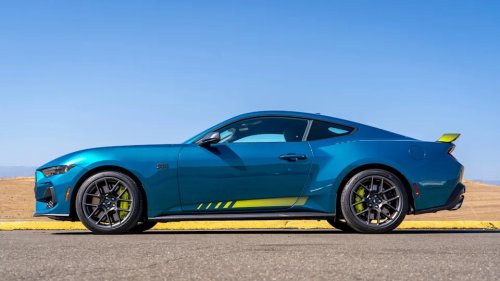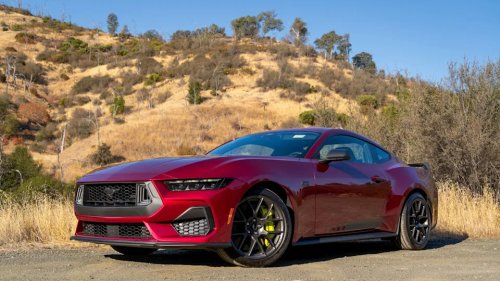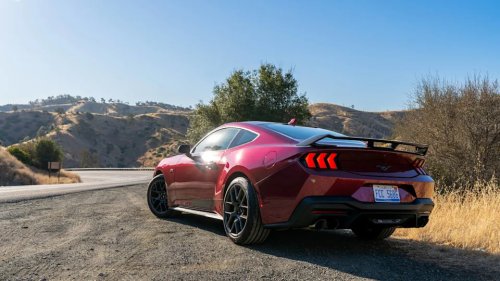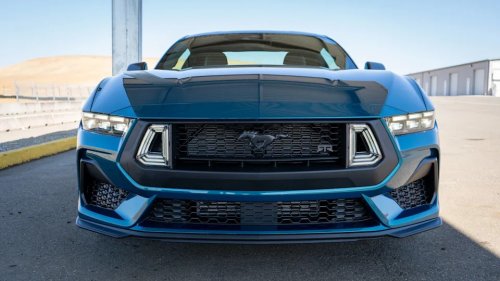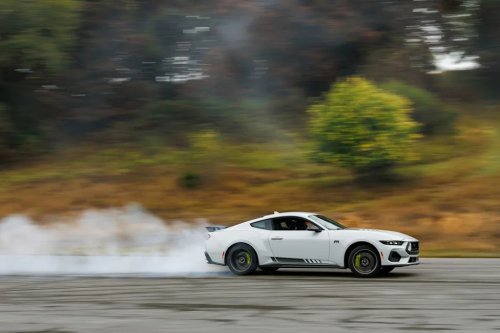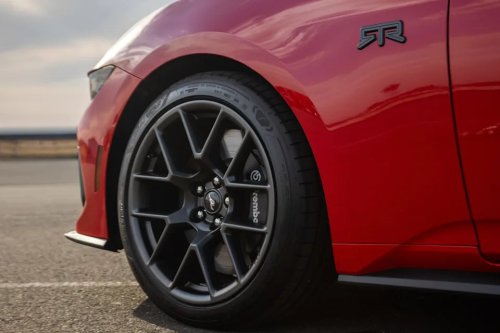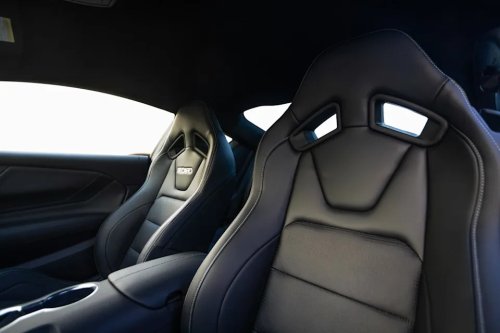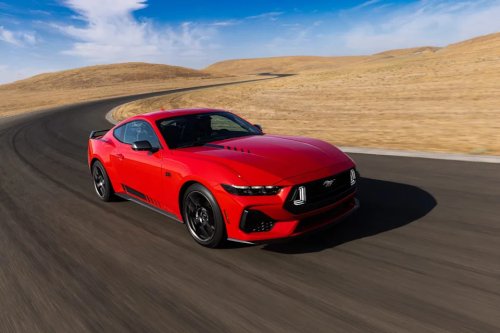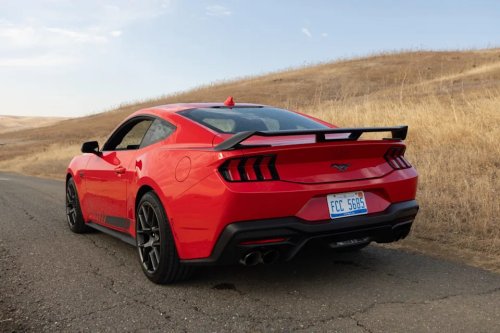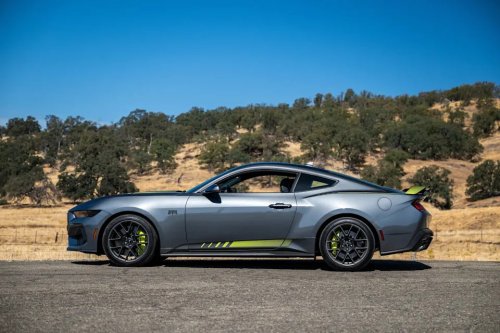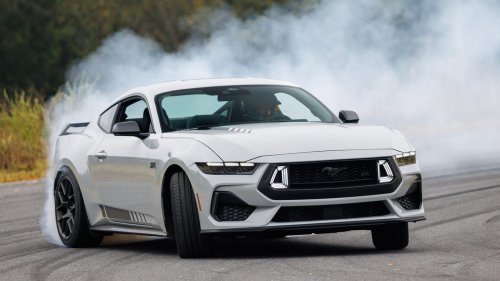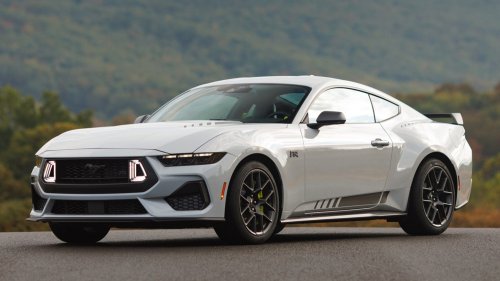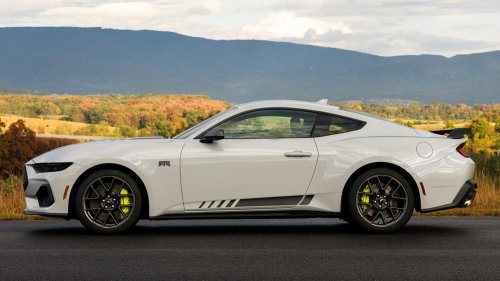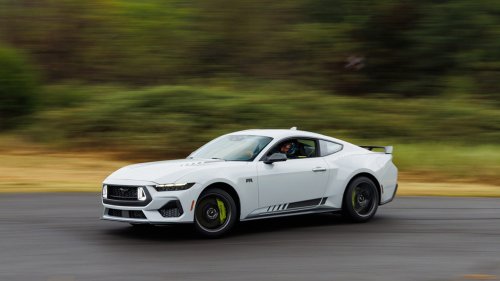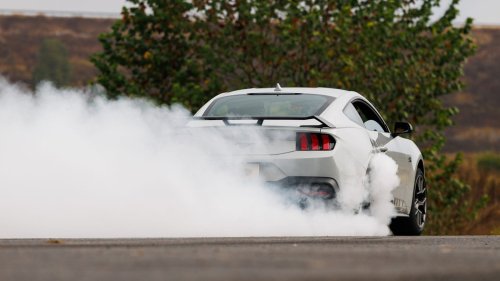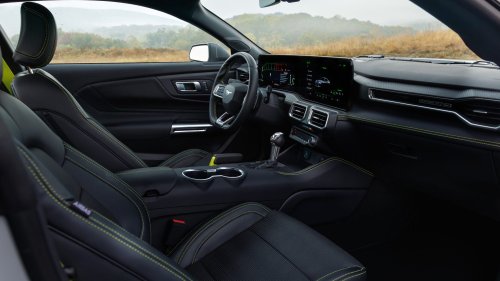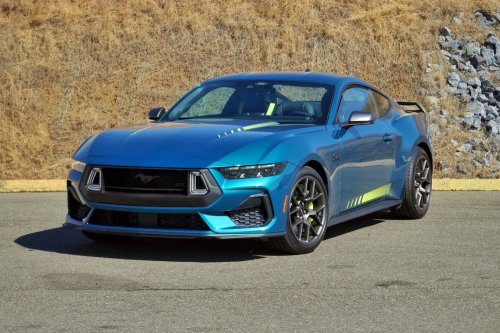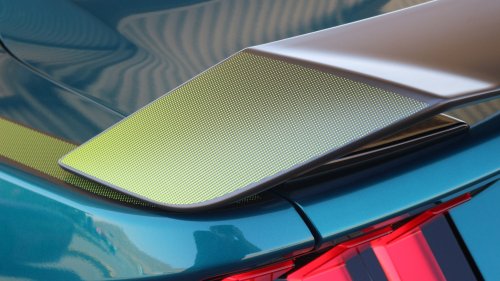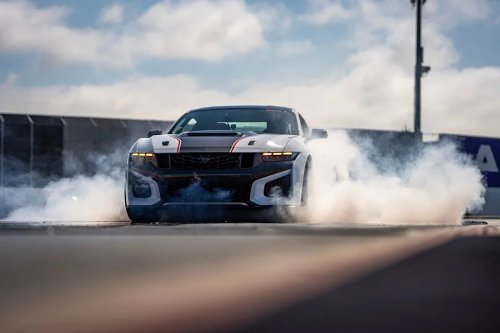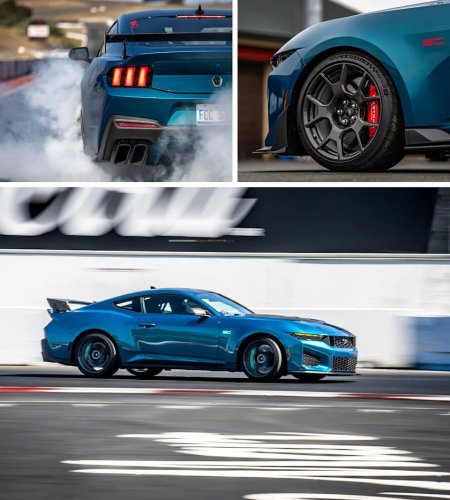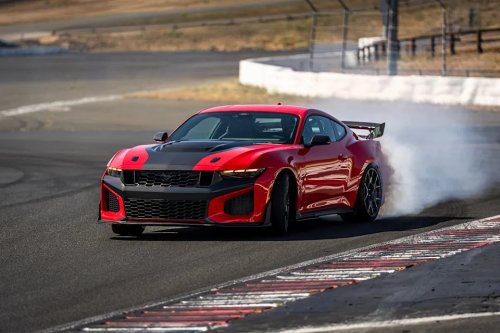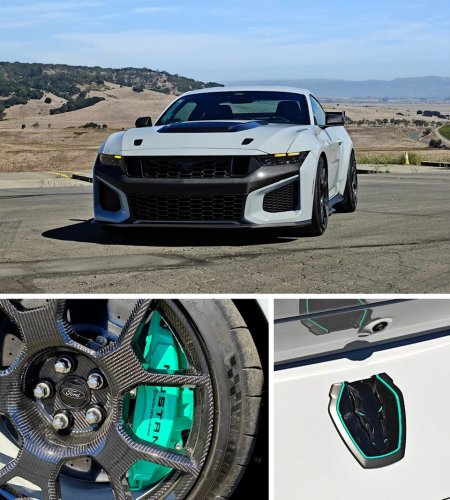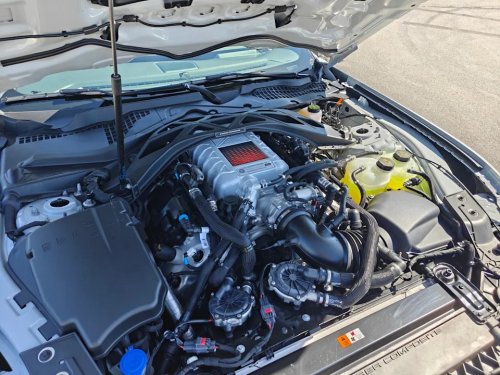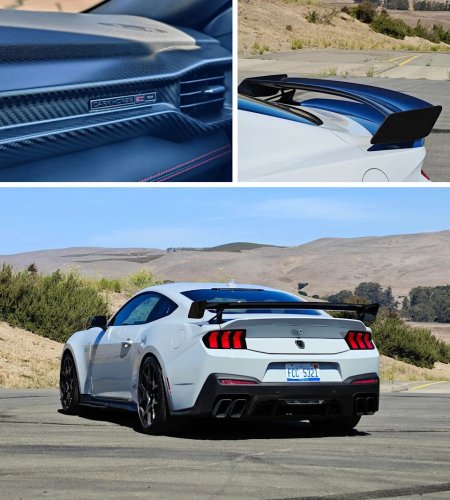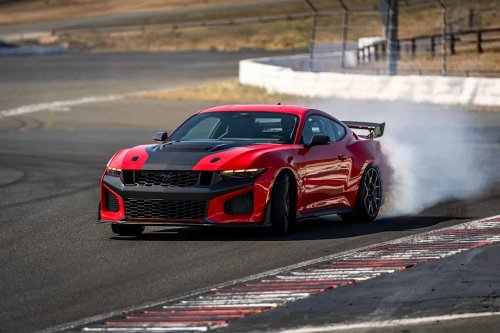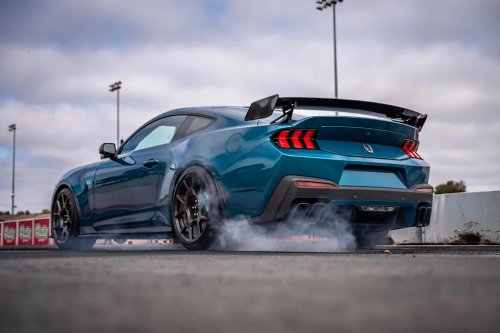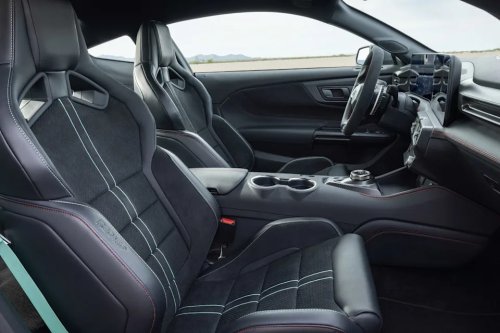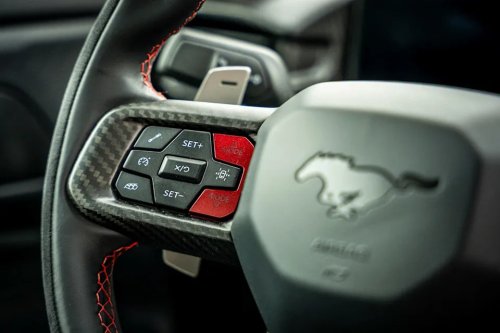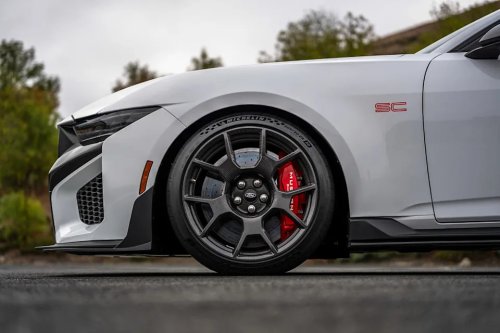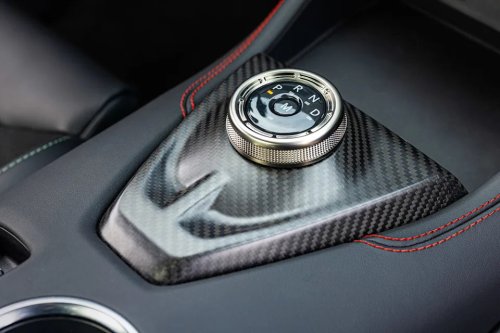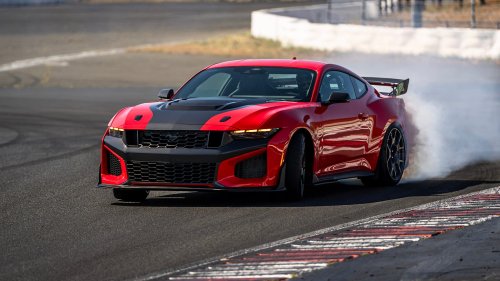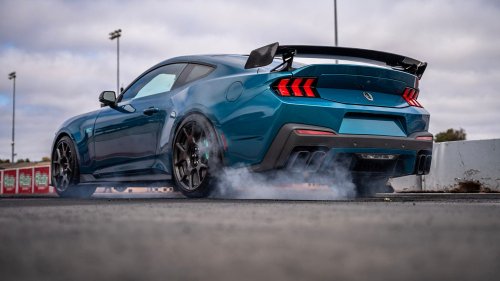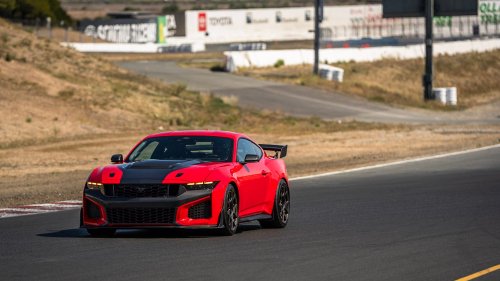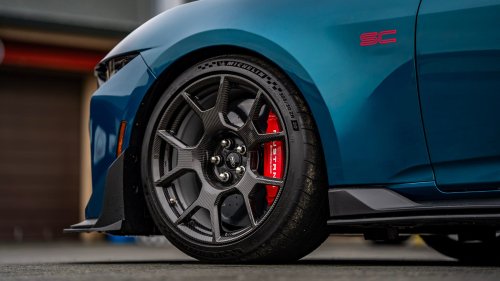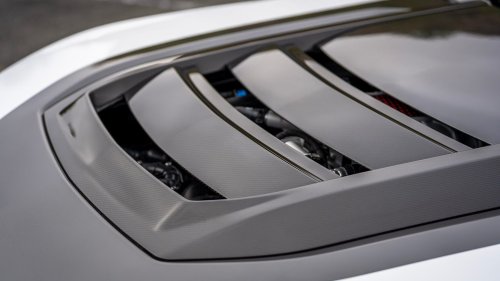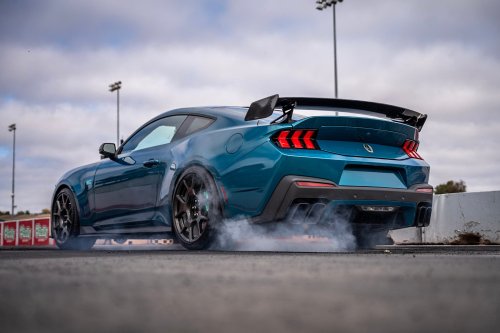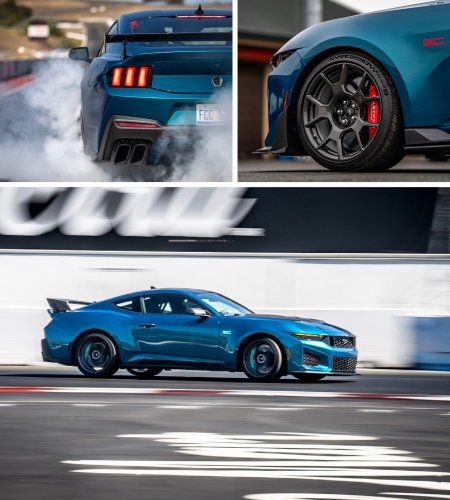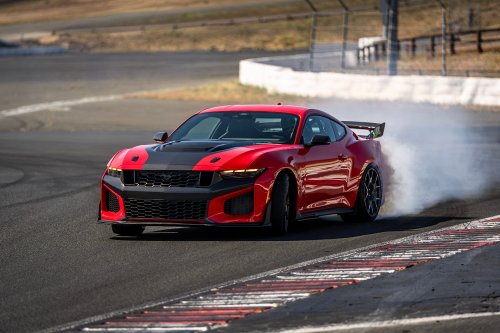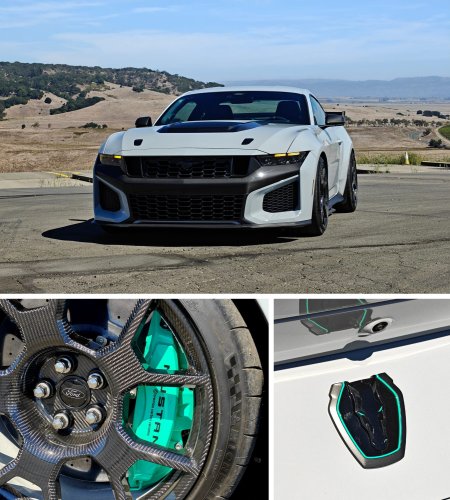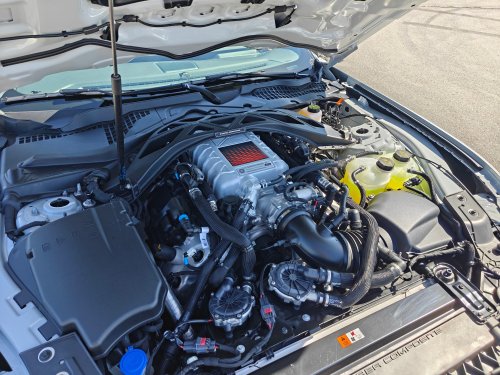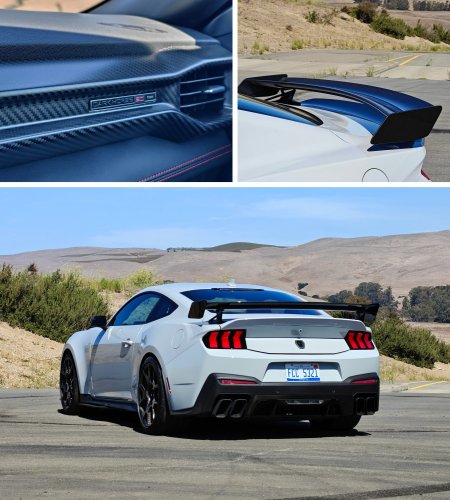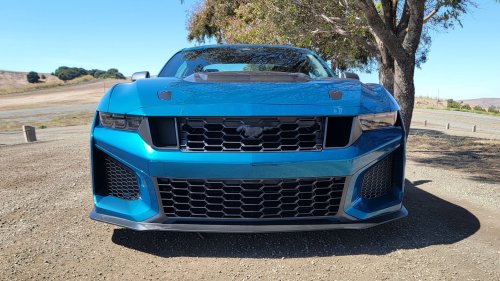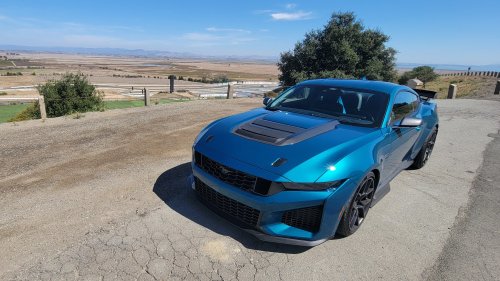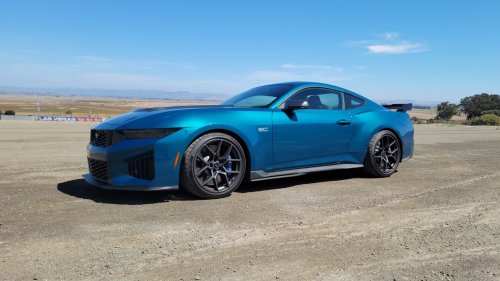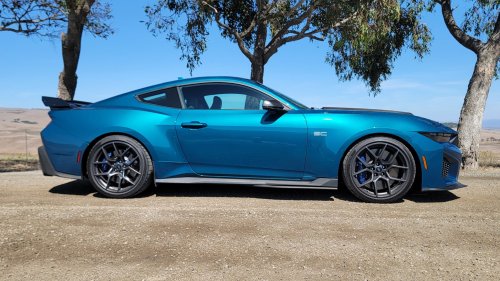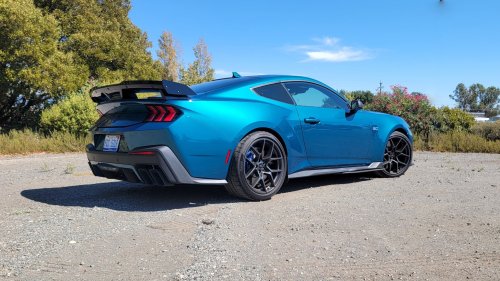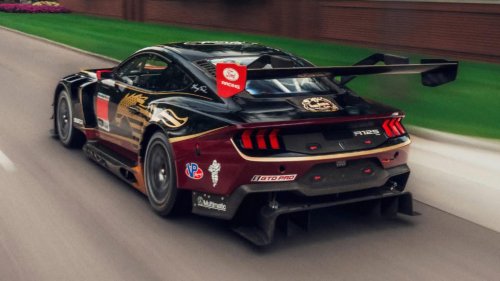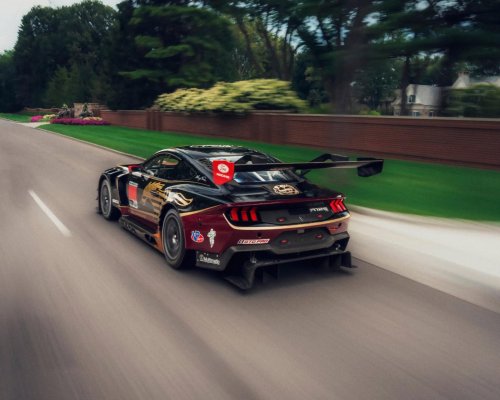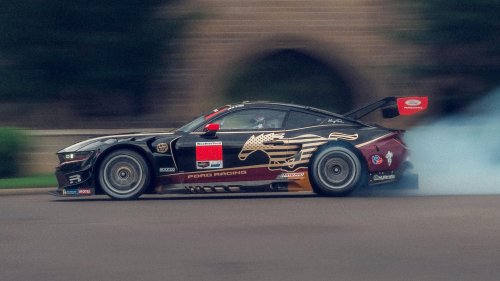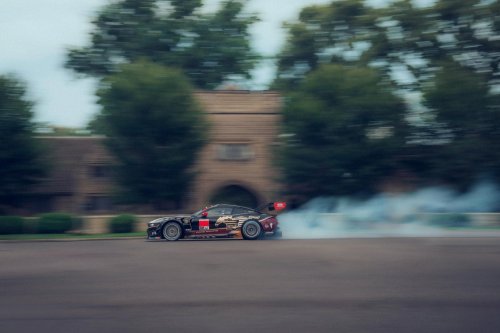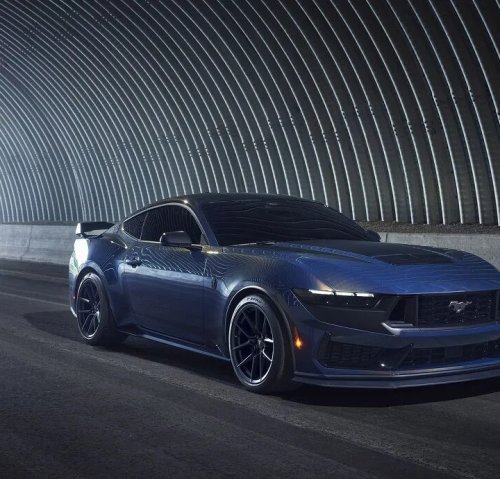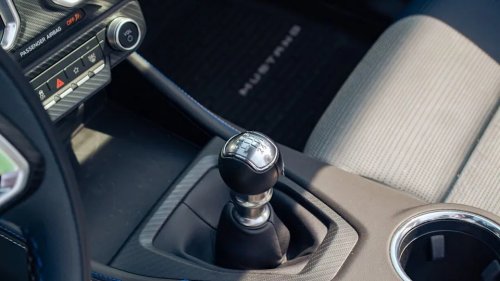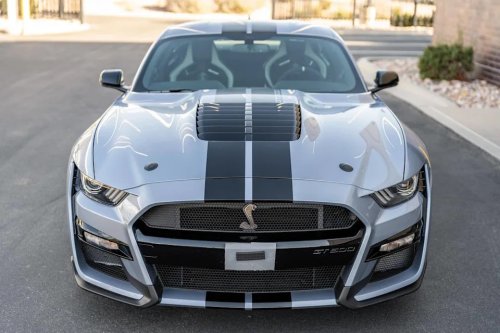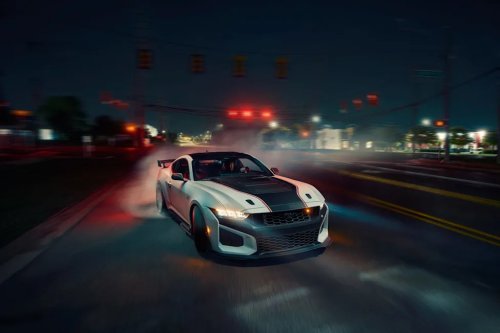
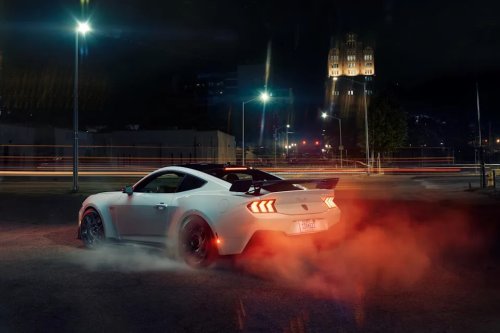
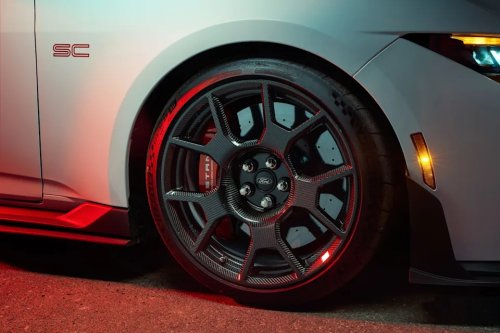
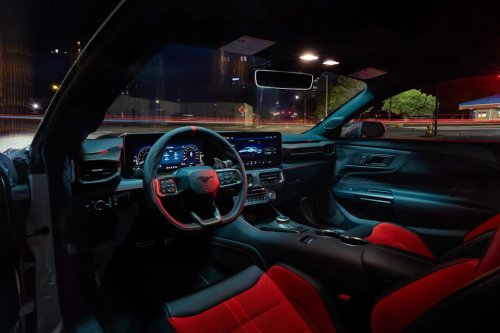
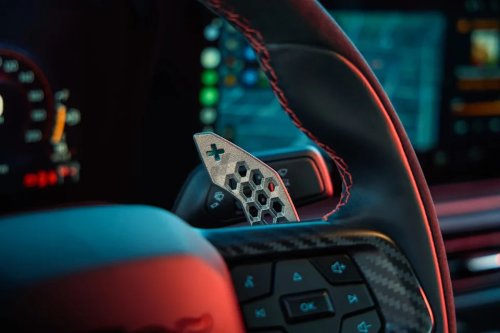
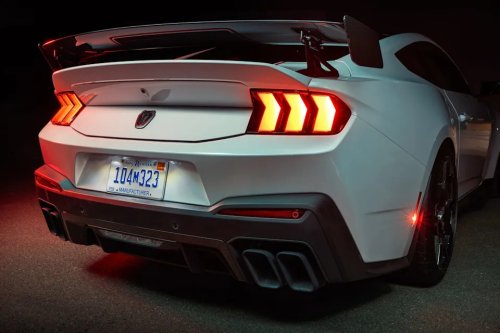
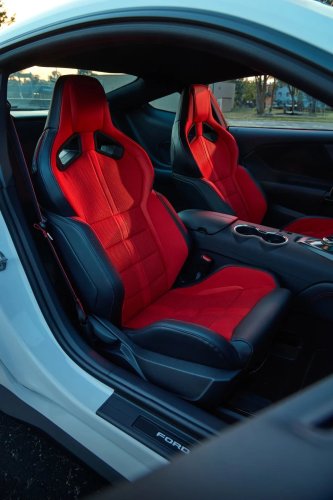
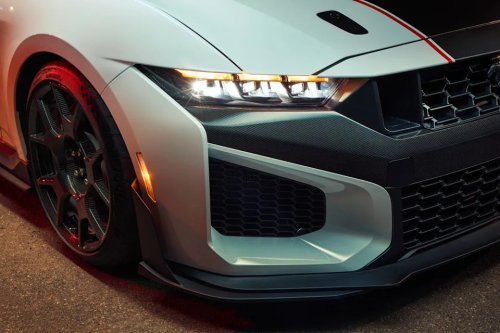
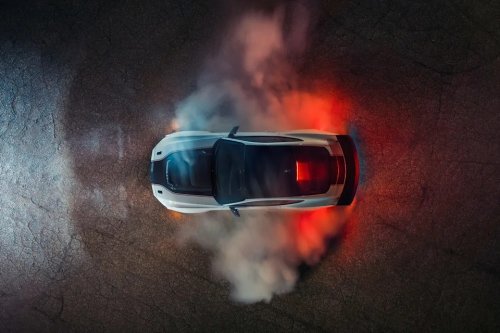
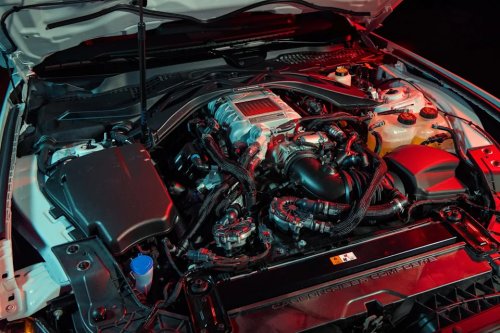



















No Show Pony: 2026 Ford Mustang Dark Horse SC TestGreg Pajo - Car and DriverFrom the November/December 2026 issue of Car and Driver.First, several important facts to consider about the new Mustang Dark Horse SC's place in the world: The Mustang GT3 race car that runs in the IMSA GTD and GTD Pro categories has roughly 550 horsepower, depending on which way the balance-of-performance pendulum swings. The Mustang Dark Horse NASCAR Cup car—admittedly, a purpose-built race car that looks only a little like a Mustang—produces up to 750 horsepower at some tracks. The new Mustang Dark Horse SC makes 795 horsepower.And, to all of those car-knowledgeable folks who asked us whether the Dark Horse SC we were driving was the next Shelby GT500, the answer, for all intents and purposes, is yes.Greg Pajo - Car and DriverFord decided to drop the iconic Shelby GT500 name now that Ford Racing, the competition department, is also responsible for engineering the company's high-performance street cars. The Dark Horse SC is its first production-line effort. No one at Ford Racing denied that the SC is an evolution of the 2020–22 GT500. Far more important is that the new Dark Horse SC will leave two long black streaks of rubber on the pavement as it marks its place among the most legendary Mustangs of all time.Dark Horse SCs are available in two levels of cage-fighter aggression: base and Track Pack, which is the one we tested. Technically—and somewhat confusingly—the Track Pack option triggers the High Equipment package and vice versa; the two together contain all the track-oriented upgrades found in the SC's full-send track-attack model. All SCs feature a Predator 795-hp 5.2-liter supercharged V-8 that's virtually identical to the 815-hp Predator in the $327,960 Mustang GTD supercar [see "Where to Find 20 Horses" below for engine details]. As it did in the 760-hp GT500, the big V-8 thumper sends power through a seven-speed dual-clutch Tremec gearbox to a Torsen limited-slip differential. Transmission and rear-differential coolers come standard. A four-position active exhaust system lets this lion roar, but its lowest setting quiets the SC enough for almost peaceful highway cruising.Greg Pajo - Car and DriverWhile the SC doesn't share the over-the-top GTD's wild rear transaxle or racing-style pushrod rear suspension, the engineering team made a host of changes to the standard Mustang's chassis components for sharper handling and better track performance. The updates include revised steering knuckles, stiffer springs, upsized anti-roll bars, specific damper tuning, a magnesium front tower brace, and swapping some suspension pieces to lighter-weight materials. Ford says the standard SC's suspension is tauter than the previous GT500's; the Track Pack version's road- racing-circuit setup goes further, with springs that are roughly 15 percent stiffer than the base SC's in the front and 6 percent firmer in the rear, plus slightly stiffer anti-roll bars and recalibrated MagneRide magnetorheological dampers.Both SC versions shed speed with beefy six-piston front and four-piston rear brakes from Brembo and run 16.5-inch front and 14.6-inch rear rotors. The Track Pack car's rotors, however, are carbon-ceramic rather than iron. All SCs grab the tarmac with 305/30ZR-20 front and 315/30ZR-20 rear tires, but there are significant differences in the rolling stock. The base car wears Pirelli P Zero R summers on 11-inch-wide alloys; speccing the Track Pack gets you sticky bespoke Michelin Pilot Sport Cup 2R track tires mounted on carbon-fiber wheels that are 11.5 inches wide.Greg Pajo - Car and DriverThe Track Pack model also receives multiple aerodynamic changes to increase downforce, though Ford wouldn't share how many pounds of it the SC gains at high speed. The prominent rear wing on the standard SC is supplanted by a larger, two-position-adjustable carbon-fiber unit propped up on taller support brackets. A rear-deck ducktail underneath the blade improves the wing's efficiency. Ford supplies front-splitter wickers to help pin down the nose and a half-dozen curved underbody strakes to direct airflow under the SC's belly, but you must install those specific components yourself.Greg Pajo - Car and DriverAll SCs come thoroughly equipped with comfort, convenience, and driver-assistance features. The track version, however, swaps the standard car's heated and ventilated leather power seats for manually adjustable, deep-pocketed leather and cloth Recaro buckets. The rear seat is deleted to save a few pounds, and Alcantara sections sewn onto the steering wheel give it a racier appearance and feel.If you worry all of that go-fast gear isn't enough to make your Stang stand out from the herd of pedestrian Ford pony cars galloping out of America's rental lots, you can go all the way with the Track Pack Special Edition. Available only in Shadow Black or Oxford White paint, it's a pricey appearance package comprising a black roof, a wide painted-on racing stripe, a smattering of carbon-fiber exterior trim pieces, blazing-red Recaros, and red-striped seatbelts. Ford goes so far as to 3-D-print its special shift paddles and gear-selector ring out of titanium.Greg Pajo - Car and DriverThe Oxford White car we had for instrumented testing and racetrack work was so equipped, and there was no question about its purpose in life. This Track Pack SC is all about going fast and making a lot of noise doing it. This is no show pony.It's no surprise that a car with 795 horsepower is quick. The SC's 3.0-second 60-mph rip is impressive for a 4099-pound rear-driver with 56.1 percent of its weight on its front tires. In fact, the SC was a scant 0.2 second behind the wildly exotic GTD to 60. While the GTD's 10.6-second quarter-mile shaded the SC's 10.8-second run, the latter's 134-mph trap speed was 1 mph better. From there, the SC edges away, beating the GTD to both 150 and 170 mph by 0.4 second.As for stopping, the SC Track Pack pulls up short like it saw a ghost. The stops from 70 mph took 131 feet, while stopping from 100 mph required just 261 feet; the car bested the GTD in both metrics by 1 foot. These are supercar brake numbers. Only on the skidpad did the SC fall short of its GTD sibling and our expectations, cranking around our 300-foot-diameter pad at 1.06 g's versus the GTD's 1.17. The deficit was likely because our car's alignment wasn't adjusted to track settings, which prescribe a little more than a degree of negative camber on the front axle and about half that at the rear for increased lateral purchase.Greg Pajo - Car and DriverThat didn't stop us from heading to GingerMan Raceway for some exploratory laps, though. Our road miles revealed one of the SC's happy secrets: It's unexpectedly nice to drive around town. Track cars can be rough around the edges—not the SC.Pedaled gently, the powertrain is so easygoing and fluid that it's, well, benign. With the exhaust in its quietest of four settings, the vicious Predator V-8 is almost muted, at least until you toe into the throttle beyond about 15 percent. Then it's loud and headed to booming and magnificent 95-decibel gloriousness as the exhaust flaps open and the revs climb toward the 7400-rpm redline. Think NASCAR V-8. The seven-speed dual-clutch transmission navigates slow in-town traffic free of lurches, shudders, or ill-timed shifts; it's smoother than several such transmissions we've experienced in luxury-brand vehicles. Redline shifts are instant, accompanied by a satisfying pop.Greg Pajo - Car and DriverAt any speed, the SC feels heroically fast, of course. Snap open the throttle from rest, and the traction-control system can't keep the tires from melting in first gear. Full throttle is futile. Second gear is good for about 80 mph, so it's hard to find places to wind up the SC, except on empty stretches of open road or highway. You don't need to visit a racetrack to experience the SC's imperturbable balance and micrometer-accurate steering. Just attack an on-ramp or three. We did, repeatedly, and it's a joy.The interstate that took us toward GingerMan let the SC show off another strength: its smooth-road ride. While we don't recommend that you attempt to sip from your travel mug of morning coffee on a lumpy surface, on the better sections of interstate it's plenty comfortable. The steering has strong on-center feel and pleasant heft, and the SC arrows down the road, rarely needing anything more than tiny corrections. There's lots of road noise—35 sones (76 decibels) at 70 mph—but the interior environment is more than tolerable, and the Recaros are comfy. You won't be worn out by the time you get to the track.Good thing, too, because the SC will make you want to wear yourself out by doing as many laps as possible, as we found out at GingerMan. You can tell the Ford team developed the SC Track Pack at, among other places, Virginia International Raceway, home of our annual Lightning Lap speed fest. Switched into Track mode, with the big wing tipped up for maximum downforce—though absent the front-splitter wickers and track-suspension alignment that would maximize grip—the SC made going fast feel natural.Greg Pajo - Car and DriverWhile the SC's steering isn't as communicative as, say, a 911 GT3's, its behavior is easy to read. The car put its prodigious power to GingerMan's tarmac without so much as a tail wag. By our third and final 10-lap session, the sure-footed handling had us confident enough to turn the variable traction-control system fully off; the stability control was on in the background, but we never felt it stepping in. The brakes did their part, repeatedly burning off speed from 145 mph on the back straight and 125 mph on the start/finish straight without a hint of fade, daring us to brake later and later. The checkered flag came too soon, and the experience had us smiling the entire 140-mile drive home.We'll cop to being seduced, but at what price? The standard Dark Horse SC starts at $108,085. The Track Pack version goes for $144,585. And the full-on Track Pack Special Edition lists for a gulp-inducing $175,565.Greg Pajo - Car and DriverNo, the SC's interior environs are hardly fancier than those in a standard Mustang GT and not nearly commensurate with the price. And yes, Dark Horse SC Track Pack money will buy you some fine alternatives: a Chevrolet Corvette Z06, a Porsche 911 Carrera, or a Mercedes-AMG GT55, cars that can also deliver gut-stirring thrills.Drive the Dark Horse SC the way it was meant to be driven, and you'll love it. We do. But you've got to love Ford's pony car enough to want your pricey toy packaged in a common Mustang's body—only the knowledgeable will recognize the car for what it is. If that's how you want to spend your money, good on you. Believe us, we'll understand.Greg Pajo - Car and DriverWhere to Find 20 HorsesLook in the "mailbox slot."Ford says the Dark Horse SC's Predator 795-hp supercharged 5.2-liter V-8 is internally identical to the 815-hp engine in the GTD—aside from the latter's dry-sump lubrication system. So where do the GTD's extra 20 horses come from? Primarily from what the engineers have dubbed the "mailbox slot," an additional small rectangular intake duct that they were able to plumb into the top side of the GTD's air intake box. The extra gulp of air it delivers contains enough additional oxygen to burn a little more fuel. Revisions to the GTD's exhaust system to reduce back pressure downstream of the catalysts enable the increased volume of spent gases to flow out unimpeded. Voilà! Twenty more stallions under the hood.CounterpointsWeight is the enemy of performance—or at least it used to be. Although this special Stang is a few hundred pounds lighter than the Mustang GTD, the Dark Horse SC isn't exactly a featherweight. But scythe your way down a twisty back road, and the traditional consequences of heft are dispelled by the Michelin Pilot Sport Cup 2R tires. Once you get some heat into them, they provide oodles of grip and make the Mustang more nimble and easy to hustle than its weight may suggest. The Track Pack's sticky rubber helps shrink the Dark Horse SC so effectively that Michelin could rename the tire the Pilot Sport GLP-1. —Caleb MillerThere's a lot of hubbub around the Dark Horse SC's $108,085 starting point and even more with the track equipment that brings the total to $145K. But one could argue—that one being me—that Ford has earned the right to charge an egregious amount for its hotted-up Mustang. Want a new Camaro? Tough luck. Head over to the Car and Driver Marketplace to find a used one with low miles. Sure, the Dodge Charger is back. But is it? Its return comes after a few years spent on the couch, gaining weight and losing attitude. And unlike the Camaro and Charger nameplates that have come and gone over the years (okay, we blacked out during the Mustang II era), the Mustang has weathered multiple storms and continued to improve. Whether you call it a muscle car or a pony car doesn't matter. The Mustang is the last one standing. —David BeardIt's 2 a.m. I'm standing with our creative director and our photographer, my hand in a bag of snacks from Trader Joe's. "Mate, that one had too much smoke," says Greg Pajo, the Kiwi behind the lens. We're doing burnouts for the issue's cover under the cloak of night. An "all call" sends seemingly every Tahoe with red and blue lights down Woodward Avenue, away from our smoke machine, and gives us time to stripe 25 inches of asphalt at a time in various parking lots. It also leads us to discover that the SC V-8's idle is violent enough to make an empty Red Bull can dance on the rear wing. Do I like the SC more than the GTD? Yeah. Would it beat the Corvette Z06 in a comparison test? Maybe not. Is it the most fun thing I've driven this year? Smells like it. —Austin Irwin➡️ Skip the lot. Let Car and Driver help you find your next car.Shop New Cars Shop Used CarsGift Guide: Best Ride-On Electric Cars for KidsFuture Cars Worth Waiting For: 2025–2029