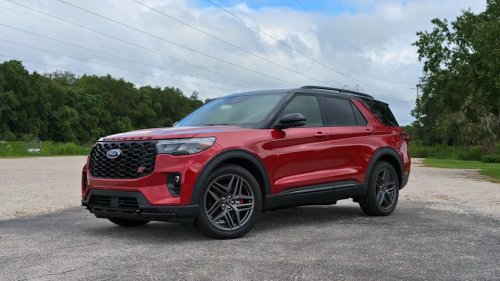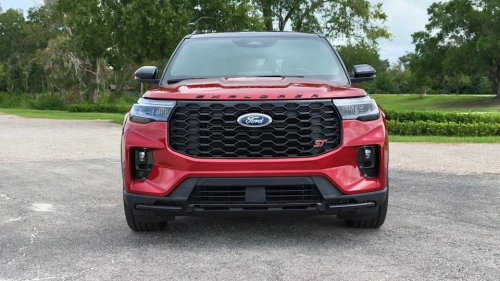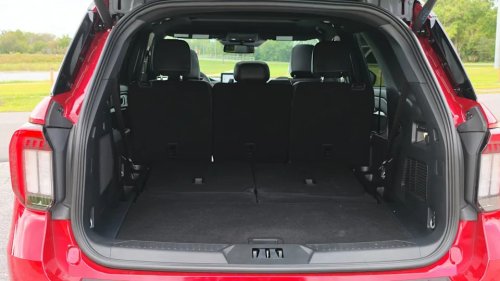
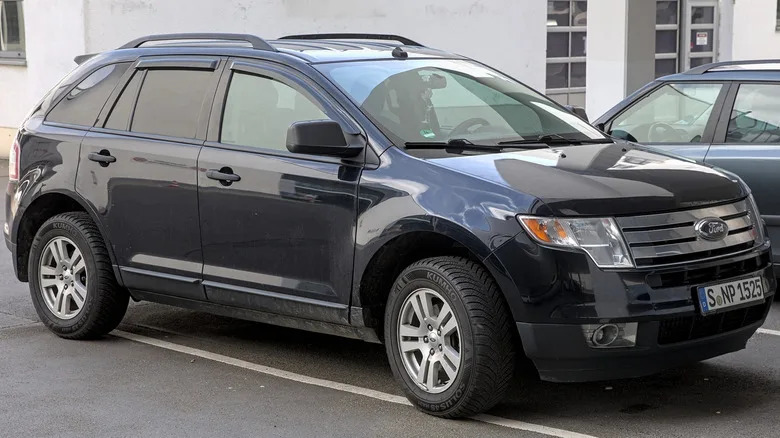



















Ford Motor Company/Wikimedia CommonsIn September 2006, Alan Mulally walked into Ford with an unusual credential for an automaker CEO — he'd spent his entire career building aircraft at Boeing. Upon his arrival, Ford had posted a $12.7 billion loss that year, and its market share had been declining for 10 years in a row – recession level losses that Ford has only recently approached since. The automaker's leadership was consumed by the personal agendas of internal executives that actively worked against the company's broader success.In the midst of this, the Ford Edge had just launched for 2007 as one of the automaker's most important new products — a crossover SUV positioned to compete against Japanese car-based utility vehicles like the RAV4 that continues to sell faster than Toyota can build them. Consumer Reports' verdict on the Edge was measured but critical. Ride quality was acceptable — if not a bit dull. The overall interior was a key deficiency for the Edge, and the liftgate release button wasn't favorable. As a result, it did not receive high praise overall.Mulally's response was not to dispute the findings or send a PR team. He gathered a group of Ford engineers and took them directly to Consumer Reports' test facility in Connecticut to face the criticism firsthand. Consumer Reports, the organization whose annual ratings shape purchase decisions for millions of buyers, was about to deliver its verdict on the Edge. Mulally chose to bring his engineers to the organization's complex to hear that verdict without any organizational filtering between the criticism and the people responsible for fixing it. He walked straight in, sat the team down, and made them listen.A critical responseAlexander-93/Wikimedia CommonsWhat happened at the Consumer Reports facility was telling. Ford's engineers, confronted with test results that contradicted their own assessments, began explaining their design decisions – defending themselves to the testers rather than absorbing the information. Mulally intervened. He told his senior engineers that they were there to understand the test results, not to argue against them. Write it down, he said, and figure out what to fix.The episode illustrated the cultural problem Mulally was trying to solve. Ford had executives who were skilled at explaining away bad news rather than acknowledging it. His weekly business plan review meetings — held in a space at the Dearborn headquarters known as the Thunderbird Room — were designed specifically to surface problems rather than bury them.The 2015 Edge — which debuted eight years after the model Mulally walked into Consumer Reports to defend — was noted as deserving of most improved status by the publication and moved to the top of the midsized SUV ratings. The gap between those two reviews is a reasonable measure of what changed – and how it shaped Ford's current lineup, which includes models like the Mustang Dark Horse SC convertible with 795 horsepower.Want more like this? Join the Jalopnik newsletter to get the latest auto news sent straight to your inbox, and follow us or add us as a preferred search source on Google.