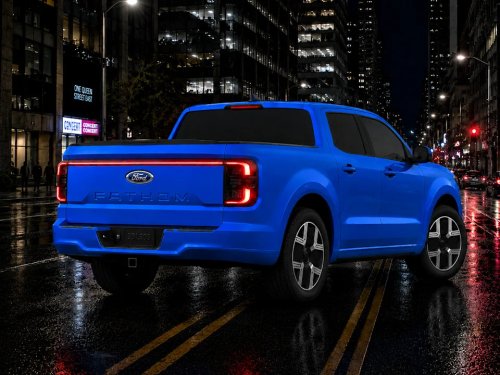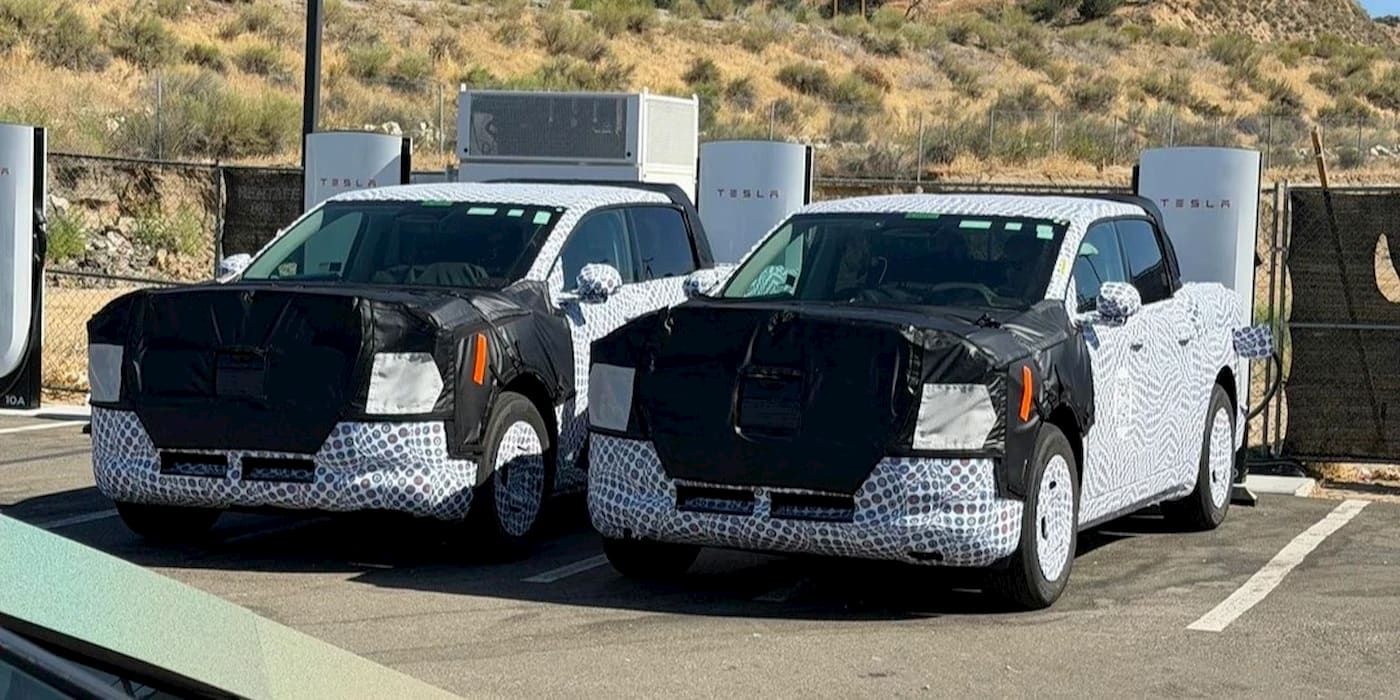


















Ford announced the name and price of its most important electric vehicle in years on Thursday: an electric pickup called the Fathom that starts at $28,350. It’s the first vehicle on Ford’s new Universal EV Platform, and the company is hitting that price with no federal tax credit to lean on. That’s the whole point. What Ford confirmed Ford locked in the Fathom name and the $28,350 starting price on Thursday, though that number leaves out destination (roughly $1,595) and dealer fees. Pre-orders open in early 2027, and the truck will be built at Ford’s Louisville Assembly Plant in Kentucky. Every Fathom will be “BlueCruise Capable” for hands-free highway driving, and Ford says it can send power back out to run tools or a house through bidirectional charging. Inside, Ford projects more passenger volume than a Toyota RAV4, with a large touchscreen running Apple Maps, a standard digital key, and both Apple CarPlay and Android Auto. Advertisement - scroll for more content But there’s a catch on that headline number. The $28,350 Fathom is the standard-range version, and Ford’s roughly 300-mile target applies to a pricier extended-range trim, not the base truck. So the cheapest Fathom is expected to land well short of 300 miles. And “midsize” is generous. We reported last month that Ford effectively admits the truck is “small”, and that RAV4 comparison confirms it. This is a compact truck for Maverick money, not a Ranger-sized hauler. The cheapest real EV pickup in America At $28,350, the Fathom undercuts every electric pickup you can buy from a major automaker today. Ford’s own F-150 Lightning started at around $50,000 at its cheapest. The Tesla Cybertruck sits north of $70,000. Rivian’s R1T and the Chevy Silverado EV are pricier still. The one truck cheaper is the Slate Truck, the startup pickup that starts at $24,950 for 205 miles of range. But the Slate is a stripped EV with no paint and no radio at that price, from a company that hasn’t delivered a truck yet. The Fathom is a fully equipped electric pickup from the second-largest US automaker. Here’s what makes the price land. The $7,500 federal EV tax credit expired last September, and it took Slate’s “under $20,000” pitch down with it. Ford hit sub-$29K anyway, on a platform it built specifically to strip cost out of EVs. When Ford unveiled the Universal EV Platform last year, the whole pitch was a cheaper way to build electric cars. The Fathom is the proof. It also, as we’ve covered before, gives Ford a shot at the buyers gas trucks like the Maverick have owned for years — people who want a small, cheap, useful pickup and don’t care about towing a boat. Electrek’s Take The Fathom could become the most important affordable EV in America. Whether you like it or not, pickup trucks are a massive part of the auto market in the US. At this point, it’s clear that more, and cheaper, electric pickup trucks, is the main thing that can boost EV sales in the market. Ford engineered a genuinely cheaper way to build EVs and then priced the Fathom accordingly. Getting a real, BlueCruise-capable electric truck to $28,350 with the federal tax credit dead is the strongest argument yet that affordable EVs don’t need subsidies to work. They need a lower cost floor. The skepticism is earned, though. Pre-orders are still months out, deliveries won’t start until late 2027, and Ford has moved the goalposts on EV pricing and timing before. The Lightning’s repeated price hikes are the obvious example. A $28,350 starting price on a slide today is not the same as a $28,350 truck in a driveway in 18 months. But if Ford holds that number, the Fathom doesn’t just compete. It resets what a cheap EV is supposed to look like in the US. If you’re buying an EV like the Fathom, powering it with home solar can cut your driving costs to nearly zero. With electricity rates up almost 10% last year and expected to keep climbing, going solar is one of the best ways to protect yourself against rising costs. And with lease and PPA options, you can do it with zero upfront cost and start saving immediately. If you want to find the best deal, check out EnergySage. It’s a free service with hundreds of pre-vetted installers competing for your business, so you save 20 to 30% compared to going it alone. No sales calls until you pick an installer. Get your free quotes here. Stay up to date with the latest content by subscribing to Electrek on Google News. You’re reading Electrek— experts who break news about Tesla, electric vehicles, and green energy, day after day. Be sure to check out our homepage for all the latest news, and follow Electrek on Twitter, Facebook, and LinkedIn to stay in the loop. Don’t know where to start? Check out our YouTube channel for the latest reviews.