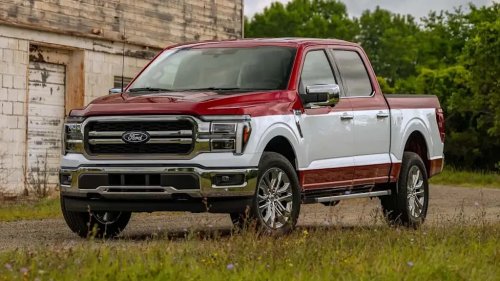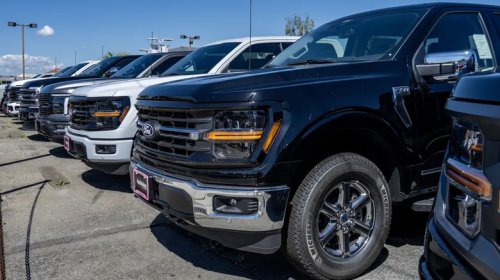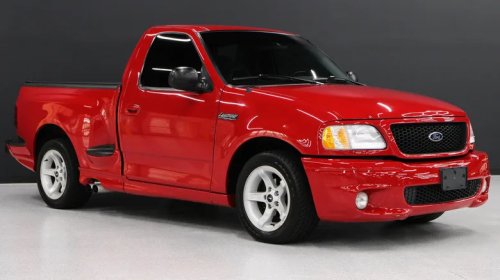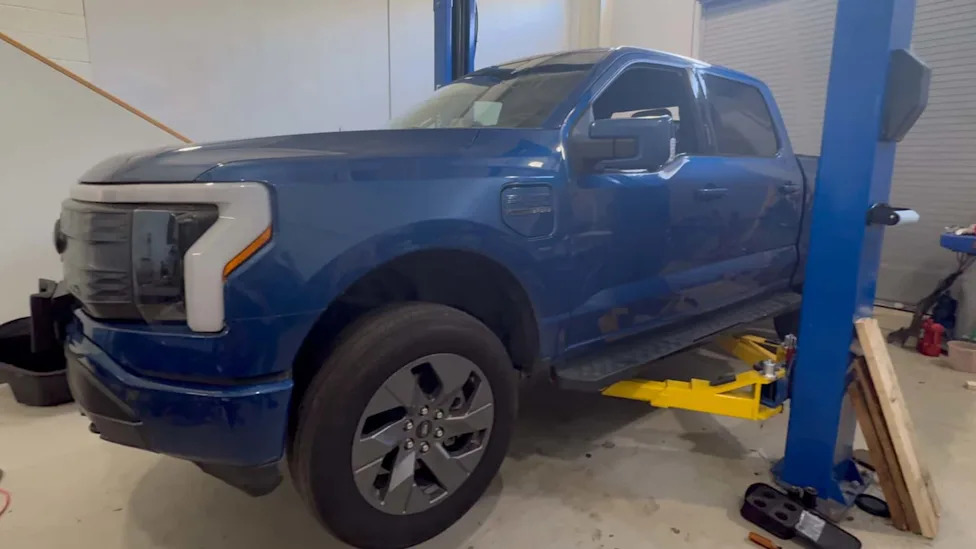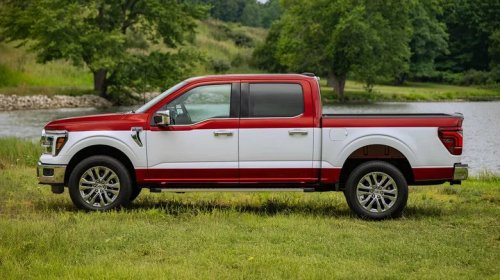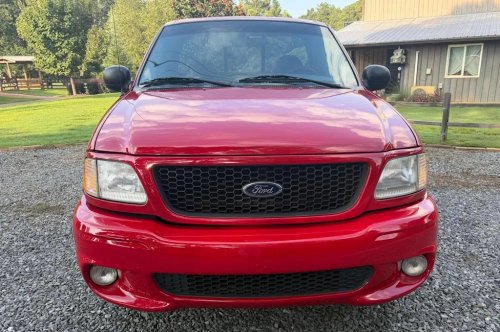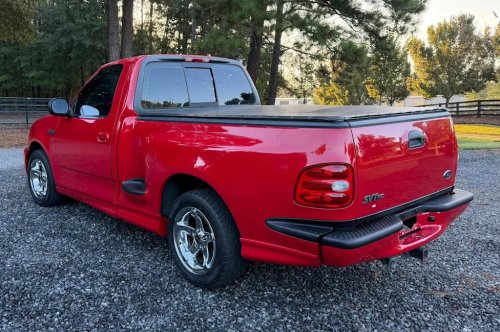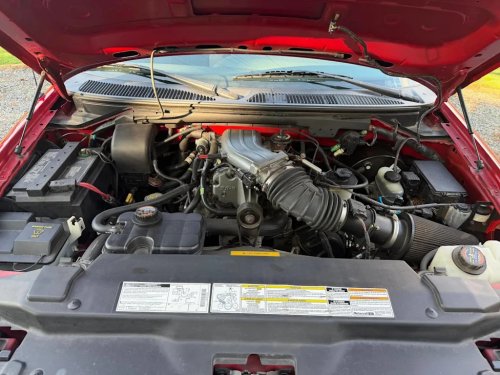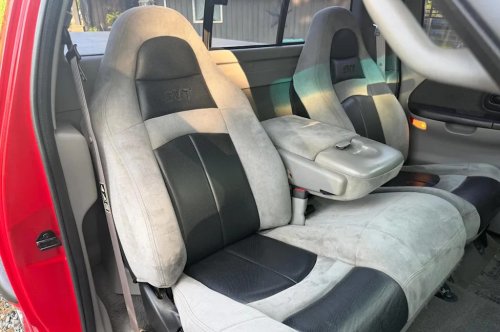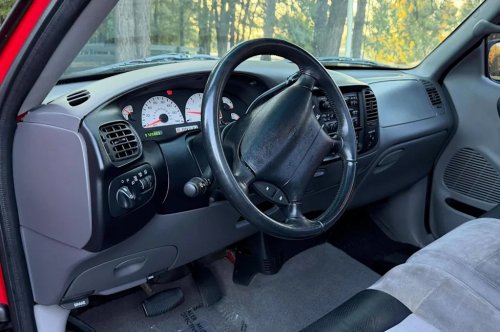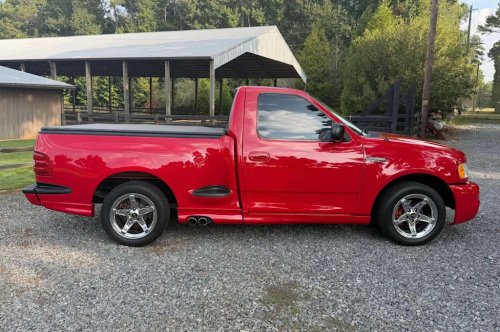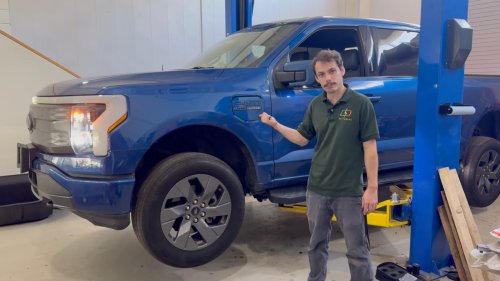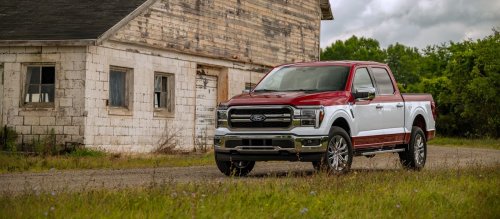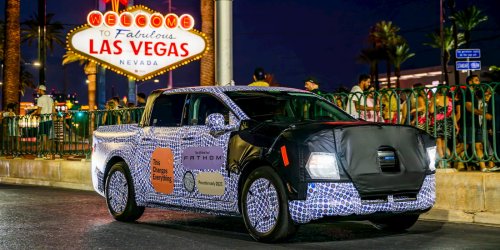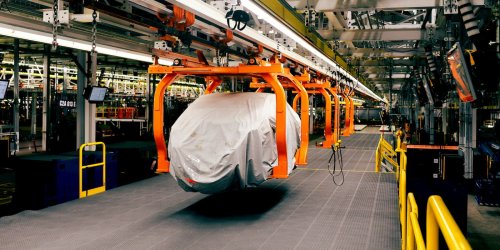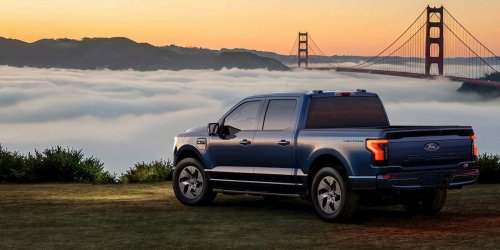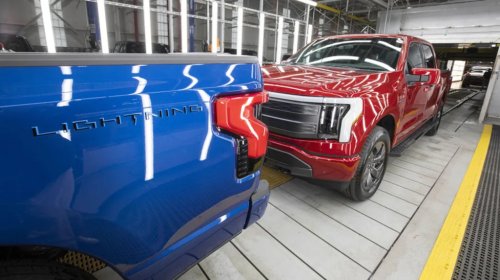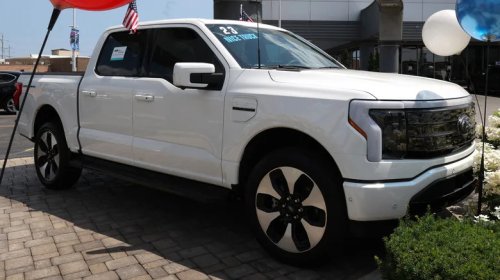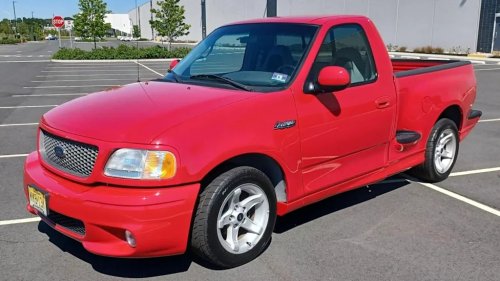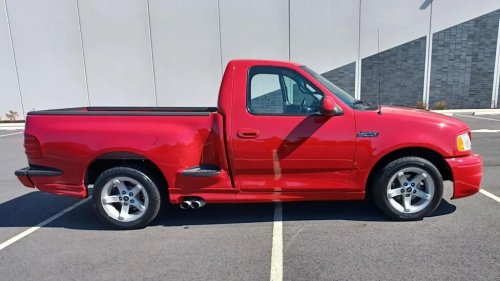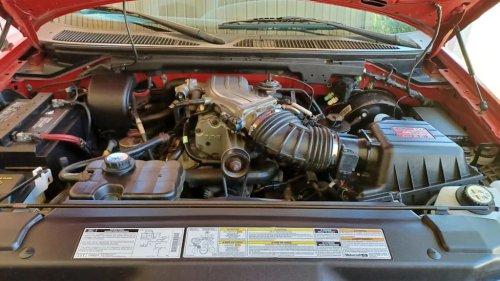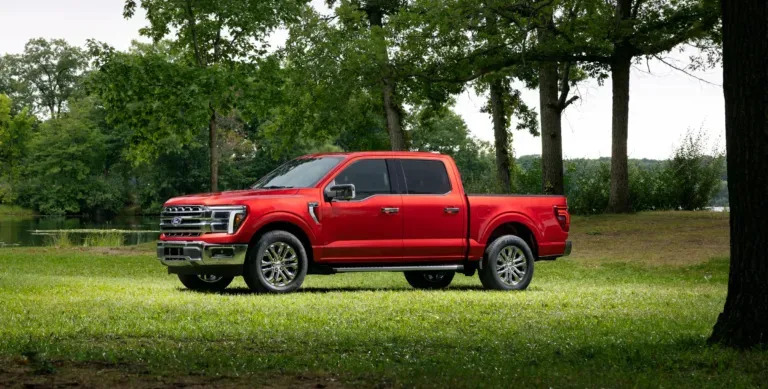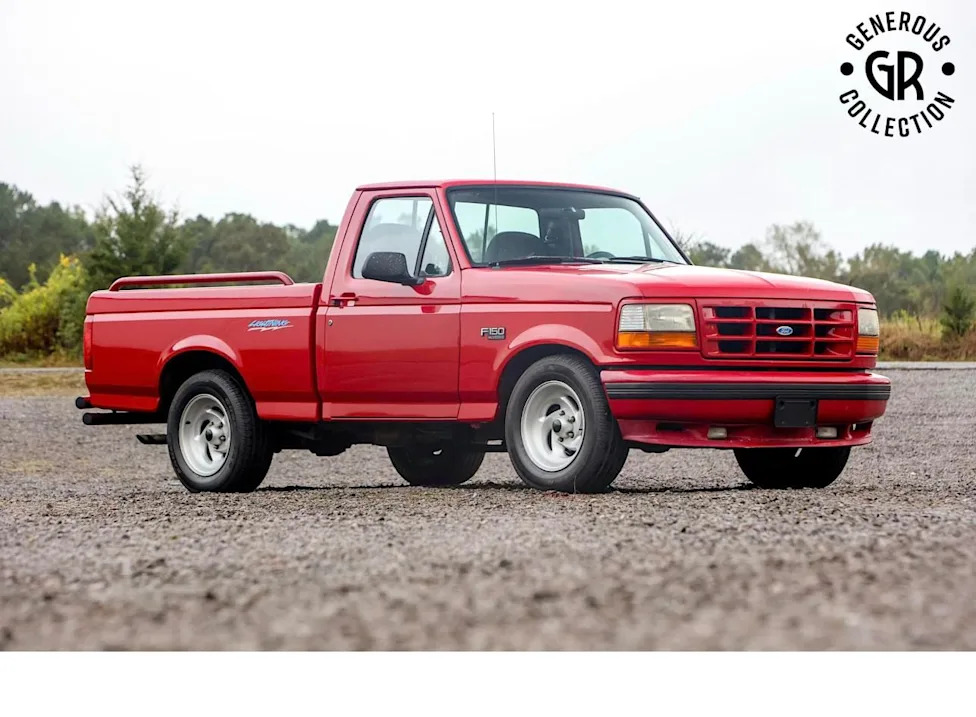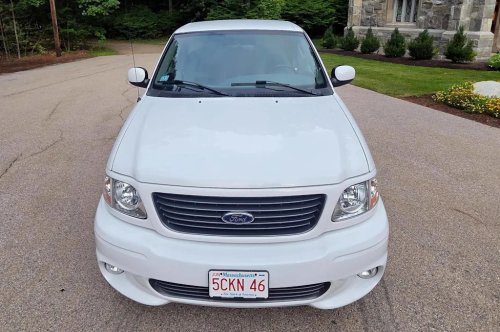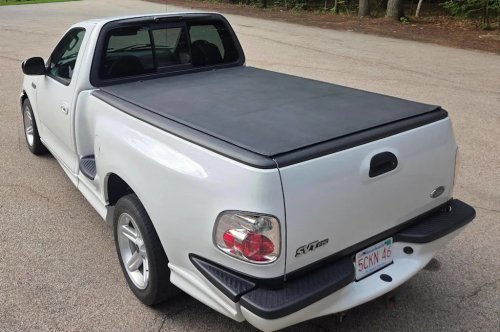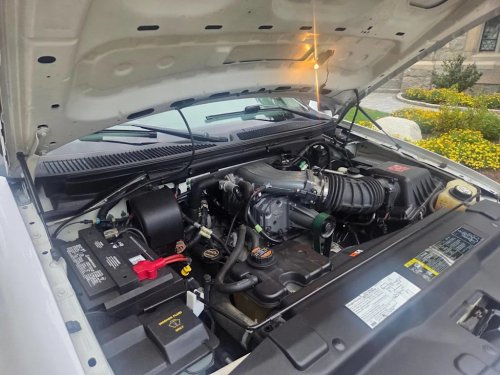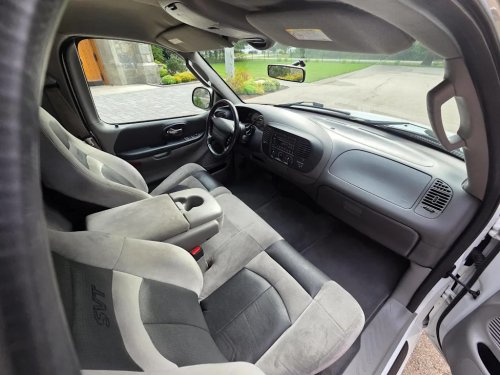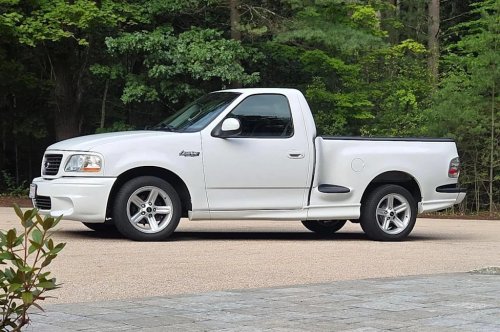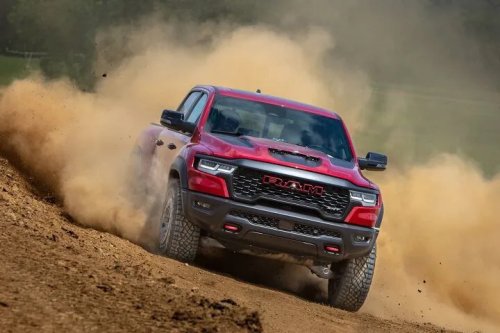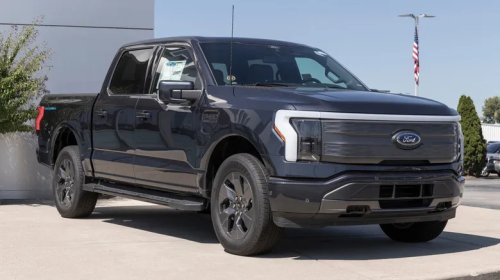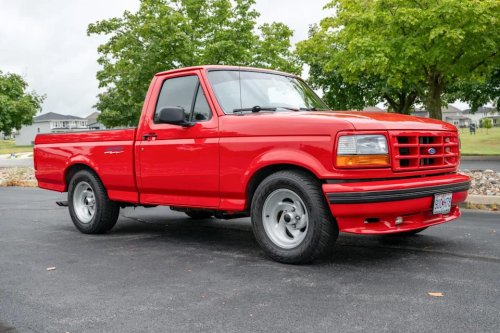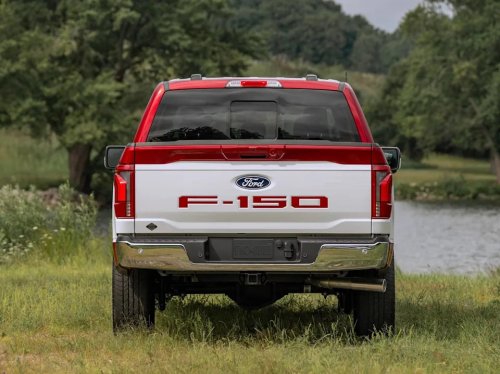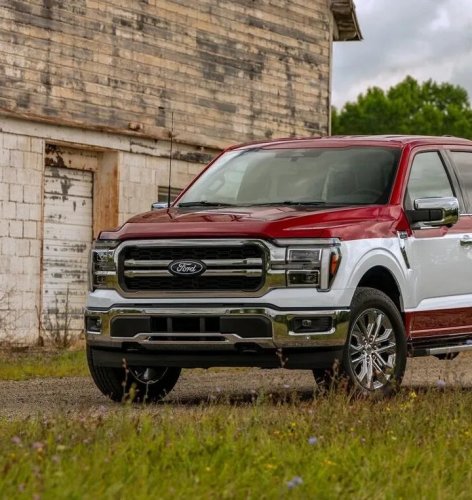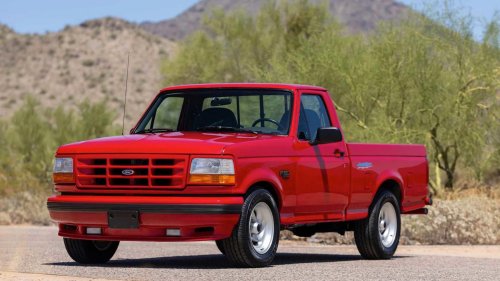
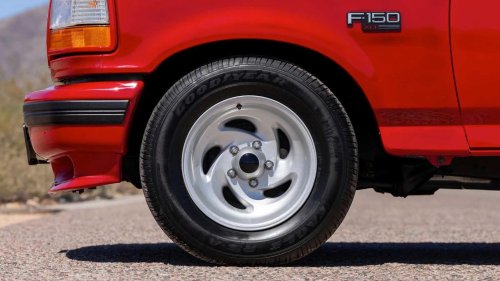
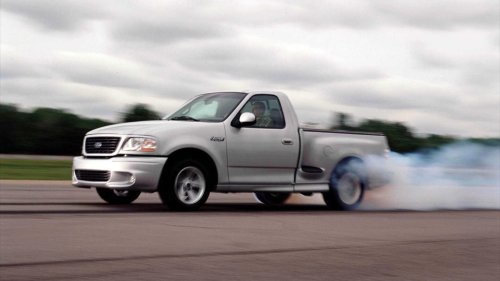
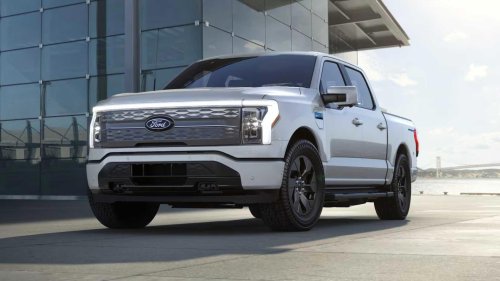
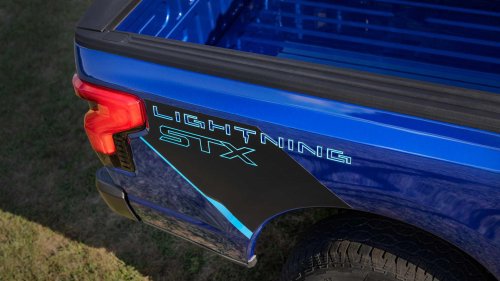



















Jump LinksFirst-Gen F-150 Lightning Fast FactsIs The Writing On The Wall For The Lightning Name?In the 1990s, Chevrolet did something the mass-market world had never seen on a large scale. It took a run-of-the-mill Chevrolet C1500 pickup truck and shoehorned a massive, 454 CID V8 under its hood. Their creation was called the Chevrolet 454SS, and with its 230-horsepower output, it was one of the fastest trucks you could buy in the 1990s, right up there with the GMC Syclone.Then, in 1993, Ford, deciding they wouldn't be out-done like that, decided to create their own sporty, go-faster pickup truck. The creation was dubbed the F-150 Lightning, and it largely followed the same recipe as Chevrolet's 454 SS. However, unlike the Chevrolet, the F-150 Lightning ended up creating a legacy that, at the time of its creation, would have been described as sci-fi nonsense. The First Ford F-150 Lightning In All Its Single-Cab Glory Bring A Trailer First-Gen F-150 Lightning Fast Facts Produced from 1993 to 1995 Approximately 11,563 first-gen Lightning models were built Utilized a tuned version of Ford's 5.8-liter V8 Its handling was tuned in part by racing legend Jackie Stewart In addition to competing with their arch-rival, Chevrolet, Ford was also looking for a way to improve the Ford F-150's reputation. To accomplish this, the team responsible for the Ford F-150 concluded that a sporty truck was in order. So, to turn their idea into reality, Ford created the now-defunct Special Vehicle Team (SVT) to help build the incoming Lightning. Work on the project began in mid-1991.By late 1992, the Ford F-150 Lightning was ready to take to the streets. Then-Ford president Ed Hagenlocker personally revealed the F-150 Lightning in an event held on December 15, 1992, and the Lightning was an immediate success. Over 150 positive articles were written about the new Lightning in newspapers across the US, and Ford made sure to secure loads of air time on American television for the Lightning. These efforts and public praise ensured that Ford's place as America's number one truck manufacturer remained.Bring A Trailer To be sure that the new Lightning was taken seriously, its handling prowess was held in high regard by the Special Vehicle Team. Handling was of such importance that Ford hired racing legend Jackie Stewart to work closely with the folks at SVT to develop the Lightning's handling and overall feel. Along with this, the SVT team fitted the Lightning with a 4:10.1 gear ratio for better acceleration, heavy-duty shocks and springs, and anti-roll bars. It was also lowered by one inch in the front and 2.5 inches in the back.Over the course of 1993, 1994, and 1995, Ford managed to shift 11,563 F-150 Lightnings. Ford then announced the Lightning would be discontinued. Not due to poor sales, but because the updated, 10th-gen F-150 was to be introduced soon, meaning the Lightning would need to be done away with. However, Ford wasn't done with the Lightning name yet, as the world would soon find out some four years later. Lightning Never Strikes The Same Place Twice... Ford ...But it did. Just five years after the demise of the first F-150 Lightning iteration, Ford decided to bring it back with a lot more oomph hiding under its hood. Along with its drastically-altered looks, the new SVT Lightning also went about things a bit differently, as well. Instead of using an F-150/F-250 hybrid chassis like the first-generation SVT Lightning did, the second-generation utilized an unaltered F-150 chassis in its entirety.Ford's Special Vehicle Team put a little bit more work into the engine than they did the rest of the truck. Unlike its naturally aspirated predecessor, the second-generation SVT Lightning came equipped with an Eaton M112 supercharger. As you can imagine, the addition of a supercharger gave the Lightning some serious performance credentials.In addition to its forced induction, SVT also outfitted the second-gen Lightning with kit such as a 4R100 four-speed automatic transmission. It was taken out of the Ford Super Duty and installed to better cope with the power produced by the blown 5.4-liter V8. The Lightning was also lowered one inch in the front and two inches in the back to help lower its center of gravity and improve handling. Larger, 18-inch wheels were fitted, along with directional tires for improved grip.Over the span of five years, the second-gen Ford F-150 SVT Lightning sold relatively well. In the end, approximately 28,124 examples were produced and sold before it was axed in 2004. The Lightning Was Resurrected Again For A Different Purpose Ford After an 18-year hiatus, the automotive world was alerted to the third return of the Lightning namesake. However, this time, things would be vastly different. The Lightnings of the past, which featured specially-tuned, roaring V8s coupled with shortened gear ratios and lightweight, single-cab bodies, would be no more. Instead, the Lightning name would now be carried forward on the proverbial back of an electric vehicle.In May 2021, the new Ford F-150 Lightning was unveiled. Hitting the market as a 2022 model year, the new Lightning looked to be positioned at an excellent point in the market. Not only would it be America's first electric pickup truck, it would also be the first electric truck produced by a legacy automaker on a massive scale in the entire world. In short, the new Lightning had quite a lot going for it, but it has to be said that the Rivian R1T beat it to the market. Ford announced several iterations of the Lightning would be made from the base-model, fleet-only "Pro" version all the way up to the top-end Platinum Black trim.Unfortunately, the current Ford F-150 Lightning has been plagued with several issues. It's been the subject of several recalls, including one which involved the Lightning's high-voltage battery pack that increased the risk of fire, although only 216 Lightnings were affected by this particular recall. It also seems to be very difficult for Ford to sell Lightnings, as many people are cooling to the idea of electric vehicles these days for a multitude of reasons. Ford later announced they halted production of the Lightning, with a stop-production order even being issued from November 18, 2024 to January 6 of 2025, in order to sort out excess inventory. The Future Of The Lightning? Ford It's always best to go out on a high note, but unfortunately, that might not be the way things end for Ford's Lightning name. The EV truck is certainly cool in its own way, with up to 580 horsepower and 775 lb-ft of torque on tap, but it certainly hasn't captured buyers in the same way the gas-powered models of old did.As a result, the Lightning will carry on into a second generation, but it will be an EREV, and not a fully electric model. Ford is basically following the same route that Ram took with the REV. The all-electric Ram has been axed, and will instead be introduced with a 3.6-liter V6 acting as a generator for two electric motors.