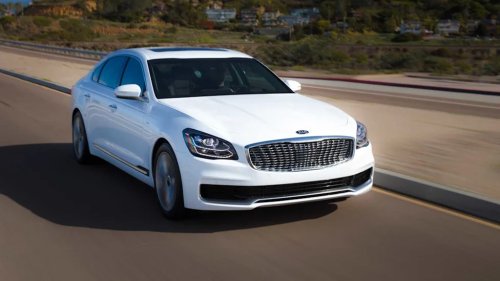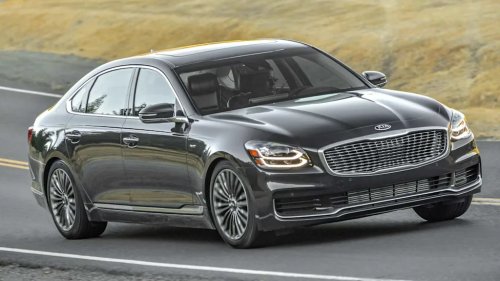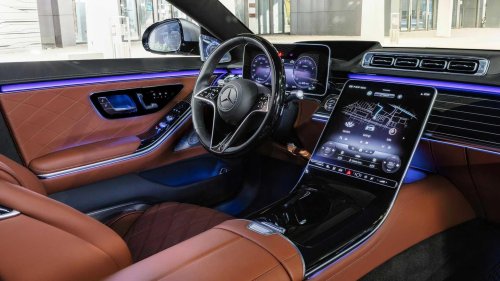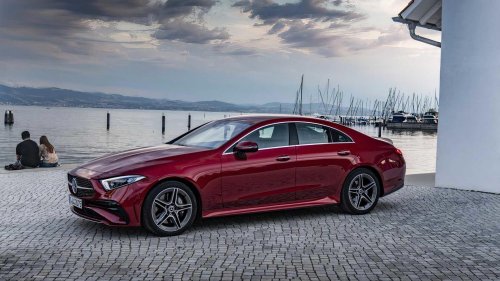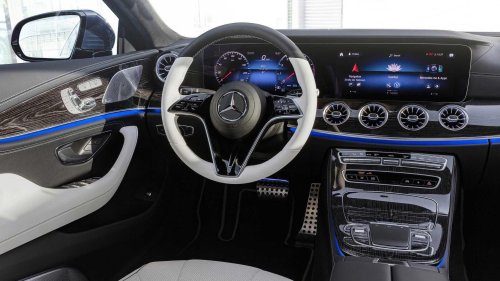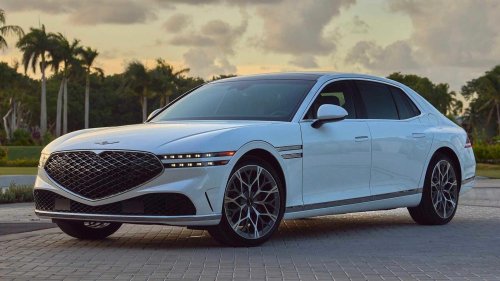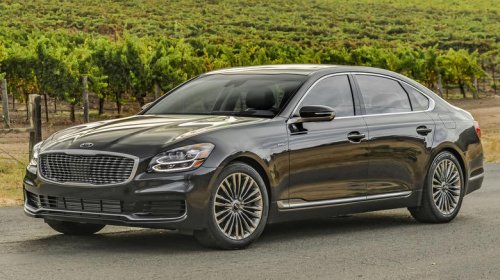
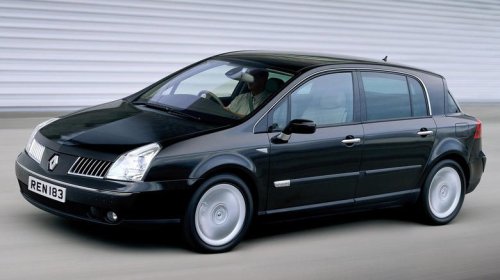
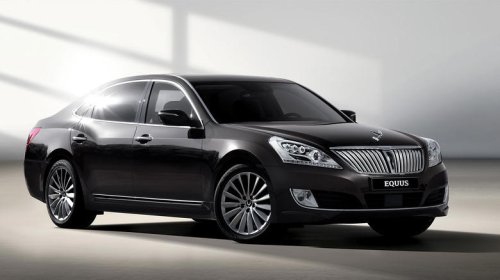
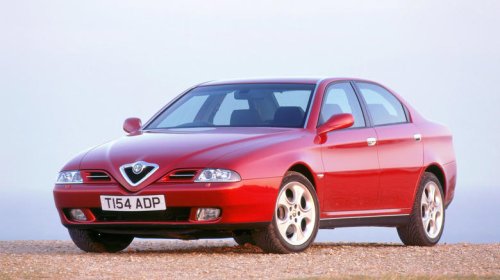



















Kia K90025 years ago, the only reason why anyone would ever buy a Kia was because it was cheap. For those earlier Kia vehicles, there was a price to pay for being so cheap, and that price would be paid by the owner. Things couldn't be more different nowadays, as Kia has rocketed to the top of ... well, everything. So about a decade ago, Kia decided to shoot for the stars by introducing a full-size luxury sedan to the North American market: the K900.The K900 began production in 2012, and on paper, it had all the right ingredients for a fantastic luxury sedan. For starters, it was one of the only vehicles in Kia's history to have eight cylinders. Along with the standard fare of V6 engines, you could spec the K900 with a pretty substantial 5.0-liter V8 putting out 429 hp. It also included all of the luxury features you might expect, and it was all wrapped up in a classy, but understated body. It was a little anonymous, but at the same time, it didn't cause exclamations of disgust like some more recent luxury sedans might do.Despite all of its decent qualities, the K900 was pretty much destined for failure, and you'll never guess why. While Kia has won the hearts of so many consumers, nobody was willing to take a second glance at a luxury sedan with a Kia badge. The brand cachet, which is endlessly important in this segment, just wasn't there.Renault Vel SatisThe French luxury car rulebook is quite different than the one used by most other global automakers. Sure, French luxury cars will offer good amounts of opulence and extra features, but they also throw in one more very important feature: quirkiness. Those who know French cars know that making them simple and conventional simply doesn't work; they have to be totally unorthodox. That is certainly the case with the Renault Vel Satis.At first glance, the styling doesn't make any sense. The bottom half of the exterior looks like a conventional sedan, but the top half and greenhouse area appear to be plucked from a minivan. That was done intentionally to increase interior room. That's quite an important aspect of a luxury car, though it's important to note that the Vel Satis didn't offer seven seats: it was just an oversized hatchback masquerading as a big waftmobile.The powertrains were pretty standard fare, some four cylinders and some V6s, but one option stands out above the rest: the 3.5-liter gasoline V6. That engine carries the code VQ35DE, which you may have heard of. Despite the Vel Satis' lovable break from convention and luxury appointments, it never struck a chord with the majority of luxury car buyers. Being a massive, massive fan of quirky French cars was a requirement to purchase one. Speaking of which...Hyundai EquusIt wasn't just the Kia side of the Hyundai Motor Group that brought their luxury sedan to the Western world. Hyundai decided to join in on the action with the K900's close relative, the Equus. The original Equus was a joint project between Hyundai and Mitsubishi, and while Korea ate it up, the original Equus never really saw any Western dealership lots. That changed with the second generation car, introduced in 2009, which wore a much snazzier suit than the rather plain looking first-gen vehicle.Like the K900, the Equus also offered the same Tau V8 engine, but in two different sizes. It also sensibly moved to a RWD platform, and it upped the quality and the features in just about every aspect, being the first Hyundai vehicle to offer air suspension and adaptive damping, while the interior was equipped with niceties such as ventilated rear seats. As with so many left-field luxury sedans, one big differentiating factor that the Equus had going for it was value, undercutting the majority of its more established rivals.But no amount of persuasion was enough to get most luxury car buyers to opt for the Equus before it bowed out in 2016. Today, the Equus remains a curious piece of Hyundai's history, and it also remains one of the cheapest used luxury cars on the market. Sadly, there's a very high chance that the ownership experience won't be entirely trouble-free.Alfa Romeo 166Jeremy Clarkson once said that you can't be a proper gearhead until you have owned an Alfa Romeo. That's all well and fine, except that most gearheads didn't want to own an Alfa Romeo. It was never made clear what the reasons were, but it might have something to do with reliability. When Alfas work, they work amazingly well, and the 166 is one of many examples. Launched in the late '90s to replace the celebrated 164, the 166 was once again hunting for E-Class and 5 Series blood.It was still front-wheel drive, but it made improvements all across the board, particularly in the luxury department. It's also a gorgeous car, like most Alfa Romeos. The tiny headlights of the early 166 versions weren't the best, but the 2003 facelift brought the 166 up to date, and it was all the better for it. There were also some excellent powertrains on offer, including a torquey five-cylinder turbo diesel, and of course, the Busso V6.No matter what Alfa Romeo does, their reputation for reliability never trails too far behind. No matter how good the car is, there is always that one asterisk that it's an Alfa and it will break eventually. The 166's depreciation curve was incredibly steep, and its most loyal customer base ended up being the most dedicated of Alfa Romeo enthusiasts.