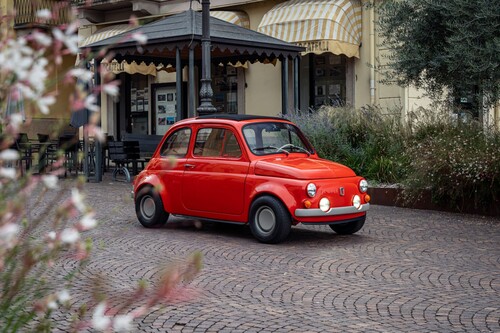
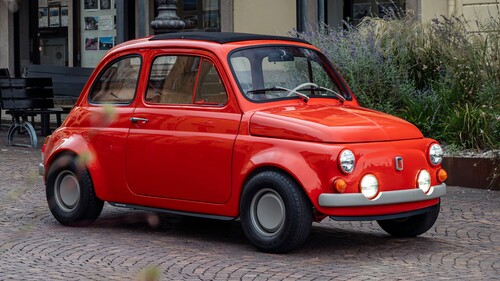
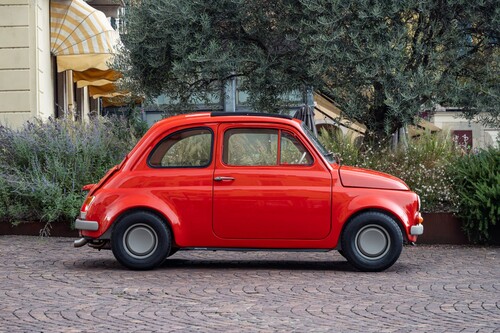
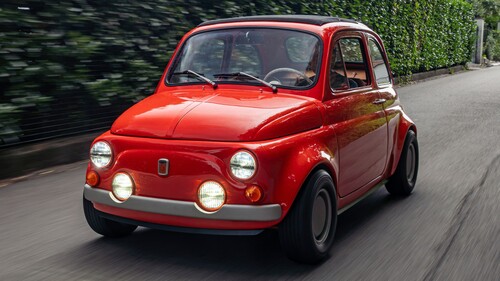
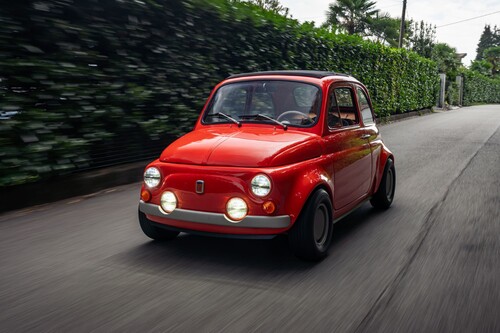
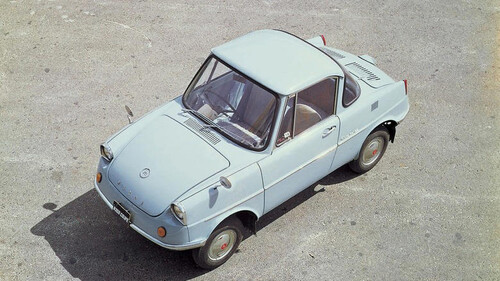
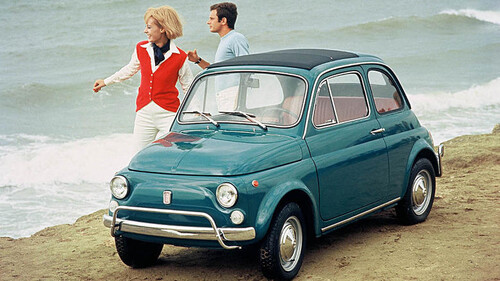
The 1958 Autobianchi Bianchina proves small cars didn’t have to be boringSmall cars have often been treated as disposable appliances, meant to be cheap, efficient and forgettable. The 1958 Autobianchi Bianchina took the opposite view, turning the basic Fiat city car formula into a piece of Italian fashion that made style and fun part of everyday commuting. More than six decades later, its mix of charm, design flair and clever engineering still shows that minimal size never had to mean minimal character. The unlikely star of Italy’s microcar moment The Autobianchi story begins with a partnership. In the mid 1950s, a business alliance with Fiat and Pirelli reshaped a small coachbuilder into a new brand called Autobianchi, created to experiment with fresh ideas on proven mechanical parts. The company would not develop its own engines from scratch; it would instead dress Fiat hardware in more upscale clothes. The Autobianchi Bianchina arrived as a minicar based on the Fiat 500 platform. The sources describe it directly as a car produced by the Italian automaker Autobianchi, using the Fiat 500 chassis and mechanics as its starting point. That connection to the 500 meant the Bianchina shared the same tiny footprint and rear engine layout, but Autobianchi treated those bones as a canvas for something more playful and aspirational. Period marketing and later commentary underline that this was not just another utility box. A video introduction to a 1957 Autobianchi Bianchina Transformabile invites viewers to “gather your espresso” and meet the tiny Italian car that behaved as if it were a miniature luxury coupe. That tone captures how the Bianchina positioned itself in the late 1950s: a city car that carried itself like a fashion accessory. From workhorse to style piece The base Fiat 500 was designed to mobilize postwar Italy with bare minimum cost and complexity. By contrast, the Bianchina treated the same underpinnings as the foundation for a more indulgent object. The Autobianchi Bianchina is described in one technical listing as a distinct model, with its own Autobianchi Bianchina ( Year 1958), separate from the basic Fiat. The table references the Model Year and the Model in a way that treats the Bianchina as its own product line rather than a trim level. That separation was obvious in the styling. Commentators looking back on the car describe “The Quirky Styling Of The Bianchina” and note that Many variants of the Autobianchi Bianchina would appear during a 13 year production run. The early cars, including the 1958 examples, wore a two tone paint scheme, bright chrome and a semi formal roofline that made them look more like scaled down American hardtops than basic European runabouts. The Bianchina’s role as a style piece is especially clear in the Trasformabile version. A Facebook discussion of the 1958 Autobianchi Bianchina Trasformabile describes how The Bianchina Trasformabile stood out through a cute and cheerful design, with two tone paint, chrome trim and a fabric roof section. That level of visual flourish was not strictly necessary for a car this small, yet it was central to its appeal. Trasformabile: when a microcar behaves like a cabriolet Among the early Bianchina variants, the Trasformabile (often written as Transformabile in some sources) is the version that best captures why this car still fascinates enthusiasts. A dedicated post about the 1958 Autobianchi Bianchina Trasformabile explains that the “Trasformabile” name literally means transformable and that this model offered a semi convertible experience. Drivers could roll back a large fabric section of the roof and enjoy open air motoring while retaining fixed door frames and rear pillars for structure, a layout that gave the car a playful character without the cost of a full cabriolet. The post describes how the trasformabile allowed owners to enjoy this kind of open top feeling without giving up the practicality of a fixed roof profile. That concept was not unique to Autobianchi, yet the Bianchina executed it in a way that felt particularly chic. A feature on early Bianchina Trasformabile models notes that this semi convertible design was enjoying a renaissance in that period and was similarly used in the contemporary Vespa 400 microcar. Compared with the Vespa, the Bianchin (as the text calls it) leaned harder into upscale cues, which helped it stand out in a crowded field of tiny cars. Enthusiast commentary today still treats the Trasformabile as the most desirable body style. A feature that labels the 1958 Autobianchi Bianchina Transformable as a “Pick of the Day” describes it as a rare version of the 500 based minicar from Italy and highlights how the Autobianchi Bianchina Transformable from Italy took the humble Fiat 500 based platform and turned it into something special. The piece emphasizes that the Autobianchi Bianchina Transformable was not just another Fiat; it was a more luxurious interpretation of the same mechanical idea. Under the skin: familiar mechanics with a twist Underneath the stylish bodywork, the Bianchina relied on the same basic engineering as the Fiat 500. The official description of the Barrett Jackson auction car spells this out: the 1958 Autobianchi Bianchina is described as a coach built car on a Fiat 500 chassis. It is powered by an original rear mounted 479 cc air cooled 2 cylinder engine with 21 horsepower and uses a manual transmission. The listing stresses that the car is powered by this compact engine and that the chassis remains faithful to its Fiat roots. Technical tables back this up in more granular form. One specification sheet refers to Autobianchi Bianchina Engine and lists Engin details such as aspiration and capacity, while another section of the same source gives overall size and dimensions including width in inches and centimeters. These figures confirm that the Bianchina occupied the same tiny footprint as the Fiat 500, with a body that barely stretched beyond city car proportions. Conceptcarz, which catalogs historical vehicles, groups the Bianchina under a dedicated page titled Autobianchi Bianchina Specifications. The navigation on that page refers to Autobianchi Bianchina Navigation and breaks down Article, Image gallery, Valuation and Specificati sections, reinforcing the idea that collectors treat the car as a distinct model with its own identity rather than a simple Fiat derivative. How the Bianchina made tiny feel premium The Bianchina’s real trick was psychological. It took the same hardware that moved working class Italians and wrapped it in cues that signaled something closer to a fashion accessory. A modern video review that calls the car a “posh, cute Fiat 500” and notes that it is for sale at Stone Cold Classics drives this home. The presenter describes how the Bianchina feels like a more refined version of the basic Fiat, with extra chrome, richer trim and a more upscale interior ambience. Another video focused on a 1957 Autobianchi Bianchina Transformabile leans into the same idea. The host introduces it as a tiny Italian car that thought it was something grander, underlining how the styling and detailing give an impression of luxury that the mechanical specification alone cannot justify. The reference to espresso and silk scarves in the Italian themed introduction plays up the lifestyle image that has always clung to the car. Written retrospectives echo that sentiment. A look back at the model’s history describes the Autobianchi Bianchina as a quirky, charming minicar and highlights how its styling set it apart from plainer rivals. The piece labels one section “The Quirky Styling Of The Bianchina” and notes that the Autobianchi Bianchina line eventually grew to include several body styles, each with its own twist on the same basic theme. Design details that made it memorable The Bianchina’s visual identity relied on a handful of specific cues. The two tone paint, often with a contrasting roof and lower body, made the car look more substantial than its size suggested. Chrome strips along the flanks and around the windows gave it a jewelry like sparkle. Enthusiast groups describe the Trasformabile as particularly recognizable for this combination of two tone paint, chrome details and the cut back fabric roof that slid open like a giant sunroof. Inside, the dashboard and seats were finished with more care than the average city car. Although detailed trim specifications vary by year and market, the overall impression from surviving cars and auction descriptions is that Autobianchi tried to create a miniature grand tourer cabin rather than a simple utility interior. The Barrett Jackson listing, for instance, refers to the car as coach built, a term that implies a level of craftsmanship and customization beyond mass production even if the underlying structure remained Fiat sourced. These touches mattered because they changed how owners related to the car. Instead of being a purely functional object, the Bianchina became something people were proud to be seen in. That pride is visible in period photos and in the way modern owners present their cars at shows, often emphasizing the originality of the two tone paint and the condition of the chrome trim. Performance: modest numbers, big personality On paper, the Bianchina’s performance figures are modest. The rear mounted 479 cc engine produces 21 horsepower according to the auction listing, and the car’s top speed and acceleration are in line with other microcars of the era. Technical tables that group the Bianchina’s engine data under headings like Autobianchi Bianchina Engine Technical Data and Engin specifications confirm that the car relied on a naturally aspirated two cylinder unit with limited output. Yet owners and reviewers often describe the driving experience as surprisingly engaging. A modern review that labels the car a posh, cute Fiat 500 points out that the light weight and short wheelbase make it feel lively at city speeds even if the absolute numbers are low. The same review suggests that the car’s character encourages drivers to enjoy momentum and smooth inputs rather than outright speed. One historical feature on the Bianchina Trasformabile mentions that this type of semi convertible design was also used on the Vespa 400 microcar and notes that this layout was enjoying a renaissance at the time. It compares the Bianchin with the Vespa and implies that while both cars were slow by modern standards, their open top configurations and compact size made them feel more entertaining than their statistics suggested. The text also includes a reference to 400 m, a metric that underscores how small and tightly packaged these vehicles were. Variants beyond the 1958 car While the 1958 Autobianchi Bianchina often draws the most attention, it was part of a broader family. The Wikipedia entry for Autobianchi Bianchina in another language version, discovered through the main English page, confirms that the model line included multiple body styles such as sedans, estates and full convertibles. The English page on The Autobianchi Bianchina notes that the car was produced by the Italian company Autobianchi and that it evolved over time while remaining based on Fiat 500 mechanicals. Other language versions of the Wikipedia entry, such as the German page at Autobianchi Bianchina and the Finnish entry at Bianchina, reinforce that the car had an international footprint, with exports and local interest beyond Italy. A Persian language page at Autobianchi Bianchina further underlines the model’s global reach among enthusiasts and historians. Retrospective articles that survey the full history of the Autobianchi Bianchina mention that the model remained in production for 13 years and that it spawned several variants. They describe how the earliest cars, including the 1958 Trasformabile, carried the most ornate styling, while later versions shifted toward more practical body styles as consumer tastes changed. Why collectors chase the early cars Among collectors, early Bianchina models from the late 1950s are especially prized. The 1958 Autobianchi Bianchina Transformable highlighted as a Pick of the Day is described as a charming minicar and a rare version of the Fiat 500 based design. The piece emphasizes that the Autobianchi Bianchina Transformable from Italy combined the mechanical simplicity of the 500 based platform with a higher level of style, making it more desirable today. Specialist dealers also treat these cars as significant. Hyman LTD, for example, presents a 1958 Autobianchi Bianchina as an important early example and traces the company’s roots back to the alliance with Fiat and Pirelli. The description on Hyman LTD frames the Bianchina as a product of that partnership and highlights its role in introducing Autobianchi as a brand that could take mainstream mechanical parts and turn them into something more exclusive. Social media communities dedicated to the model reinforce this sense of rarity and affection. Posts in enthusiast groups describe the Bianchina Trasformabile as cute and cheerful, and members often share restoration stories that focus on preserving original two tone paint schemes and factory correct details. The tone of these discussions suggests that owners see themselves as custodians of a small but important piece of design history. How the Bianchina fits into small car history The Bianchina arrived at a time when microcars and city cars were booming across Europe. Models like the Vespa 400, BMW Isetta and Messerschmitt KR200 offered ultra compact transportation to a continent still recovering from war. Against that backdrop, the Autobianchi Bianchina’s decision to prioritize style and perceived luxury stands out. By basing the car on the Fiat 500, Autobianchi could rely on proven mechanics and service networks. The Bianchina did not need to convince buyers that its engine or transmission were reliable; it only needed to persuade them that paying extra for a more stylish body was worthwhile. In that sense, it anticipated later premium small cars that would follow a similar formula, pairing mainstream mechanical parts with upscale design and trim. Retrospective commentary often positions the Bianchina as a forerunner of this approach. Articles that survey its history describe how the car turned the humble 500 into a fashionable object and suggest that it helped establish a template for later city cars that sold on personality as much as practicality. Modern enthusiasm and digital afterlife The Bianchina’s survival into the digital age has given it a second life online. Video reviews, auction listings and enthusiast group posts all contribute to a growing archive of information and imagery. A dedicated campaign page discovered through the Hyman LTD listing, hosted at Autobianchi Bianchina, demonstrates how dealers and marketers use modern tools to promote these vintage cars to a global audience. Social media accounts like Hyman LTD on Facebook and Hyman LTD on Twitter share photos and short descriptions of Bianchina examples, often highlighting specific details such as color combinations or restoration quality. These posts help keep the model visible among younger enthusiasts who may never have seen one in person. Even playful content, such as a GIF link discovered through a Facebook share about the Autobianchi Bianchina Trasformabile The, indicates that the car has become part of internet car culture. The Autobianchi Bianchina Trasformabile link points to a looping image that captures the car’s playful character, showing how easily its shape translates into visual shorthand for fun. Documentation and preservation Beyond enthusiast chatter, more formal documentation efforts help preserve the Bianchina’s story. The main English Wikipedia page on The Autobianchi Bianchina provides an overview of the model’s production history and technical basis in the Fiat 500. Supporting infrastructure such as the donation page at Autobianchi Bianchina Wikipedia indirectly contributes by keeping that reference material available. Other language versions, including the Czech page at Autobianchi Bianchina Wikipedia, the German entry and the Persian and Finnish pages, show that interest in documenting the car spans multiple regions and languages. These pages often cross reference each other, forming a network of information that future researchers and enthusiasts can draw from. Specialist data sites add further detail. The technical tables on Ultimate Specs, which group information under headings like Autobianchi Bianchina Engine Technical Data and size and dimensions, give precise measurements for width, height and wheelbase. The Cypruscar listing that labels the specification table as Autobianchi Bianchina ( Year 1958) Standard Specifications and calls out Model Year and Model fields preserves a snapshot of how the car was configured in that period. Why the 1958 Bianchina still matters The 1958 Autobianchi Bianchina occupies a small but significant place in automotive history. It demonstrated that even the most basic mechanical package could be transformed into something aspirational through design and positioning. By taking the Fiat 500’s compact chassis and mechanicals and wrapping them in a more stylish body with richer trim, Autobianchi proved that small cars did not have to be anonymous appliances. The car’s continuing appeal among collectors, the attention it receives from specialist dealers and the enthusiasm visible in online communities all stem from that original decision to treat a city car as a fashion object. The Bianchina’s cute and cheerful design, especially in Trasformabile form, shows that practicality and personality can coexist even at the lowest end of the size spectrum. In an era when modern manufacturers are once again trying to make compact cars desirable through design, technology and branding, the 1958 Bianchina stands as an early example of how to do it with conviction. Its legacy is not about speed or luxury in the traditional sense. Instead, it is about the idea that a small footprint can still carry big character, and that everyday transport can be something people genuinely love to own and drive. More from Fast Lane Only Unboxing the WWII Jeep in a Crate 15 rare Chevys collectors are quietly buying 10 underrated V8s still worth hunting down Police notice this before you even roll window down