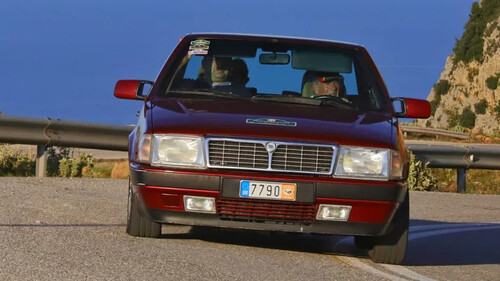
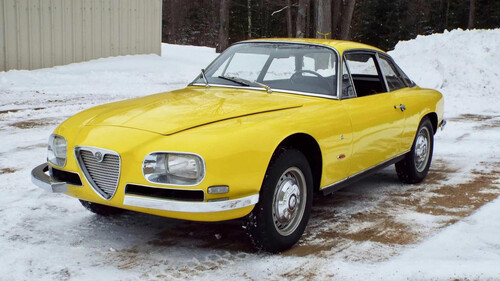
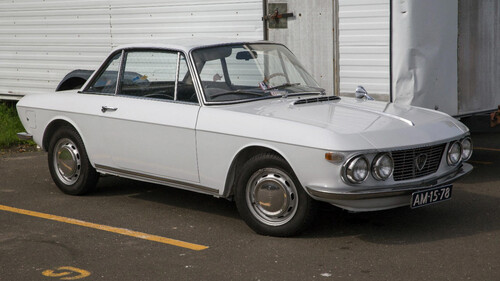
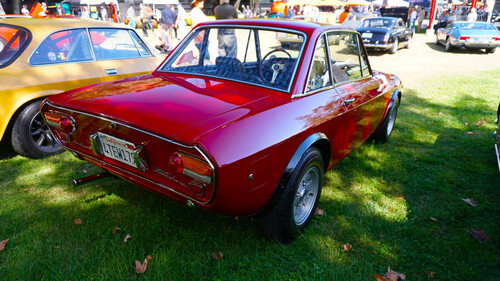
At launch the 1958 Lancia Flaminia showed what Italian luxury could beWhen the Lancia Flaminia arrived in 1958, it did not simply replace an older sedan. It reset expectations for what an Italian luxury car could be, combining advanced engineering with a calm, sculpted elegance that felt closer to bespoke coachbuilding than to mass production. In an era when prestige often meant size and chrome, the Flaminia offered a quieter kind of authority rooted in technical finesse and design purity. More than six decades later, collectors still treat the Flaminia as a reference point for Italian sophistication. Its V6 powertrain, refined chassis and range of coupé and convertible variants created a family of cars that bridged the gap between discreet limousine and thoroughbred grand tourer, achieving it with a level of detail that continues to surprise even seasoned enthusiasts. From Aurelia to Flaminia: a new chapter for Lancia The Flaminia did not appear in a vacuum. It grew out of the Lancia Aurelia, a car that had already given the company a reputation for technical daring and understated style. The Flaminia’s chassis was a clear development of the, but engineers significantly upgraded it, treating the new model as the start of a fresh era rather than a simple evolution. Within the Lancia story, that step marked the beginning of a new period for the brand, which was already half a century old when the Flaminia arrived. Company history describes how the Lancia Flaminia signaled a move into a more modern, international vision of luxury, while still following the quiet, refined path laid down by the Aurelia and by earlier models that had made Lancia famous for innovation. The Flaminia took its name from Via Flaminia, the ancient Roman road that runs north from Rome, which framed the car as a kind of rolling Italian grand tour. That sense of journey was important. Lancia wanted a flagship that could cross a continent at speed and in comfort, yet still look at home outside a Milanese palazzo or on a narrow Roman street. Florida and the design spark The story of the Flaminia’s styling began with a show car. A specially built prototype called Florida, based on an Aurelia chassis, stunned crowds and executives alike with its clean lines and airy greenhouse. The Florida concept was a roaring success with the public and also struck a high note with Lancia managers, who saw in it the design language for their next flagship. Florida translated the elegance of the Aurelia into something lighter and more architectural, with a long, almost level beltline and thin pillars that maximized glass area. The production Flaminia sedan did not copy the show car outright, but it adopted its sense of proportion and its uncluttered surfaces. That decision set Lancia apart from rivals who still relied on heavy ornament and exaggerated fins to signal prestige. Designers would later push the Flaminia platform in many directions, from sober four-door to flamboyant coupé. Even so, the Florida’s influence remained visible in the way every Flaminia variant balanced form and function, never letting visual drama overwhelm the car’s essential clarity. Engineering luxury: V6, transaxle and independent thinking Underneath the elegant bodywork, the Flaminia carried technology that was advanced for its time. Period documentation highlights how the car offered a V6 engine, a transaxle gearbox and independent suspension, a trio of features that placed it at the forefront of European engineering. As a guide to classic models notes, The Flaminia boasted this combination of V6 power, rear-mounted transmission and sophisticated suspension at a time when many luxury rivals still relied on simpler layouts. The V6 built on Lancia’s earlier work with the Aurelia, but with refinements in displacement and breathing that improved smoothness and performance. Mounting the gearbox at the rear as a transaxle helped balance weight distribution, which in turn improved ride quality and handling. Independent front suspension brought further gains in control and comfort, particularly on rough Italian roads that could unsettle more traditional setups. These choices were not made in pursuit of outright speed. They were made to create a car that felt composed and effortless at the kind of sustained cruising that defined real-world luxury in the late 1950s. The engineering gave the Flaminia a relaxed gait at high speed, a sense that the car was working well within its limits even as it covered ground quickly. Italian luxury and sophistication at launch Contemporary observers saw the Flaminia as the ultimate expression of Italian luxury. A detailed description of the The Lancia Flaminia calls it the ultimate car of Italian luxury and sophistication and emphasizes that it represented an evolution of the Aurelia that made it much more refined than its predecessor. That judgment did not rest on opulent materials alone. It reflected the way the car integrated its mechanical and aesthetic qualities into a single, cohesive experience. Inside, the Flaminia offered a cabin that mixed high quality materials with a restrained layout. Instruments were clear and functional, while the seating and trim conveyed comfort without ostentation. The car felt crafted rather than assembled, an impression that aligned with Lancia’s broader reputation for meticulous construction. On the road, the combination of V6 power, transaxle balance and independent suspension translated into a ride that isolated passengers from harshness without disconnecting them from the driving experience. The car could be driven briskly on a mountain road or wafted through city traffic with equal grace, which suited an Italian clientele that expected a single car to cover all roles. Coachbuilt glamour: Touring, Zagato and beyond One measure of the Flaminia’s appeal is the enthusiasm with which Italy’s leading coachbuilders embraced its chassis. Among the earliest and most important interpretations were the Touring GT and the Flaminia Zagato Sport. A detailed period account notes that The Flaminia Zagato Sport shared the same shortened wheelbase as its Touring GT sister model, but that the youthful Ercole Spada, chief designer at Zagato, gave it a much more aggressive and aerodynamic form. The description of Flaminia Zagato Sport credits Touring GT and Ercole Spada explicitly, underlining how central these figures were to the car’s evolution. Touring’s interpretation leaned into grand touring elegance, with smooth surfaces and delicate detailing that matched the Flaminia’s mechanical refinement. Zagato, by contrast, created a more focused sports car, often with signature double-bubble roof treatments and lighter bodywork. Both took advantage of the shortened wheelbase, which sharpened handling and gave the cars a more athletic stance. Other coachbuilders also tried their hand. The Flaminia Amalfi, shaped by Bonetto in collaboration with Boneschi, sought to combine a distinctive profile with the underlying luxury of the platform. Contemporary commentary on the Flaminia Amalfi notes that, however, despite Bonetto’s pedigree and the craftsmanship of Boneschi, this particular design faced a cool reception, which shows that not every experiment on the Flaminia chassis found an audience. GTs, Sports and the pull of the coupé Although the Flaminia began life as a four-door flagship, the market quickly showed a strong preference for its two-door derivatives. An analysis of production trends remarks that, interestingly, coupés outsold the 4-door variant by far, even in spite of their shorter production run and coachbuilt bodies. This observation appears in a technical overview where the word Interestingly introduces the point, underlining how unusual it was for more expensive, lower volume variants to surpass the sedan. The Lancia Flaminia GT became the archetypal grand tourer in the range. A period description of a 1960 example calls the Lancia Flaminia GT an elegant Italian grand tourer that reflects Lancia’s emphasis on style and long-distance comfort. That car distilled the brand’s values into a two-door format, with a more intimate cabin and a silhouette that suggested speed even at rest. Mechanical evolution continued alongside these stylistic developments. A technical summary of the Flaminia GT notes that from the start of production the GT used specific engine and chassis settings tailored to its sporting mission, and later gained three-carburetor 3C versions and larger 2.8 liter units. These changes kept the car competitive with contemporary sports and GT rivals while preserving its underlying refinement. Limited editions such as the Lancia Flaminia Sport and the later Lancia Flaminia Spo 3C 2.8, referenced in an enthusiast reel that highlights a Lancia Flaminia Sport as a limited-edition Italian classic, further expanded the range. These variants leaned hardest into performance, often with lighter bodies and more powerful engines, yet they still carried the same sense of polished engineering that defined the original sedan. Lancia, Lancho and the culture of innovation To understand why the Flaminia could combine such diverse roles, it helps to look at Lancia’s broader engineering culture. A detailed video profile of the brand points out that most people do not realize just how special Lancho were, describing how the company was the first manufacturer to produce a monok car and the first with several other advanced features. The clip that makes this argument appears in a segment labeled Apr, and a related timecode also references Lancho, underlining how central this innovative streak is to the brand’s identity. Within Lancia itself, official communication describes Aurelia as the sleek Lancia vehicle with a sloping design and notes that Aurelia, Flaminia and Fulvia together represent a journey toward timeless elegance. A press release dated Nov traces how Aurelia, the sleek Lancia vehicle with a sloping design, set the stage for later models, and it explicitly links Aurelia, Flaminia and Fulvia as key steps in the brand’s design story. In that context, the Flaminia appears not as an isolated masterpiece but as part of a continuous line of experimentation. Lancia had already pioneered unitary body structures and sophisticated suspension layouts. The Flaminia applied that experience to the luxury segment, proving that technical ambition and comfort could reinforce each other rather than stand in opposition. Production, reach and the new Lancia era The Flaminia’s career extended from the late 1950s into the early 1970s, with numerous body styles and mechanical updates along the way. A concise brand history notes that the arrival of the Flaminia corresponded to the beginning of a new period for Lancia, which was already half a century old at that point. That new period involved a push toward export markets and a desire to compete more directly with established luxury names from Britain and Germany. Within the range, the four-door remained the formal flagship, often chosen by business leaders and officials who valued its dignified presence. Yet the popularity of the coupés, which, as noted earlier, outsold the sedan despite higher prices and shorter production, showed that the market was shifting toward more personal interpretations of luxury. Buyers wanted cars that could serve as both daily transport and weekend escape machines, and the Flaminia’s flexible platform allowed Lancia to meet that demand. Internationally, the car helped establish Lancia’s reputation among enthusiasts who valued engineering subtlety over raw power. While it did not match the production volumes of mass-market rivals, it created a halo that still shapes perceptions of the brand today. More from Fast Lane Only Unboxing the WWII Jeep in a Crate 15 rare Chevys collectors are quietly buying 10 underrated V8s still worth hunting down Police notice this before you even roll window down