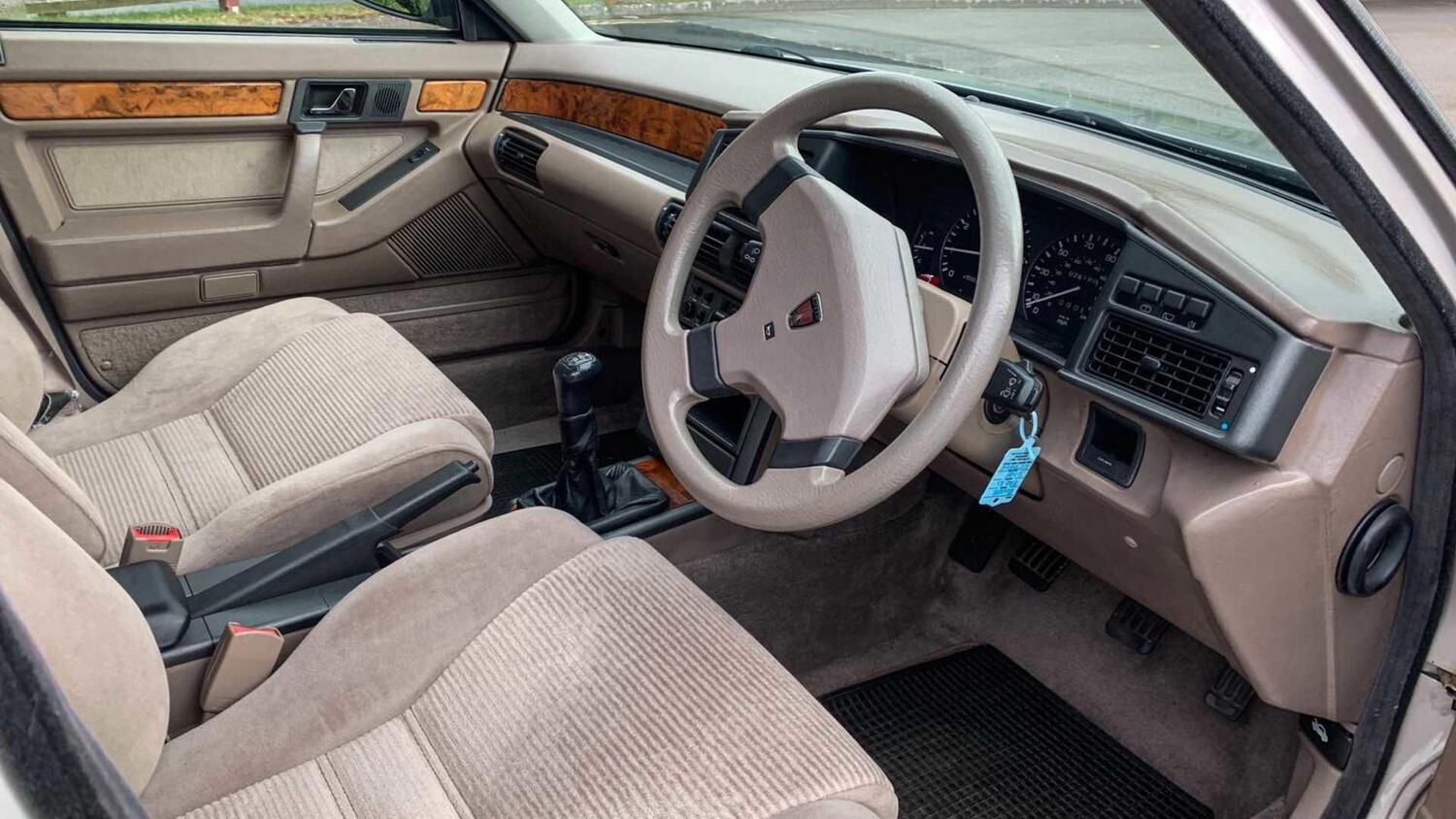
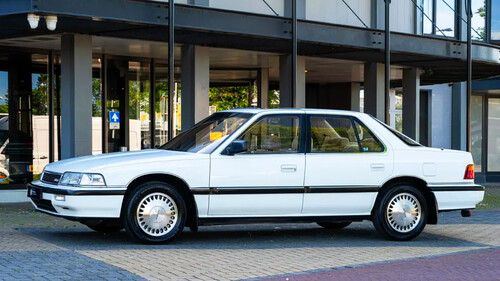
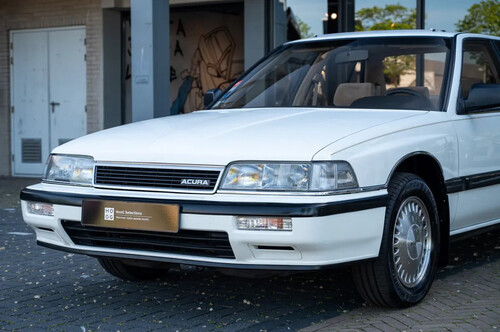
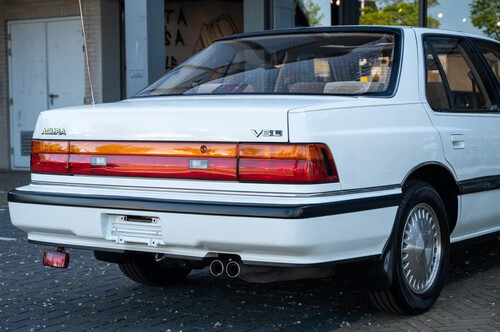
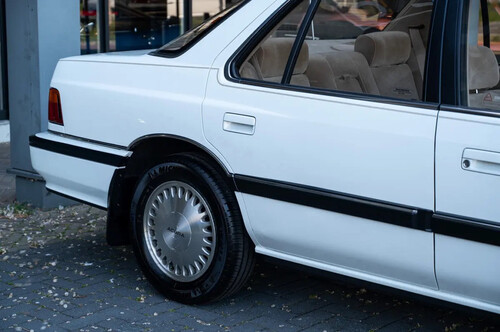
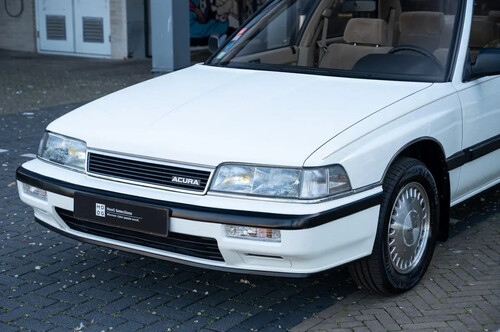
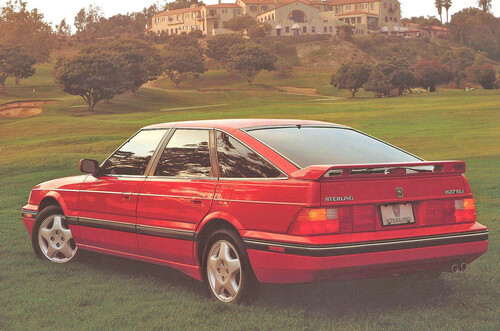
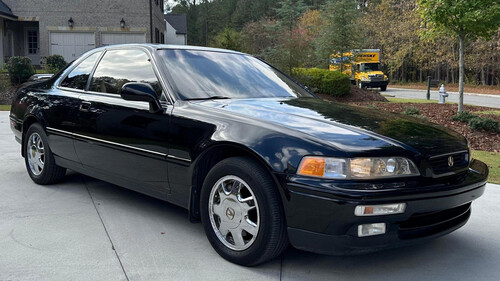
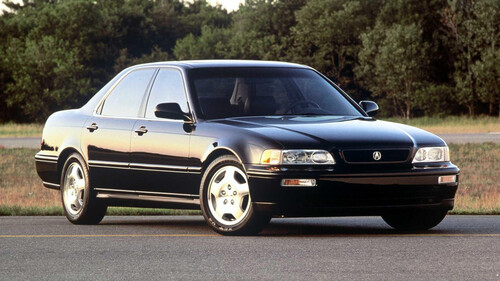
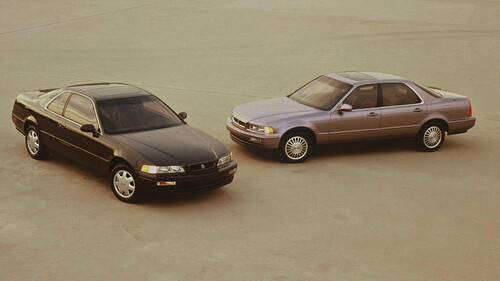
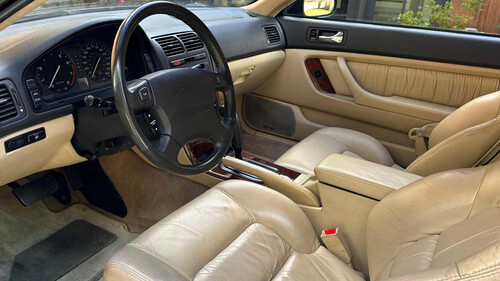
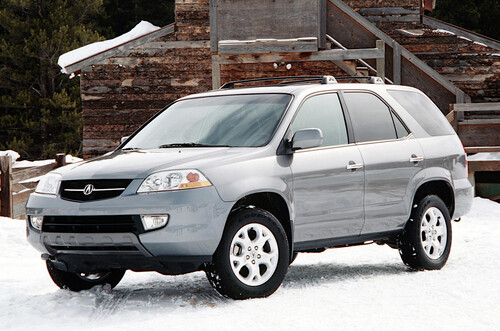
Things were so bad that Rover ended up losing a large portion of its market share during the mid 1990s, around the time BMW took a controlling interest in the company. However, there was one Rover that ended up being much more reliable than most of the brand's other namesakes, and it was all thanks to help from Honda. The model in question is called the Rover 800 Series, and it first hit the market in 1986. Japanese Know-How Meets English Heritage Bonhams While it wasn't the first time Honda and Rover — via British Leyland — had worked together, the Rover 800 would mark the first time the two brands produced a full-size model. At the time, the Japanese-English alliance had produced the Triumph Acclaim, which first hit the market in 1981. It was based on the Honda Ballade, a compact model bred for parts of the European market, as well as the South African market. However, the Acclaim would only stick around until 1984 due to, reportedly, less-than-exceptional sales.Despite the mild failure, British Leyland and Honda wanted to continue the relationship, particularly due to both brands' interest in building a full-size executive car. For Honda, the brand was interested in expanding its North American presence, which it felt it couldn't do without an executive model. As for Rover, it was in desperate need of a replacement for the aging SD1 model. So, instead of designing two separate models, which can get quite costly, the two companies put their proverbial heads together and came up with the Rover 800, which was closely related to the Honda/Acura Legend.Bonhams It first hit showroom floors in 1986, carrying a base price of £11,820, or roughly $60,660 in today's money. An expensive model, especially for a Rover at the time, with a price that was encroaching on Jaguar territory. At the same time, the 800 was the brand's flagship model, and boasted loads of period-correct luxury, along with tried-and-true Honda engineering across most of the model's mechanical make-up. Where Honda's Influence Shines Bring a TrailerWhile the 800 Series looks decidedly English, Honda's hand in the whole project begins to come to light once you peer underneath the skin. The first Honda-bred piece of kit to be found is one of the Rover 800's engines. While the model did offer a 2.0-liter four-pot built by Rover, the more-upscale engine option, a 2.5-liter V6, came courtesy of the Japanese marque. The mill itself belonged to Honda's C Series engine family, and goes by the codename "C25A."The C25A is regarded as an exceptionally reliable engine, boasting a 90-degree V-angle. In addition, it has offset crank pins, which bode well for an overall smooth operation. Its block and cylinder heads are made from aluminum, and its cylinders are lined with an iron coating for better durability. There are many anecdotal reports of the C25A motor lasting well over 250,000 miles with just routine maintenance. Come 1988, a 2.7-liter Honda V6 called the "C27A" replaced the C25A, and boasted an all-new variable-length intake manifold.BonhamsIn addition to the Honda-built V6, the Rover 800 also boasted other aspects that were touched by Honda engineering, as well. For instance, both the five-speed manual and four-speed automatic transmissions that were on offer came courtesy of Honda, along with its front-wheel drive drivetrain. The 800's chassis was directly related to the Honda/Acura Legend's, along with its entire floorpan. Its double-wishbone front suspension was shared with Honda, as well, along with its braking system. Features & Trims BonhamsAt base level, the Rover 800 Series offered a slew of inline-four-equipped grades. Starting with the standard 820 model, the lineup moved to the 820e and 820i, both of which offered slightly more in terms of creature comforts and amenities. A turbocharged version called the 820 Turbo was also available. From there, the range moves into the V6 engines, starting with the 825i. Beginning in 1988, the 825i was replaced by the 827i.Bonhams However, other grades existed, as well, such as the Si. Unlike Honda's Si spec, which denotes performance orientation, the 800 Series Si was regarded as a mid-range trim. At the top of the Rover 800 grade scale sat the Sterling, which offered nearly every single option available to the model, such as leather seats, electric windows, an upgraded stereo, and woodgrain. In addition, a "Vitesse" model was also considered top-of-the-line, although it leaned more into sportiness rather than luxury, featuring things like a stiffer suspension and a slightly aggressive body kit. The End Of Honda's Influence BonhamsCome 1990, Honda was already moving on from the joint project in a sense. The Honda/Acura Legend had received a substantial refresh, and the Rover 800 was left in the dust. Because of this, Rover needed to undertake its own, substantial revamp. The new model debuted in 1992, and some of its Honda influence had gone. For example, the shared core chassis, suspension, and V6 engines stayed, but Rover-bred interior panels, trim, and other miscellaneous items were now seen. Another refresh took place in time for the Rover 800's 1996 model year. This time, the 800 moved a bit further away from the original Honda formula yet again, although the V6 engine remained an option. Its chassis and suspension remained unchanged, as well.However, the Rover 800 would not be long for this world. Sales were floundering, and had been for some time. Despite its Honda-bred engine and chassis holding up well, the rest of the Rover 800 Series models were widely known for failures and poor workmanship. For context, tan-leather-trimmed models had a penchant for seats to turn green after a short period of time, and the model was exceptionally prone to rusting. Interior pieces were also cheap, thin, and would reportedly rattle over bumps.Bonhams At the same time, competition from marques like BMW and Vauxhall, the latter being another English car company, was becoming more and more of a problem. BMW's influence in the rest of the world had grown exponentially throughout the 1990s, making itself a real threat to the rest of the luxury-oriented world. Vauxhall, on the other hand, was building models that were far cheaper to purchase, while also sporting slightly better levels of build quality.With everything stacked against it, the Rover 800 was axed following the 1999 model year. It seems that, even with extensive help from Honda, Rover simply couldn't make the 800 good enough to compete.