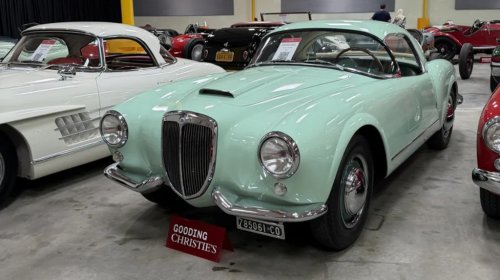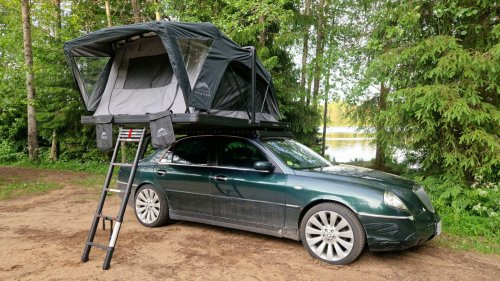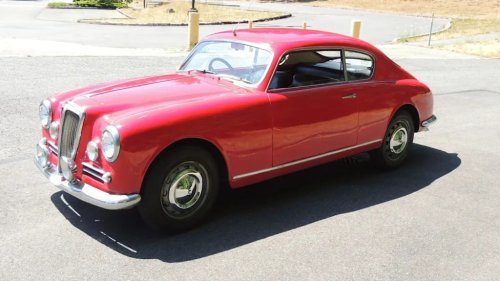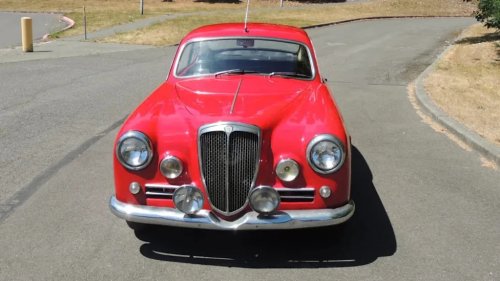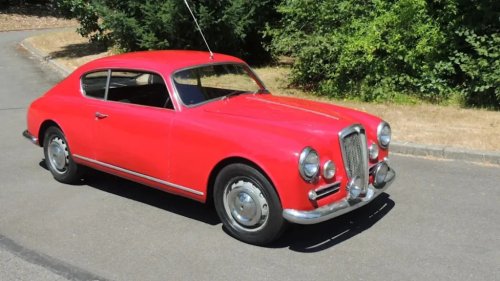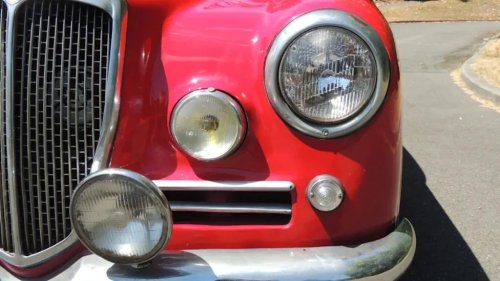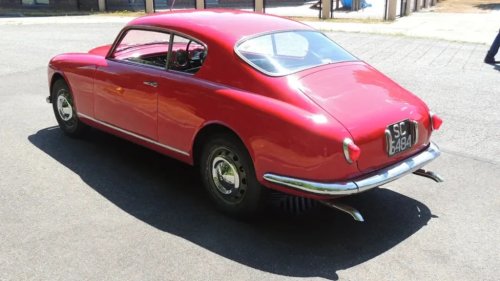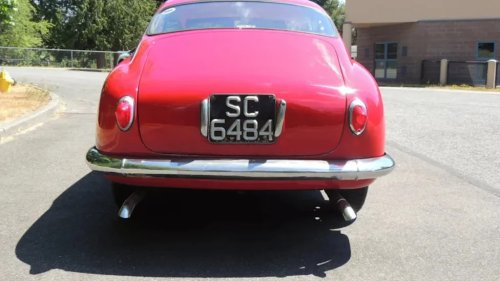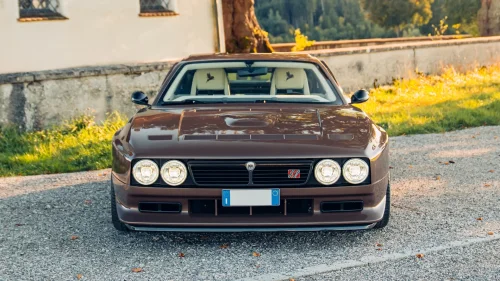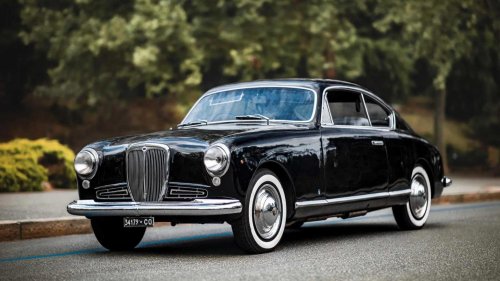
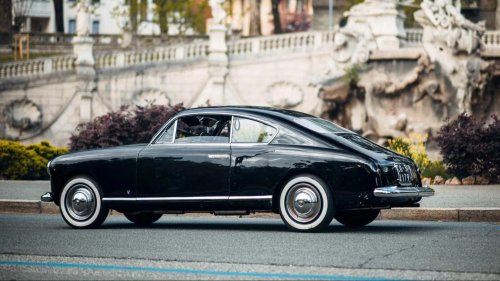
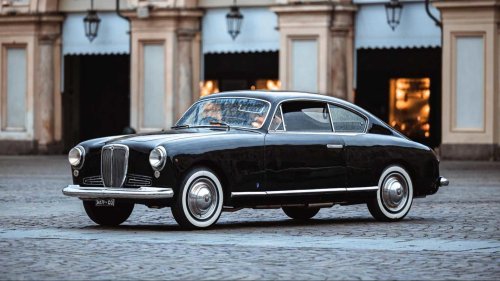
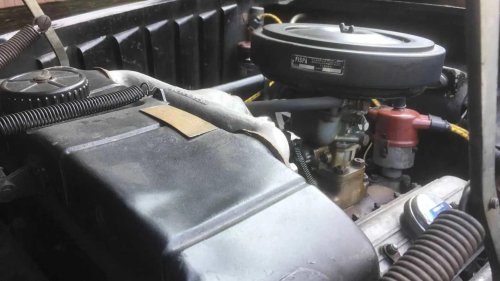
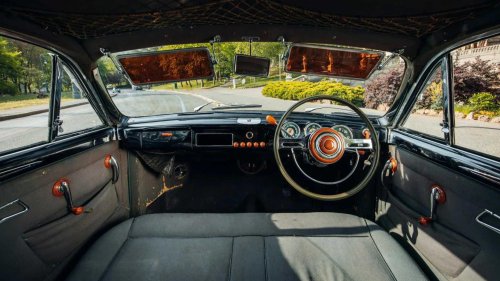
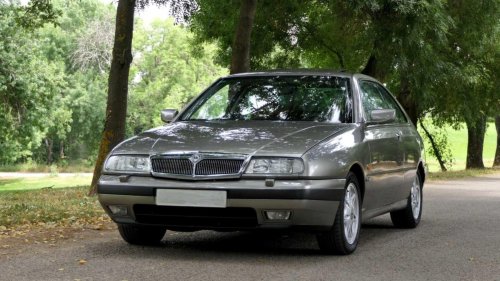
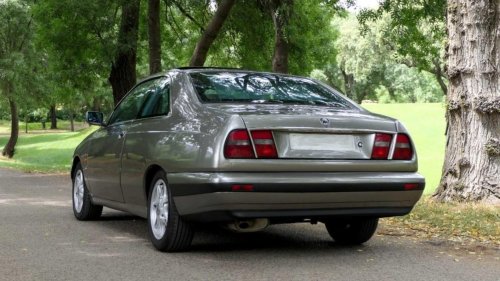
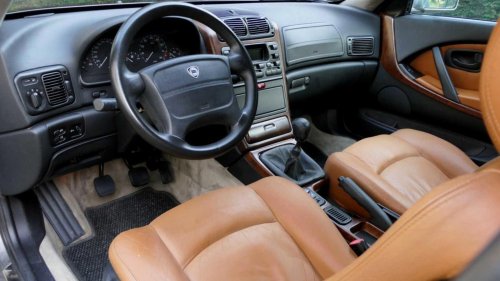

















The grand tourer. Besides the supercar and hypercar segment, it's one of the most sought-after models on the market today. Historically, the grand tourer has been the pinnacle of personal luxury, as its main objective is to ferry its passengers across long distances with as much luxury at their disposal as possible. Popular examples of the segment these days are models like the Bentley Continental GT, the Aston Martin DB11, and the Ferrari GTC4 Lusso.The grand tourer itself is an older segment, with a lifespan that stretches further back than the supercar's 1967 debut. The very first grand tourer hit the market in 1950. Its name is the Lancia Aurelia, and it marked the first time an automaker purposely designed a luxury car with long journeys in mind following the end of World War II. In essence, every single post-War grand tourer can thank the Aurelia for their existence. The Aurelia Popularized The Grand Tourer Segment Bring A Trailer While it wasn't the first grand tourer – that honor belongs to the 1930 Alfa Romeo 6C 1750 Gran Turismo – The 1950 Lancia Aurelia was the first model to popularize the term following the end of World War II. It was designed with speed and long journeys in mind, a combination of attributes that are normally thought of separately. Powering the Aurelia was a Lancia-bred V6 engine. Its use marked the first time a series-production road car featured one.Bring A Trailer When it first went on sale in 1950, the Aurelia wasn't actually considered a GT car. At least, not yet. At the time, it was considered a coupe in its "B50" grade. Alongside the B50 Aurelia were several other body styles, those being the B10, B12, B21, and B22 sedans. Sitting alongside the sedans were others, like the B24 convertible, alongside a slew of other chassis codes that were specifically bred for coachbuilding.The B50 Aurelia – while not technically considered a grand tourer – laid the groundwork for the Lancia Aurelia B20 GT, which came about in 1951. So, why not consider the B20 the first, true post-War grand tourer?Bring A Trailer The reasoning behind that was a single, coachbuilt B50 Aurelia that was produced in 1950, the very same as pictured above. Its body was hand-sculpted by Pininfarina, and boasted a design that was personally coined by Giovanni Michelotti, a famous Italian coachbuilder who was also responsible for famous models like the Ferrari 250 and the Maserati A6G. His forward-thinking styling with this model in particular is widely considered to have inspired Lancia to build the B20 GT iteration a year later. How The Aurelia Came To Be Bring A TrailerIn the late 1940s, Lancia's design team was headed up by a man named Vittorio Jano. His task was to create an all-new model lineup that would help bring Lancia into the post-War automotive arena, while also allowing the brand to branch out through the use of the Aurelia's huge, planned lineup of body styles. At the same time, the Lancia Aprilia was in desperate need of replacement, as the aging model still boasted outdated styling from before World War II.Bring A Trailer While Jano was in charge of the Aurelia's broad strokes, the design of its engine was given over to one Francesco de Virgilio. His task was to develop an all-new, six-cylinder engine. However, instead of going for a traditional inline-six design, Virgilio decided to branch out a bit. He opted for a much more contemporary V6 engine configuration. Doing it this way meant the mill could be packaged in a tighter space, allowing the Aurelia's dimensions to be smaller while also offering more room inside its cabin.In early 1950, the Aurelia debuted. This first iteration carried the body code "B10", and it was a four-door sedan. Virgilio's V6 engine was found under the hoods of B10s, sporting a displacement of just 1.8 liters. Shortly after the B10's release came the B50 cabriolet prototype, of which roughly 265 were built during a two-year production period. All B50 models were custom-designed and hand-built, mostly by Pininfarina. Under The Hood Bring A TrailerThe world's first series-production V6 wasn't just a simple, iron-clad block with six pistons in it. Virgilio made sure to design the mill with a few key features that set it apart from other engines produced at the time. For starters, its block was made from aluminum, as opposed to the usual cast iron, although the cylinder liners were made of the latter. Its cylinder heads were also cast from aluminum to help keep overall engine weight to a minimum. The powerplant also sported an undersquare setup, meaning its piston stroke was longer than its cylinder bore is wide, lending itself to higher torque production at the expense of revs.The engine itself belonged to Lancia's V6 engine family, and the 1.8-liter iteration was the first entrant in the group. As time went on, the family would grow to include a 2.0-liter, 2.3-liter, and 2.5-liter version. In 1957, the mill received a significant update, wherein its extreme undersquare nature was addressed. After the refresh, the engine was still undersquare, albeit less so. A 2.5 and 2.8-liter variation followed, and both remained in production until 1970.Bring A Trailer Backing up the Aurelia's 1.8-liter Lancia V6 was a four-speed manual transmission. However, instead of the transmission being mounted in the middle of the car, the B50 Aurelia had it mounted at the rear. Along with the gearbox was a rear differential, which was housed along with the transmission in a transaxle setup. A pair of inboard drum brakes and the transmission's clutch also lived within the transaxle unit.The Aurelia also took advantage of a unique, old-school suspension setup. Its front end was held up by something called a "sliding pillar" suspension. The configuration makes use of two kingpins, or stub axle slides, that act as fluid mounting points for the front axles to pivot in an up-and-down fashion. Coil springs were also seen in the setup. Around back, the Aurelia used an independent semi-trailing arm setup, which helped the B50 Aurelia to – reportedly – handle corners very well. The Final Lancia-Bred Grand Tourer Car And Classic47 years after the Giovanni Michelotti-designed Lancia Aurelia B50 debuted in 1950, the fabled Italian automaker released its final grand tourer. It's called the Kappa coupe, and its looks are a far cry from the old-school Aurelia's.Despite its use of a platform shared with the Kappa sedan and wagon, the coupe sported a shortened wheelbase. It also featured pillarless windows and a wider overall track than the sedan and wagon iterations. The Kappa coupe's looks were widely criticized, most notably by Car magazine. In an article published in July 1997 by Car, the Kappa's narrow look was described as "...top heavy, like a Bentley Continental that's been heated up and squeezed at both ends".It was built outside Lancia by a coachbuilder by the name of Maggiora, who also built models like the original Lancia Aurelia B20 under contract by Pininfarina and the Lancia Flamina GT, GTL, and convertible.Car And Classic However, things got better once you looked under the Kappa coupe's hood. A 2.4-liter five-pot was standard, and a turbocharged 2.0-liter inline-four was also available. Sitting at the top of the engine range was Alfa Romeo's famous 3.0-liter "Busso" V6. With the Alfa-bred mill, the Kappa was capable of producing 204 hp and 199 lb-ft of torque. Its suspension system was also praised, with its ride being described as both comfortable and well-sorted at the same time, just what you'd want from a grand tourer.Car And Classic In 2000, production of the Kappa was discontinued, along with the rest of the range. The Lancia Thesis replaced the Kappa sedan, although due to the Thesis' four-door-only body style, the Kappa coupe was left without a direct replacement. This decision ultimately spelled the end of Lancia's foray into the world of grand tourers, 50 years after it began.