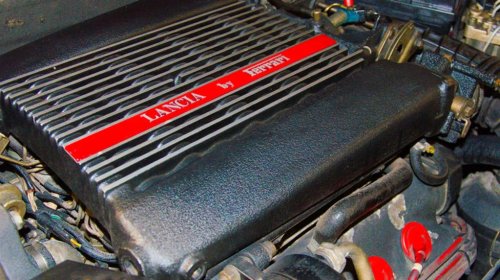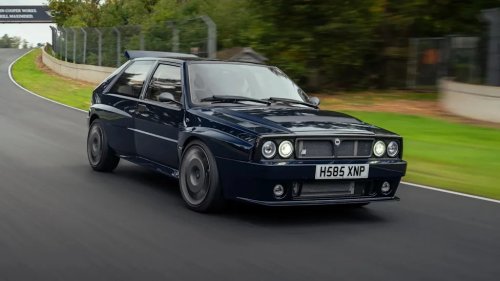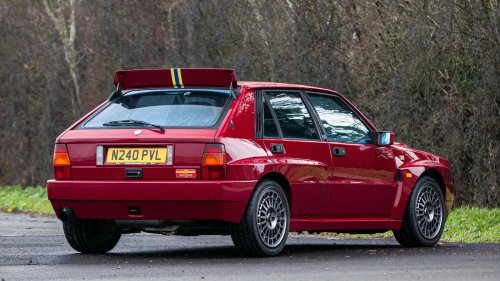
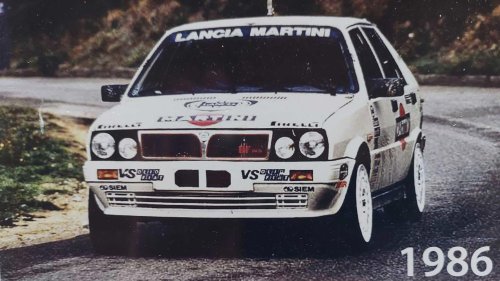
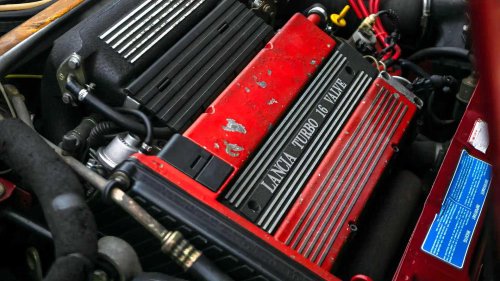
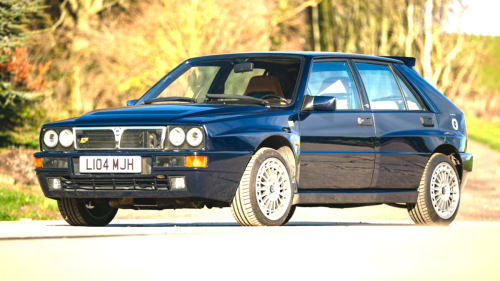
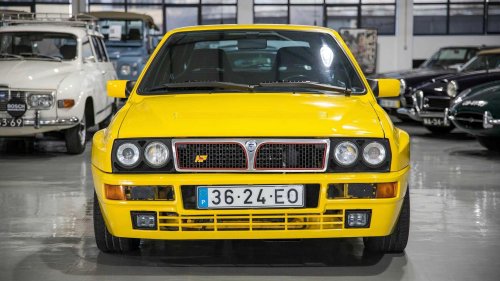



















In the 80s, Lancia had a bit of a spotty reputation in Europe and was virtually unheard of in the USA, but the company was nevertheless punching above its weight in sporting terms. It was doing particularly well in the World Rally Championship with cars that flourished in this homologation era and one of its cars, in particular, was a real hit in the shape of the Delta HF Integrale.This vehicle never went on sale in the US to become a recognized American enthusiast car, and it certainly didn't grow into the sort of household name performance badge to worry BMW or Porsche. Nevertheless, it lived in an important niche space for years and, since its heyday, has been quietly building in stature.It's grown so much that this boxy little Lancia with huge fender flares now sits in serious collector territory and its significant history is a big part of the appeal. The Integrale's Collector Status Iconic AuctioneersFar from being an obscure 1980s performance hatch, the Lancia Delta HF Integrale is now a collector's darling. It's a historically important road car that has genuine motorsport significance and its limited availability is also contributing to its pricing story.Later Evoluzione cars can comfortably exceed the $50,000 mark and Evo II sales attract some serious bidders. The market appears to be robust and is not relying on a one-off anomaly or a hyper-rare special edition to make the case.One particular Evo II from 1994 brought in $157,000 at a major French auction in January 2026 and another recorded a whopping $201,000 in California. That's certainly not representative of every Integrale on the market, but it does show that the model family is firmly within the collector car ecosystem rather than on the outside looking in. Rally Pedigree Built The Legend Lancia The biggest part of the Delta's mystique is probably its competition record. Lancia was dominant in the World Rally Championship in the late 80s and early 90s and delivered six consecutive manufacturers' titles between 1987 and 1992.This is one of the most dominant runs ever seen in the WRC, and it all began with the Delta HF 4WD. From that point, four different Delta versions carried Lancia's success through multiple seasons and Lancia was very much the brand to beat.Some collector cars may rely on a form of history that often represents a mix of facts and romantic nostalgia, but that's not the case with the Integrale. This car built its reputation in full public view on those special stages and against serious opposition and its results define the model today. While the road car is not exactly the same as the competition car, the identity is inseparable and that solid sporting connection may explain why this vehicle carries such an unusual weight in the collector’s world.Many collector's favorites score so well due to their aesthetics, but the Lancia Delta Integrale is hardly going to win any beauty pageants. It has a very squared-off shape with an upright stance, and its flared fenders and vented hood do much to define its general appearance.You could say that the Integrale is more purposeful than pretty, but you can certainly see the motorsport connotation coming through in its design. And to some collectors, this makes the backstory stronger and contributes to the value proposition, as this car certainly doesn’t need explanation in the way that some homologation-era specials may. Instead, it's obviously and unashamedly a road-going extension of a rally weapon, and a successful weapon at that. Turbo Power And AWD Grip Iconic Auctioneers While the Delta HF Integrale looks serious from the outside, it gets even more serious when you delve beneath the skin. The 16V and Evo II versions of the Integrale used a 2.0-liter turbocharged dual overhead cam inline-four, linked to a five-speed manual transmission and permanent all-wheel drive. In that configuration, the car turned out around 215 hp and 232 lb-ft of torque at 2,500 rpm. Its curb weight was around 2,950 lbs, and it had a top speed of about 137 mph.Those numbers came together particularly well within the overall Integrale package. You’d get plenty of old-school turbo shove and, as its drivetrain had those roots in real rally engineering, serious traction and handling was part of the game. The permanent all-wheel-drive setup on the original HF 4WD used a ZF self-locking front differential, a Ferguson viscous center differential, and a Torsen rear differential. That's some serious name-dropping in the mechanical realm, and those features are clearly part of what makes this car feel substantial to knowledgeable buyers.The Integrale stands up to any technical analysis, and it had lots of meaningful power for its size. Its compact chassis, manual gearbox, and sophisticated traction system made it feel urgent and purposeful and Lancia's authentic engineering approach helped to make this Delta a true collectible. Rarity Pushes Values Higher Iconic Auctioneers Americans didn't get to see this car in its heyday and its rarity in the US is a major reason prices are so spicy today. Lancia was long absent from the US market by the time the Integrale became famous on those forestry roads, and this meant that enthusiasts could only admire it from a distance rather than buy from a local showroom.Cars that often do particularly well at US auctions were usually quite common in their period and only became collectible later, but that's obviously not the case with the Delta Integrale. Instead, the Delta is able to build its proposition differently and combine obscurity, scarcity, and fame to raise the heartbeat of a true collector.It's not some European oddity that only specialists understand, and it's certainly not a famous performance car that went on sale in large numbers. It's somewhere in the middle in that it's widely admired by those in the know, immediately identifiable to enthusiasts but still uncommon enough to trigger a double take.The structure of the Integrale market underscores the effects of scarcity. And while the earliest HF 4WD and 8V cars carry significant historic importance, the 16V cars are where performance, usability, and collector appeal really come together.The later Evo and Evo II models are the most visually aggressive and perhaps unsurprisingly, pull in the strongest mainstream collector interest. And while you can still discover different entry points to the Delta story, the limited supply of all variants in the US keeps pressure on those prices. Why The Magic Still Works Car and Classic The Delta Integrale offers people something that modern performance cars cannot. It features that analog and obviously mechanical excitement level that's largely disappeared from the market. It's compact, upright, practical, manual, and turbocharged, and has permanent all-wheel drive. And it also looks purposeful in an authentic way, rather than something that's sculpted by pedestrian safety constraints or aerodynamic targets.The Integrale may be a little raw around the edges, but that's part of its appeal. It may only be a 215-hp hatchback, which certainly doesn't sound extraordinary by current standards, but what you get on board that hatchback is like little else in the marketplace. Its old-school turbo character is certainly different from the filtered competence of a modern hot hatch or performance crossover. And if you were to sum up what makes it different in one word, it would probably be "character".The Integrale is only likely to grow in relevance as modern performance cars get more digital or automated. It represents a driving idea that enthusiasts understand and miss, and it's a car that features competition-bred hardware, practical packaging, and unmistakable personality. Collectors today are increasingly drawn towards cars that feel as if they are the last of something and in that respect, the Delta HF Integrale fits perfectly. It's a proud survivor from rallying's golden era, and it features a performance formula that the industry no longer appears to be interested in.Perhaps it's no surprise that Lancia Delta HF Integrales can easily command $50k because they seem to check every single box in the eyes of an avid collector. Moreover, the market now recognizes the car's existence and its championship pedigree, while its engineering story holds up, and US supply levels remain tight.For those who want to explore the wonders of the 25-year import rule, the Integrale is not just a fascinating forbidden-fruit hatchback from Europe. With a little effort, US collectors can get to know one of the most defining homologation era road cars, so long as they accept that its prices will likely reflect its superstar status.