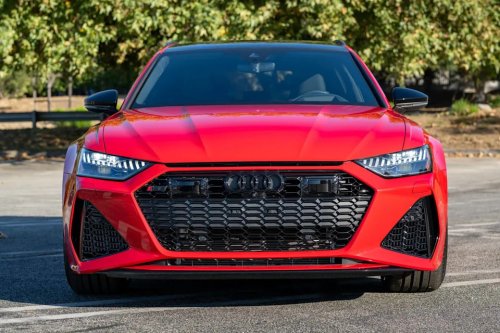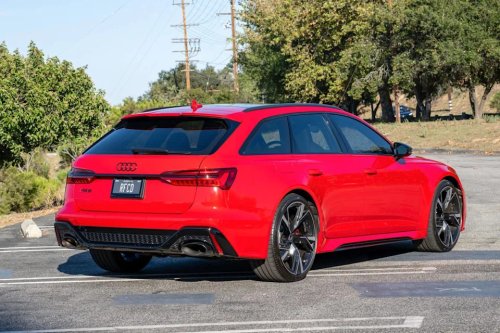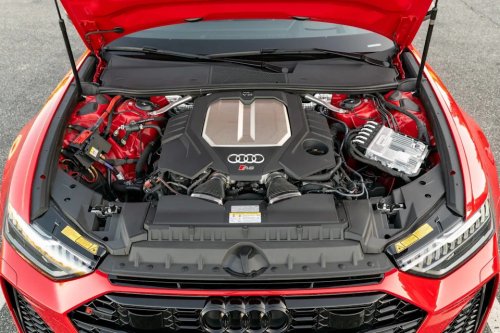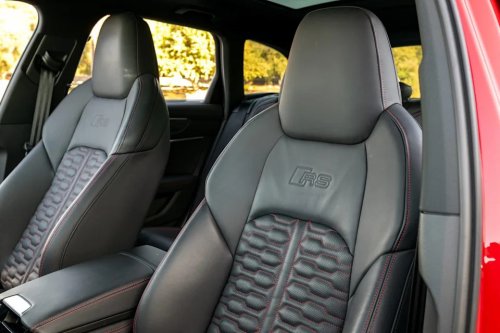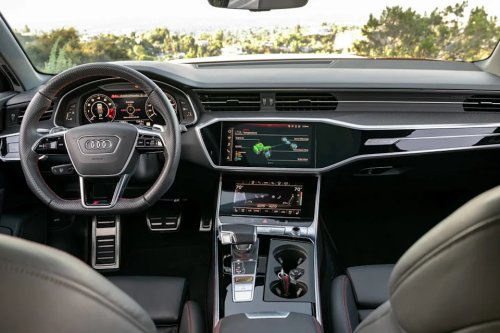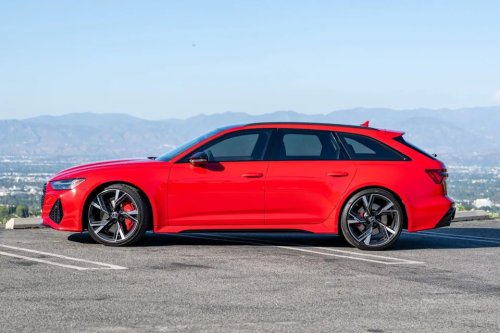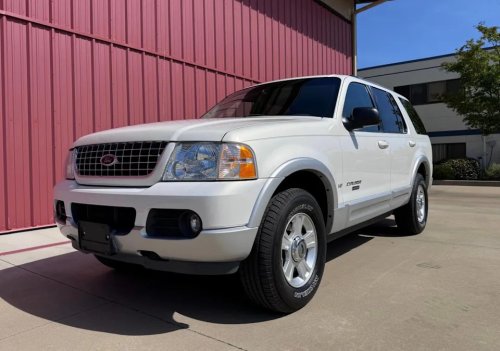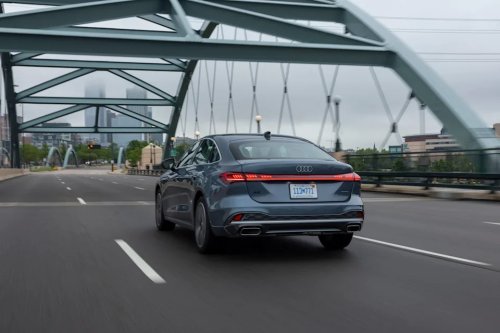
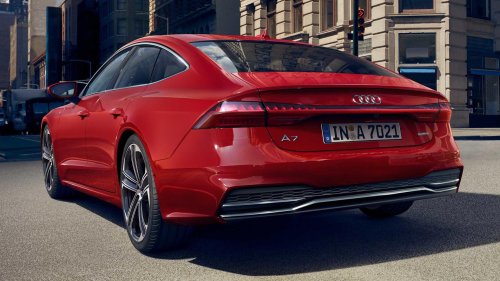
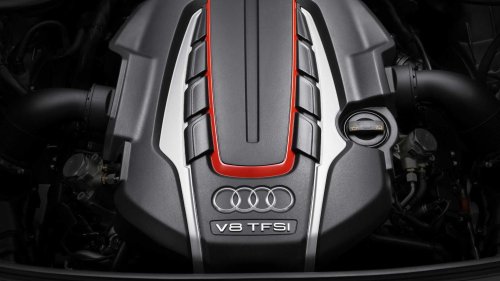
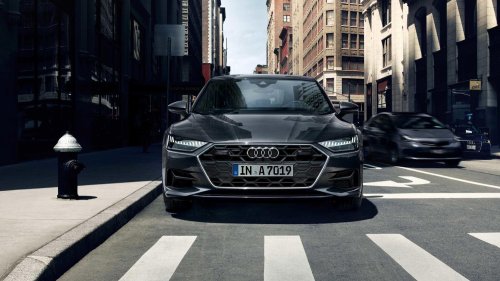
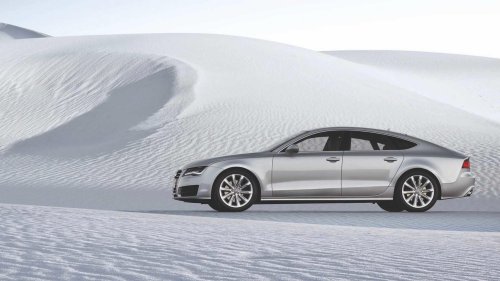
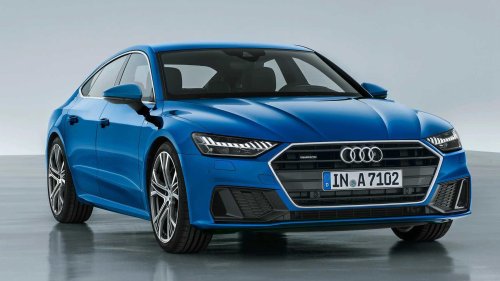



















Audi is one of the most well-known automakers in the world, and for good reason. The German brand has a history that stretches back decades, and a reputation for building vehicles that blend good looks, performance, and reliability. This piece takes a closer look at one of these models, or rather, two of them: the A7 and its sportier sibling, the S7.The A7 was in production for just over a decade and offered something not that common in today’s automotive world: a body style that’s somewhere in between that of a hatchback and that of a sedan. Its sleek, sedan-like looks were paired with a rear hatch in place of a conventional trunk, which added an extra dimension of practicality.Despite being a fairly successful model, the A7/S7 ultimately fell victim to the very vehicles it competed against: crossovers and small SUVs. Both the A7 and the S7 were discontinued in 2025. Only one version of the model is still on sale today, the RS 7 Performance, the sportiest model in the lineup. The autobahn-storming four-door is not the focus here. Instead, this piece covers the A7/S7’s design, its space and practicality, and what you can expect if you’re looking to buy one on the used market today. The A7/S7's Design: Spacious But Stylish Audi The Audi A7 was introduced to the US in 2012 as a coupe counterpart to the A6 sedan. Despite its sweeping roofline, the addition of a sloping rear hatch ensured the A7 did not become a practicality nightmare. A second generation followed suit for the 2019 model year, and remained in place until the model's demise only recently.Both generations of the model offer plenty of cargo space and a cabin that’s spacious enough for passengers to go on a long journey without being cramped. The rear seat area is large enough for two adult passengers to travel comfortably, while the middle seat is better suited to a child or a someone with a very small frame.Audi The cargo area, meanwhile, offers 25 cubic feet of space: ample enough to accommodate heaps of luggage, and large items such as a stroller or golf bag. The rear hatch offers ease of access that’s perfect for prospective buyers who are not interested in buying an SUV, but want the ability to load and unload cargo with ease. The A7/S7 Vs. The Growing SUV Trend Audi The A7/S7’s liftback body style was somewhat of a halfway point between the sedan and the hatchback. It provided a combination of sleek, elegant looks and the practicality of a crossover or SUV. However, this combination was not quite enough to counteract consumers’ growing preference towards SUVs, which has grown exponentially over the past two decades.SUVs were once almost completely confined to the military and agricultural domains. The arrival of larger Jeeps, and the Ford Explorer fo the 1990s, began to really shift public perception of these vehicles, introducing the idea that SUVs could be used for leisure or everyday driving. At the turn of the millennium, models like the Toyota RAV4 ushered in the crossover category, blurring the line between car and SUV even further.Audi Automakers caught wind of the public’s appetite for a vehicle that blended ruggedness and practicality with everyday comfort, and so the number of SUVs on the roads increased drastically over the past two decades. Today, crossovers and SUVs represent about half of new car sales in the US.The A7 and S7 offered a highly attractive package, but it ultimately was not enough to counteract the tidal wave of SUVs taking over the market. Even within Audi’s own lineup, customer preference gravitated towards the Q range of SUVs, which makes up most of the brand’s sales in the States. Powertrains And Performance AudiThe first-generation model was powered by a single choice of engine in the US market: a 3.0-liter supercharged V6. Power output varied depending on model year: between 2012 and 2015, the engine produced 306 hp. This increased to 328 hp in 2016, and then again to 335 hp the following year. The engine was paired with an eight-speed Tiptronic transmission. The S7, meanwhile, was powered by a 4.0-liter twin-turbo V8, which produced 414 hp and was paired with a seven-speed automatic transmission.In terms of performance, the first-gen A7 got to 60 mph in around five and a half seconds, while for the S7 that figure was closer to four seconds. For both models, top speed was electronically limited at 155 mph.Audi The A7’s second generation was equipped with a 3.0-liter turbocharged V6 engine, which produced 335 hp; a seven-speed dual-clutch automatic was the only transmission option available. For the S7, the V8 was replaced with a 2.9-liter twin-turbo V6, which produced 444 hp and was paired with an eight-speed automatic transmission. In both models, the engine was aided by a 48-volt hybrid-assist system.Performance was slightly improved compared to that of the first-gen model: the second-gen A7 reached 60 mph in just under five seconds, while the S7 took just over four seconds. The A7’s speed was limited to 130 mph this time, while the S7’s remained limited at 155 mph. The A7/S7 On The Used Market Today: Prices And Reliability Audi The first generation of the A7 distinguishes itself for reliability: not one, but two model years from this generation have earned themselves a spot on the carBuzz list “Best Used Audi Models To Buy For Reliability." The 2014 and 2016 models made it onto the list as they earned the highest J.D. Power Quality and Reliability score in this generation (85/100). The other model years also fare quite well, going between the high 70s and low 80s.The number of NHTSA complaints for the first-gen A7 is quite low, starting at 30 for the 2012 model year and trending downward for subsequent ones. There have been nine recalls associated with this model through the years, regarding issues with air bags, fuel lines, seat occupant detection systems, seatbelt pretensioners, and the fuel injection system.The second generation also presents a good overall picture when it comes to reliability. The first model year, 2019, has 39 complaints to its name. However, this number drops drastically for subsequent model years, all of which have a single-digit number of complaints. The model’s last four years (2022-2025) have no complaints associated with them at all. The number of recalls started out higher for early model years (varying between 6 and 11) but went down to a single recall, related to a minor issue (rear view camera malfunction) for the last three model years.The main problem areas related to this generation’s recalls include the lane departure warning system, gateway control module, instrument panel, power outlet, rear axle, fuel gauge, high-voltage battery, and air bags.Audi In terms of pricing, for the model’s first generation, you could get away with paying as little as $7,000, but these cheapest of models are likely to be at least a decade old, sporting higher mileages, and will likely be in need of some repairs and or missed maintenance. Spend a little higher, anywhere between $10,000 and $15,000, in order to net a nicer example with higher standard specification, average mileage, and a solid service history.Buying an S7 from the first-generation will understandably require a larger investment on your behalf, but not dramatically so. Checking data from the CarBuzz Marketplace shows that $20,000 is a suitable budget for a sharp example of an early S7.For the second generation, the lower end of the price range sits around the $20,000 mark, if not a little lower, although $30,000 is a better budget for anyone looking to secure a smart example. In terms of the S7, add another $10,000 or $15,000 to that budget. Which One Is Better: First Or Second Generation? The choice of which version of the A7/S7 is right for you depends on your priorities when making a used car purchase. In terms of design, the two generations are not dramatically different, with a similar silhouette and minor changes to things like the shape of the headlights. However, as car technology has evolved dramatically between 2012 and today, the second-generation model might be a better choice for people who prioritize having up-to-date tech on board.If, however, tech is not a top priority, and you simply want a car that combines style and practicality while keeping the budget small, the first-generation model wins out in terms of affordability. Even though the oldest examples of this model are nearly 15 years old, a well-maintained first-gen A7 can provide you with a great ownership experience. Importantly, both generations deliver on that all-important brief of offering SUV practicality, without compromising with an ungainly or boxy design.