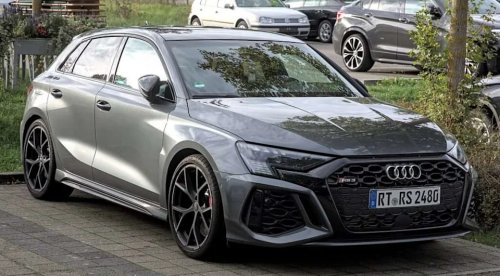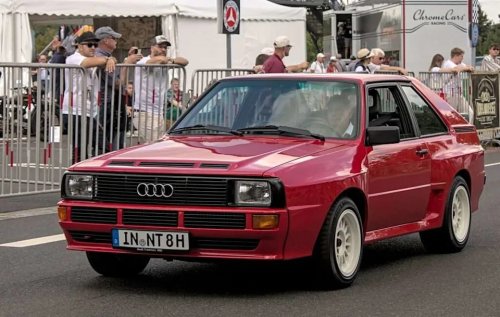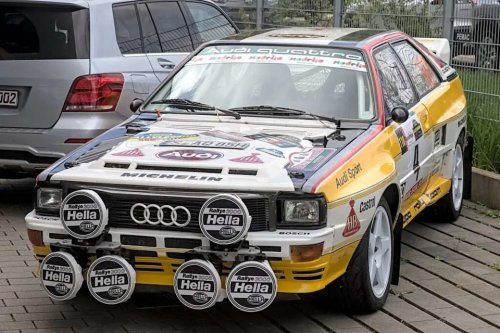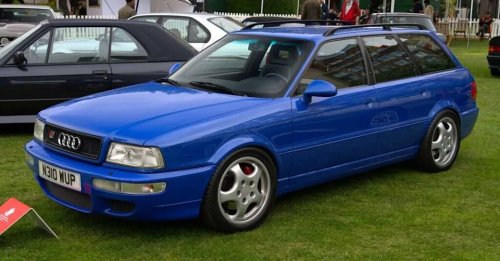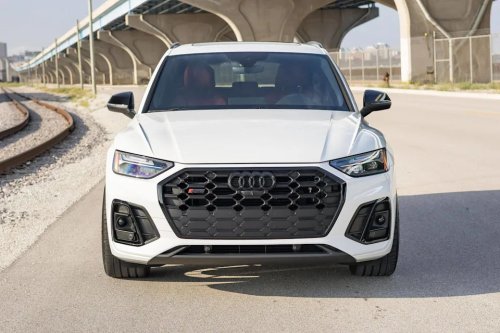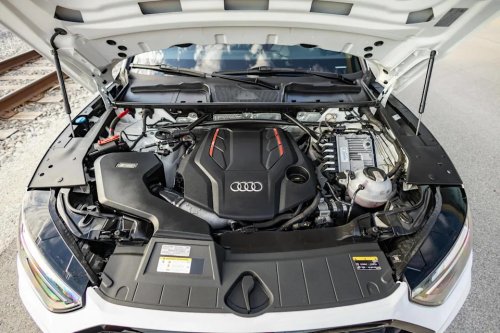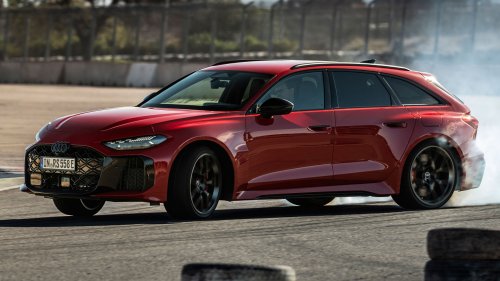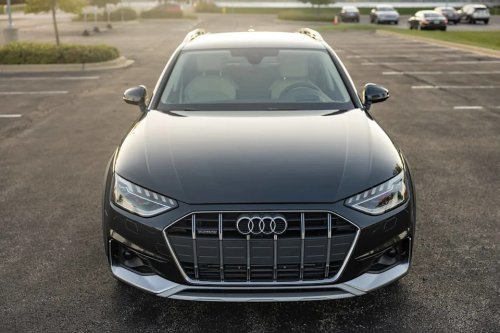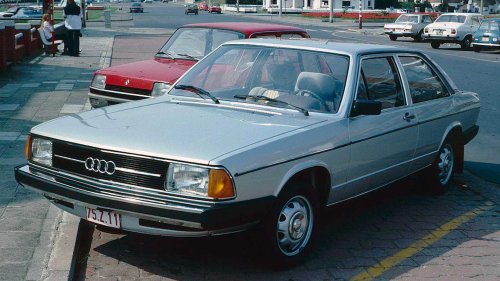
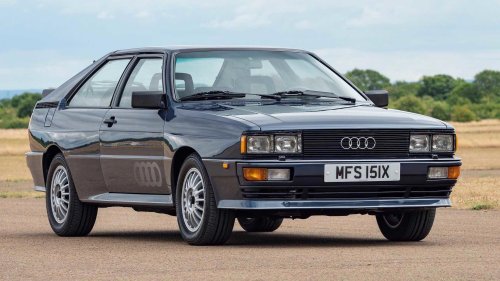

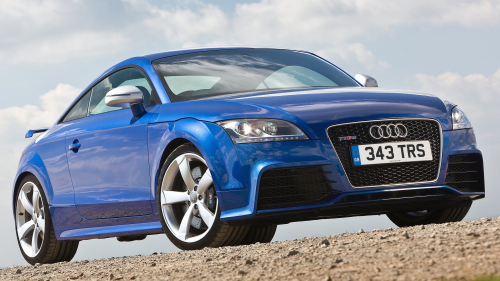
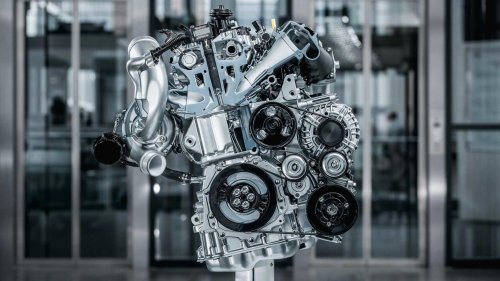
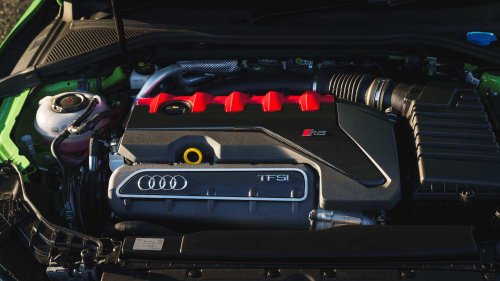
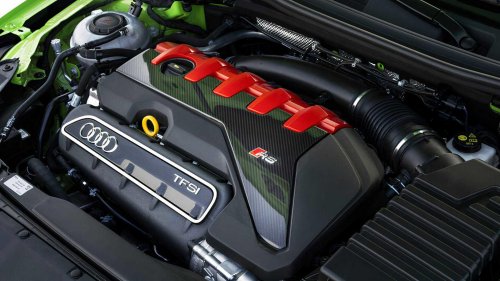





















Five-cylinder engines aren't exactly commonplace in the automotive world, especially when it comes to the US market. In the old days, we were much more used to V8s and straight-sixes, while the inline-four has become much more common to the US market in modern times. The inline-five engine was brought to us, largely, by the Germans, namely Audi. Since then, it's occupied a very small slot in the market as a whole.However, when it comes to the entire automotive world, Audi's five-cylinder has had a much larger impact. In recent times, the mill has received heaps of praise for attributes like power output, engine noise, and fuel efficiency. It's also been able to hold its own against larger performance-oriented engines. Not to mention, the Audi five-pot is loved by loads of gearheads, and has even been described by Audi itself as a pillar of the company's success. But, despite all these positives, Audi is still sending it to the chopping block. Why? A Storied Past Wikipedia Commons / Charles01Audi's dance with the five-pot began decades ago. The very first iteration of the odd-numbered engine was seen in late 1976 as a 2.1-liter, under the hood of the Audi 100, having been developed from a prototypical four-pot carrying the code name "EA 827." At the time, the German automaker decided that the four-cylinder engines produced at the time were, simply, not powerful enough. However, Audi didn't want to jump into building engines like straight-sixes or V8s, as these mills weren't as accepted, or practical, over in Europe.So, a decision was made to develop an engine that was just slightly larger than a four-cylinder, but not as cumbersome as one of the two examples above. In steps the five-cylinder. The '77 Audi 100, armed with the unique powerplant, went on sale with a new self-image, as it was destined to occupy a higher spot in the market than it had previously, thanks to its new propulsion system. According to anecdotal reports, the 1977 Audi 100 5E was roughly $7,300, or about $39,778 in today's money. One year later, the first diesel variation hit the market, followed by a turbocharged gasoline version a year after that, the latter of which produced 168 horsepower.Audi The Audi five-pot's big break came in 1980, when Audi introduced the Quattro. It was the world's first popular, mass-market full-time all-wheel drive model, and it went on to dominate the World Rally Championship (WRC) in 1982. Come 1983, Audi released the Sport Quattro, a wider, lower, and more aggressive version of the Quattro with a suped-up version of the turbo five under its hood, producing an impressive 302 horsepower. In 1983, this made the Sport Quattro the most powerful German-produced, road-legal car ever. In Group B rally guise, the engine's power output was ratcheted all the way to 444 ponies. The fabled 1994 Audi RS2 Avant also utilized a turbocharged five-cylinder, and even managed to definitively give birth to an all-new class of vehicle: the sports wagon.Audi For nearly the next two decades, very little of note happened to the Audi five-cylinder. It was still offered in naturally-aspirated, turbocharged, and diesel forms, but it didn't shake the automotive world to its core like it did during its first seven or so years of production. However, come 2009, Audi's five-pot got another big-break chance in the TT RS sports car. The Mill's Modern History Audi That first modern break achieved by the Audi five-pot put it decidedly back on the performance map. The '09 Audi TT RS was loved by virtually anyone who drove it. Prior to its release, the TT was seen as a well-sorted, but unserious convertible sports car whose overall demeanor leaned a bit further into the feminine side of things. The TT RS' use of a direct-injected, turbocharged five-cylinder and a whole host of other go-faster goodies changed its reputation virtually overnight. From 2010 to 2018, the 2.5-liter turbocharged five-pot managed to secure a winning spot in the International Engine of the Year's 2.0-liter to 2.5-liter category.From this point on, the Audi five-pot was known as a high-performance engine. Following its use in the Audi TT RS, it was also assigned to the Audi RS 3 Sportback and sedan beginning in 2011, and the Audi RS Q3 performance SUV. These days, the motor is solely utilized by the Audi RS 3, as the TT RS was axed in 2023 and the RS Q3 about a year later. However, it's recently been confirmed that the engine will be utilized by the upcoming 2027 Volkswagen Golf R, marking the model's final use of ICE power. Here's How It Works AudiAt its core, Audi's five-cylinder engine operates much like any other conventional engine, just with an odd number of pistons. Over the course of its life, it's used both cast iron and aluminum for both its cylinder head and engine block, with the latter being the staple material these days. Every single Audi five-cylinder utilizes the same "1-2-4-5-3" firing order, which lends itself to the signature "throaty" sound that's loved by many. The Culmination Of Half A Century's Progress AudiThe current 2.5-liter five-cylinder is proof that Audi worked hard to produce one of the most lightweight and performance-oriented variations ever to grace the world's roadways. Beginning in its guts, it uses a special aluminum alloy for its block and cylinder head material. It also uses a hollow-bore crankshaft, which reduces weight, allowing the motor to rev faster than an engine with a solid crankshaft. Other components, like pistons, connecting rods, and even accessory pulleys are made from lightweight materials.It employs two different types of direct fuel injection, which Audi calls "dual injection." The first type is exactly what you'd expect; a system that injects fuel directly into the combustion chamber. However, the second type squirts fuel into its own intake manifold, effectively pre-gaming the engine with a volatile air-fuel mixture before it even hits the cylinders. The engine itself is only 19.7 inches long, which is smaller than some four-cylinder mills. In an effort to reduce as much piston friction as possible, the engine uses plasma-coated cylinder liners and dedicated oil squirters for each piston.Audi One of the more unique aspects of the engine lives in its cooling system. Most modern engines have either a belt-driven or gear-driven water pump. This means the pump itself is constantly running when the engine is on. In the Audi five-pot's case, the water pump will not circulate coolant until the engine reaches operating temperature, which allows the motor to reach said temp much faster. Audi claims this special water pump reduces overall friction while also increasing fuel economy. Why It's Leaving Us, Despite It All AudiThroughout this article, it's probably become apparent to you that Audi's five-cylinder engine is fraught with positives. It's lightweight, compact, powerful, worthy of several awards, and it's been around for 50 years in an official capacity. At this point in time, the question of "why?" really begins to crop up. However, there are some EU-specific reasons for its cancellation, and those reasons aren't very fun.In short, it's because of emissions regulations. On November 29 of this year, a new swath of rules goes into effect. The regulatory package is called "Euro 7", and Audi has decided it would be too expensive to continue to upgrade the engine to meet the new standard. Not to mention, Audi is still rather gung-ho about the whole EV thing, and getting rid of the legendary engine will, reportedly, free up some much-needed resources to be fired into the EV program.Volkswagen So, like many awesome things in the automotive world, rules, regulations, and electrification have claimed another victim. If nothing changes, and with the Audi RS 3 leaving the fold at the end of this year, it looks like the 2027 VW Golf R will be the last time we'll see the fabled 2.5-liter Audi five-cylinder, some 51 years after its great-great-grandfather first hit the market.