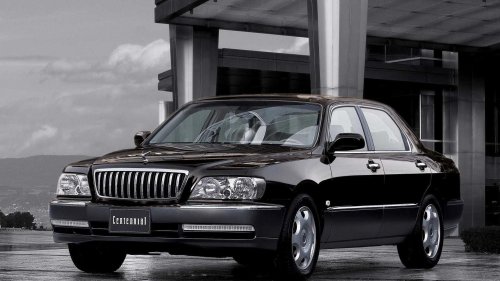
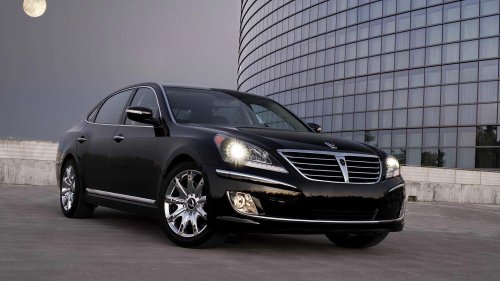
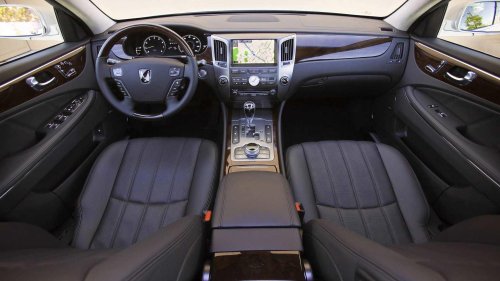
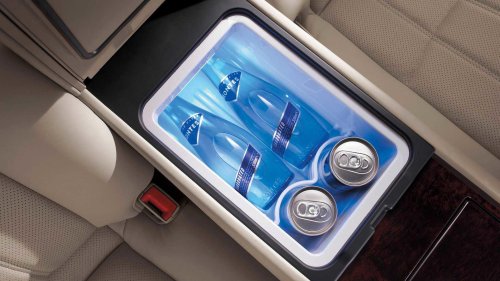
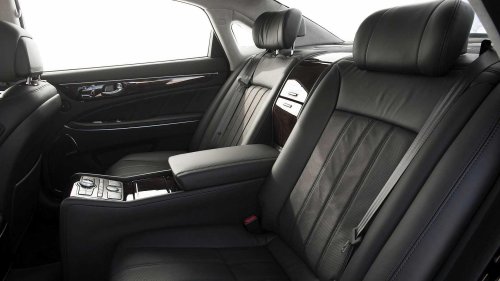
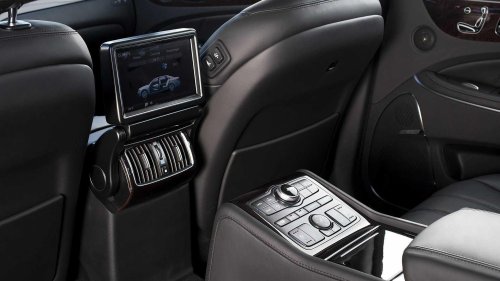
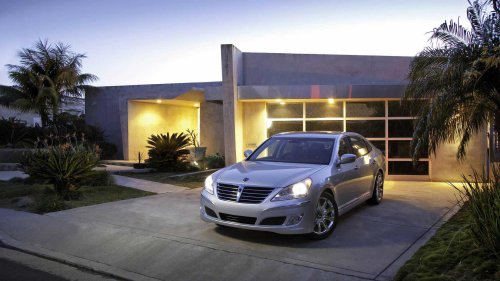
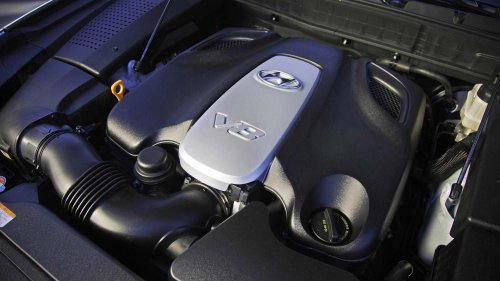
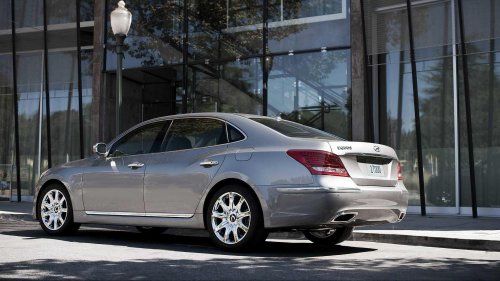
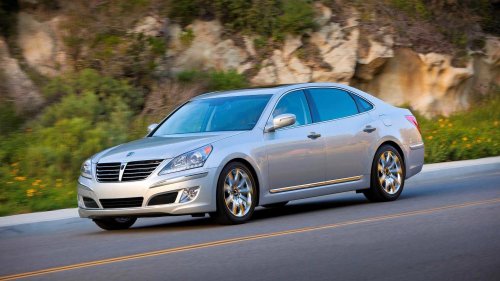
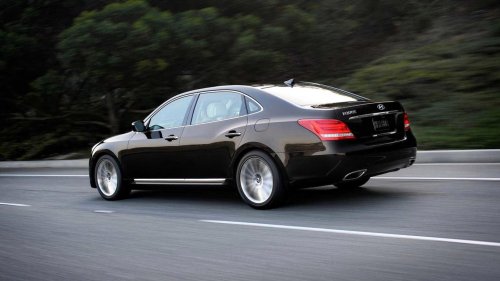
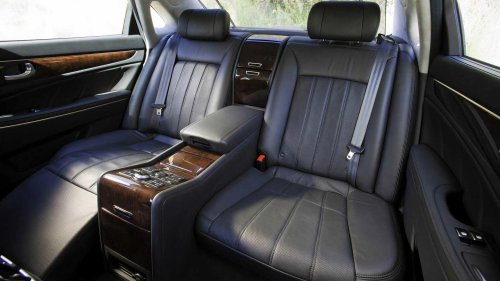


















In the early 2010s, Hyundai was making big moves. The South Korean car brand, known for its economical sedans and crossovers, was doing well. So well, in fact, it decided it needed to start taking big chances on its models. The Genesis Coupe and Sedan that the brand released in the late 2000s were surprisingly popular hits that focused on the luxury and enthusiast markets. Propelled by this success, the company felt it was time to aim even higher, and a few years later, the brand announced the arrival of a genuine S-Class competitor called the Equus.Yes, the company known most famously for commuter cars like the Elantra felt it was time to come out with a gargantuan sedan, packing a potent V8 under the hood, advanced driver assistance features, cooling rear seats, adaptive air suspension, and so much more. It was a genuinely impressive luxury vehicle in nearly every respect, and you could get it for less than half the price of similar models from BMW, Mercedes, and Lexus. It could have been a hit, but a few large issues held it back, and today, it's nearly completely forgotten. Is it time to give Hyundai's luxury sedan a second chance? The Equus Arrives in America HyundaiAlthough the Equus only arrived stateside in 2011, a previous generation had been sold in South Korea since 1999. That model was very obviously modeled after the Mercedes S-Class and Lexus LS of the time, and a passing glance would have you believe you'd just seen either of those cars and not a Hyundai. It was reportedly very popular, but the company didn't believe it had the market appeal to sell a model like that in the US. It had, however, been a consideration, and at the 2001 New York International Auto Show, Hyundai imported a first-gen Equus to gauge customer interest.HyundaiLooking to play off the success of the Lexus LS (badged as the Lexus LS430 for its third generation from 2000 onwards), Hyundai cheekily touted the Equus as the LZ450. Fast-forward a little over a decade, and this changed. Hyundai had grown substantially around the world by this point and was finally ready to start pushing the boundaries of its brand. When the second-generation Equus arrived in 2011, it was easily the brand's most ambitious and expensive model to date. A Bigger Price Tag Than Any Hyundai Had Carried Before HyundaiThe Genesis Sedan was selling for around $40,000 at this point, which was already an impressive amount for a sedan with a Hyundai badge, but the Equus blew that out of the water with a starting price of $58,000 and two main trims:Signature – A well-equipped base model with all the essentials of a premium sedan. Ultimate – A chauffeur-oriented version that swapped out the rear bench for two individual, power-reclining seats with massagers, footrests, and personal screens. There were no additional options, just a choice between these two trims, so if you weren't thrilled with the Signature, you'd have to pony up about $10,000 more to get the nicer model with fewer seats. The good news was that you wouldn't have to make this decision at the dealership because, when the car first arrived, the company attempted a new sales model that would see interested buyers call up the dealer, who would bring an Equus to them for a test drive.If a car was purchased, it then came with an iPad that would be used to handle scheduling service trips. When such events were scheduled, Hyundai would have your vehicle picked up and a loaner dropped off for you. The brand knew the concept was bold and that it would be an uphill battle, and so from the beginning, it was only expected to sell a few thousand in the US per year. What Made the Equus Unique HyundaiSo what really sets the Equus apart? Well, on the exterior, not much. From the outside, the sedan is impressively understated, with a length that screams Audi A8, but looks that are entirely underwhelming. It's not an unattractive vehicle by any means, just something that utterly blends in with traffic. However, it does look higher-end, so if you're looking for something that isn't going to attract attention while still exuding class, this is the model for you.HyundaiBeneath its understated exterior, the Equus packed serious hardware. Early models from 2011 came with a 4.6-liter Tau V8 producing 385 horsepower, while an update for 2012 upgraded the engine to a 5.0-liter V8 with 429 horsepower and 376 lb-ft of torque. Both versions drove the rear wheels through an eight-speed automatic transmission, with an emphasis on smooth, quiet cruising over outright sportiness. Yeah, the fuel economy is poor, hovering around the mid-teens, but it's not a vehicle you buy to be frugal.The Equus also offered a long list of luxury features you’d expect from cars costing far more. Highlights included: Massaging, power-reclining rear seat (Ultimate only) Soft-close doors and power sunshades A Lexicon 17-speaker premium audio system Real wood trim and high-quality leather upholstery Air suspension for added ride comfort The driver's seat on both trims had a massage function, and both front seats were heated and cooled. Both trims also came with an eight-inch infotainment screen with navigation, a head-up display, lane departure warning, blind spot detection, intelligent cruise control, and much more. Moving up to the ultimate, the back seat became a lounge, with a refrigerator center console, power headrests for both seats, individual screens, and a singular seat behind the passenger that receives a footrest and massaging.HyundaiOf course, there were many more features standard too, and nearly anything you wanted to feel comfortable, you'd be able to find on one of the two trims, especially space, as it offered enough room in the front and the rear to make you feel like you're in first class. At face value, the car had everything it needed to compete with its much better-established competitors, but its shortcomings simply couldn't be overcome with massaging seats and a low price tag. The Brand Perception Problem And The Genesis Solution HyundaiIts issues stemmed from one place: the Hyundai badge. While Hyundai wasn't the first to punch above its weight in the car industry (nor will it be the last), it punched too high, much too soon. You have to remember that this was a company that was known for being cheap above anything else in the 1990s, and you mean to tell me less than 15 years later it's trying to compete with Mercedes-Benz? It's just a tad farfetched. Even Toyota had experience building luxury cars long before it launched Lexus.HyundaiToyota had the right idea when it launched Lexus in the late '80s. It realized that, despite having a well-respected reputation, launching a luxury sedan with a Toyota badge would be too much to stomach for many buyers, so it created a new one. When Hyundai chose not to do this for the Equus, it was inherently cheapening the model, and you could see that throughout.The leather and wood didn't feel as high quality as they should have, the dials and buttons were cheap, the transmission was poor, and the ride felt entirely disconnected. It was a car about 75% of the way to being a legitimate contender and could have benefited from greater investment and a longer design period. Using the Lexus example, again, Toyota invested over $1 billion in developing the LS400, and that was in 1983. When it arrived, it was a compelling alternative to the S-Class; the same could not be said of the Equus.HyundaiIn its best year, 2013, Hyundai sold 3,972 Equus sedans in the US, a fraction of the sales achieved by the Lexus LS, BMW 7 Series, and Mercedes-Benz S-Class. Hyundai knew the model wasn't going to survive, but using what it had learned with its creation and the creation of the Genesis Sedan before it, the company was finally ready to launch its luxury brand - Genesis - in 2015.The brand launched in the US in late 2016 with the G80 and G90 sedans, with the latter effectively being the successor to the Equus. Both took everything the brand had learned from the Equus and made it better, as they both launched with better styling, improved quality, and impressive performance. While it took a while for the Genesis brand to become fully independent of Hyundai, it's now reached a point where it offers a line of luxury models that easily compete with some of the best luxury models in the world, and it can trace this back to the work pioneered by the Equus. The Equus Today: A Luxury Bargain On The Used MarketHyundaiThe Equus was officially discontinued in 2016 with the creation of the Genesis brand, and over its short life, the company only managed to move a little under 18,000 of the models. Given the low expectations of the model in the first place, these aren't actually terrible sales numbers, and today, used options are very affordable.HyundaiMany options with less than 100,000 miles can be found for around $12,000, with some that only have around 50,000 miles selling for around $15,000. This is a $15,000 car with a 400-horsepower V8, massaging seats, and an impressively comfortable ride. You could easily soak up the miles in a vehicle like this, and although we'll always warn you against buying a cheap luxury vehicle due to the repair and maintenance costs, it's hard to know where the Equus lands in that situation.HyundaiWhile it's certain to be more expensive to own than a Hyundai Sonata, it's likely to be much more affordable than an S-Class, truly making it a much better option for those of us who want to enjoy luxury on a budget. Just try to make sure the model you find has been taken care of because the last thing you want is to have to service that air suspension or V8 soon after you purchase this behemoth.Sources: Hyundai