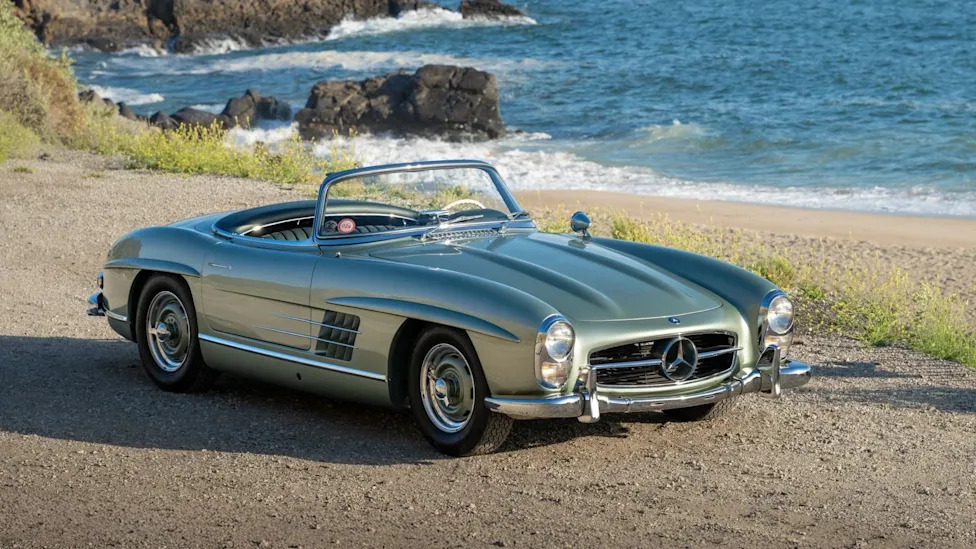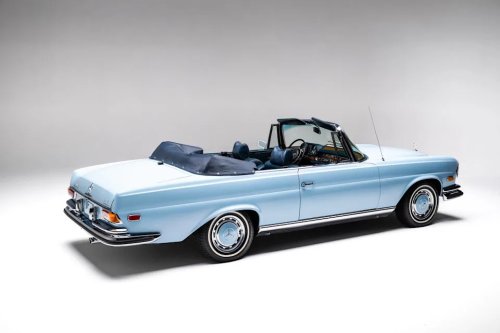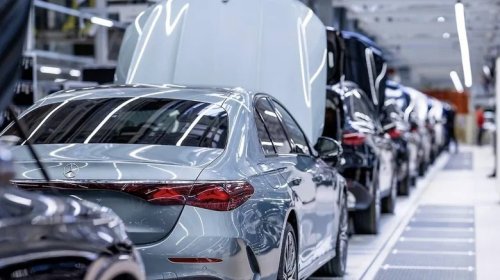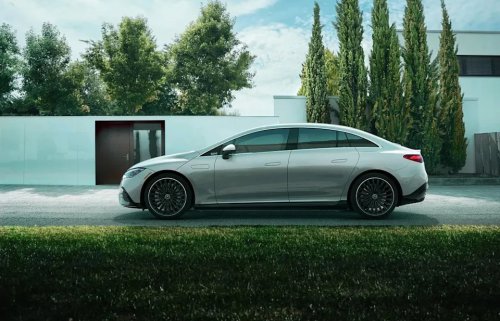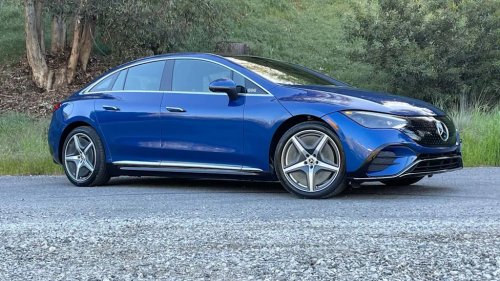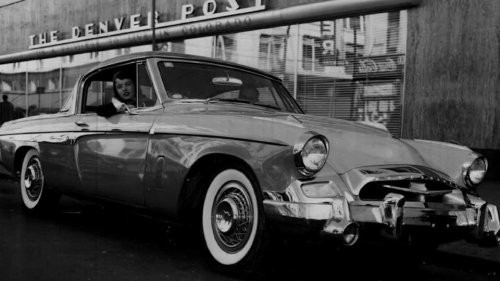
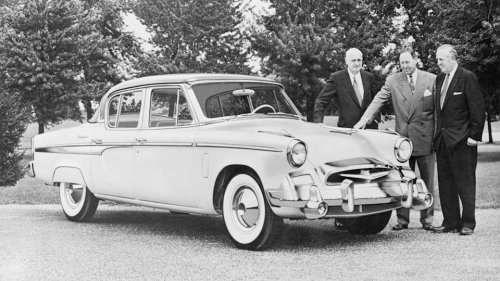
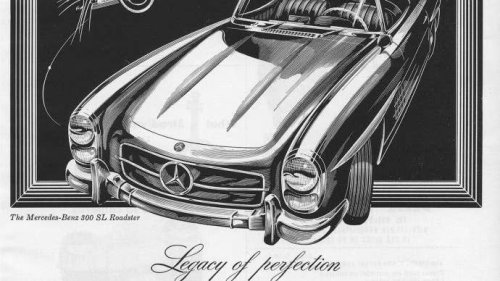
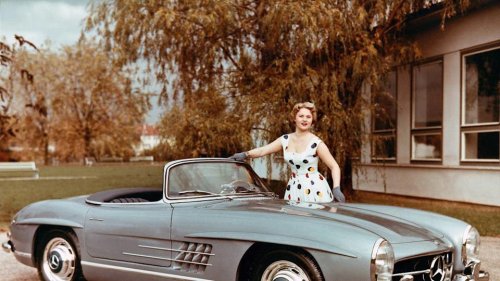
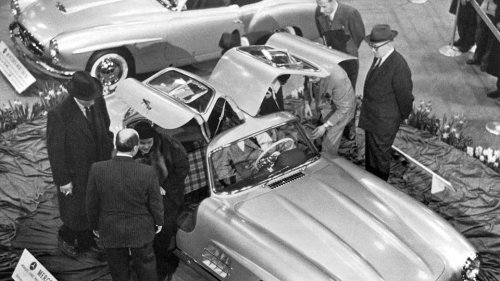


















Autoblog and Yahoo may earn commission from links in this article.Running a car business is hardUnless you’re a company like Tesla or Rivian, getting car dealers on board with your unique brand and vision is pretty much the only way to sell cars in the United States. That’s not just a tradition, in most states, franchise dealership laws require automakers to sell through independently owned dealerships rather than directly to consumers. Without the right resources and connections, this multi-layered system can make it difficult for a new and emerging brand to survive in the American market. Partnering up with the right people can help build out a network of physical dealers and showrooms, and for European brands trying to crack the US market in the 1950s, it wasn’t just a challenge, but a fight for relevance.Before they populated executive parking lots and hotel valets from coast to coast, there was a time where Mercedes-Benz was virtually invisible to most Americans. While it may seem as if there are 10 to 20 different Mercedes dealers in and around every major U.S. city these days, in the 1950s, Mercedes was a much different company than the behemoth that it is today. To sell more cars, it needed to be in more showrooms, and at the time, Mercedes didn’t have any of that. What they found instead was Studebaker-Packard; an American automaker that was very much on its last legs, that just so happened to have exactly what Mercedes needed. The partnership that followed didn’t save Studebaker, but it launched Mercedes into the American mainstream.Floyd H. McCall/The Denver Post via Getty ImagesView the 2 images of this gallery on the original articleTwo Companies, One Common ProblemTo understand why a major American automaker like Studebaker-Packard entered into an agreement to sell Mercedes-Benzes, it should be known that both Mercedes and Studebaker-Packard were facing their own respective struggles.AdvertisementAdvertisementIn 1954, Studebaker and Packard merged to form the Studebaker-Packard Corporation in an attempt to survive, but it was a union that was troubled from the start. The idea behind the merger was that both Studebaker and Packard would come to the table with something that’d benefit each other; by linking up with Studebaker, Packard would benefit from their larger dealer network to sell more cars. To make a long story short, the deal wasn’t as sweet as thought out to be, as Packard execs learned the hard way that Studebaker had “cooked the books” when presenting their financials, which didn’t come to light until the merger was already signed.To make matters worse, Studebaker had their way with the Packard nameplate. What was once a rival to American luxury buyers, was being slowly broken up and sold for parts. Ultimately, in 1957, the combined Studebaker-Packard decided to stop making dedicated Packard models, in favor of simply rebadging Studebakers as Packards. Consumers weren’t fooled and as a result, Packard sales dropped to just 4,857 units in 1957. By mid-1958, the Packard badge would be given up for good.Getty ImagesBut despite all this, Studebaker-Packard had another lifeline. In an effort to expand its reach, aircraft manufacturer Curtiss-Wright linked up with Studebaker-Packard in 1956 through a special “management agreement,” which helped them regain some business acumen. In 1957, around the same time when Studebaker-Packard announced their Packard rebadging scheme, Curtiss-Wright leveraged its vast business connections in the aviation and military to connect Studebaker with Daimler-Benz; the then-named parent company of Mercedes.Although they were known across the pond for their racing prowess, attention to detail and outright opulence, Mercedes was still a tiny brand that didn’t catch on any American car buyers’ radars; even to the kind of posh, high-end buyers that could afford their cars. According to its own data, Mercedes sold just 53 cars in the entire United States in 1952, though it improved to 288 units the next year and 437 units in 1954. At the time, the brand didn’t have an extensive U.S. dealer network; in fact, New York City-based importer Max Hoffman, with dealers in New York and Los Angeles, was the importer and sole distributor for Mercedes-Benz at the time.The Deal That Changed EverythingIn 1957, Curtiss-Wright, Studebaker-Packard and Daimler-Benz reached an agreement for Studebaker-Packard to serve as the U.S. distributor for Mercedes-Benz cars. Through this agreement, distribution of Mercedes cars was boosted through participating dealers throughout the United States, and in return, Studebaker-Packard received a much-needed seven-figure cash injection. Through the agreement, Mercedes-Benz Sales Inc. was formed as a subsidiary of Studebaker-Packard, and Mercedes cars began appearing at Studebaker-Packard dealerships throughout the country. For most Americans, their first exposure to a Mercedes wasn’t at some stuffy European import boutique, it was at their local Studebaker dealer, where 300SL roadsters and 220SEs were displayed next to Larks and Hawks.AdvertisementAdvertisementInstantly, Mercedes’ dealer network dramatically expanded. Led by veteran Packard exec Lon Fleener, M-B Sales Inc operated out of an office at the Studebaker headquarters in South Bend, Indiana. Its small staff of mostly Studebaker and ex-Packard people handled dealer recruitment, sales, parts and service training, as well as US brand awareness and advertising. Studebaker made it fairly easy for franchisees to sell Mercedes-Benzes, which came at an agreement to purchase $10,000 of parts, tools and signage, as well as keeping two to four cars in their showrooms.Studebaker National MuseumAdvertisementAdvertisementAlthough these cars were prohibitively expensive to most buyers, the new distribution network gave the Mercedes-Benz brand something that money couldn’t exactly buy on its own: exposure. At a time when Cadillac and Lincoln dominated luxury car sales in the United States, the arrangement for Mercedes to sell its cars in Studebaker-Packard dealers helped expose Americans to a new upper echelon of luxury motoring. In a 1961 review, critics at Car Life magazine were very receptive to the 220SE saloon, a best-selling model that it concluded as being a threat to marques like Cadillac, as they found its fit, finish, effortless six-cylinder power and ease of use to trump Detroit’s best.“[...] the Mercedes-Benz 220-SE sedan is expensive, and worth every dollar of its cost,” they declared. “We encourage anyone interested in automobiles to look over one of these cars carefully—even if he isn’t considering buying one. The way the car is put together; the fit of the doors, the quality of every detail is such that you can’t but be impressed. [...] It’s easy to understand why so many Cadillac owners are switching to this car.”Mercedes-BenzThe BuyoutThe numbers told the success story pretty clearly. Mercedes data shows that while it sold 3,150 units in 1957, sales doubled to 7,404 units the next year and maintained an average of about 11,000 to 12,000 units from 1959 to 1965. In hindsight, these numbers are a sliver compared to Cadillac, which sold 163,174 units in 63’, although Lincoln (which only sold just the Continental sedan and convertible at the time) sold just 31,233 units that same year. However, more telling of the brand’s growth under the Studebaker-Packard agreement was the sheer amount of retailers that it gained. By 1964, there were more than 320 dealers that sold Mercedes vehicles, with more than 150 of them being Studebaker-Mercedes combination dealerships.On the flip side, Studebaker-Packard was doing considerably worse. The company tried everything; diversification into non-automotive industries and even an attempt to revive the Packard name using rebadged French cars. In 1959, M. Jean Daninos of Facel-Vega pitched Studebaker-Packard the idea of a potential rebadging of the Excellence as a new Packard. Knowing that such a product would kill sales of its own cars, Daimler-Benz executives protested to their equivalents at Studebaker and threatened to pull out of the distribution deal.AdvertisementAdvertisementStudebaker would close its South Bend plant on December 9, 1963, moving what little operations it had over to Canada, where it soldiered on until the plant closed in 1966, while the rest of Studebaker lasted until 1967. Seeing the writing on the wall, Daimler-Benz execs quickly began negotiating a buyout of its contract with Studebaker, which it successfully negotiated for a sum of about $4 million to $9 million at the end of 1964. In April the following year, Daimler-Benz formed Mercedes-Benz of North America Inc., setting up shop in Fort Lee, New Jersey to handle North American distribution entirely on its own. To establish its own independent dealer base, Mercedes recruited 200 of the highest-performing Studebaker and Studebaker-Mercedes dealers to become the first official U.S.-based Mercedes-Benz dealerships.Mercedes-BenzView the 2 images of this gallery on the original articleIn ReflectionIn the end, the distribution agreement between Studebaker-Packard and Mercedes-Benz could be looked at as one of the most lopsided, but consequential partnerships in automotive history. For Mercedes-Benz, the deal was the ultimate catalyst for growth, providing the German brand with an established national dealer network and the mainstream exposure necessary to challenge domestic luxury titans like Cadillac and Lincoln. This strategic foothold helped Mercedes become the household name it now is, laying the groundwork for the dominant market presence Mercedes-Benz enjoys in the United States today.While Studebaker-Packard had faded into history by the late 1960s, its legacy inadvertently lives on through the success of the very brand it helped introduce to America. Today, Mercedes-Benz outsells the domestics; in 2025, it sold about 303,200 cars in the U.S., while Cadillac moved 173,515 units and Lincoln sold just 106,868. Over the past 30 years, it has been making cars in Tuscaloosa, Alabama and had recently celebrated its 5 millionth SUV rolling off the line with a landmark $4 billion expansion investment. Although 60% of the plant’s output goes overseas and that most of the company's business is in China; it’s hard to believe that Mercedes’ footprint in the U.S. started with a partnership with a company that no longer exists.AdvertisementAdvertisementThis story was originally published by Autoblog on May 12, 2026, where it first appeared in the Features section. Add Autoblog as a Preferred Source by clicking here.