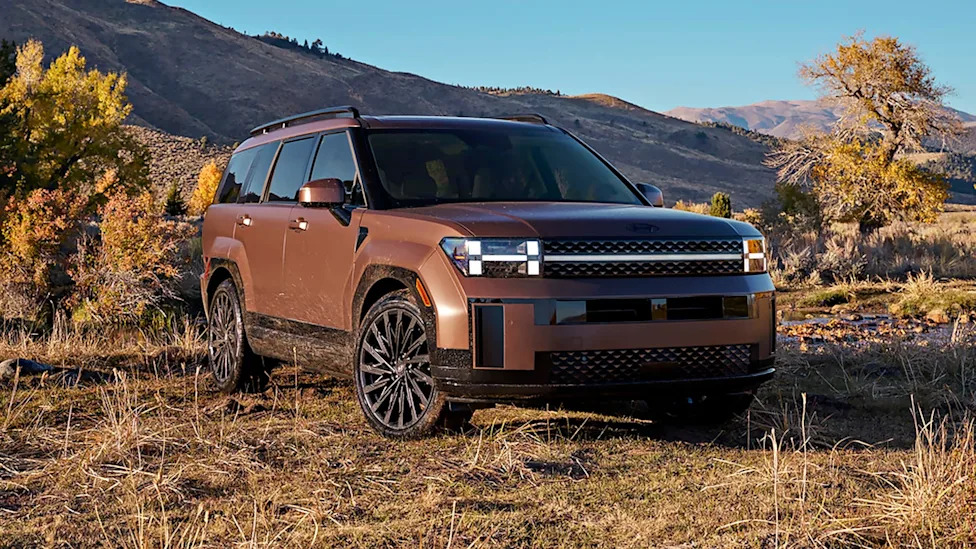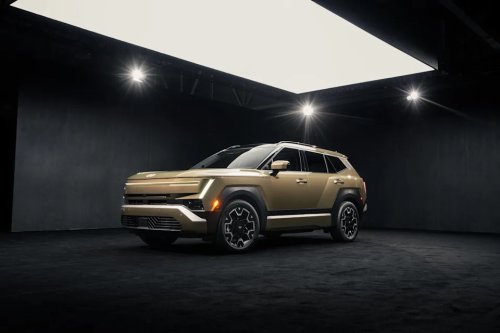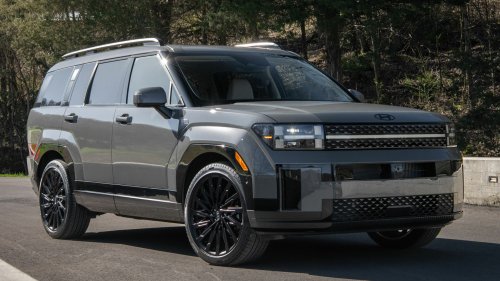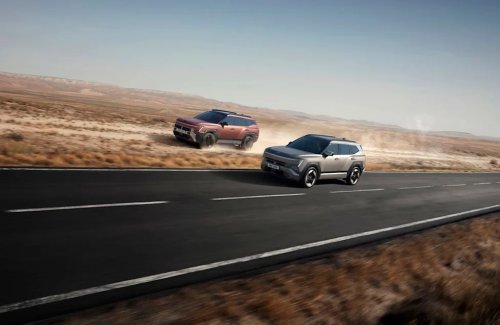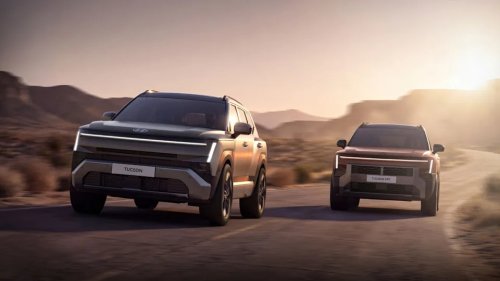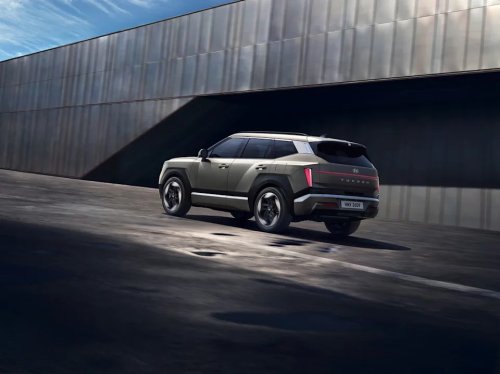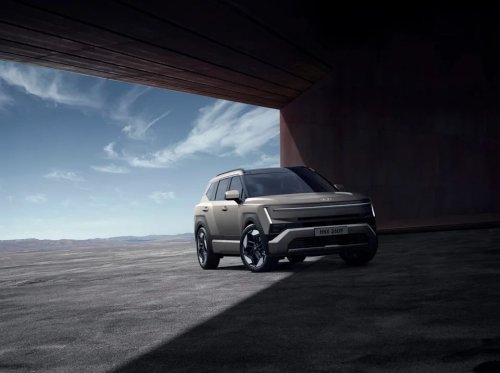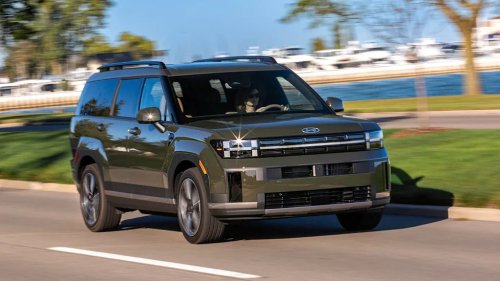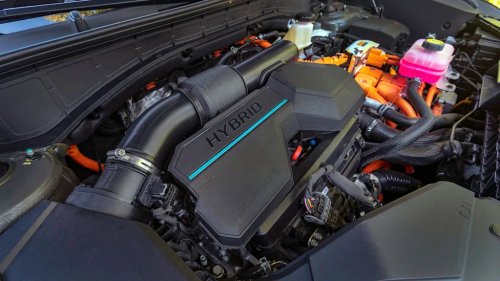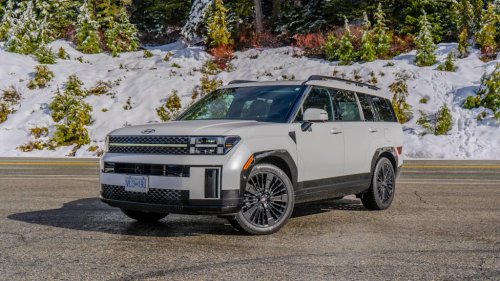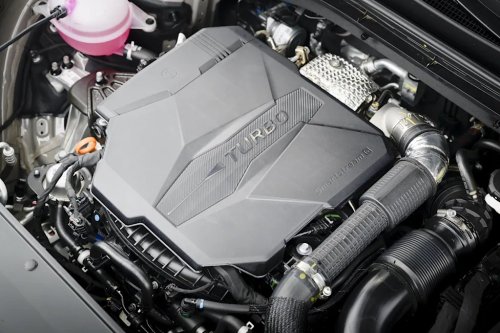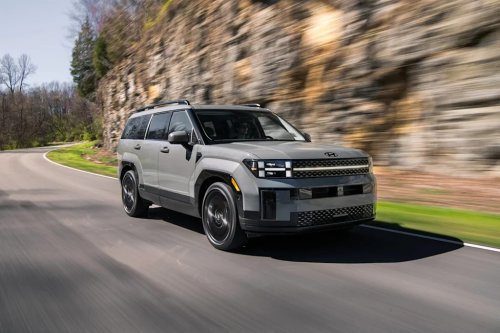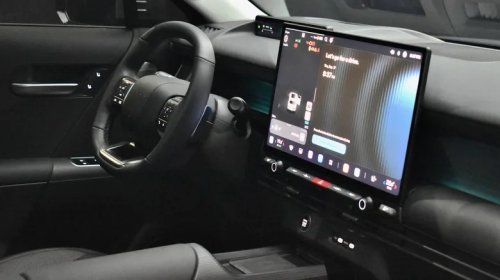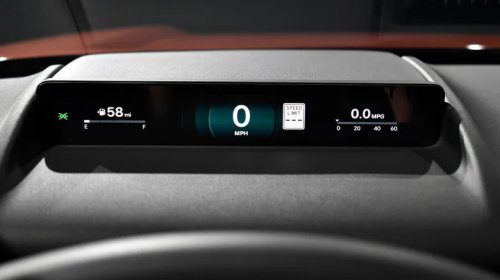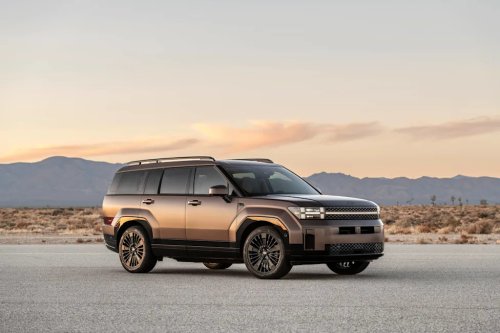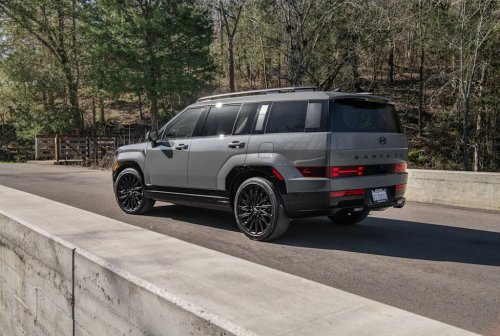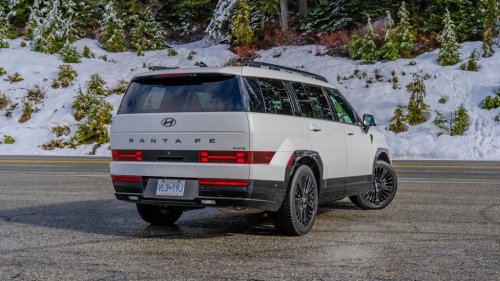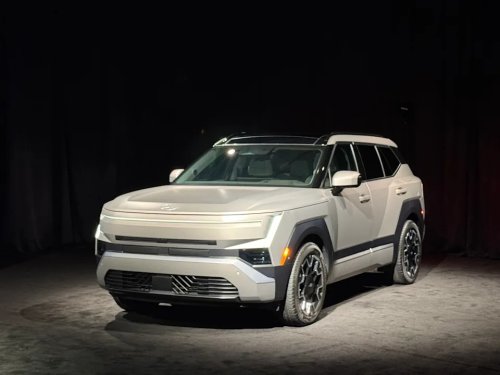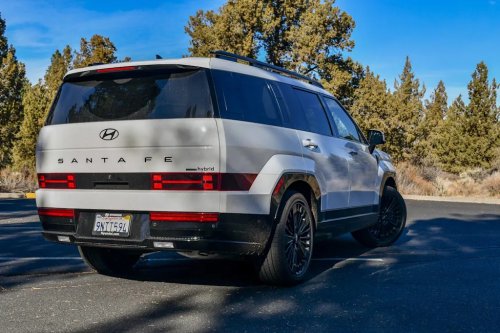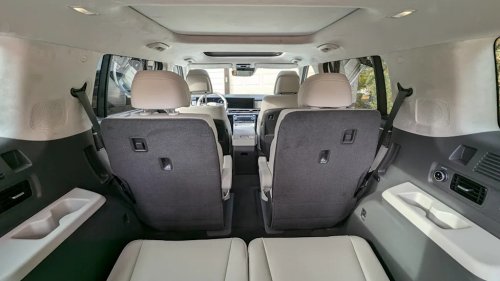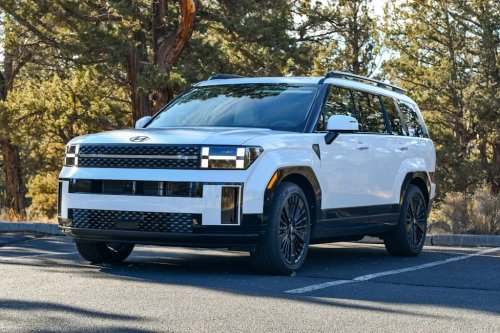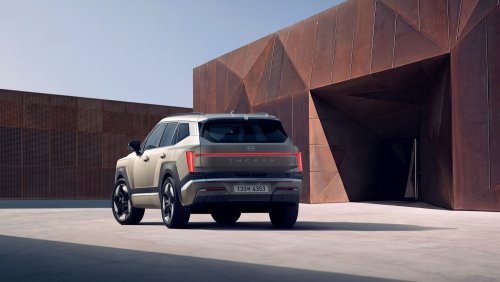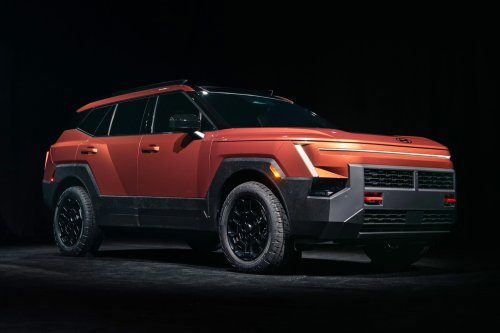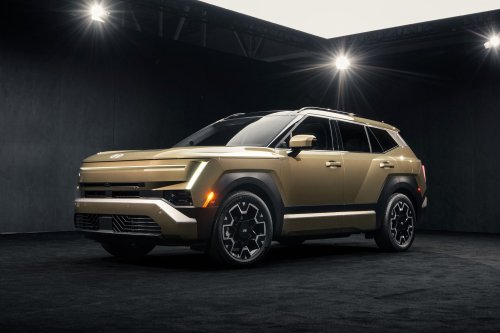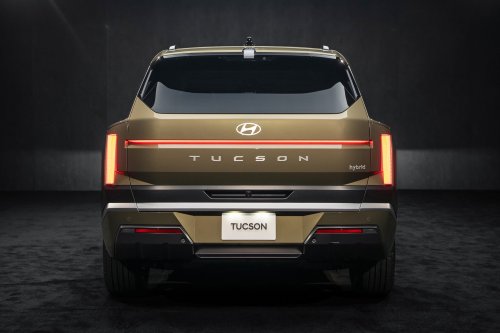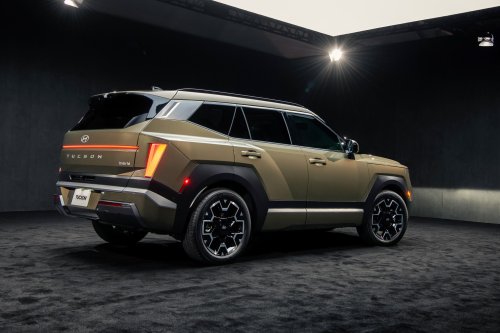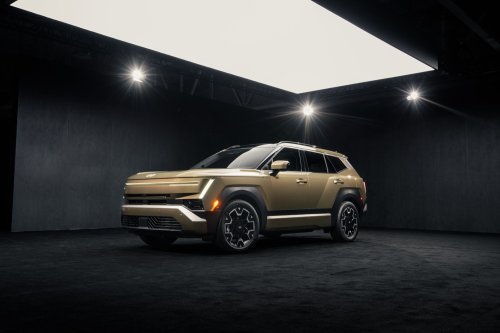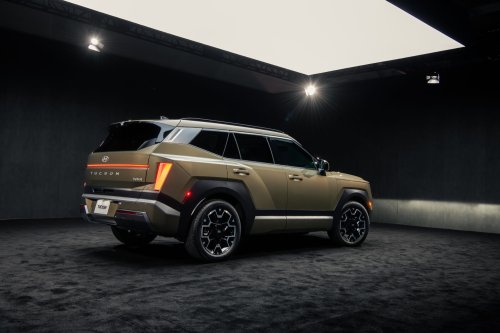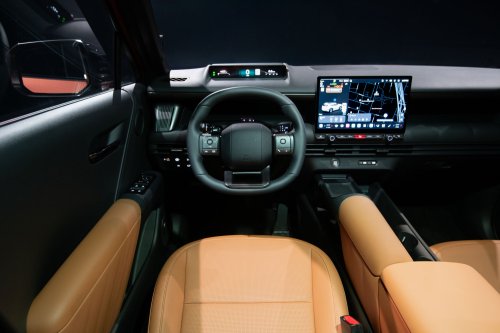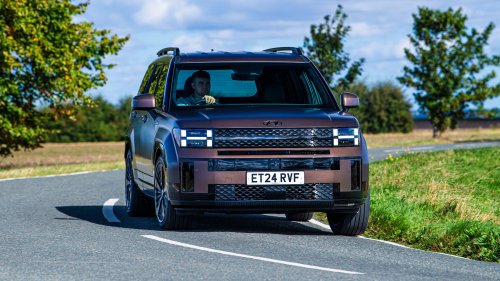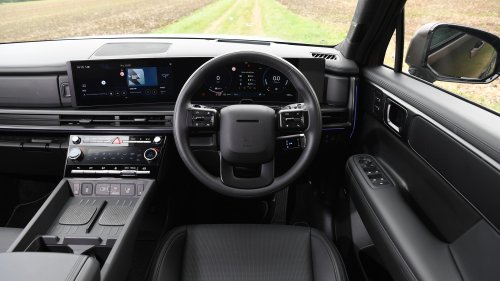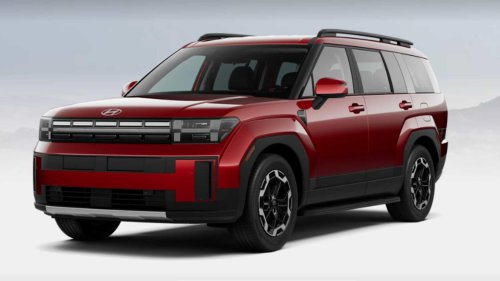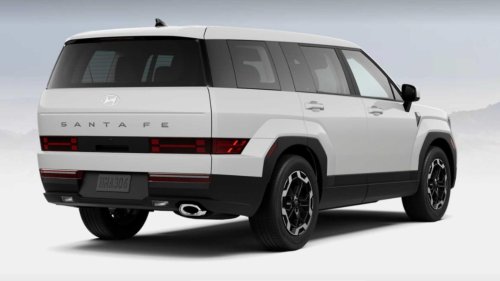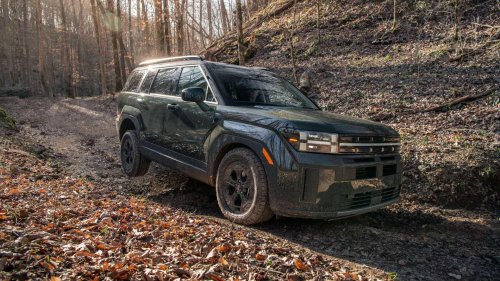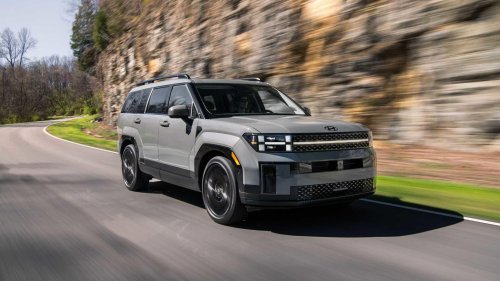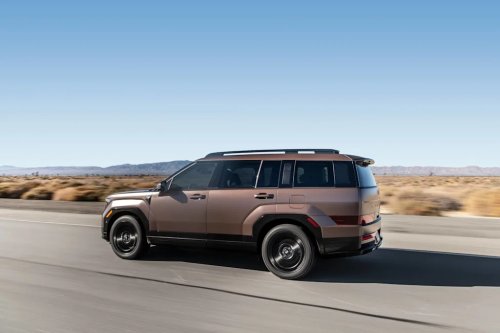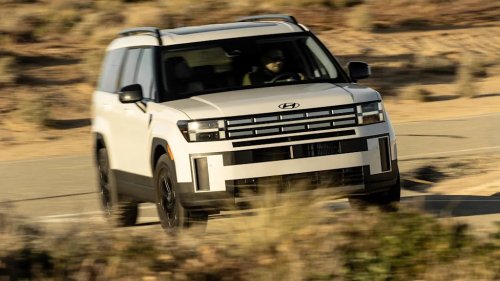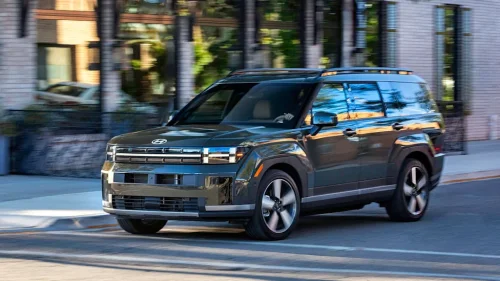
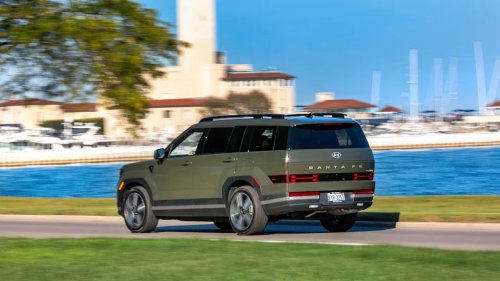
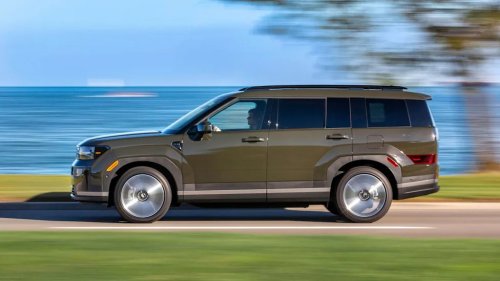
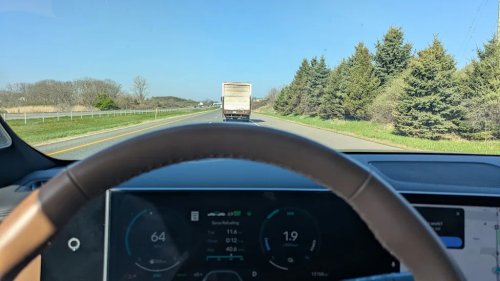
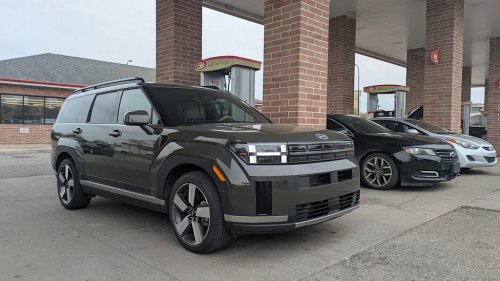



















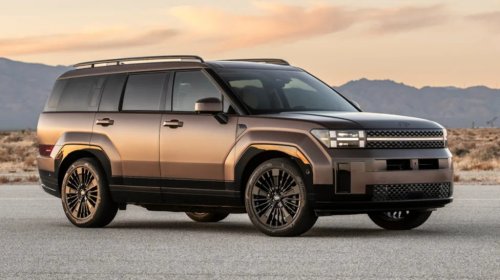
Hyundai Santa Fe Hybrid MPG Falls ShortJim Fets - MotorTrend (Jim Fets - MotorTrend)Our long-term Hyundai Santa Fe Hybrid’s fuel economy has been disappointing. The EPA rating on the window sticker sets high expectations, suggesting this three-row SUV can stretch up to 35 miles out of a gallon of gas, yet through 13,283 miles, we’re averaging just 25.3 mpg.I can’t say I’m surprised. The real world is harder on small-displacement turbocharged engines than the EPA’s laboratory fuel-economy test, especially when that engine is tasked with pushing a big, slab-sided box through the air. You hear that and feel that in the Santa Fe as the boosted 1.6-liter I-4 regularly revs over 5,000 rpm during easy part-throttle acceleration even with the electric motor pitching in to help.Of course, it would be disingenuous to place all the blame for our lousy fuel economy on the Santa Fe. The idiot behind the wheel—hi, there!—is the biggest variable in real-world fuel economy, and I can confidently say (without a single shred of evidence) that I drive our long-term Hyundai harder and faster than the average Santa Fe buyer. The good news is that I can control my impulses. Most of the time. Unless there’s Oreos involved.MotorTrend - MotorTrend (MotorTrend - MotorTrend)Lately I’ve been wondering what it would take to match the Santa Fe’s EPA fuel economy in real-world conditions. What if I didn’t drive like me? I could do that, at least for a little bit. So I put on my lightest pair of shoes and set out on two drives, on the highway and in the city, to figure out just how gingerly you need to drive to make the window sticker fuel economy come true.In Pursuit of the Hyundai Santa Fe Hybrid’s 34 Highway MPGPull onto any of the major interstates slicing through Metro Detroit, and you’d think driving fast is the official recreational activity of the state of Michigan. (It’s actually eating cured meats.) Do the speed limit on I-96, and you might as well be pedaling a Schwinn. That construction zone sign? That’s your sign to speed up—there’s nowhere for the cops to lay a trap. Yes, that’s a dumb and offensive thing to say, but I don’t make the rules here. That’s just how the place works.AdvertisementAdvertisementI’ll have to break Michigan’s unspoken rules of the road if I’m ever going to match the Santa Fe’s 34-mpg highway rating. I won’t be doing 80 mph, or 75 mph, or even the speed limit of 70 mph. From studying the onboard trip computer over the past several months, I know the rectilinear Santa Fe will force me to drive under the speed limit on the highway for the first time since I took my driving test.MotorTrend (MotorTrend)With a full tank of gas and a scientific commitment to going slow, I merge onto I-94, Michigan’s major east-west trucking corridor, and end up side-by-side with a semi hauling something that’s both flammable and capable of zapping you with dangerously high voltage according to the warning stickers. Normally I’d put my foot to the floor and nope out of there with the Santa Fe’s engine buzzing. Instead, I lift off the accelerator and tuck in behind the semi’s load.I use the Santa Fe’s fuel economy readout to pick my speed. I’m targeting 36 mpg since I know from experience that the car tends to be overly optimistic. After fluctuating between 60 and 70 mph, I land on a 65-mph cruise. It’s not as painfully slow as I expected even though it quickly becomes clear I’m the slowest noncommercial vehicle on the road. In a 100-mile span, I pass exactly six vehicles, including one box truck with “Max Speed 63” scratched into the dirt-covered roll-up door. I get excited when I pass an Amazon Prime semi and a GMC Sierra pulling a camper only to realize they’re clogged up behind two 16-foot-wide mobile homes being moved down the highway with the help of a couple pilot cars. Once I make it around the rolling bottleneck, the Amazon truck and GMC pass me back.MotorTrend (MotorTrend)I pull into the gas station with the Santa Fe showing 36.8 mpg. My GPS data logger reveals I’ve averaged 64 mph, which is at least 10 mph below what I naturally would have driven. I open my phone’s calculator app to divide miles driven by gallons of gas used only to discover I wasn’t conservative enough. I’ve averaged 33.0 mpg, one whole mpg short of the EPA label. To hit 34 mpg, I needed to knock off even more speed. How much exactly? Dunno. I don’t plan to drive that slow on a 70-mph interstate anytime soon.How to Hit 35 MPG in city in the Hyundai Santa Fe HybridDespite missing my target on the highway test, I feel confident about the city test. I’ll need to find two more miles per gallon to match the Santa Fe’s 35-mpg city fuel economy rating, which seems doable. I’ve seen the Hyundai’s computer read the high 30s many times during short hops around town, all without modifying my driving behavior.AdvertisementAdvertisementFor the test, I intentionally drive slower than normal as I draw meandering circles around Ann Arbor, a university town of some 122,000 residents. Instead of picking my way through traffic to find any advantage, I just follow the flow and sometimes even drift backward. My most aggressive acceleration at 0.23 g is about what you’d expect from a cyclist. At one traffic light, a city bus even pulls away from me.There are two problems with this strategy. First, it’s absolutely mind-numbing and soul-crushing to spend so much time driving without ever reaching 25 mph or making it a mile before hitting a red light. More important for the purposes of this story, all the stop and go is tanking my efficiency. I’m averaging in the low 30s according to the trip computer.With no specific destination, I steer the Santa Fe toward Ann Arbor’s suburban arterials and outlying two-lanes, where I can cruise at 45 mph for whole miles at a time. This kind of driving is easy on any gas-burning car, but especially one like the Santa Fe Hybrid that can periodically shut off its engine while supporting a lazy cruise. I quickly boost my average over 40 mpg and eventually drive back into the city center to help bring my fuel economy down.MotorTrend (MotorTrend)When the monotonous city driving becomes insufferable, I return to the gas station where I started. The Hyundai tells me I’ve averaged 38.2 mpg, which translates to 35.4 mpg after I do the actual math on miles driven and fuel consumed. That’s about as close to perfect as I could hope for. A moving average of 23 mph doesn’t seem awful for city and suburban driving until you factor in how much time I spent stopped, which torpedoes my speed to just 17 miles every hour. Bicycle lanes suddenly look even more appealing.How Slow Is Too Slow?There’s no cheating physics when it comes to fuel economy. If you want to match the EPA fuel economy in the Hyundai Santa Fe (or any car for that matter), I only have the same old advice that most drivers already know and don’t want to hear again. You need to drive slower and avoid stop-and-go traffic. In the particular case of the Hyundai Santa Fe Hybrid, that means highway speeds below 65 mph and city driving that’s barely faster than you’d move around on an e-bike. Based on that, don’t expect a dramatic turnaround for our Hyundai’s fuel economy in the coming months.More on Our Long-Term 2025 Hyundai Santa Fe Hybrid:The Average New Car Costs $50K. So Does Our New Yearlong Hyundai Santa Fe HybridHow EV Thinking Makes Our 2025 Hyundai Santa Fe Hybrid Better to Live WithA Brutal Michigan Winter Changed How I View Our Yearlong Hyundai Santa Fe Hybrid