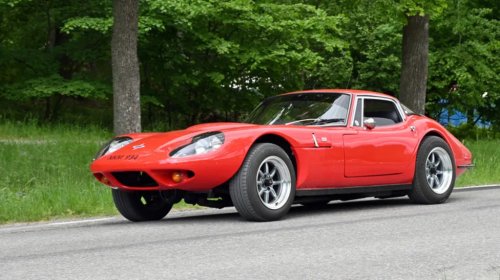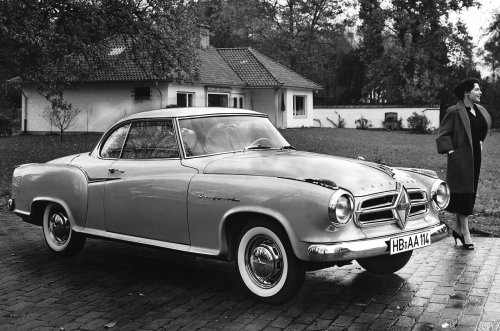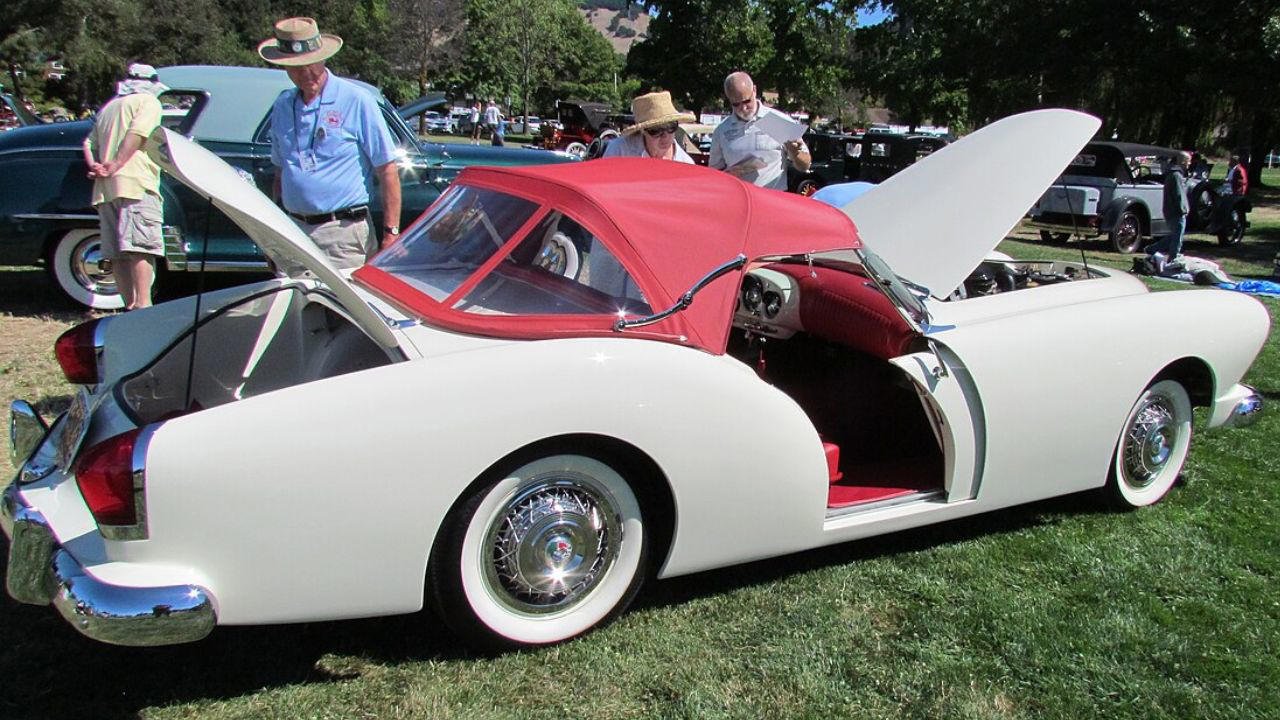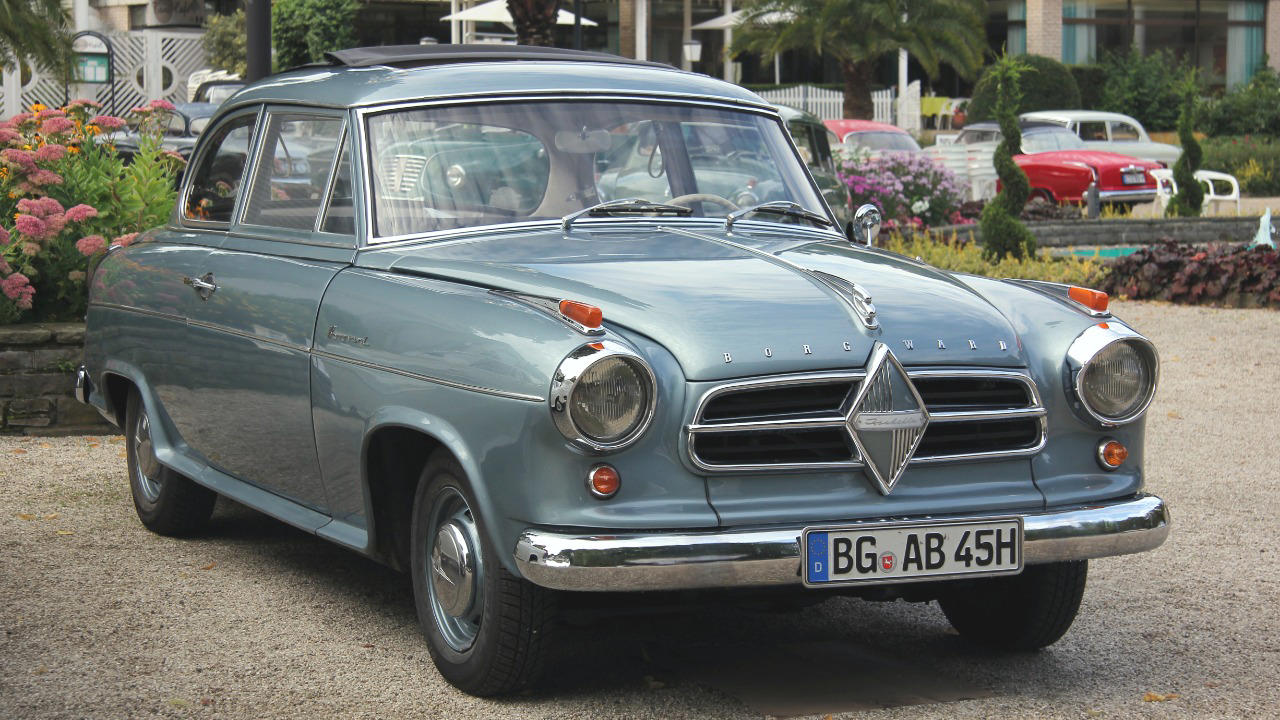



















You’ve never heard of the 1958 Borgward Isabella but it quietly rivaled bigger brandsThe 1958 Borgward Isabella once sat in the same European showrooms as Fiat, Renault, Opel, Mercedes and Benz, yet its badge faded while those rivals built empires. On paper it was a modest mid-size German saloon; in practice it quietly matched bigger brands on engineering, style and comfort. Today, the Isabella looks less like an also-ran and more like a forgotten benchmark that briefly put an independent carmaker on equal footing with the giants. To understand how a car this polished slipped from collective memory, it helps to look closely at what Borgward built, how the Isabella line evolved through the late 1950s and why a company capable of producing such a car collapsed even as its products were still winning admirers. The ambitious outsider from Bremen The Borgward story starts with a restless engineer who refused to stay beaten. Carl Borgward started from scratch twice, once in the 1920s and again after WWII, and was described as financier, engineer and designer rolled into one for the company that carried his name. The reborn group after the war folded several marques together, so the portfolio included Hansa, Lloyd and Goliath alongside the core Borgward brand, a structure that allowed the firm to cover everything from tiny economy cars to respectable family sedans. By the early 1950s the company was strong enough to think bigger. A high point in Borgward’s commercial success came in 1954 with the introduction of the new Isabella line, which quickly became the company’s volume model and brand ambassador. Conceived as a quality mid-range saloon, the Isabella was positioned between the budget offerings of Lloyd and Goliath and the premium territory guarded by Mercedes and Benz, and it was aimed squarely at export markets where German engineering already carried weight. The car itself nearly wore a different badge. In 1954 Borgward introduced the Isabella as a two-door sedan that was initially due to be called Hansa 1500, but when test cars went out the name Isabella stuck so firmly with staff and customers that the company kept it. That decision gave the car a more personal identity than the alphanumeric codes used by rivals and helped it stand out in brochures filled with numbers and letters. What made the Isabella special The Borgward Isabella did not rely on flash alone. Under the bonnet, Borgward’s compact four-cylinder engine was paired with a four-speed, all-synchromesh gearbox via a hydraulic clutch, a specification that put it ahead of many contemporaries still using crash gears or part-synchro units. Later versions of the Isabella would produce 66 horsepower and about 80 lb-ft of torque from a 1.5 liter inline-four, figures that delivered credible performance without sacrificing economy. Chassis engineering also showed serious intent. The Isabella featured a swing axle rear suspension and a column-mounted lever for the four-speed transmission, a combination that aimed to blend comfort with modern driving manners. Period testers noted that the car felt sophisticated on rough European roads, with a ride that compared well with larger sedans from better-known badges. Inside, the focus on refinement continued. The Borgward Isabella Saloon used thin pillars and generous glass to create an airy cabin, while detailing such as brightwork, two-tone paint and neatly integrated instruments gave it an upscale feel. Contemporary enthusiasts still point to the mid-range saloon as a quality product built in the mid to late 1950s, with fit and finish that reflected the company’s ambition to punch above its weight. The name itself carried an unexpected charm. The Borgward Isabella was and is a captivating sight, and the simple, almost romantic label Isabella was not dreamt up by marketing men. When test drivers used it informally, the moniker stuck in the factory and then in showrooms, giving the car a human touch that contrasted with the more clinical designations used by some competitors. The 1958 sweet spot: saloon and coupé By 1958 the Isabella range had matured into a surprisingly broad family. Borgward had already added the Isabella Combi, an Estate version, to appeal to practical buyers who needed more space. Special coachbuilder Karl Deutsch of Cologne produced cabriolet versions that turned the sober saloon into an elegant open car, aimed at buyers who might otherwise have shopped at Mercedes showrooms. For those who wanted something sportier, Borgward decided in 1957 to create a sleeker 2+2 coupé derived from the Isabella sedan. Enthusiasts regard this Borgward Isabella Coupé as one of the most beautiful cars the brand ever produced, with a lower, more aerodynamic profile, gentle curves and thin pillars that gave it a light, almost Italian look. The coupé kept the mechanical package of the saloon but wrapped it in bodywork that would not have looked out of place alongside contemporary designs from Alfa Romeo or Lancia. Photographs and survivor cars show how carefully Borgward executed the details. The 1958 Borgward Isabella Coupé remains a beloved classic among collectors, celebrated for its timeless beauty and innovative styling touches that have aged gracefully. Even in static images from classic vehicle events, the car’s long hood, tidy rear fins and airy greenhouse give it a presence that belies its mid-size footprint. Driving impressions from later coupés underline how cohesive the package was. One period-correct 1960 Borgward Isabella Coupe has been described as having all-drum brakes that are adequate, though not immune to fade, and a column-mounted shift lever that uses a conventional H-pattern with a dogleg for first gear between first and second. Owners report that the car feels refined and stable at speed, with a level of engineering polish that supports the idea that Borgward was, as one admirer put it, almost too good for this world. Rival to the giants In the late 1950s the Isabella did not exist in a vacuum. It had to compete with familiar names like Fiat, Renault, Opel, Mercedes and Benz that already dominated European streets and export markets. By the time Autocar magazine tested an Isabella TS sedan in autumn 1958, the asking price and specification placed it directly against those mainstream rivals, and reviewers judged it on equal terms rather than as a curiosity from a minor maker. The TS variant in particular showed how far Borgward was willing to go. The Isabella TS offered stronger performance and more luxurious trim aimed at buyers who might otherwise choose a Mercedes 180 or an Opel Rekord. Contemporary assessments described the TS as a car for drivers with an eye for economy but who still wanted a sophisticated machine, a positioning that mirrored the strategy of larger manufacturers. Sales figures in export markets reinforce that the car was more than a niche product. The Borgward Isabella was a quality German car that sold in significant numbers in places as far-flung as New Zealand, where surviving cabriolets still draw attention. The model was also marketed aggressively in North America, where Borgward hoped to carve out a slice of the growing import segment that Volkswagen and Renault were already exploiting. Within the broader Borgward group the Isabella effectively became the flagship, even if larger models existed on paper. It carried the company’s engineering reputation abroad and generated the volumes needed to support smaller marques like Lloyd and Goliath. For a brief period in the late 1950s, the Isabella allowed Borgward to stand shoulder to shoulder with much larger competitors in showrooms from Bremen to Mexico. Engineering ambition and racing grit Borgward did not stop at building comfortable saloons. The company also turned the Isabella into an unlikely racer, sending modified versions into competition to prove the car’s durability and performance. Borgward’s group, which also included car-makers Lloyd and Goliath, used motorsport as a showcase for the engineering that underpinned its road cars, and race-prepared Isabellas surprised observers who expected only sedate family transport. Under the skin, the production Isabella already had the fundamentals for such exploits. The compact engine, relatively light body and competent suspension made it a natural candidate for tuning. Later reports of a 1961 Borgward Isabella with 66 horsepower and about 80 lb-ft of torque show that even the standard units had enough strength to respond well to careful modification, while the stiffer, quieter platform engineered for later cars hinted at a continuous drive to refine the design. Special variants like the Isabella TS and the coupé capitalized on this base. The Borgward Isabella Coupe, developed after a significant sales dip in the mid-1950s, was explicitly created to build a more visually striking and aspirational car that could draw buyers back into showrooms. That strategy mirrored moves by larger brands that used sporty derivatives to lift the image of their bread-and-butter sedans. Period videos and surviving footage of the Borgward Isabella show why the car still captivates enthusiasts. The combination of clean lines, restrained chrome and the distinctive Isabella name gives it a charisma that photographs only partly convey. On film, the car’s proportions and stance reveal a design that was both of its time and subtly forward looking. The collapse that should not have happened Given this product strength, the end of Borgward remains one of the more controversial stories in postwar automotive history. By the early 1960s, Borgward’s group collapsed in circumstances that contemporary press reports suggested were more about financial management and political maneuvering than about the inherent viability of the cars. On 4th February 1961 the Bremen Senate took over the company and Dr. Borgward resigned, a dramatic move that effectively ended independent control. Companies such as BMC were reportedly interested in buying into the operation, which indicates that outside observers still saw value in the factories and product lines. Later analysis has pointed out that creditors were eventually paid off in full, with money to spare, which supports the argument that Borgward was not bankrupt in the traditional sense but rather forced into liquidation under pressure. The Isabella itself outlived the corporate entity that created it. Borgward had many unsold Isabellas when it went bankrupt in 1961. Nevertheless, production of the model at the Bremen plant continued under trustees until around 1970, which meant that new cars were still being registered years after the original company disappeared. Few marques can claim that their signature model survived their own demise for nearly a decade. The aftermath has fueled debate among historians and enthusiasts. Some see the collapse as a cautionary tale about rapid expansion and complex corporate structures. Others argue that an innovative mid-size automobile produced by a German manufacturer like Borgward was squeezed out by larger competitors and unsympathetic local politics, despite evidence that the underlying products were sound. Why the Isabella still matters Today, the Borgward Isabella is often described as a forgotten classic, a best-kept secret of the 1960s that has become a bargain relative to more famous contemporaries. Collectors who discover the car are drawn to its blend of style, usability and engineering detail, as well as the narrative of a company that dared to challenge the establishment and almost succeeded. More from Fast Lane Only Unboxing the WWII Jeep in a Crate 15 rare Chevys collectors are quietly buying 10 underrated V8s still worth hunting down Police notice this before you even roll window down The post You’ve never heard of the 1958 Borgward Isabella but it quietly rivaled bigger brands appeared first on FAST LANE ONLY.