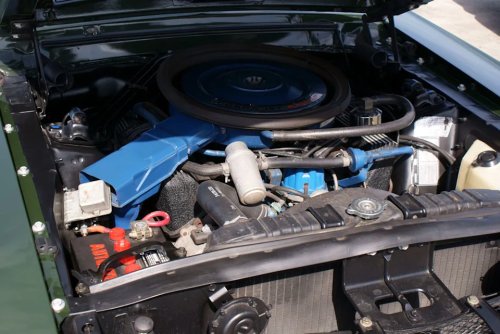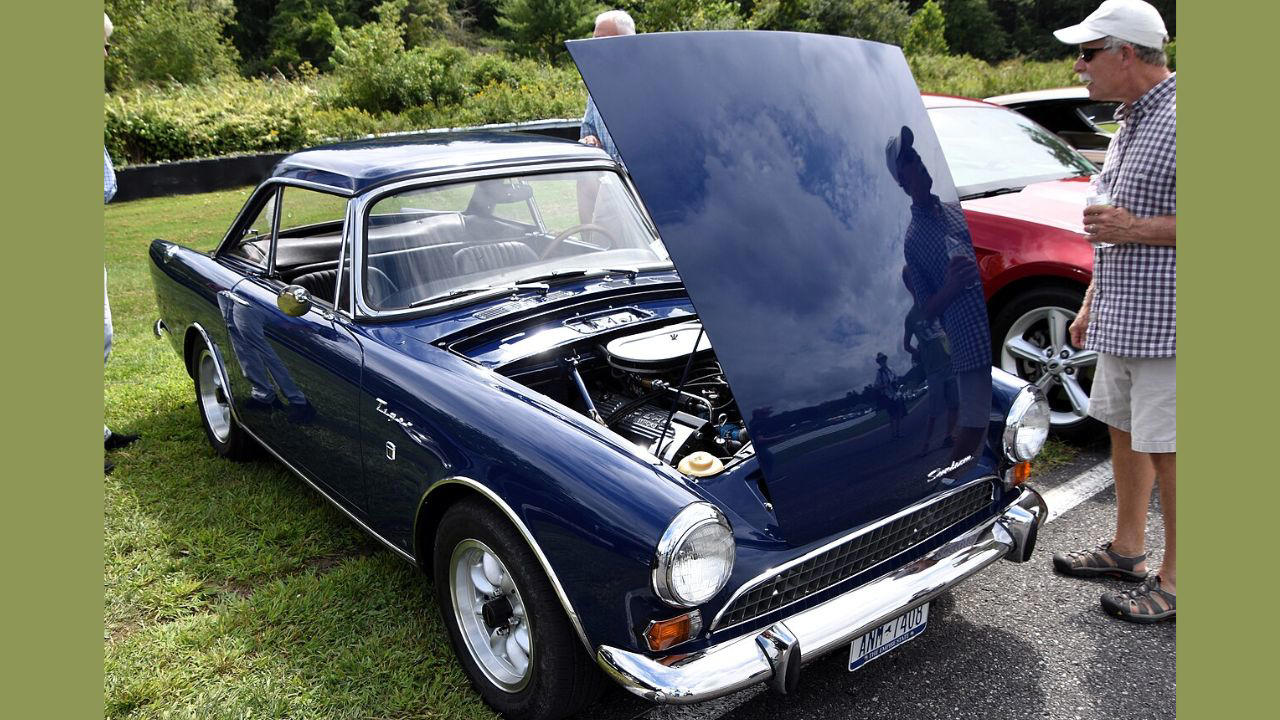



















You’ve likely never heard of the 1967 Sunbeam Tiger but it hides a Ford V8 under the hoodThe 1967 Sunbeam Tiger looks like a tidy British roadster from a distance, all slim fenders and modest chrome. Up close, the details still whisper Alpine rather than muscle car. The surprise sits under the hood, where a compact Ford V8 turns this polite two-seater into one of the strangest and most charismatic Anglo American hybrids of the 1960s. Built in tiny numbers at the end of a short production run, the 1967 example represents the Tiger concept at its most refined and most endangered. It arrived just as corporate politics and changing ownership were about to snuff out a car that combined British style with Detroit torque in a way few manufacturers have attempted before or since. The unlikely idea: British roadster, Ford V8 The story of the 1967 Sunbeam Tiger starts with a more modest machine. Rootes Group had been selling the Sunbeam Alpine, a neat four cylinder roadster, into a market increasingly obsessed with power. The Alpine looked the part but lacked the punch of larger European and American rivals. Inside Rootes, the search began for a way to give the car serious performance without sacrificing its approachable character. Into that gap stepped a bold proposal. Rather than rework the existing four cylinder, the company would shoehorn a compact American V8 into the Alpine shell. The resulting car, known as The Sunbeam Tiger, kept the basic body and layout of the British roadster but traded its modest engine for a Ford small block. That decision turned a pleasant tourer into a serious performance car while preserving the Alpine’s light steering and tidy dimensions. The conversion did not emerge from a vacuum. Shelby had already proven that a European chassis could handle American power with the AC Cobra. The same logic applied here. Rootes Group wanted to blend European style and handling with American V8 grunt, and the Tiger project followed that formula with a more civilized, more affordable twist than the raw Cobra. The resulting machine looked understated compared with its American muscle contemporaries, yet its performance figures told a different story. Carroll Shelby and the “other” Ford roadster The development of the Tiger pulled in some of the same creative forces that shaped the Cobra. Carroll Shelby had already built a reputation for turning light British sports cars into fearsome V8 weapons. When Rootes Group explored the Alpine conversion, it sought design input from Shelby, who understood both the engineering challenge and the marketing potential of such a hybrid. According to one detailed account, The Sunbeam Tiger was originally developed by Rootes Group with design input from Carroll Shelby, specifically to combine European handling with American V8 grunt. This collaboration cemented the Tiger’s place as a kind of sibling to the Cobra. Enthusiasts often describe it as the “other” Shelby Ford roadster, a car that shares the same basic recipe but aims at a different audience. Where the Cobra is raw and noisy, the Tiger offers more comfort and a more relaxed driving position, with a proper folding top and a cabin that still feels very British. That duality helped define the Tiger’s character. On one hand, it was a compact British sports car with a small footprint and tidy styling. On the other, it hid a muscular American V8 that transformed its acceleration and gave it a gruff exhaust note. The combination made the Tiger a compelling alternative for buyers who wanted Cobra-style performance but preferred a car that looked less aggressive and felt more usable on real roads. From Alpine to Tiger: how the conversion worked Turning the Alpine into the Tiger required more than just dropping a V8 into the engine bay. Engineers had to rework the front crossmember, steering, and firewall to clear the engine, while also reinforcing the chassis to handle the extra torque. The Ford small block’s compact dimensions helped, but packaging remained tight. The result was a car whose engine bay looked densely packed, with minimal space between the block, steering gear, and bodywork. The earliest Tigers used a Ford V8 displacing 260 cubic inches, which translates to 4.3 liters. That engine gave the car strong low end torque and a power figure that comfortably outstripped the Alpine’s four cylinder. Later versions, including the ultimate Tiger II, stepped up to 289 cubic inches, or 4.7 liters, for even stronger performance. A period specification sheet describes the Tiger I engine as 260 cu in (4.3 L) V8 (Ford) and the Tiger II engine as 289 cu in (4.7 L) V8, both shoehorned into a compact British body. Despite the power increase, the basic chassis layout remained simple. Every Tiger used a solid rear axle and a differential produced at the Salisbury Division, often identified as a Dana 44 unit. One buyer’s guide points out that, whatever the drivetrain, every Tiger relied on that Dana 44 dropout differential from the Salisbury Division, which became a key part of the car’s durability under V8 power. The conversion also changed the driving experience in subtler ways. Weight distribution shifted forward, which required careful tuning of springs and dampers. Steering effort increased at low speeds, thanks to the heavier engine over the front axle, but the car still felt nimble once moving. The compact wheelbase and relatively narrow track gave the Tiger a lively character that contrasted with the broader, heavier feel of contemporary American muscle cars. 1967: the rarest Tigers By 1967, the Tiger story was nearing its end. Production had started in the mid 1960s and ran only a few years. A detailed tally from a dedicated owners’ group notes that total production of the Mk 1 Tiger was 6,450 cars between 1964 and 1967. The Mk II production in 1967 totaled 633 cars, making the final year particularly scarce. Those figures mean that any 1967 Sunbeam Tiger, and especially a genuine Mk II, occupies rarefied territory. Another inspection guide for prospective buyers notes that There were over 6,000 of these two models produced and most of the parts are interchangeable, but warns that if a buyer is looking at a Mark II they should watch out, because the rarity can increase the purchase price significantly. Within an already limited production run, the 1967 cars sit at the top of the desirability pyramid. The Mk II changes were subtle but meaningful. The move from the 260 to the 289 cubic inch Ford V8 gave the car more power and a slightly different character, with stronger mid range pull and a deeper exhaust note. Cosmetic tweaks, including revised badging and minor trim updates, helped distinguish the final cars from earlier Tigers. Yet to a casual observer, a 1967 Tiger still looked much like an Alpine, which is part of its enduring charm. That understatement contributes to the car’s relative obscurity today. While muscle car fans can recite the specifications of Mustangs and Camaros from memory, the Tiger remains a more specialist interest. Even among classic British sports cars, it occupies a niche, overshadowed by more numerous models from MG and Triumph. The 1967 examples, built in such small numbers, are rarer still, which helps explain why many enthusiasts have never seen one in person. Performance and personality: the “poor man’s Cobra” On the road, the Tiger delivered performance that surprised drivers used to more sedate British sports cars. Period tests and modern retrospectives highlight its strong acceleration and relaxed cruising, attributes that came directly from the Ford V8. A modern feature on a 1965 Sunbeam Tiger Mark I notes that with more performance on tap than its European four cylinder powered rivals and a much more relaxed and luxurious driving experience, the car offered a distinct alternative to both traditional British sports cars and American muscle. That comparison appears in a review that presents the Tiger as a kind of Shelby Cobra alternative, underscoring how close the conceptual link between the two cars really was. Enthusiasts often describe the Tiger as “the poor man’s Cobra” or “Cobra’s little brother.” One detailed history observes that Invariably, Cobra and Tiger are mentioned together, with the Tiger living in the Cobra’s shadow yet earning respect in its own right. The Tiger’s lower price, greater comfort, and less aggressive styling made it accessible to a wider audience, even if its production numbers remained modest. The car’s personality reflects that duality. Around town, the Tiger behaves like a slightly heavy but friendly British roadster. The cabin features traditional materials, simple switchgear, and a driving position that feels more touring than racing. Press the throttle, however, and the Ford V8 changes the mood. The car surges forward with a muscular urgency unfamiliar to drivers of typical European roadsters of the era, accompanied by a deep, American exhaust note that seems slightly out of place beneath the restrained British bodywork. That contrast has led some commentators to describe the Sunbeam Tiger as a car that looked like a mistake someone made on purpose, a tiny British sports car with a massive American V8 shoved together by design rather than accident. A video essay on the model argues that the Sunbeam Tiger represents a British chassis and an American engine fused into a machine that feels both improbable and strangely coherent. Racing, reputation, and the Shelby connection The Tiger’s competition record further cemented its reputation. Enthusiast histories point out that Obviously, Tiger and Shelby deserved to be uttered in the same breath, given the car’s development story and its success as a racer. The Tiger saw action in various forms of motorsport, where its combination of compact size and V8 power made it a formidable package when properly prepared. Period advertising leaned heavily on that connection. One surviving campaign shows Carroll Shelby promoting the virtues of the Sunbeam Tiger, urging drivers to “unleash it.” A social media post that shares this material notes that Carroll Shelby personally endorsed the car, describing The Sunbeam Tiger as a high performance V8 version of the British Sunbe roadster. The implication was clear: buyers could access Shelby flavored performance in a more approachable package than the Cobra. Modern coverage keeps returning to that theme. A contemporary video segment on a 1965 Sunbeam Tiger describes it as a collaboration with Carroll Shelby, quoting a figure of 2400 lb and 300 hp for a modified example. Another social media reel promoting the same car mentions that it is a collaboration with Carroll Shelby and highlights how a relatively light body combined with a strong Ford V8 can produce startling performance. One post about this clip even notes that it attracted 83 likes, a small but telling sign of the car’s cult following. The Tiger’s racing pedigree and Shelby connection have helped sustain its reputation among enthusiasts even as wider public awareness remains limited. Specialist clubs, online communities, and dedicated events keep the story alive, ensuring that knowledge about the car’s engineering quirks and history passes from one generation of owners to the next. Why such a good idea died so quickly Given its performance and character, the Tiger’s short production run can seem puzzling. Several factors contributed to its demise, and they intersect in ways that highlight the fragility of niche performance projects inside larger corporate structures. One key issue was ownership. As the Tiger matured, Rootes Group’s financial position weakened, eventually leading to greater involvement by Chrysler. The new corporate parent was not enthusiastic about a British sports car powered by a Ford engine, given the rivalry between American manufacturers. Reengineering the car to accept a Chrysler V8 would have required major investment and might have compromised the packaging that made the Tiger viable in the first place. Instead, the project was allowed to fade. The same video that characterizes the Tiger as a tiny British sports car with a massive American V8 also explores how internal politics and market changes combined to kill the model. The analysis suggests that the car looked like a mistake someone made on purpose, a daring experiment that did not fit neatly within Chrysler’s broader strategy. Without a clear path to an in house powertrain and facing increasingly strict safety and emissions regulations, the Tiger’s days were numbered. Production ended after only a few years, with the final 1967 cars representing both the peak of the concept and its swan song. The Mk II’s 289 cubic inch engine offered the strongest factory performance, yet the model arrived just as external pressures made continuation impossible. The result is a car whose rarity is not the product of deliberate exclusivity but of corporate and regulatory headwinds. Global identity: Italian, American, Australian, British The Tiger’s identity stretches across continents. One enthusiast feature asks whether The Sunbeam Tiger is Italian, American, Australian, British, or all of the above. The car’s roots lie in a British manufacturer, its engine comes from an American giant, some design influences trace to Italian stylists, and its enthusiast base spreads to Australia and beyond. That global mix reflects the broader appeal of the Anglo American performance formula. Its engineering and marketing also carried a distinctly transatlantic flavor. The use of a Ford V8 linked the Tiger to American performance culture, while its compact size and open top format connected it to British sports car traditions. Owners in Australia and other markets embraced the car for its blend of long distance touring ability and back road pace, further broadening its geographic reach. Even the historical record reflects this international dimension. Multiple language entries, including pages in German, Spanish, Persian, and French, document the Sunbeam Tiger’s story. The German page at de.wikipedia.org, the Spanish entry at es.wikipedia.org, the Persian article at fa.wikipedia.org, and the French coverage at fr.wikipedia.org all build on the same core narrative while tailoring details to local audiences. Each of these pages is explicitly linked back to the English Discovered Sunbeam Tiger Wikipedia ecosystem, which itself is supported by donations collected through a central platform at Discovered Sunbeam Tiger Wikipedia. This global documentation effort mirrors the car’s scattered but passionate fan base. Owners and historians in different countries contribute photos, technical data, and personal stories, ensuring that the Tiger’s brief production run leaves a long digital footprint. Living with a Tiger today For modern enthusiasts, the 1967 Sunbeam Tiger offers both rewards and challenges. On the plus side, the use of a Ford V8 and a Dana 44 rear axle means that many mechanical parts are robust and, in some cases, easier to source than components for purely British engines of the same era. The car’s simple construction and body on frame layout make certain repairs straightforward for experienced home mechanics. At the same time, originality matters. With only 6,450 Mk 1 cars and 633 Mk II cars built, and There being over 6,000 of the combined models, preserving correct specifications can significantly influence value. Buyers must be cautious about modified examples that blur the line between period upgrades and modern hot rodding. Some owners have fitted all alloy SVO engines or other high output variants, which can improve performance but also place additional stress on the chassis and driveline that the factory did not anticipate. Authenticating a Tiger presents its own challenges. Because the car shares its basic body with the Alpine, and because V8 conversions of Alpines have been attempted outside the factory, verifying that a given car is a genuine Tiger rather than a later clone requires careful inspection of chassis numbers, body details, and specific reinforcements. Enthusiast sites and clubs provide detailed guides for this process, including lists of telltale signs that distinguish factory Tigers from aftermarket conversions. The emotional side of ownership can be intense. One widely shared story recounts how Barbara Skirmants sold her Sunbeam Tiger to help purchase her first home, assuming that decision ended her relationship with the V8 powered British roadster. More than four decades later, she managed to buy the same car back. A social media post about that journey notes that Although production of the Sunbeam Tiger was relatively short lived, lasting from 1964 to 1967, it remains a sought after classic that continues to captivate automotive enthusiasts around the world. That enduring appeal stems from the car’s contradictions. It looks modest but goes hard. It carries British styling cues yet sounds like a small American muscle car. It shares DNA with one of the most famous performance cars in history, yet it operates quietly on the margins of mainstream awareness. For owners, those qualities turn every drive into a conversation starter, at least among the few who recognize what they are seeing. Why the 1967 Tiger still matters The 1967 Sunbeam Tiger occupies a special place in automotive history. It represents the final evolution of a daring experiment in cross cultural engineering, a moment when a British manufacturer embraced an American powerplant to create something that did not fit neatly into any existing category. The Mk II cars, with their 289 cubic inch engines and low production numbers, stand as the most developed and most elusive examples of that concept. Modern coverage reinforces the car’s status as a hidden gem. A feature on the 1965 Sunbeam Tiger Mark I frames it as a Shelby Cobra alternative, pointing out that it delivered more performance than many European rivals while offering a more relaxed and luxurious driving experience. Auction listings and gear reviews on sites associated with HOTROD, including pages connected to Shelby Cobra Alternative Sunbeam Tiger Mark HOTROD and related gear reviews at Discovered Shelby Cobra Alternative Sunbeam Tiger Mark HOTROD, treat the model as a serious collectible, not just a quirky footnote. More from Fast Lane Only Unboxing the WWII Jeep in a Crate 15 rare Chevys collectors are quietly buying 10 underrated V8s still worth hunting down Police notice this before you even roll window down The post You’ve likely never heard of the 1967 Sunbeam Tiger but it hides a Ford V8 under the hood appeared first on FAST LANE ONLY.