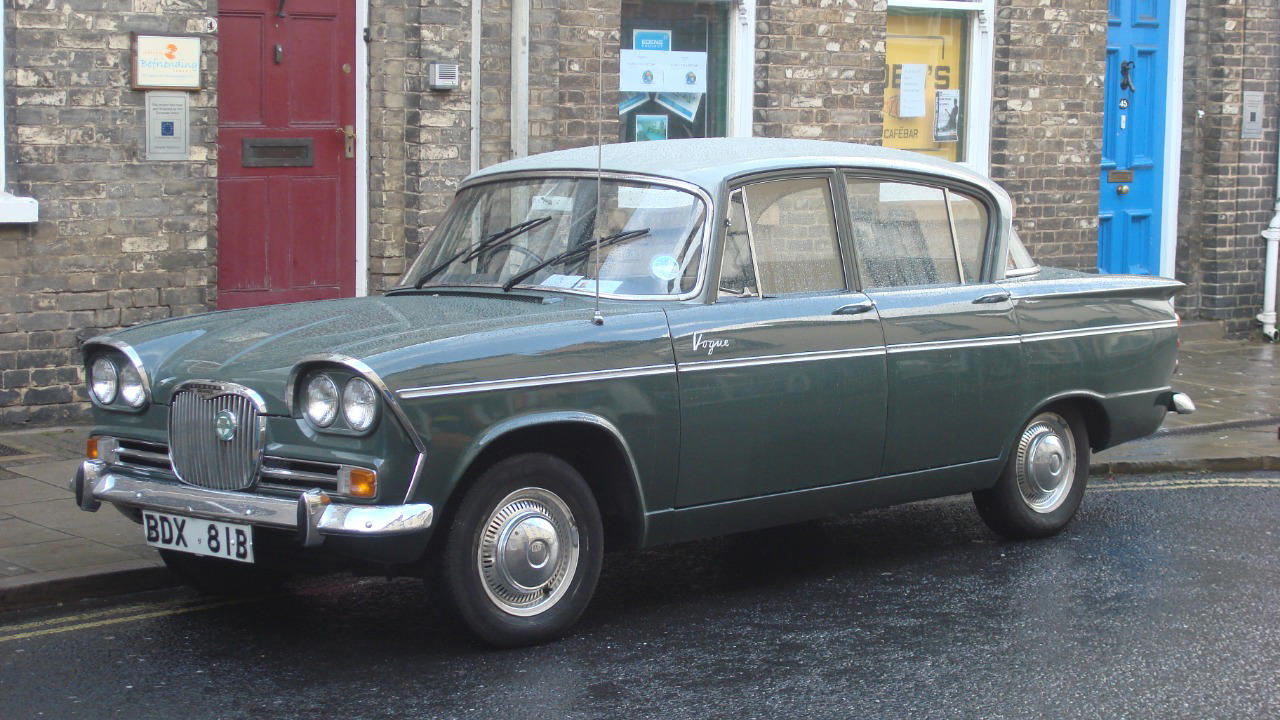



















You’ve likely never seen a 1964 Singer Vogue but it stayed quietly refinedThe 1964 Singer Vogue rarely appears at shows or in classifieds today, yet it represents a quietly confident idea of British motoring. Instead of chrome excess or raw speed, it offered a calm, well-tailored way to move a family, particularly in estate form, without shouting about status. That understated approach helps explain why many enthusiasts have never seen one in person, even as the car’s refinement and thoughtful engineering still reward a closer look. The discreet upmarket cousin The Singer Vogue sat within the Rootes Group as an upmarket version of the Hillman Super Minx, with the first generation Singer Vogue I, II, III and IV built from 1961 to 1966 as a badge-engineered take on the Hillman Super Minx. Styling cues, proportions and basic mechanical layout were shared, yet the Singer name carried expectations of extra polish. Contemporary commentary framed the car as a way to look classy without raising one’s voice, a sentiment echoed in a later description that called the Singer Vogue “a car that speaks with style, not noise” and highlighted how it arrived just before the contraction of the British motor industry in the late 1960s, as recalled in a Singer Vogue station discussion. Within the Singer range, that role was deliberate. The brand had been associated with a more genteel image, and the Vogue became the smaller side of British luxury, a badge-engineered Super Minx that added a layer of Singer trim and character. One contemporary analysis described how the Vogue took the basic Super Minx package and added the touch of Singer luxury, positioning it as the more refined choice within a two-car Singer lineup where the Vogue effectively carried the aspirational flag for the marque. That perspective on the Vogue and Super relationship helps explain why the car never tried to dominate the road, but instead aimed to look quietly superior to its Hillman cousin. Engineering calm into a family car The Singer Vogue did not chase headline power figures, yet it was not short on thoughtful engineering. Reporting on the early series highlights that the car used an all-drum braking system, which was still common in its class at the time, and that Smiths Easidrive and Laycock overdrive transmission were offered as optional extras. These details, recorded in a retrospective on the model’s 60th anniversary, show how the Vogue balanced conventional hardware with modern conveniences, with Smiths Easidrive and options aimed at drivers who wanted smoother progress without constant gear changes. Transmission development did not stand still. In February of a key model year, the Vogue gained a new four-speed synchromesh gearbox, a feature that brought more precise and quieter shifting to everyday use. That change, documented in the same anniversary account, fits with the car’s character. Rather than chasing top speed, the Singer Vogue concentrated on reducing effort, noise and fuss for its driver, and a full synchromesh box aligned with that goal by making the car easier to handle in traffic and on longer journeys. Body styles also reflected a practical mindset. The Vogue was offered both as a saloon and as an estate car, a point confirmed in the description of the first generation Singer Vogue I, II, III and IV models that notes the car was available as an estate car alongside the saloon. That flexibility meant the Singer Vogue could serve as a family workhorse without sacrificing the extra trim and finish that justified its position above the Super Minx, a balance that helped the car appeal to buyers who wanted a single vehicle to cover commuting, shopping and holidays. The 1964 Singer Vogue Mk III and its subtle evolution The 1964 model year is particularly interesting because it coincided with the arrival of the Singer Vogue Mk III. According to a period brochure, the Vogue Mk III was launched in October 1964 with revised rear styling that sharpened the car’s profile. The document describes how, in October, the new Singer Vogue Mk. III appeared with a much sharper rear treatment, underlining that this was not a ground-up redesign but a carefully judged update to a familiar shape. The brochure for the Singer Vogue Mk shows how the company leaned into subtle visual changes rather than radical overhauls. Those revisions mattered in a crowded mid-sized market. The sharper rear styling gave the estate version a crisper tail and more defined lines around the tailgate, which made the car look more contemporary without alienating existing owners. At the same time, the Mk III kept the essential proportions and glasshouse that made the Vogue practical and airy. Rootes engineers and designers appeared to treat the Mk III as a refinement exercise, tightening the design and improving usability while leaving the underlying concept intact. Under the bonnet, the Mk III continued to rely on the proven Rootes four-cylinder engine, tuned for a balance of performance and economy rather than outright speed. While the sources focus more on transmission and later engine developments, the continuity of the powertrain in 1964 fits the broader pattern. The Singer Vogue was never meant to shock with innovation; it was meant to reassure owners that their car would start, run and cruise quietly year after year, with incremental improvements rather than sudden leaps. From Mk III to Mk IV and the end of the line The story of the 1964 Singer Vogue cannot be separated from what came shortly after. The next development of the Vogue came in October 1965 with the launch of the Mk IV, which was fitted with the new Rootes 1725cc engine. That change, detailed in the same 60th anniversary coverage, marked a significant step in the car’s evolution, bringing more displacement and stronger performance while keeping the same basic package. The report on the Vogue Mk IV notes that this engine powered later Vogue saloon and estate models. The Mk IV’s arrival foreshadowed the end of Singer as a separate marque within Rootes. As corporate consolidation and financial pressure intensified, Singer, and the Vogue’s progress, eventually came to an end. The sources describe how the final Singer models marked the close of the brand’s independent identity, with the Vogue among the last expressions of its approach to modest luxury. In that context, the 1964 Mk III sits at a turning point, still fully rooted in the original concept but only a year away from the more powerful Mk IV and a few years from the marque’s disappearance. Production numbers and survival rates are not detailed in the provided reports, so any claim about how many 1964 Singer Vogues remain on the road would be unverified based on available sources. What is clear is that the combination of limited production, brand consolidation and the passage of time has made these cars rare sights, especially outside dedicated classic events. The understated styling that once helped them blend into British streets now contributes to their tendency to go unnoticed even when they do appear. Inside the quiet refinement Contemporary and modern observers consistently point to the Singer Vogue’s interior as a key part of its appeal. Within the Singer lineup, the Vogue used better materials and more elaborate trim than the Super Minx, translating the brand’s more upmarket image into tangible details. A modern walkaround of an estate version describes the car as the upmarket version of the Super Minx, noting that it has a bit more power and, crucially, a walnut interior that sets it apart from its Hillman cousin. That description of the Vogue and Super relationship highlights how wood trim and upholstery played a central role in the car’s character. The cabin layout followed the familiar pattern of the time, with a large steering wheel, clear instruments and bench-style seating in some versions, but the execution aimed for a more club-like feel. Walnut veneer, higher-grade seat coverings and extra chrome details on the dashboard gave the impression of a small-scale luxury saloon rather than a basic family car. This approach made the Singer Vogue especially appealing to buyers who wanted a sense of occasion on every trip without the size or running costs of a larger executive car. Practicality remained central, especially in the estate. The flat load floor, square tail and generous glass area made the car easy to pack and easy to place on the road. Families could load prams, luggage or dogs without wrestling with awkward openings, and the car’s relatively compact footprint kept it manageable in town. The combination of walnut trim and a large luggage area captured the essence of the Singer approach: everyday usefulness wrapped in an air of quiet respectability. How a modest estate became a cult curiosity The Singer Vogue never achieved the cult status of some contemporaries, yet it has built a small but passionate following. Owners and enthusiasts share images and memories of the car through community pages that celebrate the model’s anniversary and its place in British motoring history. One such community, which highlights local stories and heritage, has featured the Singer Vogue in its coverage of Coventry’s automotive past, linking the car to the city’s broader industrial narrative through channels such as Live Coventry. That local connection matters because Rootes had deep ties to the Midlands, and cars like the Singer Vogue were part of everyday life in towns shaped by factory work and supplier networks. The car’s blend of modesty and aspiration fit the lives of buyers who might work on the shop floor during the week and want something a little special for weekend drives. In that sense, the Vogue’s quiet refinement reflected the aspirations of a generation that valued progress without ostentation. Today, the Singer Vogue appears more often in specialist circles than on public roads. Enthusiast clubs maintain archives, such as period brochures and technical documents, that help owners keep their cars running and preserve accurate details about trim, colours and mechanical specifications. These materials, including the detailed brochure for the Mk III, provide a window into how the car was marketed and understood in its own time, and they reinforce the impression of a model that prized subtle improvements and comfort over flash. A car that rewards a second glance The scarcity of the 1964 Singer Vogue, especially in estate form, means many enthusiasts can spend years around classic shows without seeing one. When a car does appear, it often does not shout for attention. The lines are clean but not dramatic, the chrome is tasteful rather than extravagant, and the badges are small. Yet a closer look reveals the care that went into the design: the sharper rear styling of the Mk III, the well-proportioned glasshouse, the neat integration of the tailgate on the estate. Mechanically, the car represents a snapshot of British engineering on the cusp of change. Drum brakes, optional Smiths Easidrive and Laycock overdrive, and the later adoption of a four-speed synchromesh gearbox show a manufacturer updating a proven platform step by step. The arrival of the Rootes 1725cc engine in the Mk IV hints at the performance improvements that were becoming necessary as traffic speeds rose and expectations changed, even as the broader pressures on Rootes and Singer were building. More from Fast Lane Only Unboxing the WWII Jeep in a Crate 15 rare Chevys collectors are quietly buying 10 underrated V8s still worth hunting down Police notice this before you even roll window down The post You’ve likely never seen a 1964 Singer Vogue but it stayed quietly refined appeared first on FAST LANE ONLY.