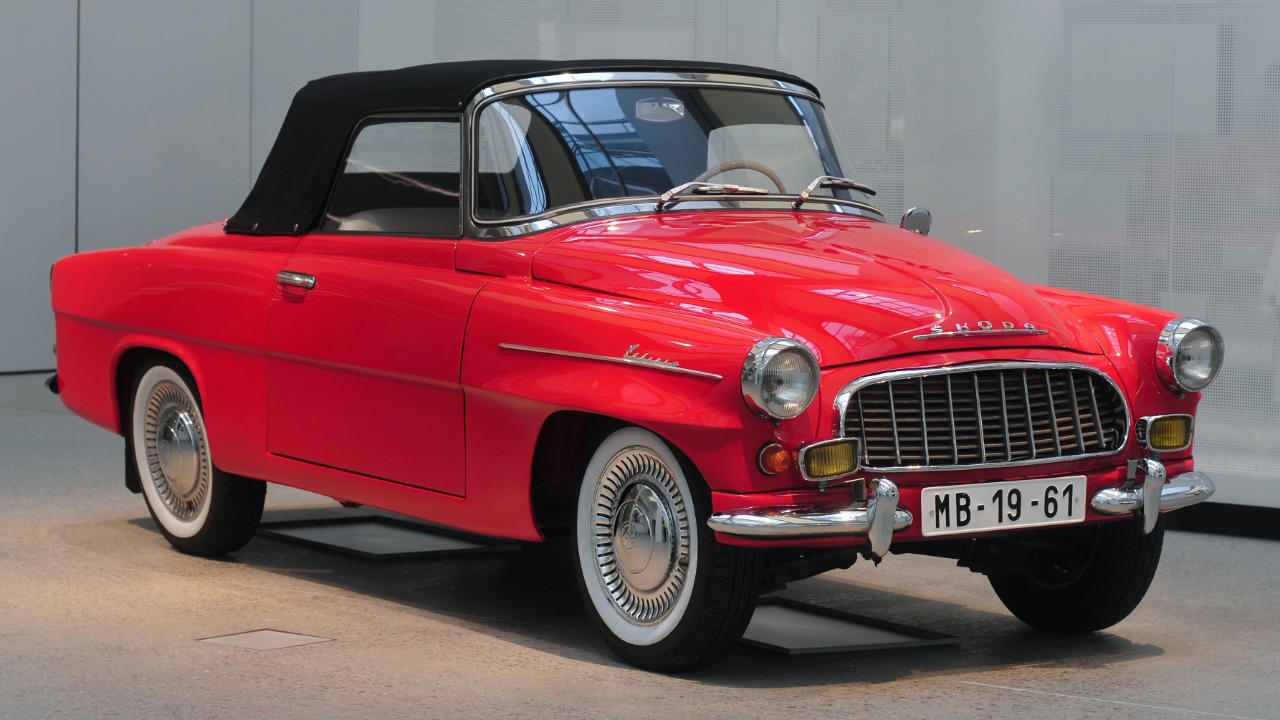


















You’ve likely never seen a 1959 Skoda Felicia but it carried a different kind of charmThe 1959 Skoda Felicia rarely appears in the mental catalogue of classic convertibles, yet it offered a very different kind of glamour from the chrome-heavy icons of Western Europe and the United States. Built in the shadow of the Iron Curtain, it combined gentle styling, honest engineering and an unexpectedly optimistic character that still resonates with enthusiasts who manage to find one. Instead of chasing brute power or ostentatious luxury, the Felicia leaned into lightness, practicality and a quietly confident design. That balance helped it become one of the most distinctive Eastern Bloc exports of its era and explains why surviving examples now attract intense interest on the Czech classic car market. From Laurin & Klement to a carefree cabriolet To understand why the Felicia feels so different, it helps to look at the company that created it. Skoda is a Czech manufacturer with roots that reach back to 1895, when founders Laurin and Klement began building bicycles before moving into motorcycles and cars. The firm later evolved into the national carmaker that would carry Czechoslovak aspirations into the second half of the twentieth century, a journey that is often traced through models such as the Skoda Felicia. By the late 1950s, that heritage was being repackaged for a new, more optimistic age. Earlier this year, Skoda highlighted how the Felicia name has become one of two central pillars in its heritage branding, alongside Octavia, by marking 65 Years of the Octavia and Felicia. The company framed Felicia as a symbol of happiness and even brought a car to New York to underline how this Czech convertible once projected a friendly, approachable face of Eastern European industry. That positioning was not accidental. In a region where cars were often utilitarian and production constrained, a four-seater open-top model signalled optimism and a desire to participate in the wider culture of motoring pleasure that defined the early 1960s. Replacing the ŠKODA 450, not the family saloon The Felicia did not appear out of nowhere. It replaced the earlier ŠKODA 450, a compact cabriolet that had already shown there was room in the market for something more playful than a standard sedan. Skoda later looked back on this transition and described how the ŠKODA 450 impressed with a higher level of practicality compared with rivals of its era. With the FELICIA, the brand wanted to keep that usability while offering a more modern, elegant shape. Contemporary technical descriptions echo that balance. The Felicia was introduced in 1959 as a 2 door convertible, replacing the Škoda 450, and it was able to seat five persons despite its compact footprint. Period material describes how it was equipped with a modest four cylinder engine that focused on tractable performance rather than outright speed, a choice that kept fuel consumption reasonable for owners who used the car daily. Engineers also retained a practical trunk and folding roof system that allowed the car to function as a primary vehicle. This attention to everyday usability separated it from some Western roadsters that sacrificed luggage space and weather protection in the pursuit of a more aggressive profile. The convertible with the rhythm of the 1960s Skoda would later characterise the Felicia as a car that moved with the rhythm of the 1960s. In material prepared in Mladá Boleslav, the company described the open top ŠKODA FELICIA (1959–1964) as a model that captured the spirit of its decade through clean lines and friendly proportions. Rather than the extravagant fins and heavy chrome that defined many American convertibles, the Felicia wore a smoother, almost understated body. Photographs from Mladá Boleslav show a low waistline, rounded front wings and a gently sloping rear deck that give the car a light, almost buoyant stance. The bodywork is free of aggressive creases, which lets small details such as the grille and chrome side strip carry the visual interest without overwhelming the overall shape. Technical data from period brochures and later retrospectives describe a car that rolled on 15 inch wheels and could reach a speed of 130 km/h, with an average fuel consumption of nine liters per 100 kilometres. That combination placed it squarely in the middle of the European compact class, quick enough for comfortable touring yet still economical for buyers in Czechoslovakia and export markets. Inside, the Felicia continued the theme of simple charm. Contemporary images show a thin rimmed steering wheel, a horizontal speedometer and minimal switchgear, all framed by body coloured metal and modest brightwork. There is no attempt to imitate luxury brands. Instead, the cabin feels airy and honest, more like a cheerful summer tool than a status symbol. Design that made optimism look modest What sets the Felicia apart from many Western contemporaries is how it expresses optimism without excess. Skoda later summarised this quality by noting that the Felicia convertible, produced from 1959 to 1964, reflected the spirit of the 1960s with its clean lines and restrained styling. The Felicia managed to look modern and inviting without resorting to flamboyant styling tricks. The front fascia carries a horizontal grille with integrated headlights that gives the car a friendly, almost smiling face. Modest chrome bumpers and simple hubcaps keep the visual weight low, which in turn emphasises the open roof and thin pillars. With the top down, the car presents a continuous beltline from nose to tail, a detail that helps it look more expensive than its mechanical specification might suggest. Colour choices added to this impression. While a recent discussion about a Felicia in the United States highlighted that Pink was not an official option and that surviving cars in such shades are repaints, factory palettes still leaned toward bright, upbeat hues that stood out against the more muted tones of everyday sedans. In period photographs, light blues, greens and creams highlight the car’s curves without overshadowing its form. The result is a design that reads as approachable rather than intimidating. For buyers in Czechoslovakia, owning a convertible like this signalled a certain level of success and freedom, yet the car never looked ostentatious. That balance of aspiration and modesty is a key part of its charm. Performance, practicality and the joy of five seats Under the skin, the Felicia was not a sports car in the strict sense. The Felicia was introduced in 1959 as a 2 door convertible, replacing the Škoda 450, but it remained closely related to Skoda’s family cars of the time. That shared platform kept costs down and ensured that parts and servicing were accessible for owners who did not treat the car as a weekend toy. Period specifications show that able to seat five persons was more than a marketing line. The rear bench offered genuine space for passengers, which made the Felicia a rare open top car that could carry a family. In an era when many convertibles were strictly 2+2 at best, this practicality mattered. Engine outputs were modest by Western standards, yet the combination of low weight and relatively short gearing gave the car a lively feel at typical European speeds. Owners could cruise at around 100 km/h on open roads, with reserves up to the quoted 130 km/h when conditions allowed. The focus was on relaxed touring rather than aggressive driving. That balance extended to fuel use. An average of nine liters per 100 kilometres was acceptable in the context of the time and region, particularly given the added drag of a convertible body. For many buyers, the ability to enjoy open air motoring without a severe penalty at the pump reinforced the Felicia’s image as a sensible indulgence. Exports, rarity and rising values Although the Felicia was conceived in Czechoslovakia, it was never intended to remain purely domestic. Skoda sought hard currency by exporting cars to Western markets, and the Felicia became one of the few Eastern Bloc convertibles that customers in places like Western Europe and the United States could actually buy. Later enthusiasts have pointed out that 14863 units were built between 1959 and 1963, a figure that underlines both its relative success and its eventual rarity. Those production numbers were small compared with mass market Western models, and attrition over six decades has thinned the fleet further. A recent discussion among enthusiasts noted that surviving pieces are extremely overpriced on the Czech classic car market, a reflection of both limited supply and growing nostalgia for a car that represented a more carefree side of socialist era motoring. Export cars sometimes featured subtle differences in trim or equipment, but the core character remained intact. In New York, Skoda has recently used a Felicia as a rolling ambassador for its heritage, presenting it alongside Octavia models to underline how the brand’s history spans both practical family cars and light hearted convertibles. That strategy reinforces the idea that Felicia was never an outlier, but rather a complementary expression of the same engineering values. Collectors today prize originality and well documented histories, especially for cars that spent time in Western markets where rust and modifications were common. Because Pink was not a factory color, genuine period finishes in more typical hues can command a premium among purists. Why its charm feels different today Seen from the vantage point of modern motoring, the 1959 Felicia carries a kind of charm that is hard to replicate. Part of that appeal lies in the contrast between its gentle styling and the political context in which it was built. This was a Czech convertible created by AZNP in a planned economy, yet it looks and feels like a car designed simply to make people happy. Skoda itself leans into that narrative. In its celebration of Years of the, the company emphasises how Felicia symbolised joy and leisure, not just mobility. Period images hosted on Skoda’s own archives, such as the discovered photographs that accompany the 65 year anniversary campaign, show couples and families enjoying open roads and city streets with the roof folded neatly away. The car’s modest performance also contributes to its modern appeal. In an age of turbocharged power and complex electronics, a light convertible with a simple four cylinder engine, manual gearbox and straightforward suspension offers a more direct connection between driver and machine. Enthusiasts often describe the pleasure of driving such cars at reasonable speeds, where the sensation of movement comes more from wind and sound than from raw acceleration. There is also a design lesson. The Felicia demonstrates how a manufacturer can create a desirable object without excess. Its clean surfaces, thin pillars and minimal ornamentation feel surprisingly contemporary when compared with some heavily styled modern crossovers. The car’s proportions do most of the visual work, which is why it still looks balanced from almost any angle. For younger enthusiasts who encounter one at a show or on the street, the Felicia can feel like a discovery. It is not as widely known as Western icons, yet it tells a story that connects Czech industrial history, Cold War trade and the universal desire for a bit of sunshine with the roof down. That layered context, combined with its approachable styling, gives it a character that is quietly distinctive. More from Fast Lane Only Unboxing the WWII Jeep in a Crate 15 rare Chevys collectors are quietly buying 10 underrated V8s still worth hunting down Police notice this before you even roll window down The post You’ve likely never seen a 1959 Skoda Felicia but it carried a different kind of charm appeared first on FAST LANE ONLY.