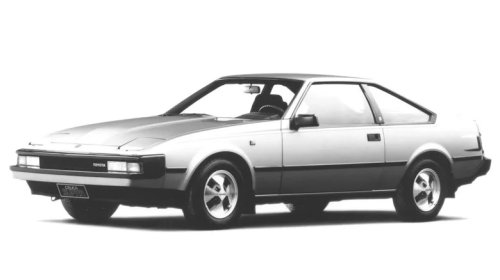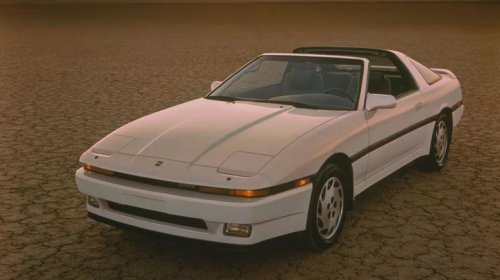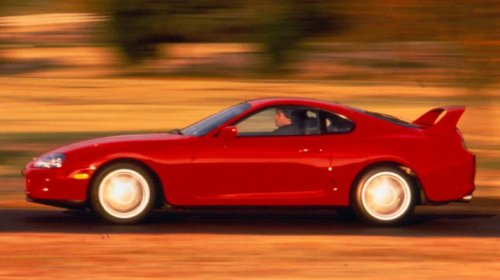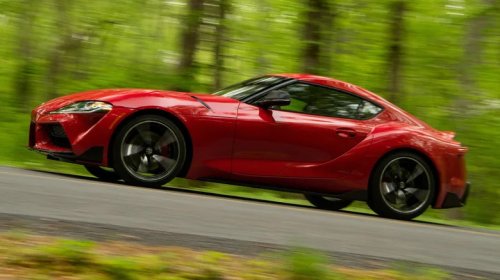





















The fourth-generation Toyota Supra, known as the A80 or MkIV, is one of the most recognizable Japanese sports carsof the 1990s. Most people know it for the legendary 2JZ-GTE engine, rear-wheel-drive setup, and presence in racing and pop culture. But Toyota also made a special version of this car that didn’t get much attention outside Japan. It wasn’t built for show or for mass production—it was made to meet racing rules for Japan’s top GT racing series at the time.This special Supra came with substantial changes, courtesy of TRD, Toyota’s motorsport division. The model features a redesigned widebody along with several optional upgrades to improve performance on track. This Supra was never sold through the regular dealerships, but they were hand-built with a unique serial number. A handful were ever manufactured and generally exclusively sold in Japan.As a result, this Supra flew well under the radar, even though it was closely tied to Toyota’s racing program and featured in pop culture. A homologation special Supra was developed to meet racing rules, rather than make headlines. Even today, this special MkIV Supra is one of the most overlooked. The TRD 3000 GT Is A Rare, Obscure Factory-Tuned MkIV Supra Toyota TRD Supra 3000 GT Front Three QuarterAmong the many variations of the fourth-generation Toyota Supra (A80), the TRD 3000GT stands apart as a factory-backed performance model fit for the road, but few enthusiasts have seen up close. Introduced in 1994 by Toyota Racing Development (TRD), the TRD 3000GT was a purpose-built homologation special. Its primary role was to help Toyota meet entry requirements for the JGTC (All-Japan Grand Touring Car Championship), specifically to mirror the race-ready Supra GT500 competing in the series.Unlike typical aftermarket modifications, the TRD 3000GT represented a complete transformation. TRD reworked nearly every exterior panel to create a wider, more aerodynamic body that improved cooling and allowed for larger wheels and tires. The widebody kit for the Supra included new front and rear bumpers, vented front fenders, side skirts, a revised hood with cooling vents, and a large rear wing—all made from lightweight materials. These changes gave the car both a stronger visual link to its GT500 counterpart and functional performance benefits on the track.Despite its roots in motorsport and its direct connection to Toyota’s racing efforts, the TRD 3000GT stayed relatively obscure outside. Today, the TRD 3000 GT is seen as the ultimate factory-tuned Supra, embodying both the street and track spirit of Toyota’s golden performance era. The TRD 3000 GT Came With 275 HP, But 500+ Tune Was An Option Via: Toyota Performance Specifications (Source: Toyota)The Supra TRD 3000 GT was introduced in 1994 as a factory-backed homologation package for the A80-generation. TRD offered the 3000GT as a complete conversion that included extensive changes to the body, chassis, and performance systems, with optional upgrades for customers seeking improved engine output.TRD replaced nearly every exterior panel of the 3000 GT with wider, aerodynamically revised components made from fiber-reinforced plastic. The widebody design helped to accommodate wider racing tires. The redesigned body was also designed to help dissipate heat from the engine bay and improve downforce, mimicking the GT500 racecar.Mechanical upgrades from TRD included sports suspension with stiffer springs and dampers, front and rear anti-roll bars, additional chassis bracing, and an optional mechanical limited-slip differential. Larger brake rotors with performance brake pads were employed for improved stopping power, all of which resulted in improving handling and driving dynamics for the racetrack, without severely compromising road usability.While the 2JZ-GTE engine remained stock in compliance with Japan’s horsepower limit at the time, TRD offered optional engine performance parts. Customers could install a revised ECU, higher-flow exhaust, improved intercoolers, oil coolers, and fueling upgrades. With these components, power output could reach around 350–400 hp, though TRD did not officially offer turbocharger upgrades, but some versions with upgraded turbos made over 500 hp. Toyota Supra TRD 3000 GT Factory Upgrades Full widebody kit made from FRP (Fiber Reinforced Plastic) Wider front and rear fenders (60mm front/ 50mm rear) to accommodate racing tires Vented front bumper and hood for better cooling Side skirts, rear spats, and massive rear wing, designed to improve downforce. Rear diffuser-style bumper Optional carbon fiber rear wing TRD coilovers or dampers for improved handling Optional TRD brake kits with larger rotors and calipers Optional TRD strut tower bars and underbody braces. TRD LSD (limited-slip differential) for better traction Optional engine tunes - Mild (350–400 hp), Heavy (500+ hp) Toyota Supra MkIV Is Generally Worth $96,389 Today Bring A Trailer 1994 Toyota Supra Mk IV Values (Source: Hagerty)The lore of the 2JZ engine, and the car's iconic status, aided by pop culture, some Toyota Supra models are valued at over a quarter of a million dollars today. The standard 220-hp Supra models are generally more affordable, while the more powerful Supra with the twin-turbo 2JZ engines, especially with a manual transmission, is a highly collectible car among enthusiasts.Hagerty values a base Supra from 1994 at an average of $44,900 in good condition, but a pristine example is valued at $81,900 today. However, the twin-turbo models are substantially more valuable, generally worth $80,000 on average. But Concours-worthy models in original condition are valued at a staggering $284,000.According to Classic.com, the highest recorded sale of a MkIV Supra Twin Turbo was $232,000. The model which was sold through Bring a Trailer with a Sport Roof was finished in black, with a black interior. The low-mileage example of the Supra had just 13,000 miles, still in "Original & Highly Original" condition. The window sticker available with the car reveals that the example carried an MSRP of $45,200, while a few options elevated the price to $48,895 when it was sold new.Only 35 examples of the 3000 GT were officially built by TRD as complete conversions, each featuring unique serial plates to confirm their authenticity. This extremely low production number makes it one of the rarest factory-tuned Japanese sports cars ever produced. TRD also offered the widebody kit separately, leading to many replica builds. However, original factory-completed cars remain highly sought-after and easily command six-figure sums in the collector's market today.