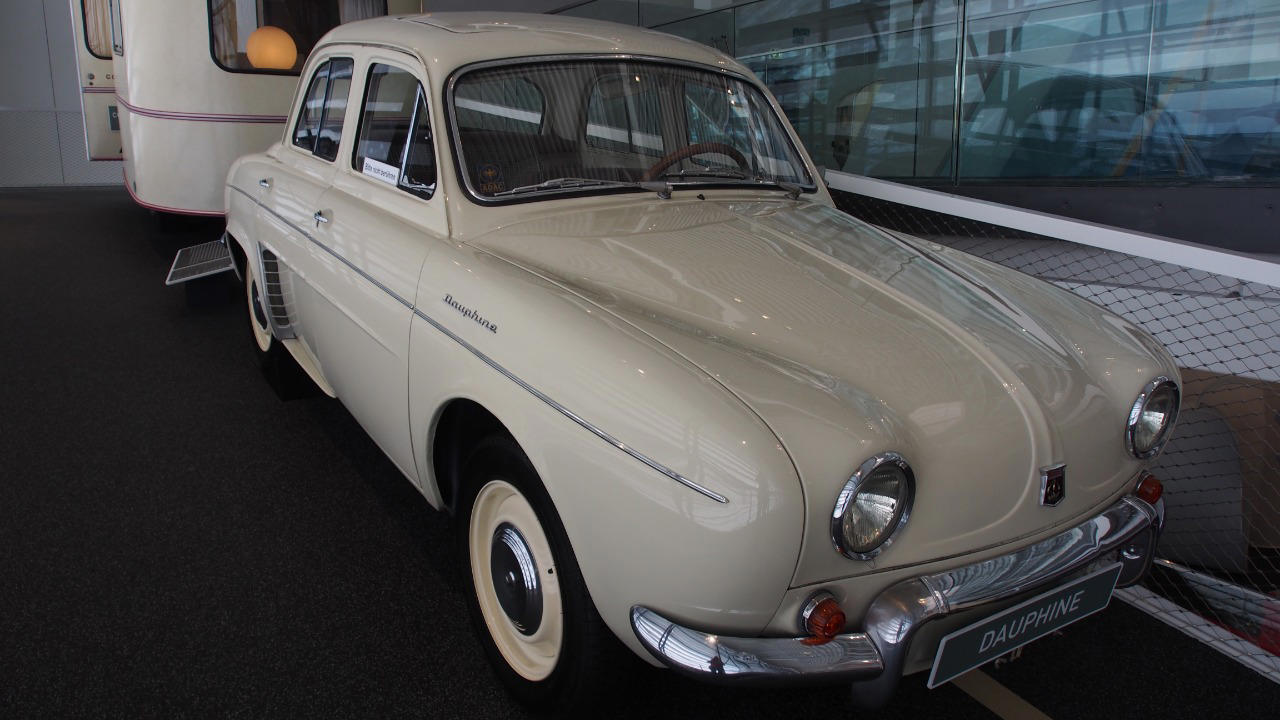



















On a modern highway filled with crossovers and electric SUVs, a 1961 Renault Dauphine looks like it slipped in from another planet. Tiny, softly sculpted and defiantly slow, it survives as a rare sight in traffic, yet it carries a story that runs far beyond quirky styling or foreign charm. The car that some enthusiasts now hunt down in ones and twos once promised to reshape American driving, then became a cautionary tale about hype, quality and what happens when a product meets the wrong expectations. Spotting a Dauphine today is to confront how quickly reputations can flip. In a few short years it went from darling of import showrooms to punchline on worst-car lists, then largely vanished from the roads it was meant to conquer. The journey of that 1961 sedan reveals as much about postwar optimism and American car culture as it does about one small French machine. The little French car that arrived with big promises The Renault Dauphine emerged in the mid 1950s as France rebuilt its industry and looked outward. Designed as a successor to the rear engined 4CV, it carried a compact four door body, a rear mounted inline four and a mission to bring affordable motoring to families who had never owned a car. According to production histories of the Renault Dauphine, the model was built for more than a decade and shipped to markets across Europe, North America and beyond. At a time when American sedans stretched longer every year, the Dauphine landed like a design manifesto. Its rounded nose, slim pillars and delicate chrome trim suggested European elegance rather than brute power. The cabin was narrow but airy, with thin seats and large windows that made the car feel friendlier than its dimensions. For drivers who had only known full size Detroit iron, the idea of a small, economical French sedan that could slip into tight city streets felt novel and even sophisticated. Renault and its U.S. partners leaned into that image. The Dauphine was marketed as a chic alternative to domestic compacts, a car that offered style and thrift in one neat package. It arrived just as American buyers started to consider smaller vehicles, the same moment that the Volkswagen Beetle was proving that an import could be both foreign and mainstream. For a brief period, the Dauphine looked like it might follow the same path. America’s sweetheart, briefly Sales figures from the late 1950s show how quickly the little sedan connected. In the States, the Dauphine became one of the most popular imports, at one point ranking just behind the Volkswagen Beetle among foreign nameplates. That surge was not an accident. Dealers pitched the car as an answer to rising fuel costs, city congestion and a growing appetite for European style. Marketing campaigns presented the Dauphine as light, nimble and modern, a car that could slip through traffic and sip fuel while larger V8 sedans gulped it. Period film reels and advertisements, preserved in enthusiast archives, show smiling families loading the tiny trunk and boasting about easy parking. The message was consistent: the Dauphine would give American drivers the benefits of European motoring without asking them to sacrifice comfort. The numbers looked impressive. In one standout year, Renault sold 102,000 units in the United States, a figure cited in French accounts of the model’s early success. That tally made the Dauphine a serious presence on American roads, not just a curiosity. For a small French car in the States, it was a breakthrough that seemed to confirm the strategy of exporting compact, efficient vehicles to a market built on size. Yet even as sales climbed, the seeds of trouble were present. The same qualities that made the Dauphine appealing in brochures, its light weight, modest power and simple construction, would soon collide with American driving habits and expectations in ways that the company had not fully anticipated. When charm met reality On paper, the Dauphine’s mechanical layout looked clever. The rear engine freed up interior space and improved traction on slippery roads. The small displacement four cylinder promised strong fuel economy. In practice, especially on long American highways, those virtues could feel like liabilities. Contemporary road tests and later retrospectives describe acceleration that was leisurely at best. One widely shared anecdote, highlighted in a TIL the Renault discussion, notes that the car could take 32 seconds to reach 60 MPH, a figure that turned highway merges into long exercises in patience. On crowded freeways built for big engines, that performance gap mattered. Handling also drew criticism. The rear engine layout, combined with narrow tires and soft suspension, produced a driving feel that was very different from front engine American sedans. Drivers unused to lift off oversteer or the quirks of weight over the rear axle sometimes found the Dauphine unpredictable at the limit, especially when fully loaded or driven quickly on winding roads. Quality and durability issues compounded the perception problem. Owners reported rust appearing sooner than expected, electrical gremlins and mechanical wear that seemed out of step with the car’s marketing as a practical family vehicle. Detailed buyer guides from outlets that track classic cars, including a survey of the 1956 to 1967, describe common trouble spots in the bodywork and drivetrain that frustrated early adopters. In Europe, where speeds were lower and roads narrower, many of these compromises were more acceptable. In the United States, where daily commutes involved long distances at sustained highway speeds and where buyers expected their cars to shrug off harsh winters and salted roads, the Dauphine’s weaknesses stood out. The same differences that had made it feel exotic now made it feel out of place. From bestseller to byword for failure The shift from success to stigma did not take long. As warranty claims mounted and word spread about corrosion and reliability problems, American enthusiasm cooled. Sales, which had climbed so quickly, began to fall almost as fast. Within a few years, the Dauphine’s presence on U.S. roads thinned, and Renault’s broader American ambitions suffered. French historians of the brand have since labeled the episode a fiasco. One detailed account of the Renault DAUPHINE in America describes how the company misread local conditions and underestimated the importance of corrosion protection, dealer support and adaptation to local driving patterns. The car that had seemed perfectly tuned to postwar European needs was misaligned with the realities of the U.S. market. Decades later, the Dauphine resurfaced in a very different context. A widely circulated list of the worst cars ever built placed the model among the most notorious automotive missteps. That ranking, archived at Time’s worst cars, cited the car’s sluggish performance, rust issues and fragile build as reasons for its inclusion. Enthusiasts and historians have debated whether that verdict is fully fair. Some argue that the Dauphine was no worse than many budget cars of its era, and that its reputation suffered because it was judged by American standards for speed and durability rather than by the modest expectations of European city drivers. Others point to the scale of its early success, including those 102,000 units sold in a single year, as evidence that buyers initially saw real value before disappointment set in. What is clear is that the Dauphine became a symbol. For some, it represents the dangers of overpromising and underengineering. For others, it stands as a reminder that context matters, that a product built for one environment can falter in another even if it performs exactly as designed. The car that almost rewrote the import playbook To understand why the Dauphine matters today, it helps to see it alongside the cars that succeeded where it stumbled. The Volkswagen Beetle, which shared the Dauphine’s rear engine layout and compact footprint, built a reputation for durability and simplicity that helped it thrive in the same market. The contrast between the two shows how small differences in engineering, rustproofing and dealer support can shape long term perceptions. In the States, the Dauphine briefly looked like it might become the standard bearer for French design in the way that the Beetle did for German engineering. Period footage of marketing the Dauphine shows how aggressively it was promoted as a modern solution to American traffic and fuel use. The fact that it briefly became the second most popular import behind the Beetle underscores how close it came to reshaping the import market. Instead, its decline served as a warning to other manufacturers. Later European entrants paid closer attention to corrosion protection, high speed stability and the expectations of American buyers who drove long distances and demanded strong heating, cooling and dealer service. The Dauphine’s experience showed that charm and price could not fully compensate for structural weaknesses. Within Renault itself, the episode influenced product planning and export strategies. Successors to the Dauphine, including later front engine models, reflected lessons learned about packaging, safety and durability. While those developments fall outside the immediate story of the 1961 car, they form part of the longer arc that began when the first Dauphines crossed the Atlantic. Why a 1961 Dauphine still turns heads On the collector market, the Dauphine sits in an unusual place. It is not a blue chip classic in the mold of high performance sports cars, yet it has a small but passionate following. Guides for buyers of surviving examples, such as the overview at Hemmings, emphasize the need to inspect carefully for rust and to understand the car’s limitations before purchase. The advice is practical: treat it as a charming city car, not a highway cruiser. Part of the appeal lies in rarity. Many Dauphines succumbed to corrosion or were discarded once parts became scarce. The few that remain, especially well preserved 1961 cars, stand out at shows and on the street simply because so few people under a certain age have ever seen one in person. When a small, softly humming French sedan appears at a traffic light, it draws curiosity from drivers who have grown up with towering pickups and aerodynamic crossovers. Aesthetic appeal plays a role as well. The Dauphine’s design captures a particular mid century optimism, with rounded forms and brightwork that feel more like domestic appliances of the era than contemporary cars. In videos that revisit the model’s history, including enthusiast features on YouTube, owners talk about the pleasure of driving something that feels light, simple and connected to the road, even if it struggles to keep up with modern traffic. The car also carries a certain underdog charm. Owning a Dauphine is a way of embracing an automotive story that did not go according to plan. It is a conversation starter, a rolling reminder that not every ambitious product becomes a lasting success, and that failure can be as revealing as triumph. A different kind of automotive memory The story of the 1961 Renault Dauphine complicates the usual narrative of classic cars as icons of power or luxury. Instead of a muscle car that dominated drag strips or a grand tourer that defined glamour, this is a compact sedan that struggled, disappointed and then quietly disappeared from mainstream view. More from Fast Lane Only Unboxing the WWII Jeep in a Crate 15 rare Chevys collectors are quietly buying 10 underrated V8s still worth hunting down Police notice this before you even roll window down The post You’ve likely never seen a 1961 Renault Dauphine and it tells a different kind of story appeared first on FAST LANE ONLY.