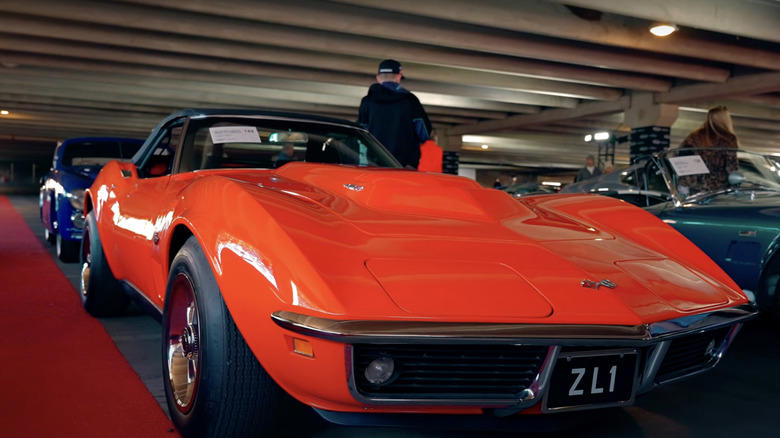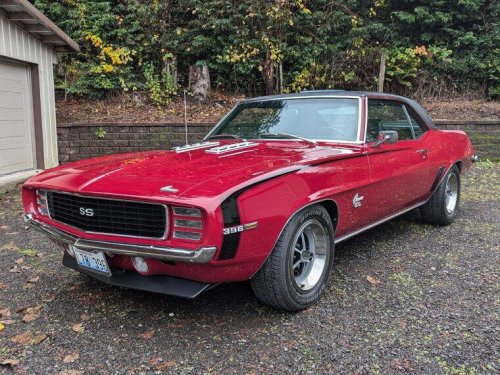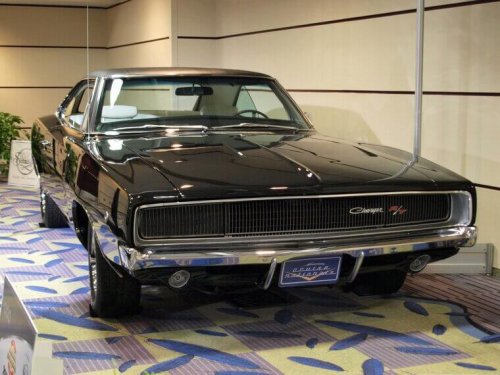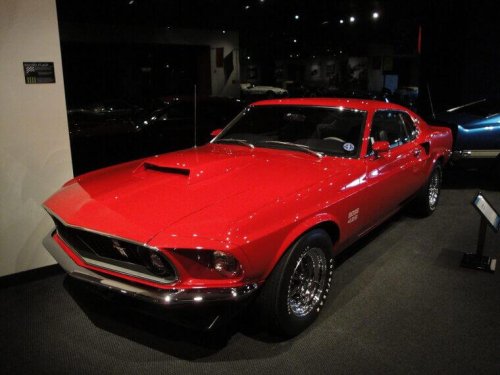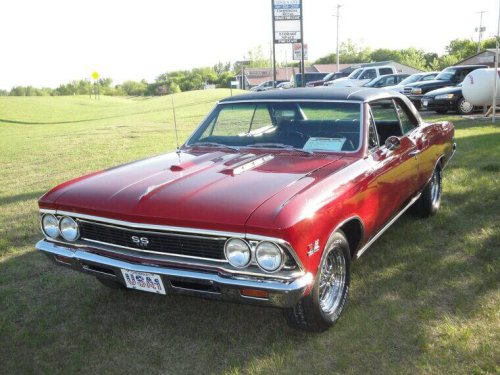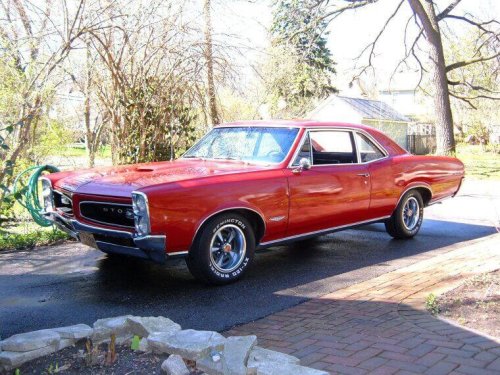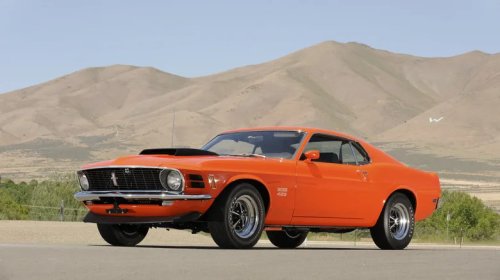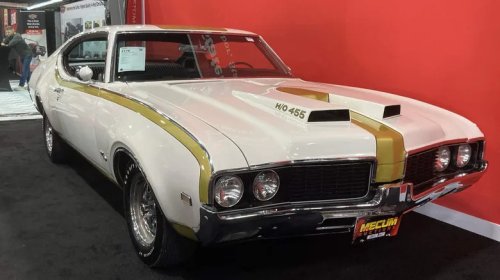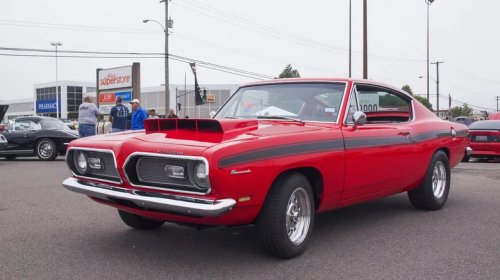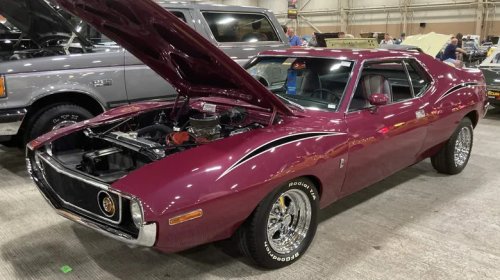
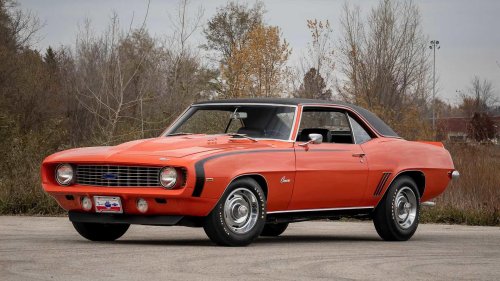
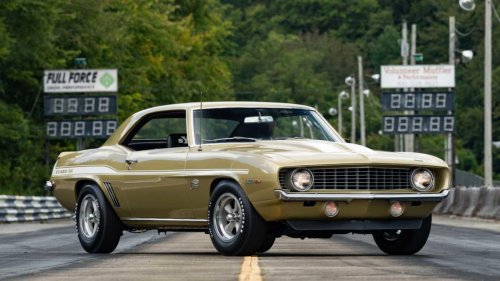
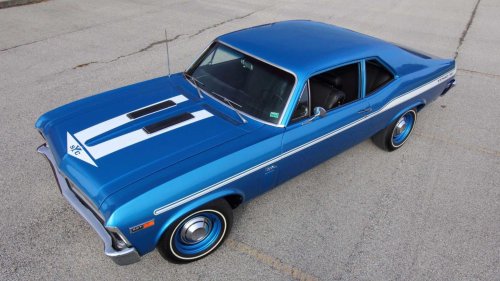
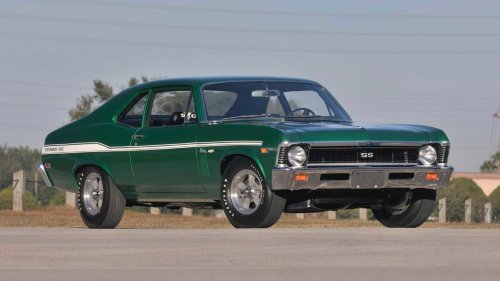
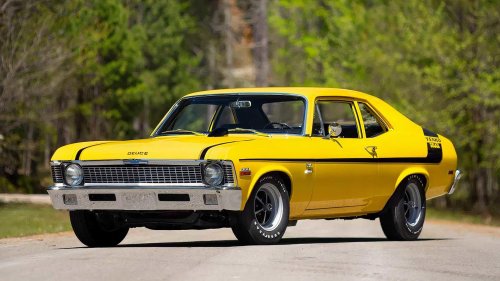
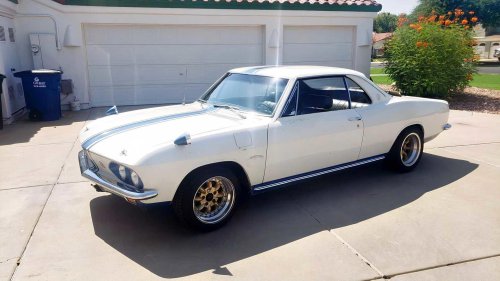
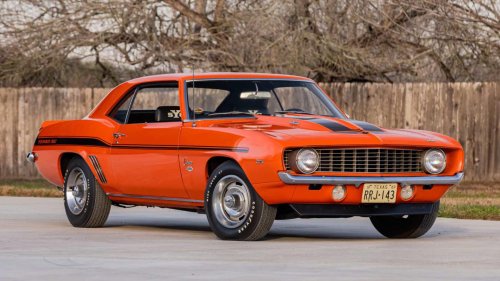
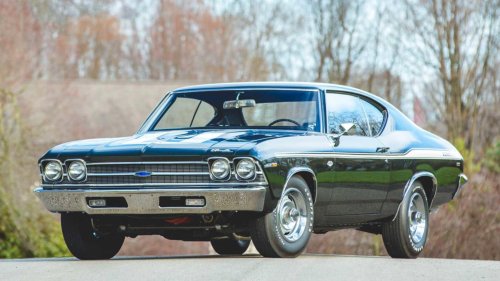
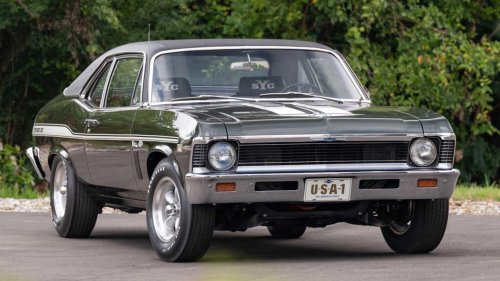



















Even though the Golden Age of American Muscle only lasted realistically from 1964 to 1971, the era produced some of the most memorable rides of all time. Everyone knows the Chevy Chevelle SS or Dodge Charger R/T when they see one, and literally no one has said "what the heck is that?" when a Pontiac Trans Am rolls on by. Even rare variants like the Ford Mustang Boss 429 or Plymouth Hemi 'Cuda are widely known because of their inherent awesomeness and staggering value.The California Special and Twister Special regional Mustangs packages weren't nationally known at the time, but are now sought-after collectibles. There were also limited edition factory drag cars that didn't make it to everyone's showroom, which have gone on to legendary status with enthusiasts. Muscle fans may think they've seen it all, but there were cars prepped by individual dealers that most have never set eyes on. These dealer-built rides were souped-up versions of popular muscle cars that were both extremely rare and hyper-localized, making them virtually unknown. GM’s Big Engine Ban Mecum Before even one piston was fired in the Horsepower Wars of the classic muscle car era, GM had already surrendered with their infamous big engine ban of 1963. Possibly seeing what kind of terrifying power the Chevy Impala Z11 and its 430-horsepower 427 cubic-inch V8 was capable of and fearing the liability of equipping regular production models as such, GM issued a company-wide edict that forbade engines over 400 cubic inches from being installed in intermediate cars. When the Golden Age launched in 1964 with the Pontiac GTO, it and all GM muscle cars were limited, while Dodge and Plymouth rides had access to powerful big-blocks that dominated the streets. COPO Cabana Mecum AuctionsIn 1967 Chevy produced the Camaro, which was the first car designed for and dedicated to the muscle car trend. It was a real looker but lacked the scorching performance to match its hot styling until some industrious dealerships found a loophole that allowed them to order Camaros straight from the factory with 427ci V-8s, correcting GM's pointless ban. The Central Office Production Order (COPO) system allowed dealers to order non-standard equipment from the factory and was supposed to be for fleet orders as well as law enforcement and emergency vehicles. There seemed to be a collective epiphany in 1969, when dealers all across the country suddenly figured out they could use the COPO system to get hyper-Camaros delivered straight to their lots. Yenko Chevrolet Mecum Don Yenko was a former race car driver who set up a speed shop at his family's Chevrolet dealership in Canonsburg, Pennsylvania, to give customers a little more juice under their hoods. He initially took an interest in making Corviars faster, but when the Camaro came out in 1967, he realized this was the car that needed his help the most. Unlike many dealers that simply ordered Camaros with 427 cubic-inch V8s, Yenko branded his rides as Super Cars, stylized as "sYc," and gave them graphics packages, sort of akin to what Carroll Shelby did with the Mustang. The only differences were that Yenko didn't have Chevy's blessing and, unlike the marginally faster Shelby Mustangs, the Super Cars were ferocious street machines. 1969 Yenko Chevrolet Nova SC MecumYenko Chevrolet is famous for their COPO Camaros, but not a lot of people realize that they dabbled in super-powering other Chevy muscle cars as well. In 1969, Yenko wanted to test the limits of the COPO system as he yearned to create a Nova SS 427, but there was no way GM would allow that engine to go into a compact car. Undeterred, he ordered a couple dozen Nova SS 396 cars and swapped out their engines for L72 Corvette big-blocks, which is actually just as awesomely insane as it sounds.Yenko upgraded the suspension and brakes to accommodate the additional power as well as adding a 12-bolt rear axle. With a Muncie four-speed manual transmission and Stewart-Warner tach, this car was purpose built to dominate the straight line, with explosive launches. Around 28 Nova SCs were built, featuring the 427 big-block, and less than 10 are known to still exist probably because that kind of ludicrous power in the wrong hands leads to rampant destruction. Yenko Power That Was Almost Too Much To Handle Mecum When the Dodge Viper came out in 1992, it had a 400-horsepower, 426 pound-feet of torque V-10 engine but almost no modern safety features like anti-lock brakes or traction control and inexperienced owners were wrapping them around telephone poles. The 1969 Nova had even fewer safety features and the Yenko SC was packing a 450-horsepower, 470 pound-feet of torque 427 cubic-inch V8, so it was a literal Noob-killer. Piloted by someone who knew what they were doing, however, this was a street machine masterpiece capable of a 4.8-second 0-60 sprint and a blistering 11.7-second quarter-mile ET. 1970 Yenko Deuce Bring a Trailer In 1970, GM finally lifted its silly big engine ban and that spelled the end of the COPO Camaros, but it's not clear why, because Chevy never put a monster-block into one. The 1970 Camaro stuck with the 396 (402), and a second-gen with a 454 LS6 would have been amazing, but for whatever reason, Yenko never made that a reality. The Nova SC didn't carry on either, but Yenko created the Yenko Deuce, which was still pretty cool, but much less extreme. With a 360-horsepower 350 cubic-inch V8 and Yenko's performance mods, the Nova Deuce was a solid 13-second car, but definitely not in the same league as the '69 SC. Yenko Stingers And Other Muscle Cars Mecum Considering that Don Yenko is famous for making fearsome first-gen Camaros, it almost seems weird that he got his start sprucing up Chevy Corvairs. In reality, Yenko's interest in the Corvair was as an endurance race car, and he wanted to improve upon the middling performance Chevy put into it. He sold these dealer-modified Corvairs as Stingers and offered three "Stages" that brought the 2.7-liter turbo flat-six's horsepower up from 160 to 240. In 1971, Yenko switched the Stinger brand to the Chevy Vega with a 290-horsepower upgrade to its 2.3-liter I-4. COPO Camaro Mecum Before discovering the joys of the COPO system, Yenko Chevrolet was building Super Camaros by hand. In 1967, Yenko had the service department swap out 54 Camaro 396s for Corvette 427s, and in 1968 they did another 64. Like the Nova SC, the Yenko Camaros received upgrades from the suspension to the brakes to the rear end gearing, and were adorned with the sYc graphics package. Once COPO came into play in '69, Yenko ordered around 200, making it the least rare Super Car that's still a Holy Grail. Regardless of year, a Yenko Camaro was an 11-second car versus the 14-second ETs of a stock Camaro SS 396. There were just over 1,000 COPO Camaros delivered in '69, with 69 featuring the ZL1 aluminum block race 427. Super Chevelle SS Mecum Of all the cars needing Yenkofication, none was more desperate than the Chevy Chevelle, and that finally happened in 1969. The Camaro was technically a pony car and its competition was the Mustang and maybe the Plymouth Barracuda, both of which it could smoke in stock form. The Chevelle SS, on the other hand, was a pure muscle car that was getting dusted by Chargers, Coronets, Road Runners, and Super Bees equipped with either a 440 or 426 Hemi. Yenko not only gave the Chevelle SS a fighting chance against Dodge and Plymouth by ordering them with 427 cubic-inch V8s, he created a Mopar-killer, 12-second beast. Only 99 Chevelle SCs were made, so they didn't have a lot of street presence, but at least a few times they must have caught a Hemi owner by surprise. Nova SC Collector’s Market Mecum Despite being ultra-rare and a dealer build, the 1969 Yenko Chevrolet Nova SC actually has a Hagerty value, and it's a whopper. A fixer-upper goes for $248,000 while a Concours condition show car is valued at $470,000, which is more than any regular production hardtop GM muscle has ever sold for, and about $400k above the top sale for a stock Nova. As it turns out, Hagerty's value is a bit shy of what these cars sell for in the real world, as that Yenko Nova SC pictured above just brought down the gavel at Mecum Kissimmee 2026 for an astounding $852,500. As a compact, the Nova never got the same respect as the intermediate Chevelle, but it is now more valuable than its big brother which has a top sale of $770,000 for an SS 454 LS6 convertible.Sources: Chevrolet, Hagerty, Mecum