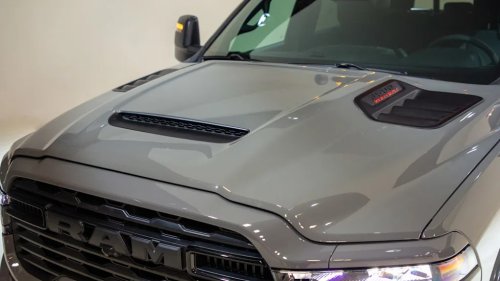
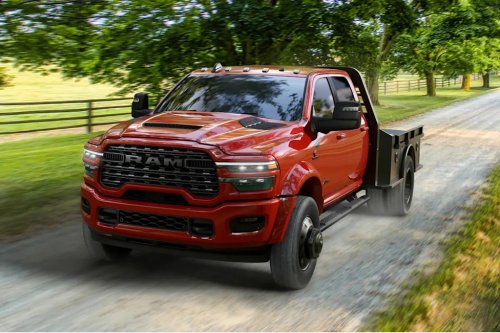
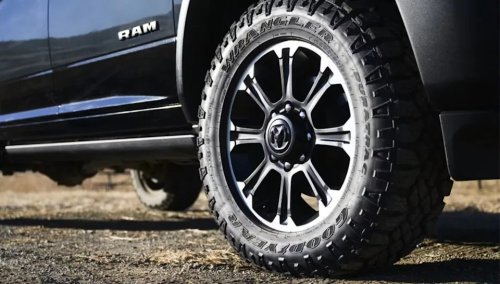
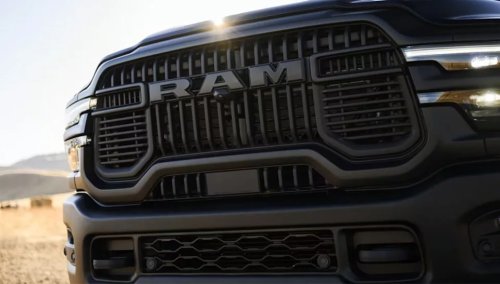
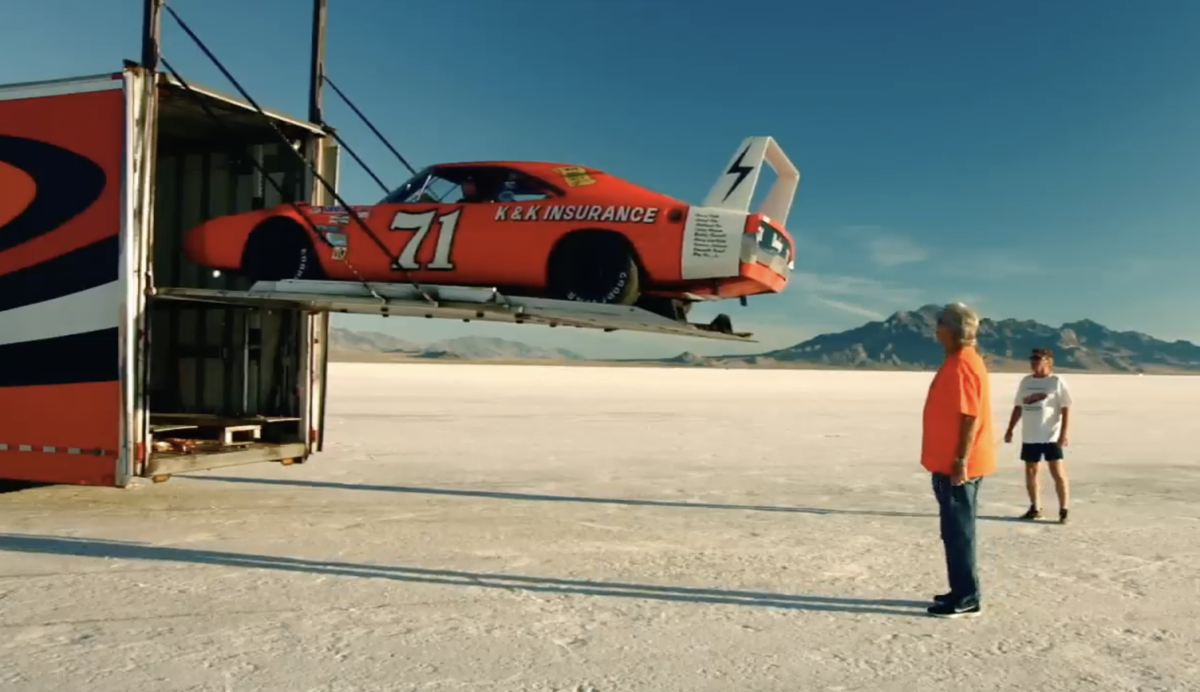
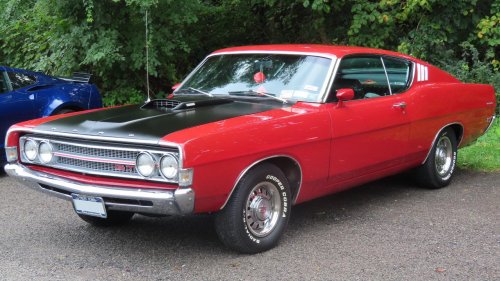
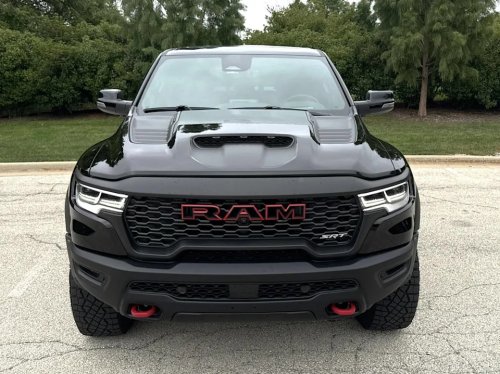
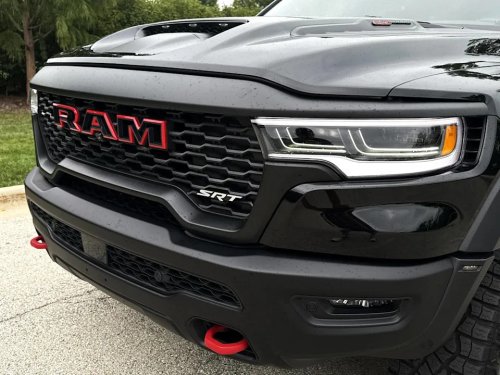
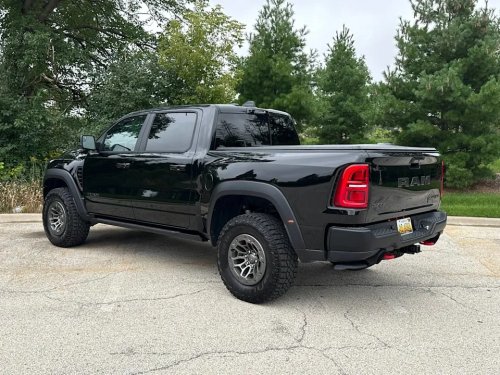
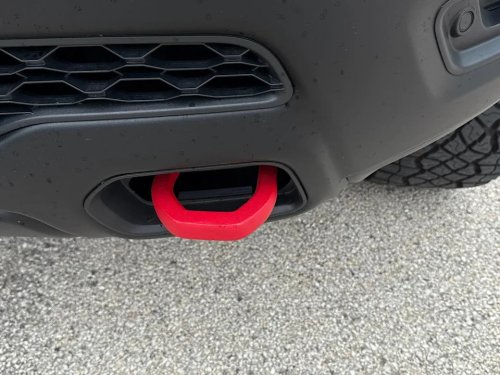
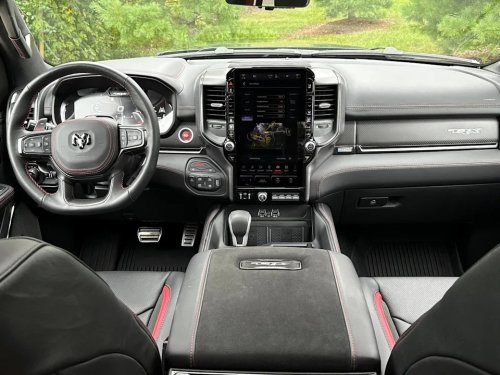
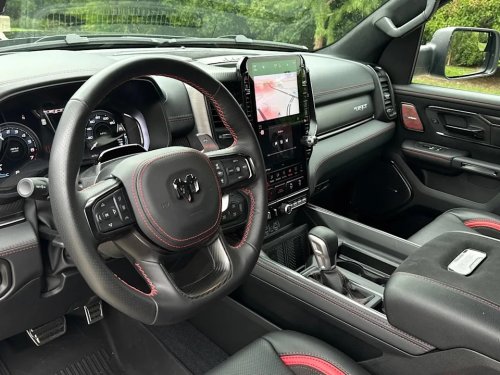
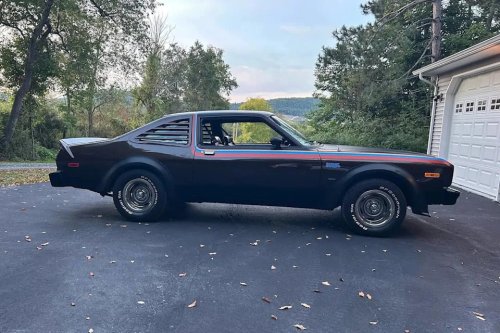
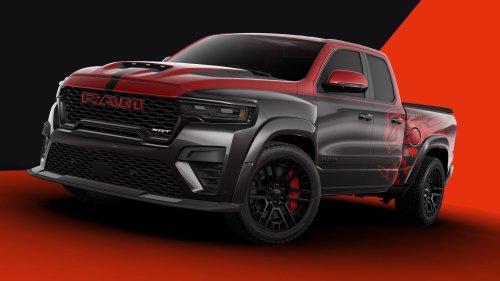
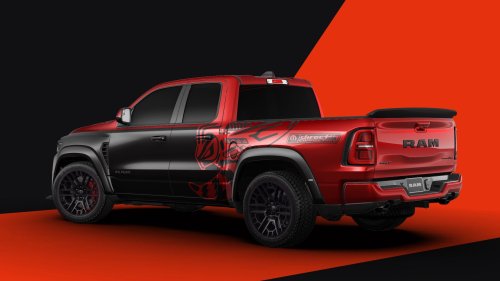
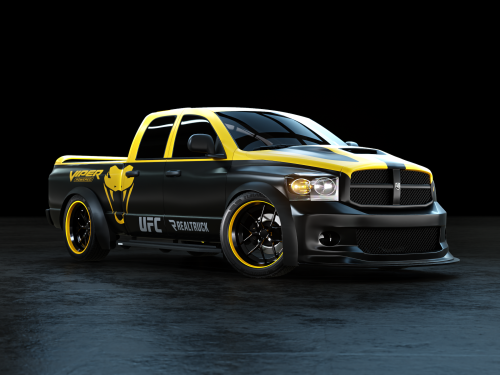
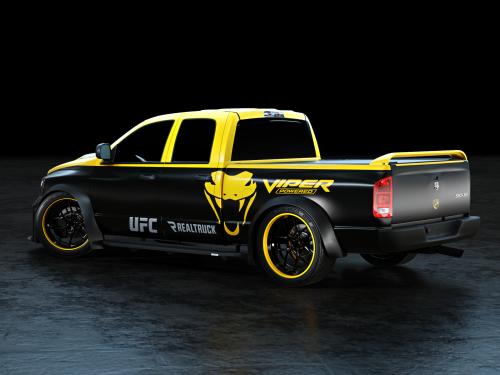
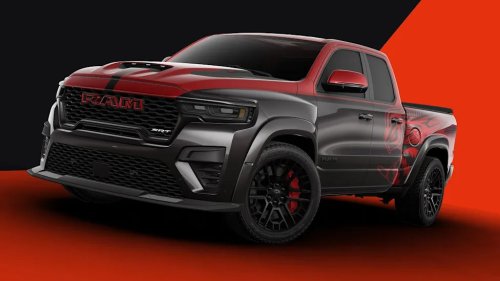
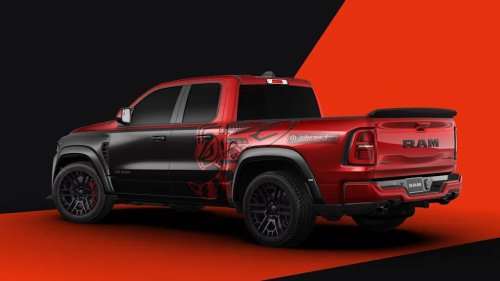
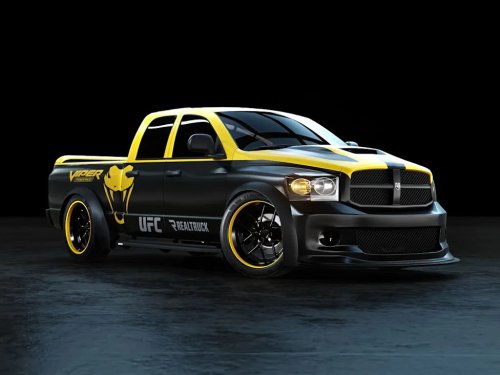
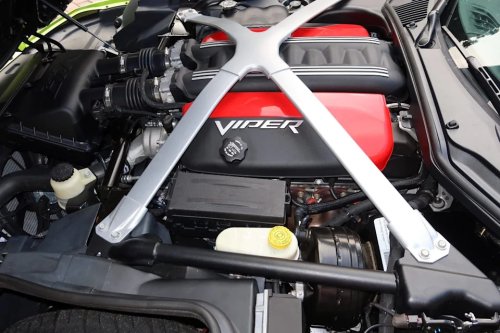
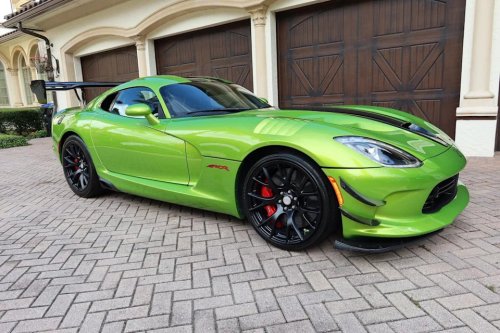
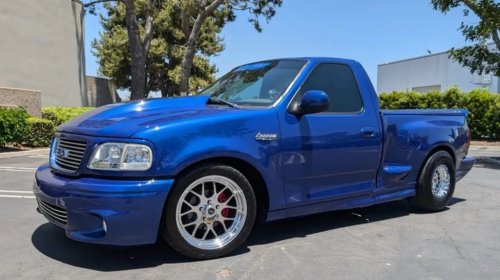
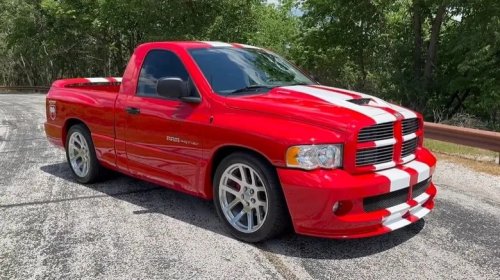
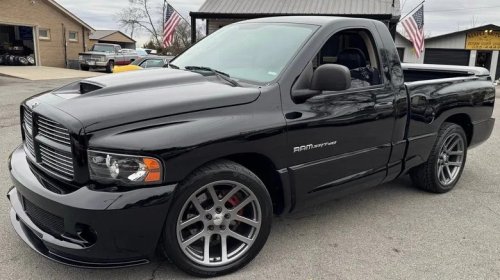
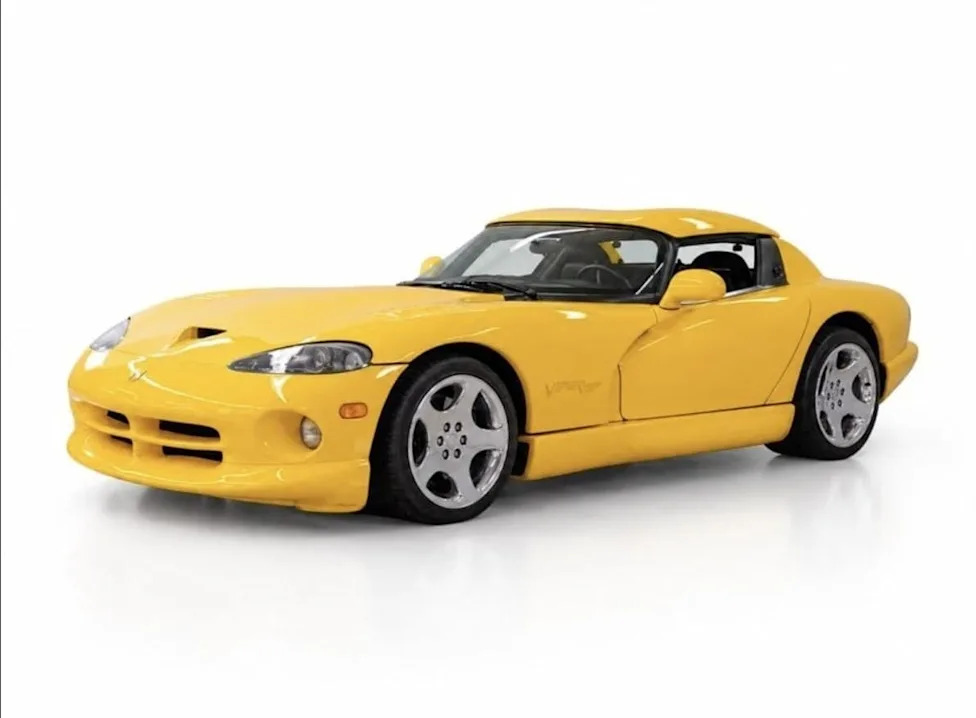
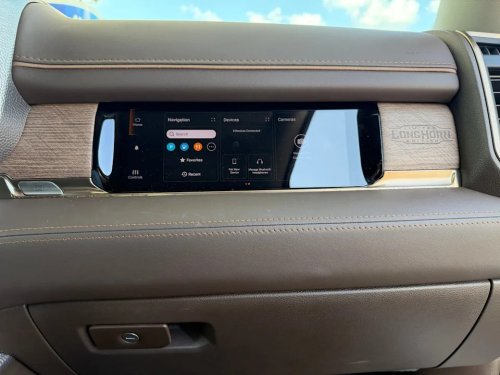
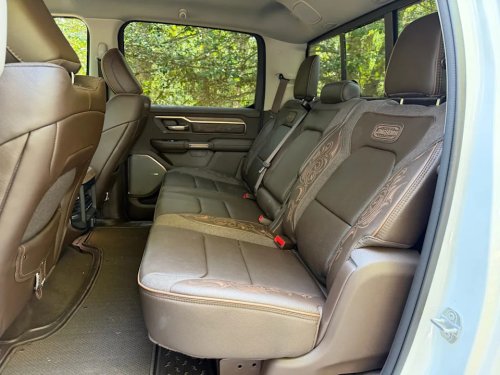
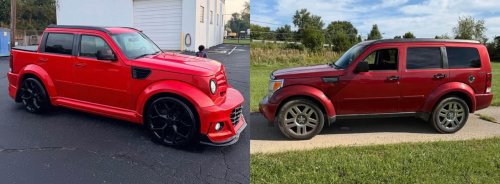
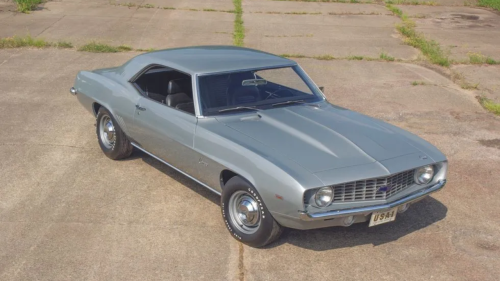
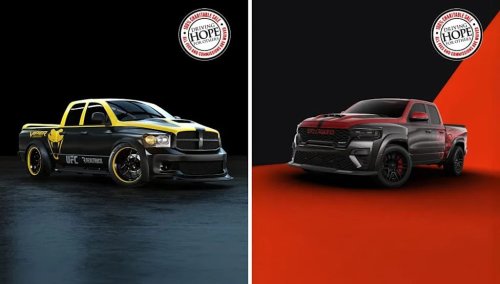
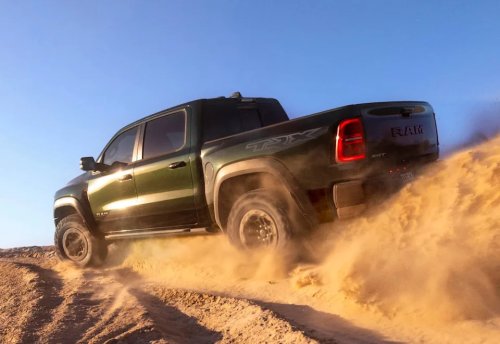
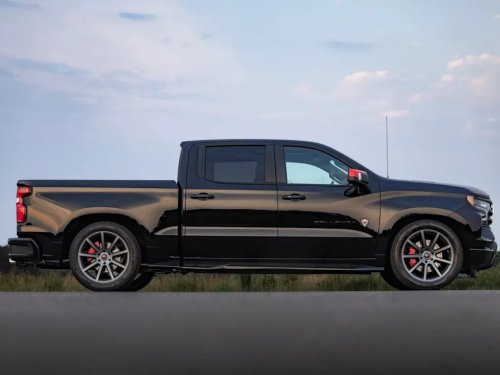
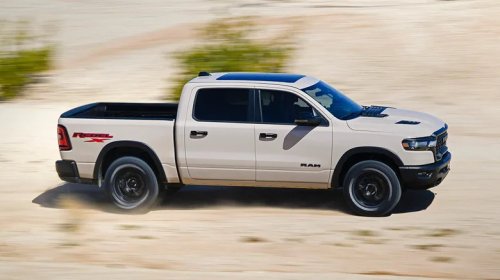
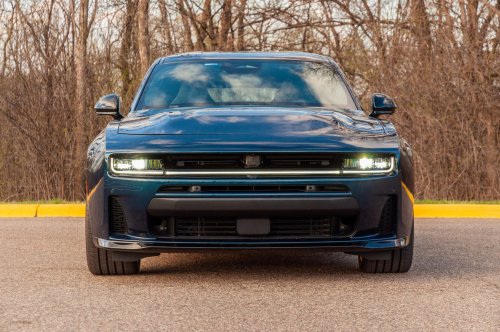
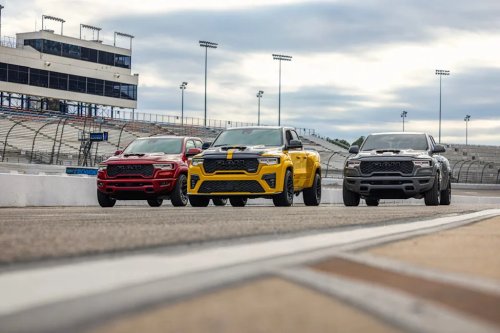
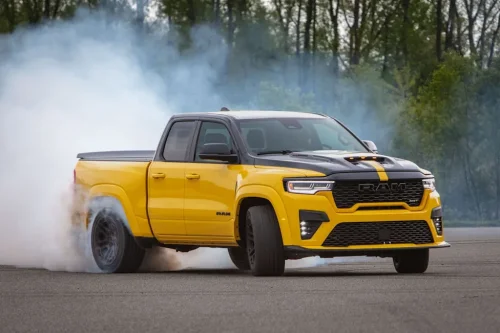
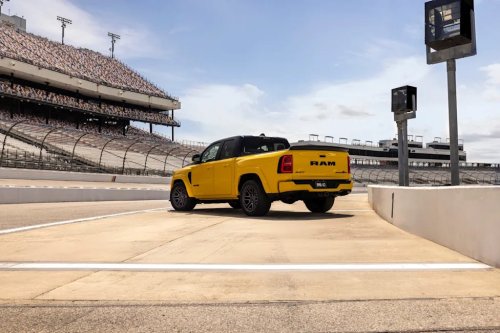
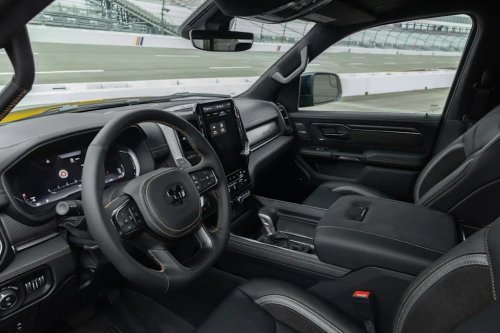
The 2027 Ram 1500 Rumble Bee family features three distinct V-8 engines: a 395-hp 5.7-liter, a 470-hp 6.4-liter, and a 777-hp supercharged 6.2-liter.Along with wider body panels from the RHO and TRX, all these street-oriented trucks have a tidier quad-cab, short-bed configuration that brings a shrunken wheelbase.The regular Rumble Bee will go on sale later this year, with the 392 and SRT arriving in early 2027; we bet the Hellcat-powered pickup will clear the six-figure price point.Ram is on a roll. Not only did it just have the best first quarter of sales since 2023, but the brash brand has been on a product offensive over the past 18 months that has helped fuel its comeback. Most notably, it brought back the Hemi V-8 after a short-lived retirement, much like the one Ram's CEO Tim Kuniskis took in 2024. According to Kuniskis, the same week he rejoined the fold was the same week his team started thinking about a new type of pickup truck, one that had been done before but didn't work.Kuniskis is referring to iconic, albeit fleeting, street-performance trucks like Dodge's 1970s Li'l Red Express and the Viper-powered SRT-10 from the mid-2000s. While those hi-po pickups didn't last, they set the stage for what's about to make your suburban neighborhood sound like pit lane at a NASCAR Truck Series race. The 2027 Ram 1500 Rumble Bee isn't just a new V-8-powered model with a sporty appearance; it's a whole family of "muscle trucks" that Kuniskis and Co. are betting will turn a niche into a hot commodity. And their wider performance/practicality bandwidth is poised to fill the void left by Dodge's popular V-8-powered muscle cars, the Charger and Challenger.Ram (Ram)Trucks Built for the Street/StripSince it debuted, Ram's TRX off-road supertruck has been the brand's flagship. It features a lane-hogging widebody and a supercharged Hellcat V-8 that was recently reworked to make 777 horsepower and 680 pound-feet of torque. While its long-travel suspension and chunky all-terrain tires make it ultra-capable after the blacktop ends, that setup doesn't provide the on-road precision you get from something with a lower ride height, street-focused rubber, and a rear-wheel-drive mode that's definitely only intended for better fuel economy (wink, wink). All the latter stuff applies to the new Rumble Bee SRT, which is the patriarch of the bunch.AdvertisementAdvertisementLike every Rumble Bee, the top-of-the-line SRT version inherits the TRX's wider front fenders and bedsides as well as its bulging hood. Along with a waistline some 88.0 inches wide, the trucks' 132.3-inch wheelbase is a foot shorter than most other half-ton Rams. Why? Because the engineers removed a section of the ladder frame behind the B-pillars to help improve handling. That's also why every Rumble Bee pairs a smaller quad cab configuration (versus the more popular crew cab) with the shorter five-foot-seven-inch cargo bed.Ram (Ram)The SRT's chassis also features a unique suspension setup compared with the regular Rumble Bee and the standard 392 variant (more on those later). While the whole family shares Ram's sophisticated multilink rear suspension, the SRT has Bilstein adaptive dampers and air springs at every corner that allow height adjustments. The rest of the Rumble Bee clan is buoyed by monotube Bilstein dampers and steel coil springs, though the 392 Track Package that will eventually join the party will inherit the SRT's chassis upgrades. Those also include larger 16.1-inch front brake rotors clamped by Brembo six-piston calipers. The SRT and 392 Track Package share huge 325-section-width all-season tires mounted on 22-inch-by-12-inch wheels, with Ram claiming they're the second-widest wheel-and-tire combo ever fitted to a production model in the company's history, behind only the Viper.Speaking of the Viper, when the third generation donated its 500-hp 8.4-liter V-10 to Dodge's two-door pickup, the SRT-10 set the top-speed record for production trucks at nearly 155 mph. That record stood for over two decades, until the new 777-hp Rumble Bee SRT broke it. Along with a targeted top speed of 170 mph, Ram claims its most powerful muscle truck will hit 60 mph in 3.4 seconds and complete the quarter-mile in 11.6 seconds at 116 mph. To hit these marks, the SRT and 392 Track Package feature an exclusive launch-control mode, and you'll only get the electronically locking rear diff (dubbed E-spool) on these trucks.Ram (Ram)The Rumble Bee SRT and 392 Track Package are also differentiated from their siblings thanks to more prominent jawlines. Their increased frontal area is filled with a dedicated lower grille that helps cool vital components, like directing air to the front brakes. Ram's engineers also prioritized downforce-enhancing hardware like a 4.5-inch front splitter, a skid-plate-esque aero shield under the chin, and something you seldom see on a pickup truck—a rear spoiler. Don't worry, though, the 3.1-inch-tall piece won't ruin your workday, as it's securely fastened to the tailgate. So you can easily access the trucks' nearly 1200-pound max payload. And if you need to pull a trailer, the Rumble Bee family can tow up to 8890 pounds.V-8 Street Trucks for EveryoneThankfully, Ram didn't just build one Rumble Bee that's too expensive for most people. The regular model, with its 395-hp 5.7-liter Hemi V-8, will be accessible to almost everyone. It looks mean as hell too, sporting the same widebody panels as the top trucks. That also goes for the Rumble Bee 392, which benefits from a more powerful 470-hp "Apache" V-8. Ram proudly points out that it's the first time the 6.4-liter engine has been installed in its 1500 model. Ram claims the 395-hp truck will hit 60 in 6.1 seconds, while the 470-hp version will do the deed in 5.2 ticks, and they'll go 1320 feet in 14.6 seconds at 93 mph and 13.2 seconds at 101 mph, respectively.AdvertisementAdvertisementLike the SRT and 392 Track Package, the lesser Rumble Bees have an eight-speed automatic transmission (sorry, manual fans) and all-wheel drive, though a front-axle disconnect allows ass-out antics. Eventually, you'll be able to trade their standard 285/45R-20 all-season tires for wider 305/50R-20 rubber, and Ram promises a limited-slip rear diff will also be available on these trucks.Inside, the Rumble Bees preserve Ram's class-leading interior, with the lower-rung trucks featuring standard cloth seats. Still, every version has a flat-bottomed steering wheel with paddle shifters, and Ram avoided the 1500's rotary shift knob, instead installing a more appropriate center-console lever like on the TRX. A 12.3-inch digital gauge cluster is standard, but the size of the infotainment touchscreens grows with the engine output. The 395-hp trucks have an 8.4-inch unit, while the 470-hp and 777-hp models have vertically oriented 12.0- and 14.5-inch displays. You get leather-appointed seats with extra bolstering on the 392 Track Package, and the SRT takes the luxury a step further with leather covering the dashboard and horn pad. Carbon-fiber trim, a microsuede headliner, and engraved Rumble Bee badges round out the upscale cabin.Ram (Ram)The 5.7-liter version will be the first Rumble Bee to race into your local Ram dealership sometime later this year. The regular 392 and SRT will follow in the first half of 2027. We're still waiting to see the 392 Track Package, and Ram hasn't released any pricing details, but we expect the entry point to start around $60,000 and the SRT to clear the six-figure mark.Will Americans line up for Ram's new muscle trucks as they do for off-road-oriented trucks? Maybe they will, maybe they won't. Even Kuniskis admits there's no market research that says what they're doing is a sure thing. However, he thinks that, unlike the last time this was done, the strategy is much better and the timing is perfect, saying during the Rumble Bee's reveal event, "This is absolutely a 'Hold my beer, watch this, push the chips in' moment." Alright, Tim, we're watching.AdvertisementAdvertisement➡️ Skip the lot. Let Car and Driver help you find your next car.Shop New Cars Shop Used CarsYou Might Also LikeGift Guide: Best Ride-On Electric Cars for KidsFuture Cars Worth Waiting For: 2025–2029

















 +64 others