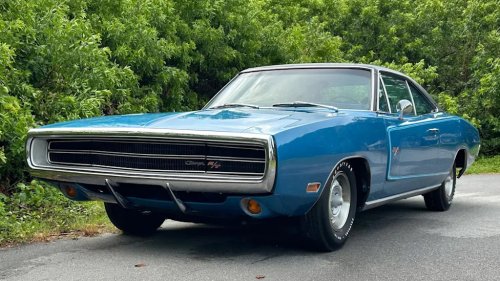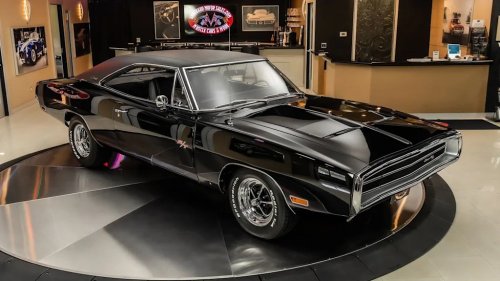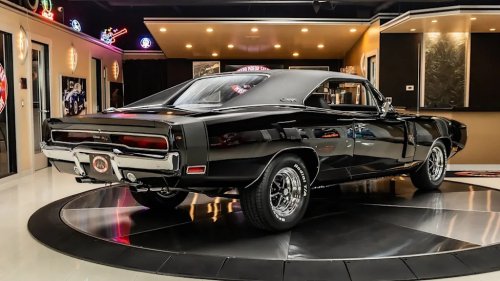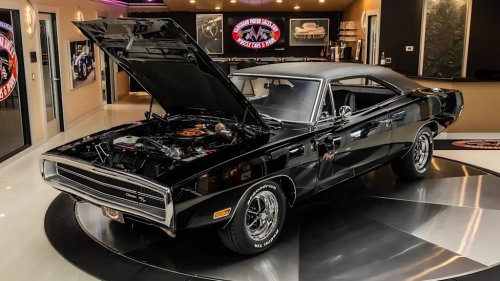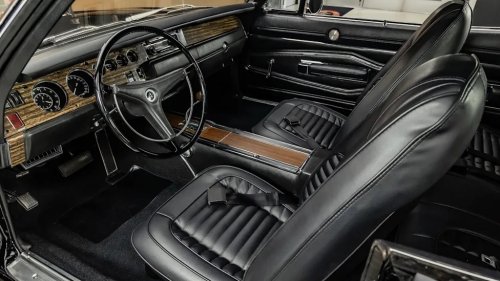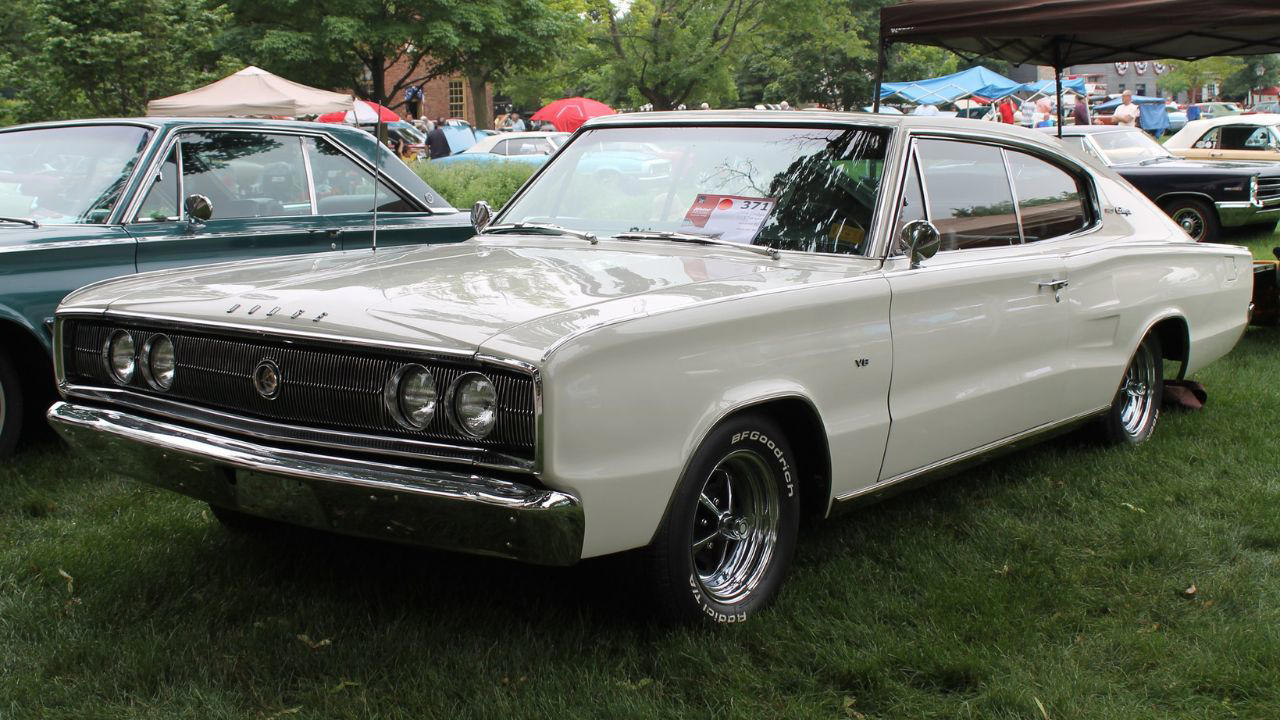



















Why the 1966 Dodge Charger looked unlike anything else in showroomsWhen the Dodge Charger arrived for the 1966 model year, it immediately stood apart from nearly every other American car on the road. Its sleek fastback roofline flowed uninterrupted from the windshield to the rear bumper. Its front end featured a full-width grille hiding rotating headlights behind a clean metallic facade. Inside, buyers found a futuristic interior unlike anything offered by Ford, Chevrolet, Pontiac, or Plymouth. The dashboard glowed with electroluminescent gauges, and a full-length center console stretched from the front seats all the way to the rear of the cabin. Today, many enthusiasts associate the Charger name with the famous 1968-1970 models that became muscle car icons. Those later Chargers are among the most recognizable American performance cars ever built. The original 1966 Charger, however, was something entirely different. Rather than creating a traditional muscle car, Dodge set out to build a futuristic personal performance coupe that blended luxury, technology, and style in ways few American manufacturers had attempted before. The result was one of the boldest automotive designs of the decade—a car that looked unlike anything else sitting in a showroom in 1966. Dodge Wanted More Than Another Sporty Coupe The mid-1960s saw an explosion of interest in sporty automobiles. The success of the Ford Mustang had transformed the industry almost overnight. Every manufacturer wanted a vehicle capable of attracting younger buyers and generating excitement. Dodge already offered performance-oriented products, but company executives believed there was room for something different. Rather than building another compact pony car, Dodge envisioned a larger, more sophisticated automobile that blended performance with luxury and advanced styling. The Charger would occupy a unique position. It would appeal to buyers who wanted something sporty but also wanted comfort, technology, and exclusivity. That mission shaped every aspect of the car’s design. The Coronet Platform Was Only the Beginning Underneath its dramatic bodywork, the Charger shared much of its structure with the Dodge Coronet. Using an existing platform helped control development costs and accelerated the path to production. Yet once designers began working on the exterior, they moved far beyond anything associated with the Coronet. The goal wasn’t merely to create a sporty version of an existing model. The goal was to create an entirely new personality. Virtually every visible panel differed from the donor vehicle. The Charger needed to look futuristic. And it did. The Fastback Roofline Changed Everything The most obvious styling feature was the roof. At a time when many American coupes used formal rooflines and relatively upright rear windows, the Charger adopted a dramatic fastback profile. The roof flowed smoothly into the rear deck, creating a shape that looked more European than traditional Detroit. The design immediately distinguished the car from competitors. It suggested speed even when parked. It also reflected growing American interest in grand touring automobiles—cars capable of combining performance and long-distance comfort. The Charger wasn’t trying to imitate the Mustang. It was trying to establish its own identity. The fastback silhouette became the foundation of that effort. Hidden Headlights Created a Futuristic Front End The Charger’s front fascia was unlike anything else available from Dodge. Instead of exposing the headlights, designers concealed them behind a full-width grille that stretched across the entire nose of the vehicle. When the headlights were turned off, the grille appeared smooth and uninterrupted. When activated, rotating panels revealed the lamps. The effect was dramatic. Hidden headlights were generally associated with expensive and technologically advanced automobiles. Vehicles such as the Buick Riviera had already demonstrated how sophisticated the feature could look. Dodge wanted that same sense of exclusivity. The hidden headlights helped make the Charger feel futuristic and upscale while creating one of the most memorable front ends of the decade. The Rear Design Was Equally Distinctive The styling innovation didn’t stop at the front. The Charger featured a full-width taillight assembly spanning nearly the entire width of the rear panel. At night, the illumination created a striking visual signature that made the car instantly recognizable. The broad taillight treatment complemented the fastback roofline and reinforced the vehicle’s futuristic appearance. Designers paid close attention to symmetry and visual continuity. Every angle of the car looked deliberate. Unlike many contemporary vehicles that relied heavily on chrome and ornamentation, the Charger used shape and proportion to create visual impact. That approach felt remarkably modern for 1966. The Interior Was Unlike Anything Else If the exterior surprised buyers, the interior often left them speechless. The Charger featured one of the most unusual cabins ever installed in an American production car. A full-length center console ran from the dashboard all the way between the rear seats. Instead of a conventional rear bench, Dodge installed individual rear bucket seats. The layout effectively divided the cabin into four separate seating positions. Few American automobiles offered anything comparable. The design reinforced the Charger’s personal luxury image while creating an environment that felt exclusive and futuristic. Passengers immediately knew they were sitting in something special. Electroluminescent Gauges Added Space-Age Flair The dashboard further emphasized the car’s advanced character. Dodge equipped the Charger with electroluminescent instrumentation, a technology Chrysler had previously used on premium models. The gauges emitted a distinctive glow unlike traditional dashboard lighting. In an era captivated by the Space Race and technological progress, the feature felt cutting-edge. The instrumentation helped transform the driver’s experience. Operating the Charger felt different from operating a conventional automobile. That distinction was exactly what Dodge wanted. The company wasn’t merely selling transportation. It was selling an experience. The Design Reflected the Jet Age Many elements of the Charger’s styling reflected broader cultural influences. The 1960s were an era fascinated by aviation, aerospace technology, and futuristic design. Jet aircraft inspired everything from furniture to architecture. Automotive designers were no exception. The Charger’s clean lines, hidden lighting, sweeping roofline, and advanced instrumentation all reflected this fascination with the future. The car looked as though it belonged to the coming decade rather than the current one. That sense of optimism became a defining part of its appeal. Dodge Was Targeting a Different Customer One reason the Charger looked so different was that Dodge wasn’t targeting the same audience as traditional muscle cars. The company believed some buyers wanted performance without sacrificing sophistication. These customers appreciated technology, luxury, and distinctive styling. They wanted a car that stood out, but not necessarily through raw aggression. The Charger catered directly to those preferences. Its appearance suggested confidence and modernity rather than youthful rebellion. That positioning helped separate it from many competitors. Not Everyone Understood It Ironically, many of the features that make the 1966 Charger fascinating today contributed to mixed reactions when the car was new. Some buyers loved the futuristic design. Others found it too unconventional. The fastback roofline reduced rear visibility. The unusual seating arrangement sacrificed some practicality. The styling differed dramatically from what many Americans expected. In some ways, the Charger may have been ahead of its time. The car challenged assumptions about what a Dodge performance coupe should look like. Not every customer was ready for that challenge. The 1968 Redesign Changed the Formula When Dodge redesigned the Charger for 1968, many of the original car’s more radical ideas disappeared. The second-generation model retained hidden headlights but adopted a more conventional interior and a more muscular exterior appearance. Sales increased significantly. The new design eventually became one of the most famous muscle cars in history. Yet the success of the later Charger shouldn’t overshadow the originality of the first generation. The 1966 model remains one of the boldest designs Dodge ever produced. Collectors Appreciate Its Uniqueness For years, the original Charger lived in the shadow of its more famous successor. Recently, however, enthusiasts have developed a greater appreciation for the car’s distinctive character. Collectors increasingly recognize how unusual the 1966 Charger truly was. Its fastback roofline, hidden headlights, electroluminescent gauges, rear bucket seats, and full-length console created a combination found nowhere else in Detroit. The very features that once seemed unconventional now make the car especially desirable. A Concept Car for the Street Looking back, the 1966 Dodge Charger often feels more like a concept car than a production automobile. Its styling took risks. Its interior challenged convention. Its technology embraced the future. Dodge wasn’t interested in creating another ordinary coupe. The company wanted something memorable. And it succeeded. The Car That Refused to Blend In The 1966 Dodge Charger looked unlike anything else in showrooms because Dodge deliberately rejected the familiar. Instead of following existing trends, designers created a car defined by a dramatic fastback roofline, hidden headlights, futuristic instrumentation, and one of the most innovative interiors of the decade. The result was a vehicle that stood apart from every competitor. While later Chargers became legends through muscle car fame, the original earned its place in history through originality. More than half a century later, it remains one of the most distinctive automobiles ever produced by an American manufacturer. And that’s exactly what Dodge intended from the beginning. More from Fast Lane Only Unboxing the WWII Jeep in a Crate 15 rare Chevys collectors are quietly buying 10 underrated V8s still worth hunting down Police notice this before you even roll window down