











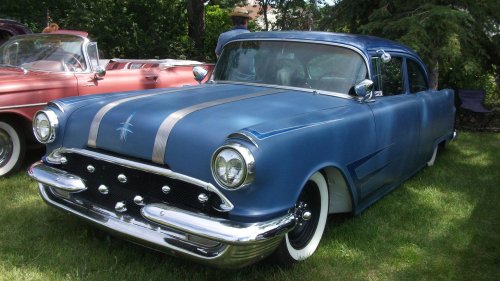







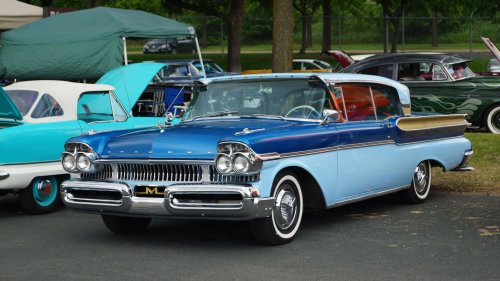





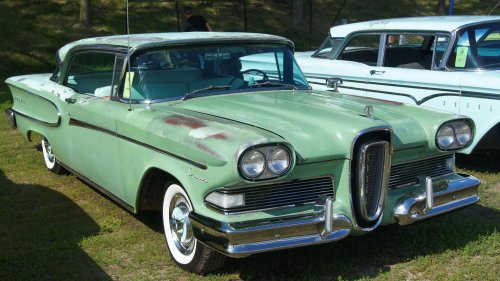

































Historic Speed KingsAutomotive history did not suddenly ignite in the 1960s. Decades earlier, bold machines were already redefining style and speed. Innovative engines and surprising performance transformed ordinary sedans and coupes into legends.1949 Oldsmobile Rocket 88Considered the model that sparked the muscle car era, the 1949 Oldsmobile Rocket 88 blended a lightweight body with the innovative 303-cubic-inch Rocket V8. Producing 135 horsepower, it excelled in drag racing and stock car competition. Its affordability and raw speed made it a favorite for enthusiasts across America.1953 Packard CaribbeanPackard introduced the Caribbean in 1953 as a statement of style and strength. Its straight-eight engine delivered smooth yet forceful performance, while the convertible design emphasized elegance. This combo of luxury and power attracted drivers who wanted more than transportation, reflecting America’s growing demand for prestige and horsepower.1950 Hudson HornetDominating NASCAR throughout the early 1950s, the Hudson Hornet earned its reputation through engineering rather than style alone. Its “step-down” chassis design improved handling, and the powerful inline-six delivered exceptional torque. The Hornet became a motorsport legend and proved that performance could be engineered into full-size sedans with precision.1949 Cadillac Series 62 Coupe DeVilleLuxury and power defined the 1949 Cadillac Series 62 Coupe DeVille, which introduced the 160-horsepower overhead-valve V8. This engine not only elevated Cadillac’s reputation but also reshaped expectations for high-end cars. Smooth acceleration and advanced engineering positioned the Coupe DeVille as an aspirational and influential performance leader.1956 Lincoln PremiereThe Lincoln Premiere carried bold styling and a 285-horsepower V8 that put it in direct competition with Cadillac. Its size didn’t hide its performance, and its presence on early stock car tracks reinforced Lincoln’s muscle. With elegance and raw capability, it highlighted how luxury brands embraced the power race.1950 Chrysler SaratogaWith its Spitfire straight-eight engine, the Chrysler Saratoga bridged the gap between everyday practicality and unexpected strength. While understated in appearance, it delivered a surprisingly solid driving experience. The Saratoga showed buyers that even family sedans could provide genuine power, laying the groundwork for Chrysler’s later high-performance HEMI-powered successes.1948 Tucker 48 “Torpedo”Many car enthusiasts believe that the Tucker 48 “Torpedo” was years ahead of its time. Featuring a rear-mounted engine derived from aircraft design, it offered spirited performance combined with pioneering safety features like a padded dashboard and pop-out windshield. Though production halted at just 51 units, its bold vision still resonates today.1956 Packard CaribbeanPackard’s Caribbean convertible received a dual four-barrel 374-cubic-inch V8 in 1956, rated at 310 horsepower. One of the most powerful engines of its time, it was paired with striking two-tone styling. Though Packard’s days were numbered, the Caribbean demonstrated how prestige and power could be mixed in limited-production performance cars.1951 Studebaker Commander V8Studebaker shook the market in 1951 by introducing the Commander V8, one of the industry’s earliest overhead-valve V8 engines. Lightweight bodies paired with this engine made Studebakers popular among hot rodders. The Commander’s sleek design and strong power output earned it credibility, proving performance wasn’t reserved for Detroit’s biggest automakers.1953 Buick Roadmaster SkylarkCelebrating Buick’s 50th anniversary, the 1953 Roadmaster Skylark combined bold styling with a powerful 322-cubic-inch Nailhead V8. Sleek lines and luxurious detailing made it a standout. Beyond looks, it showed Buick’s dedication to performance and refinement, reinforcing that even upscale models could offer speed alongside sophistication.1953 Oldsmobile FiestaOldsmobile’s limited-production 1953 Fiesta showcased the brand’s Rocket V8 in an exclusive convertible package. With only 458 units produced, it demonstrated the appetite for high-performance cars paired with exclusivity. The Fiesta highlighted Oldsmobile’s role in pushing accessible performance and built on the Rocket 88 legacy by merging flair with muscle.1956 Dodge Coronet D-500The 1956 Dodge Coronet D-500 launched as a factory performance package offering Chrysler’s HEMI V8 with up to 260 horsepower. Coupled with upgraded brakes and suspension, it gave Dodge new credibility on the NASCAR circuit. Affordable and powerful, the D-500 helped prove that mainstream sedans could carry genuine racing potential.1955 Pontiac ChieftainFeaturing the brand’s first modern overhead-valve V8, the Pontiac’s 1955 Chieftain’s 287-cubic-inch engine delivered up to 200 horsepower. This model marked a turning point by shifting Pontiac toward performance-focused engineering. The Chieftain’s power, paired with fresh styling, laid the groundwork for Pontiac’s eventual transformation into one of Detroit’s muscle car leaders.1955 DeSoto FireflitePowered by a 291-cubic-inch HEMI V8, the DeSoto Fireflite represented Chrysler’s growing emphasis on style and speed. It delivered strong performance in a striking package with up to 200 horsepower. Positioned as DeSoto’s top model, the Fireflite carried prestige but also highlighted how horsepower was becoming a standard expectation across divisions.1954 Mercury MontereyMercury gained a performance edge with the 1954 Monterey, featuring the new 161-horsepower Y-block V8. The combination of mid-range pricing and solid power appealed to drivers seeking more than Ford’s offerings without Cadillac prices. The Monterey helped Mercury carve out a distinct identity, foreshadowing its later focus on performance-oriented trims.1954 Dodge RoyalThe Dodge Royal introduced the Red Ram HEMI, a smaller-displacement but high-compression V8 that gave Dodge newfound performance credibility. Compact yet strong, it proved that even Dodge’s lower-tier models could deliver serious punch. The Royal positioned Dodge for success in the horsepower race that escalated through the late 1950s.1955 Chrysler C-300Introduced as America’s first true “letter car,” the Chrysler C-300 stunned the industry with its 300-horsepower HEMI V8. Built for both luxury and competition, it dominated NASCAR events. Its mix of refinement and raw force created a new category of performance-oriented sedans, setting the stage for Chrysler’s muscle car dominance.1955 Chevrolet Bel Air V8The arrival of Chevrolet’s 265-cubic-inch small-block V8 in the 1955 Bel Air transformed mainstream performance. Affordable and easily modified, it became the darling of hot rodders. This compact yet potent engine proved that everyday family cars could also deliver thrills, a concept central to muscle car philosophy.1956 Studebaker Golden HawkStudebaker offered something unexpected in 1956: the Golden Hawk, a lightweight coupe fitted with Packard’s 352-cubic-inch V8. Later supercharged versions enhanced its reputation. The Golden Hawk was fast and affordable, proving that smaller automakers could produce cars with performance matching or exceeding Detroit’s giants, which cements its place in muscle car history.1957 Chevrolet Corvette FuelieLightweight and stylish, the Chevrolet Corvette gained serious credibility in 1957 with fuel injection, producing up to 283 horsepower from just 283 cubic inches. It could hit one horsepower per cubic inch, which was considered impressive for the time. The Corvette Fuelie legitimized America’s sports car scene and influenced muscle-era engineering goals.1957 Mercury Turnpike CruiserDesigned for America’s new highway system, the Mercury Turnpike Cruiser emphasized long-distance speed and power. Equipped with powerful V8s up to 368 cubic inches, it brought futuristic design and advanced features. Though often overshadowed, it’s the perfect blend of power and bold styling that would define the coming muscle generation.1957 Pontiac Bonneville Fuel-InjectedPontiac made a bold statement in 1957 with the limited-production Bonneville, offering Rochester fuel injection and 315 horsepower. Only 630 units were built, but they demonstrated Pontiac’s performance ambitions. This model marked the brand’s shift toward speed and set the foundation for the GTO, which helped Pontiac forge a powerful new identity.1957 DeSoto AdventurerThe DeSoto Adventurer arrived as a stylish performance leader with Chrysler’s 345-cubic-inch HEMI producing 345 horsepower. Distinguished by its gold trim and upscale finishes, it offered both presence and muscle. The Adventurer proved DeSoto could compete in the horsepower race to reflect Detroit’s escalating pursuit of power across all divisions.1951 Oldsmobile Super 88In 1951, Oldsmobile expanded its performance reputation with the 1951 Super 88, pairing the compact 88 body with the powerful Rocket V8. This balance of size and strength made it especially popular among young drivers and racers. Affordable and quick, the Super 88 highlighted Oldsmobile’s role in pushing performance into mainstream showrooms.1957 Dodge D500Available as a performance package, the Dodge D500 combined upgraded suspension with Chrysler’s powerful HEMI V8. It gave Dodge a foothold in racing and appealed to buyers wanting more than basic transport. With added handling and speed, the D500 previewed the performance-first ethos that Dodge would later perfect with muscle cars.1958 Plymouth FuryPlymouth’s 1958 Fury was marketed toward younger drivers who wanted style and muscle. With Golden Commando V8 options producing up to 305 horsepower, it became an icon of late-1950s performance. Affordable and aggressive-looking, the Fury represented the formula of big engines in stylish midsize packages, directly foreshadowing muscle car philosophy.1958 Edsel CorsairThough the Edsel name became synonymous with failure, the 1958 Corsair offered serious strength with its 410-cubic-inch V8 producing 345 horsepower. Positioned between Ford and Mercury to compete in the mid-priced market, it had the performance credentials to compete, but faltered commercially. 1959 Pontiac CatalinaPontiac’s Catalina introduced the 389-cubic-inch V8, a cornerstone for future performance models. Affordable and adaptable, it was lighter than Pontiac’s luxury cars yet packed strong power. The 389 engine later powered the GTO, making the Catalina essential in the muscle car story as a performance platform and a cultural touchstone.1959 Buick InvictaLuxury and performance met in Buick’s Invicta, which was equipped with the 401-cubic-inch “Nailhead” V8 for strong torque. Marketed with sporty trims, it appealed to younger buyers seeking both comfort and speed. The Invicta’s blend of elegance and raw power demonstrated Buick’s ability to deliver performance cars before the muscle era fully arrived.1959 Chevrolet Impala 348 Tri-PowerChevrolet transformed the Impala into a serious performance contender with the 348-cubic-inch V8 and optional triple two-barrel carburetors. This “Tri-Power” setup delivered up to 335 horsepower and made the Impala one of the most potent cars in its class. Stylish and affordable, it resonated with enthusiasts and influenced future performance Chevys.1959 Chrysler WindsorThe Chrysler Windsor paired bold late-1950s styling with substantial V8 power. While not as extravagant as the 300-series cars, it provided strong performance for buyers at a lower price. Its aggressive fins and road presence positioned it as a precursor to Chrysler’s more affordable high-performance sedans of the 1960s.1958 Lincoln Continental Mark IIIThe 1958 Lincoln Continental Mark III was massive in scale but carried a 430-cubic-inch V8 generating 375 horsepower. Its sheer size didn’t hide its performance, and the Mark III reflected Detroit’s obsession with bigger engines. Though luxury-focused, its raw capability contributed to the horsepower race that fueled the coming muscle era.1959 Oldsmobile Super 88Oldsmobile’s Super 88 continued the Rocket V8 tradition with larger-displacement engines and stronger output. Stylish and accessible, it carried forward Oldsmobile’s performance image into the cusp of the muscle car age. The Super 88 directly influenced the 442 that followed, maintaining Oldsmobile’s role in shaping Detroit’s horsepower legacy.1954 Buick CenturyThe Buick Century earned its name by reaching 100 miles per hour, a remarkable feat in the mid-1950s. Using the lighter Special body with the larger Roadmaster engine, it became an early example of the big-engine, smaller-car formula. The Century proved Buick could combine speed with refinement and everyday appeal.1955 Dodge Custom RoyalDodge’s Custom Royal sat at the top of its lineup in 1955 with bold styling and potent V8 power, including the Red Ram HEMI. With options delivering up to 193 horsepower, it was both fashionable and quick. The Custom Royal reflected Dodge’s growing commitment to style-driven performance in the mid-1950s.1955 Packard PatricianPackard’s Patrician offered both elegance and strength, powered by a 352-cubic-inch V8 producing 260 horsepower. Though marketed as a luxury sedan, its performance matched rivals from Cadillac and Chrysler. The Patrician reflected Packard’s attempt to modernize and remain competitive, proving that luxury brands could also deliver impressive horsepower in the mid-1950s.1956 Nash Ambassador SpecialThe Nash Ambassador Special showcased innovative engineering with its 250-cubic-inch V8 option. Known for its smooth ride and futuristic design, it surprised enthusiasts with genuine performance potential. Though Nash wasn’t typically associated with speed, the Ambassador Special demonstrated how even conservative brands participated in the growing horsepower race of the 1950s.1957 Plymouth BelvedereWith optional Golden Commando V8 engines, the Plymouth Belvedere gained attention and produced up to 305 horsepower. Affordable pricing and bold styling made it a favorite among working-class buyers. Its presence in drag racing circles reinforced Plymouth’s role in delivering performance cars that appealed to everyday Americans long before muscle cars emerged.1956 Hudson Hornet V8While the original inline-six Hudson Hornet made history, the 1956 Hornet introduced a Packard-sourced 352-cubic-inch V8. This engine boosted power output significantly and modernized the car for a market hungry for bigger engines. Though Hudson’s independence was fading, the Hornet V8 highlighted its continuing commitment to performance and racing credibility.1957 Rambler RebelAmerican Motors surprised the industry with the Rambler Rebel, fitting a 327-cubic-inch V8 into its midsize body. With 255 horsepower, it offered one of the best power-to-weight ratios of the decade. Affordable, quick, and limited in production, the Rebel is often cited as one of the earliest true muscle car formulas.1955 Chrysler New YorkerThe Chrysler New Yorker featured a 331-cubic-inch HEMI V8. Positioned below the 300-series, it still delivered serious performance with more accessibility. Its combination of speed and reliability made it popular among enthusiasts and showed Chrysler’s commitment to high-powered engineering throughout its product range.