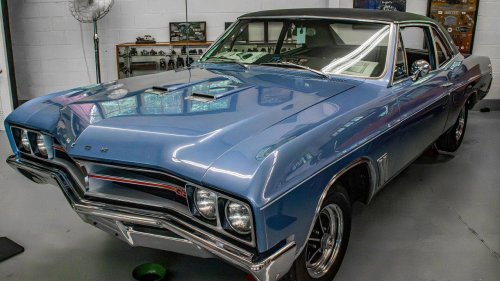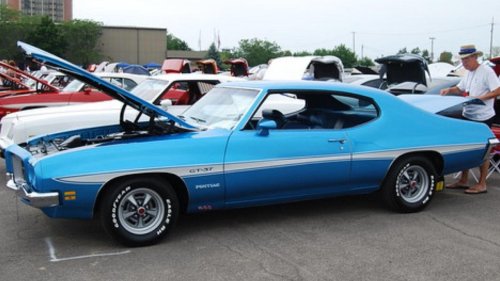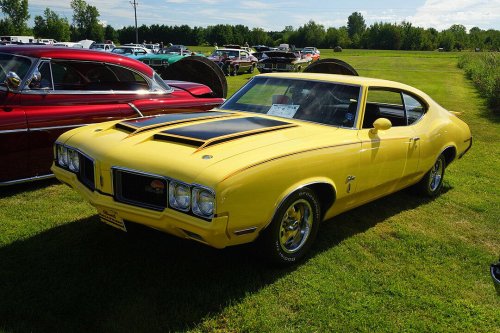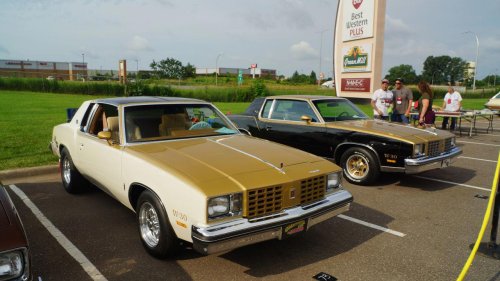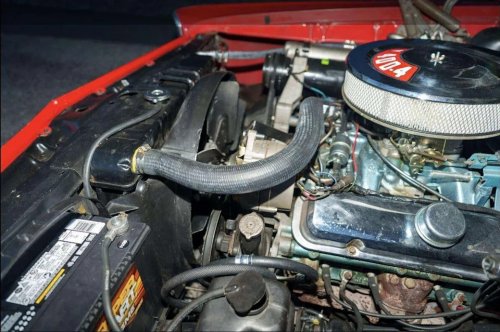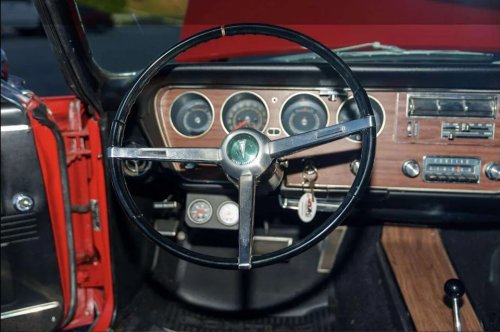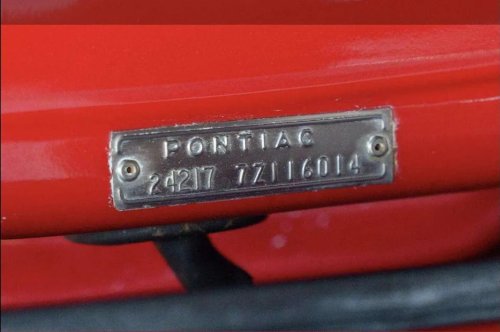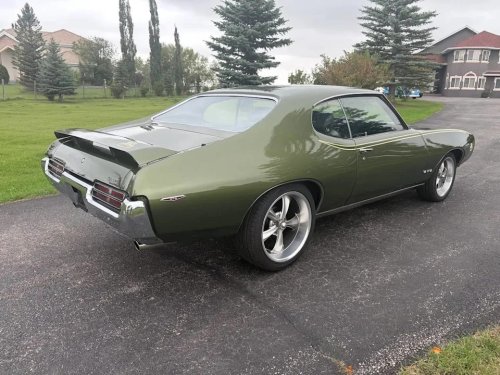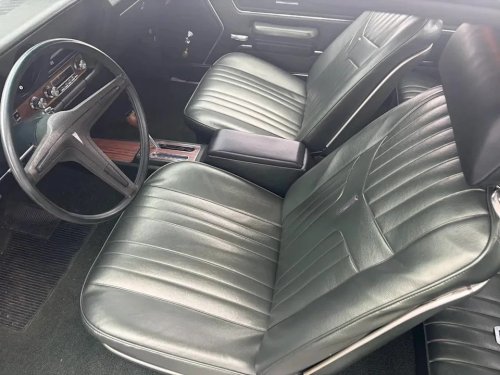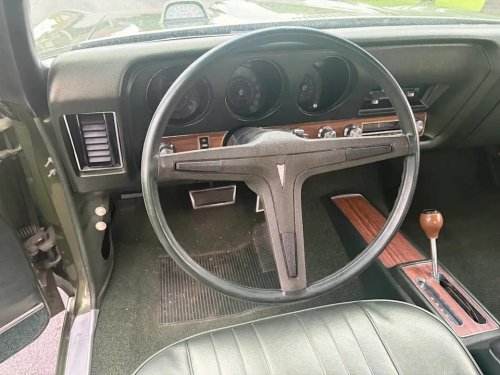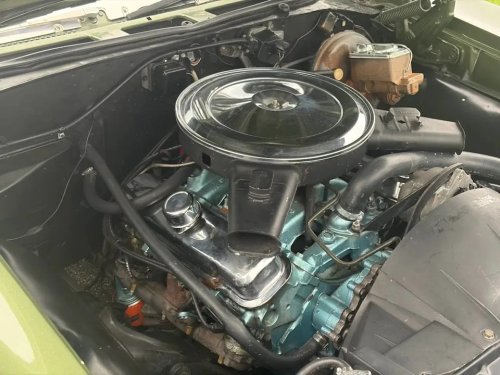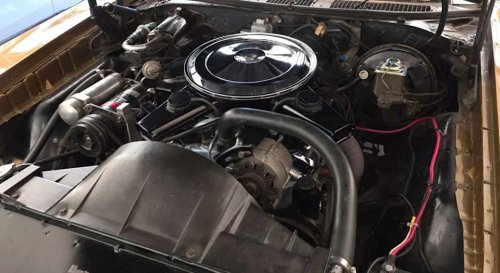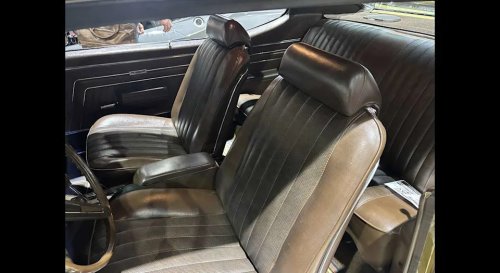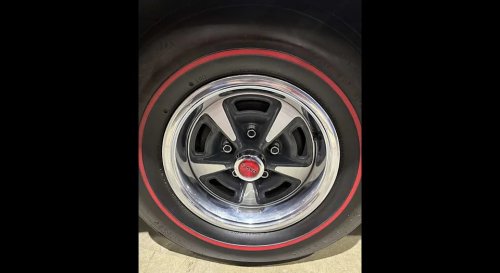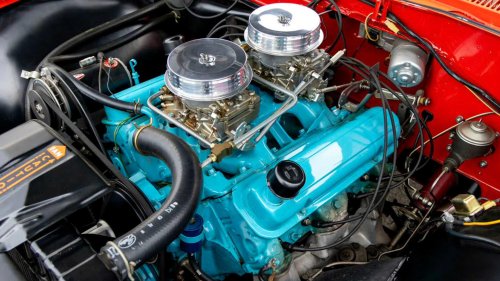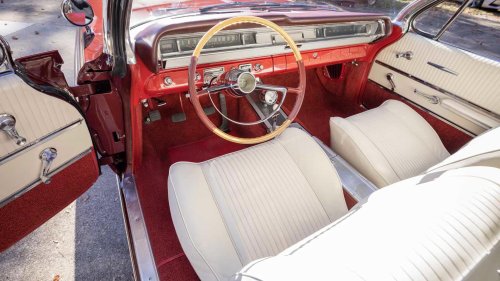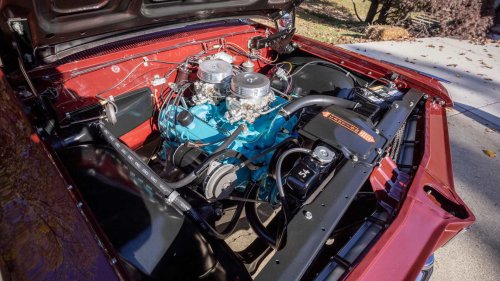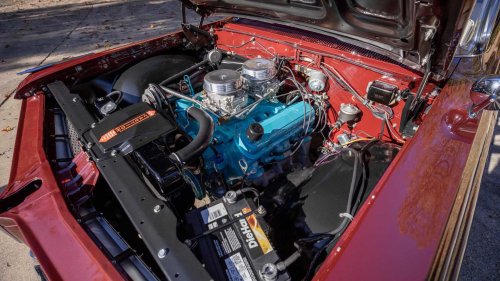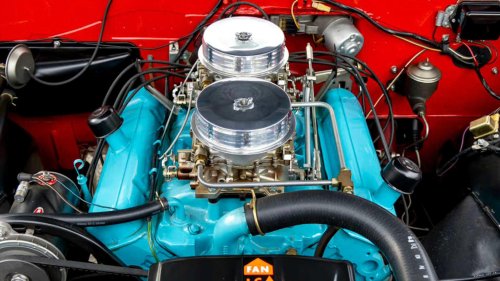
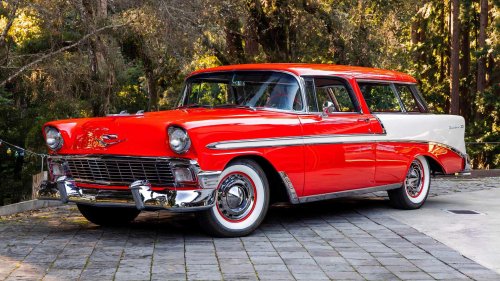
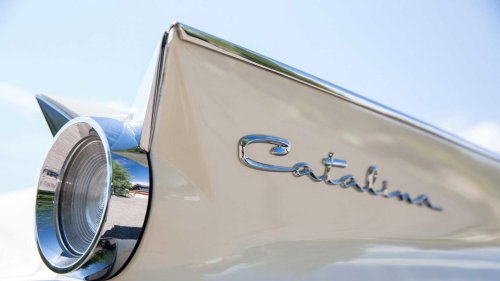
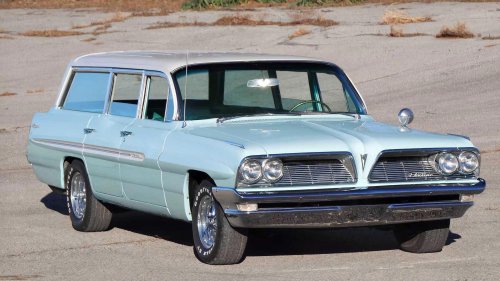
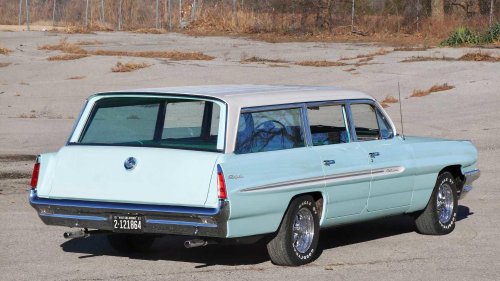
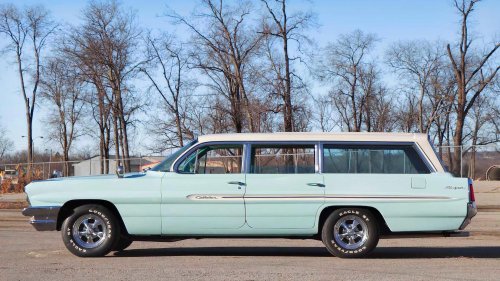
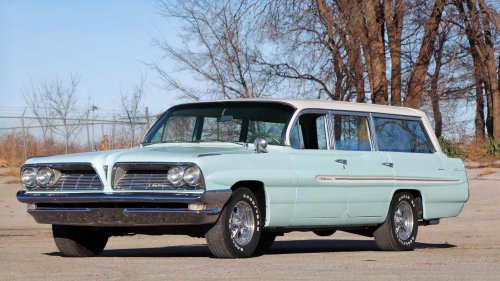
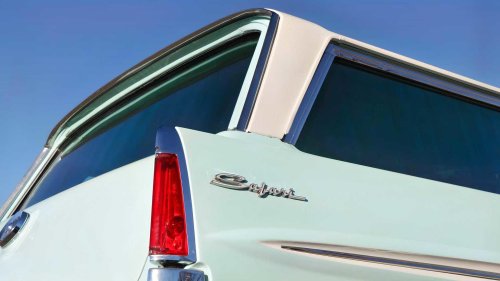


















Think of how a typical muscle car story goes, and it usually begins with a young buyer, a two-door body, and a salesman who knows exactly where the horsepower brochure is hidden. This one begins in a slightly different space, somewhere between a suburban driveway, a family vacation, and the part of Pontiac’s catalog where sensible people were supposed to stop reading.The car here was far removed from looking like a street fighter. It looked like something that should have smelled faintly of vinyl seats, beach towels, and whatever snack crumbs children could grind into a carpet before 1966. Yet Pontiac, during its most dangerous years, had a funny habit of treating almost every full-size car as a potential delivery device for big-inch trouble. Muscle Was Supposed To Wear Two Doors MecumEarly-'60s performance history has a very tidy memory. It likes coupes, hardtops, hood scoops, bucket seats, manual shifters, and advertising that made every stoplight feel like a sanctioned event. That’s why the Pontiac GTO gets wheeled out as the start of the proper muscle-car age, even though Detroit had been playing with the ingredients long before the recipe got a name.Pontiac was already in that mood. The division had spent the late '50s and early '60s dragging itself away from its old-man image and toward something sharper, louder, and much better at making Chevrolet nervous, and big Pontiacs were central to that shift. They were broad-shouldered machines with enough width, wheelbase, and underhood real estate to make a serious V8 look right at home. Wagons Had Their Work Cut Out MecumThat’s the part history tends to flatten. The muscle car story also came from full-size cars with heavy-duty drivetrains, big engines, and buyers who understood that horsepower didn't care whether the body had two doors, four doors, or enough cargo space for a family’s camping gear.Still, muscle wagons were almost impossible to take seriously back then. They carried kids, groceries, luggage, dogs, folding chairs, and occasionally everyone’s patience. A coupe could look rebellious just sitting still, but a wagon had to work harder for respect, usually while wearing sensible paint and being asked to stop for milk. Pontiac’s Full-Size Cars Had Dangerous Potential MecumThe full-size Catalina gave Pontiac a terrific base for mischief. For 1963, the B-body Catalina rode on a 120-inch wheelbase, with a wide track and a perimeter frame underneath. That was important because big power needs a big engine, sure, but it also needs structure, cooling, gearing, brakes, and enough chassis beneath it to keep the whole thing together.Pontiac’s engine menu made the Catalina especially interesting. People could choose from several 389ci V8s, including four-barrel and Tri-Power versions, before climbing into 421-cubic-inch territory. The 1963 421 lineup included a 320-hp four-barrel version and 421 HO engines rated at 353 hp with a four-barrel or 370 hp with Tri-Power. That last setup used three Rochester two-barrel carburetors on a cast-iron intake, which is exactly the sort of hardware that makes a family car sound like it’s been hanging around the wrong crowd.The drivetrain choices were serious, too. A three-speed manual was standard, while heavy-duty three-speed, four-speed manual, and Roto Hydra-Matic automatic options were available. With the 421, the four-speed used a 2.20:1 first gear, and the HO cars were tied to a 3.42:1 standard rear gear. Add the optional Safe-T-Track limited-slip differential, and suddenly this stopped looking like a sleepy big car with a nice engine. The Long-Roof Catalina With 421 Cubes MecumThe 1963 Pontiac Catalina Safari was the long-roof version of Pontiac’s full-size workhorse, and by 1965, the Catalina Safari came in 6- and 9-passenger configurations. That meant buyers could order a wagon that had the right seat count for family duty and the right engine bay for... something far more fun.The 1965 full-size Pontiac range sharpened the 421 story further. The 421ci four-barrel V8 made 338 hp at 4,600 rpm and 459 lb-ft of torque at 2,800 rpm. The three-two-barrel 421 made 356 hp and 459 lb-ft, while the 421 HO Tri-Power version made 376 hp at 5,000 rpm and 461 lb-ft at 3,600 rpm. Those are incredibly serious numbers for anything with a Pontiac badge in 1965. In a muscle wagon, they feel like someone in product planning had a sense of humor and access to the good parts bin.The 421’s dimensions tell their own story. It used a 4.09375-inch bore and a 4.00-inch stroke, which gave it the long-legged torque delivery big Pontiacs loved. The hotter Tri-Power versions added three two-barrel Rochester carb, so the engine could behave like a calm commuter until the extra carburetion joined the party.Images of a 421-powered Catalina Safari are rather hard to source, so the photos used here show a 389 Catalina Safari instead. The body style remains representative of the wagon covered in this story. Big Torque Made It A Real Street Problem MecumA 421-powered Catalina Safari was never going to feel like a lightweight street racer. The wagon body brought size, mass, and enough glass to qualify as a small greenhouse. A 1963 Catalina Safari also sat among full-size wagons that could carry six or nine passengers, while Catalina Safari production in 1965 reached 22,399 six-passenger wagons and 15,110 nine-passenger wagons. This was a real family vehicle, not a pretend one with a tiny back seat and a brochure full of excuses.Given that, it's what the made the grunt it gave even more tasty. The wagon didn’t need to be lighter than a GTO or tidier than a Chevelle SS to be dangerous. It had displacement, torque, and Pontiac’s full-size confidence. A GTO with a 389 had the image, the lighter body, and the youth-market heat. The Catalina Safari with a 421 had the bigger engine and the kind of low-rpm shove that could make a stoplight feel awkward for the person in the cool car. A Menace Out In Public MecumIt’s better not to oversell it as some unbeatable monster, because that’s where these stories usually drift into barstool fog. A wagon’s weight mattered, as did the gearing, as did the transmission choice and the driver, traction, tune, and the number of passengers arguing in the back. Still, the raw hardware gave the Pontiac a credible shot at embarrassing cars that looked much more obvious about their intentions.The Catalina Safari, with a 421 under the hood, could lean on a ton of of torque and make its point the old-fashioned way. It was probably still carrying luggage while doing it, because wagons are nothing if not committed to multitasking. The GTO Got The Legend, The Wagon Got Forgotten MecumPontiac’s smaller Muscle Cars got the legend because they were easier to sell as rebellion. The GTO had the right proportions, the right marketing, and the right cultural timing. It looked like youth culture had found a loophole in the General Motors rulebook. A full-size wagon, even one with a serious V8, looked like Dad had accidentally checked the spicy box while ordering something for family trips.That image problem never really went away. Wagons were used hard, handed down, loaded up, parked outside, and treated as appliances long before anyone thought to preserve them as performance artifacts. And even with time, the market still hasn’t turned these into six-figure darlings, which makes them pretty cool if you want to snatch one up now on the cheap. Current used values put a 1963 Catalina Safari 421 six-passenger wagon at around $48,000 in peachy condition, depending on the engine configuration, while excellent examples sit roughly in the $32,500 to $34,800 range. That’s real money, but it’s still oddly reasonable for something this strange, rare, and factory-backed. Silent Approval MecumUnfortunuately, the Catalina Safari 421 didn’t become the template everyone copied, but the idea never really died. Fast estates from later American and European manufacturers carried the same basic thought forward: take the practical body, add serious power, and let the joke reveal itself at full throttle. Pontiac got there early with a long roof and a big V8, then watched the GTO take the applause. Say what you will about it, but decades later, that only makes the wagon feel infinitely cooler.Sources: Hagerty, Hemmings.