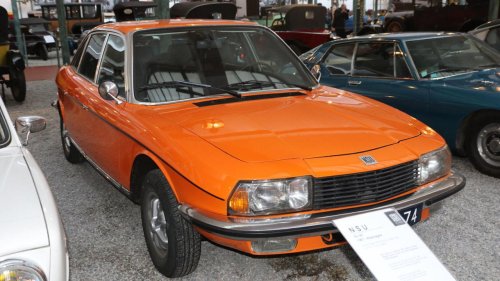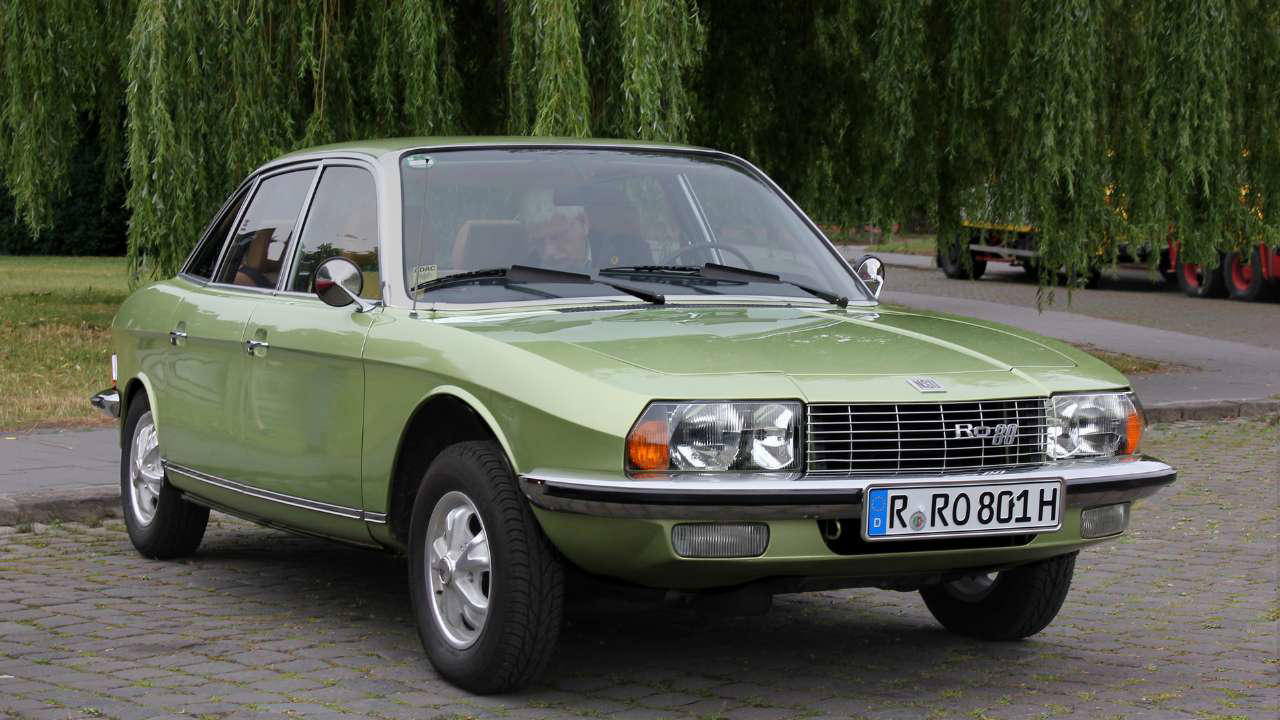



















You’ve likely never come across the 1967 NSU Ro 80 and its risky engine designThe 1967 NSU Ro 80 looked like it had driven in from the future, with a slippery body, a glassy, sparse cabin and a drivetrain that promised to rewrite the rulebook. Instead, its radical rotary engine turned into a high-stakes gamble that helped sink its maker and left one of the most interesting sedans of the 20th century as a rare sight even among car enthusiasts. Today the Ro 80 sits at the edge of automotive memory, admired in hindsight for its daring ideas and remembered just as clearly for the mechanical failures that followed. Its story shows how a single risky engineering decision can turn a potential icon into a cautionary tale. A futuristic sedan from West Germany When the West German firm NSU launched the Ro 80 in 1967, it stepped into the executive sedan class with a car that barely resembled its rivals. The NSU Ro 80 was a four-door, front-engine sedan with clean wedge-like lines, a low nose and a high, almost fastback rear that made it look closer to a 1980s design than a product of the late 1960s. Period observers remarked that the Ro 80 looked like 1980 in 67, and even now the shape reads as crisp and modern compared with many of its contemporaries. Inside, the car continued that forward-looking approach. The cabin layout was airy and minimalist, with large glass areas and a dashboard that favored clarity over chrome. Contemporary descriptions of the 1967 NSU Ro80 refer to it as The Futurist’s Sedan Wankel, a smooth-riding and advance-thinking machine that put comfort and visibility at the center of the experience. The overall effect was a sedan that felt more like an experimental concept than a showroom product. NSU did not stop at styling. The Ro 80 combined front-wheel drive with disc brakes and a semi-automatic transmission, a package that placed it well ahead of the conservative norm in its segment. The company clearly wanted the car to signal a break with the past, and that ambition set the stage for the boldest choice of all under the hood. The Wankel gamble at the heart of the Ro 80 The most radical part of the Ro 80 was its engine. Instead of a conventional piston design, NSU chose a twin-rotor Wankel unit, a technology that the company had nurtured for years. The Wankel concept, developed by Felix Wankel, dispensed with pistons and connecting rods in favor of triangular rotors spinning inside an epitrochoid housing. Supporters praised its smoothness, compact size and high specific output. As one analysis of the rotary era notes, the Wankel engine was NSU’s baby, and Felix Wankel had worked as a consultant to NSU when the firm was a major manufacturer of small vehicles. In the Ro 80, this layout promised turbine-like refinement and a high rev ceiling, attributes that matched the car’s executive positioning. Promotional material and later retrospectives describe the rotary as the car’s greatest calling card, the feature that set it apart from every rival in its class. The rotary also allowed a low bonnet line and helped the designers achieve the sleek profile that made the sedan so distinctive. However, this was a high-risk move for a relatively small company. While NSU had experimented with earlier rotary-powered models, such as the compact Sprint that used a rear-mounted single-rotor Wankel, scaling the technology up for a full-size sedan placed new stresses on materials and sealing surfaces. The Ro 80 engine ran at high speeds and temperatures, which magnified any weakness in its construction. In other words, the company was betting its future on a powerplant that still sat at the edge of proven durability. From engineering marvel to reliability nightmare Reality caught up quickly. According to the main historical account of The Ro 80, the car developed an early reputation for unreliability. The Ro 80 engine in particular suffered from construction faults, especially in the rotor tip seals that were critical to compression and combustion. Owners began to report severe wear and loss of performance at mileages that would have been considered barely run-in for a conventional sedan. Some reports describe engines that needed major work or complete replacement around the 30,000 kilometer mark, a figure that shocked buyers who had paid for a premium product. One retrospective on the rotary-powered NSU Ro 80 notes that early cars could see their engines approach failure not long after passing the 50,000 kilometer mark, sparking outrage among customers who had believed the rotary hype. The promise of smooth, vibration-free power was real, but the cost in durability was far higher than NSU anticipated. NSU responded by revising materials and improving seals, and later engines enjoyed longer lives. The company also extended warranties and replaced engines under goodwill arrangements in an effort to rescue the car’s reputation. However, the damage to public perception was already deep. Once a model is known for stranded owners and repeated engine swaps, it becomes difficult to persuade cautious buyers to take a chance, especially when the underlying technology still feels experimental. Financially, the consequences were severe. Each engine replacement represented a direct hit to NSU’s bottom line, and the engineering effort required to refine the rotary diverted resources from other projects. The same historical record that details the reliability problems also connects the Ro 80’s costly warranty burden to the eventual absorption of NSU into the modern-day Audi company. Before Audi became Audi in its current form, The NSU Ro was a central chapter in that transition, a car so advanced for its time that it effectively killed its parent company. Production numbers, cult status and the view from today Despite the technical issues, the Ro 80 did not vanish overnight. The model stayed in production for roughly a decade, with sources citing the main run from 1967 to 1977. One detailed history notes that Only 37,398 Ro80s were built over its decade-long lifespan, a tiny figure compared with mass-market sedans of the era. Those low numbers reflected both the car’s premium positioning and the chilling effect of its early failures on potential buyers. Enthusiasts who stuck with the car often speak fondly of its driving experience. The rotary engine, when healthy, delivered a smooth and free-revving character that matched the car’s aerodynamic body. Contemporary owners praised the ride comfort and stability, and later road tests of surviving examples highlight the way the Ro 80 feels composed at modern highway speeds. That calm demeanor has helped cement its status as a cult classic among fans of unusual engineering. Modern commentators frequently describe the 1967 NSU Ro80 as a Revolutionary sedan, with some fan communities introducing it as Presenting the NSU Ro80, a revolutionary car when it came out in 1967. These enthusiasts often stress how the car’s design and technology anticipated features that would become common decades later, such as aerodynamic styling, advanced braking systems and powertrains that prioritized smoothness over raw displacement. At the same time, they acknowledge that the rotary’s fragility kept the car from reaching a wider audience. The small production run has made surviving examples rare, especially outside Europe. When a 1969 NSU Ro80 appears at a show or in a specialist video, it often draws attention from people who initially mistake it for a much newer model. Some observers have commented that at a quick glance they thought a different car was an NSU Ro80, especially when they saw a similar rear end. That confusion speaks to how the Ro 80’s shape set a template for later wedge designs, even if most buyers never saw one new. How the Ro 80 looks and feels in the 2020s Modern video reviews have helped bring the Ro 80 back into the conversation among younger enthusiasts. In one detailed feature on the car world being littered with machines that were ahead of their time, a presenter introduces the NSU Ro 80 as a rotary dream that ate its maker, then walks through the car’s styling and mechanical layout. The piece emphasizes how the sedan’s silhouette and glasshouse still look contemporary, while the rotary engine remains a curiosity that few mechanics are willing to touch. Another long-form video describes the NSU Row 80 produced from 1967 to 1977 as one of the most innovative sedans of the 20th century, manufactured by the German company that would eventually be folded into a larger group. That reviewer highlights the contrast between the car’s advanced specification and its modest sales, pointing out that the same traits that made it special also made it hard to maintain and repair outside specialist circles. A separate review from Harry’s garage introduces viewers to the NSU Row80 with a candid acknowledgment that most people have never heard of it. Harry notes that he spotted the car at an Audi event, which underlines the historical link between NSU and Audi and shows how the modern brand occasionally celebrates this obscure ancestor. Driving impressions in that piece focus on the smoothness of the rotary, the light steering and the relaxed cruising ability that still feels relevant on current roads. Enthusiast videos also revisit the broader context in which the Ro 80 appeared. One segment titled as being too clever for the masses describes the NSU Row 80 introduced in 1967 as a revolutionary car far ahead of its time, with its sleek design, rotary engine and advanced chassis. The presenter argues that the car’s failure was not due to a lack of vision but to the difficulty of bringing such a complex concept to market with the resources of a relatively small German manufacturer. Why the Ro 80 still matters Looking back, the NSU Ro 80 offers a compact lesson in the risks and rewards of radical engineering. The car combined a daring body, a forward-thinking chassis and a Wankel engine that promised a new kind of refinement. For a brief moment, it looked as if NSU had leapfrogged the established players in the executive sedan segment. The reality of fragile rotor seals, short engine life and expensive warranty claims changed that narrative. Yet the Ro 80’s influence did not disappear. The aerodynamic, wedge-like profile that made the sedan so distinctive has clear echoes in later European designs, and its integration of advanced braking and drivetrain layouts helped normalize features that would become standard in the decades that followed. The fact that Only 37,398 examples were built has turned it into a rare artifact, but the ideas it carried spread far beyond those cars. For modern carmakers, the Ro 80 serves as a reminder that being first with a technology is not enough. NSU and its engineers backed the Wankel concept with conviction, and for drivers who experienced a well-sorted rotary, the appeal was undeniable. However, the gap between experimental promise and mass-market durability proved too wide for a company of NSU’s size to bridge. The resulting financial strain fed directly into the restructuring that led to the modern Audi brand, a corporate shift that traces back to The NSU Ro and its ambitious program. More from Fast Lane Only Unboxing the WWII Jeep in a Crate 15 rare Chevys collectors are quietly buying 10 underrated V8s still worth hunting down Police notice this before you even roll window down The post You’ve likely never come across the 1967 NSU Ro 80 and its risky engine design appeared first on FAST LANE ONLY.