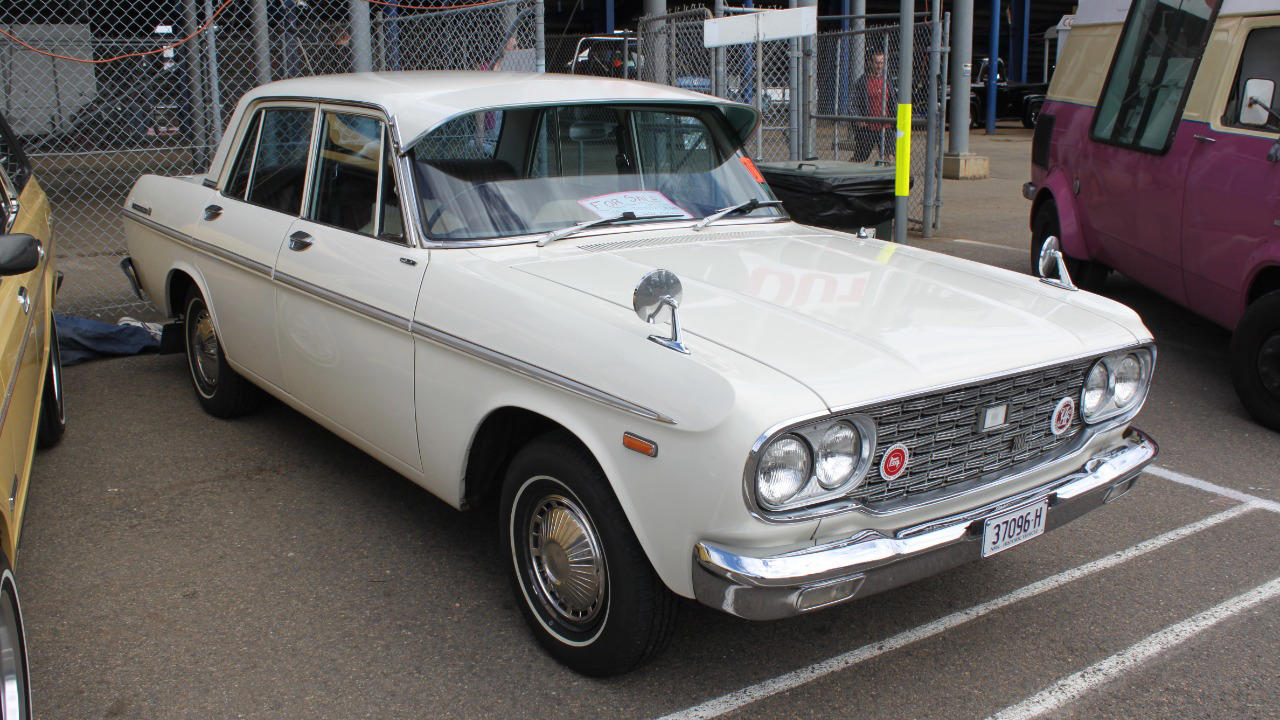



















Few people talk about the 1967 Toyota Crown and its early push into new marketsThe 1967 Toyota Crown rarely appears in coffee shop debates about classic Japanese cars, yet it quietly marked a turning point. As the third generation of Toyota’s long-running Crown line, the S50 series became a test case for how a Japanese luxury sedan could move from domestic taxi ranks into the driveways of private buyers and into new export markets that were still skeptical of Japanese brands. Seen from today’s vantage point, the 1967 Crown sits at the intersection of engineering conservatism and strategic ambition. It did not grab attention with radical styling or exotic engines, but it arrived just as Toyota was refining its overseas strategy and learning from earlier missteps in the United States and elsewhere, using this car as a bridge between utilitarian roots and a more confident global presence. From domestic workhorse to global experiment The Crown story began well before 1967. Toyota introduced the original Crown in the mid 1950s as one of the company’s first purpose-built passenger cars, and it quickly became central to its domestic line up. According to factory history, the early Toyopet Crown was also the first Toyota model exported to the United States, a bold move for a manufacturer still proving itself even at home. That export push was ambitious but not entirely successful. The first Crowns that reached American shores were underpowered for freeway use and carried an unfamiliar Toyopet badge that did little to reassure buyers. Toyota still treated the car as a symbol of its aspirations and kept refining it across successive generations. The second generation, known as the S40, arrived in the early 1960s with cleaner styling and a more modern chassis, and it set the stage for the more globally minded S50 series that would follow. By the time the third generation Toyopet Crown appeared in 1967, Toyota had already learned some hard lessons from its first American foray. The company had watched the Crown struggle in the United States, then seen the smaller Toyota Corona gain traction as a better fit for local expectations of power and price. That experience shaped how Toyota approached the new Crown: not as a mass-market import, but as an experiment in what Japanese luxury and comfort might look like abroad. The 1967 Toyopet Crown: conservative hardware, broader ambition The third generation Crown, internal code S50, did not rip up the engineering rulebook. As enthusiasts have noted in period summaries and later retrospectives, the car carried over many of the mechanical elements from the S40 series. That continuity reflected Toyota’s cautious approach. The company wanted reliability and familiarity in a model that would increasingly serve as a public face in overseas markets. Body styles, however, showed how Toyota was widening its aim. The S50 series was offered as a 4 door sedan, a 4 door station wagon, a 2 door coupé and a 2 or 4 door coupé utility, a spread that gave the Crown a presence in family, commercial and more lifestyle oriented segments. The variety is documented in the main Crown overview, which lists the Toyopet Crown third generation among Toyota’s key passenger lines of the period. Inside Toyota, the Crown was evolving from a fleet oriented sedan into something more aspirational. The company’s own corporate history notes that the third generation Crown was vigorously marketed to individuals who wanted to own a car rather than to taxi operators alone. Advertising shifted toward themes of personal status and comfort, and higher grade trims offered more luxurious appointments than earlier Crowns had provided. At the same time, the Crown remained a relatively conservative car in technical terms. The S50 relied on proven inline four engines and conventional rear wheel drive, with incremental improvements in refinement rather than dramatic leaps in power. That balance of restraint and quiet confidence would define how the 1967 Crown was received in different markets. Meeting Japan’s changing expectations In Japan, the Crown had a dual identity. It was a familiar sight as a taxi and corporate car, but it was also one of the few domestically built sedans that could plausibly be described as a luxury model in the late 1960s. Japanese buyers were becoming more affluent, and Toyota saw an opportunity to move the Crown upmarket while still keeping it accessible enough for business use. Company material on the third generation explains that the objective for the Crown during this period was to meet rising domestic expectations for comfort and safety and to satisfy stricter export market standards at the same time. That translated into better sound insulation, more comfortable seating and more attention to crash protection than earlier Crowns had offered. The Crown was no longer just a durable workhorse, it was a statement that a Japanese sedan could compete with European and American rivals on refinement. Styling reflected this ambition. The S50 series adopted straighter lines and a more formal profile compared with the softer shapes of the S40. Chrome detailing and a more imposing grille gave the car a presence that aligned with its role as an executive vehicle. In period photographs, the 1967 Crown looks less like a compact import and more like a scaled down interpretation of contemporary American sedans, tailored to Japanese streets. That shift in character helped Toyota position the Crown above models such as the Corona in the domestic hierarchy. While the Corona targeted families seeking their first car, the Crown appealed to company directors, government agencies and wealthier private owners. The third generation therefore became a bridge between Toyota’s utilitarian roots and the more overtly premium sedans that would follow in later decades. Exports: a quiet but significant push While the domestic role of the 1967 Crown is relatively well understood, its export story is more understated. Yet the third generation marked a significant expansion in where Toyota was willing to send its flagship sedan. The Crown had already been the first Toyota exported to the United States, and the model continued to be shipped there through the late 1960s and into the early 1970s. A detailed history of Crown exports notes that the car remained part of Toyota’s American line up until 1973. The United States, however, was not the only focus. The third generation Crown was also the first version of the model that Toyota exported to Europe. A retrospective on the car’s historiography points out that this was the first generation of the Toyota Crown that reached European buyers, describing it as a significant step for Toyota to present a more luxurious sedan in that region. The same account notes that Toyota used bright body colors to attract more customers, a detail that hints at how the company tried to stand out in markets already crowded with established European brands. That European push is documented in a study of Crown historiography. Elsewhere, the Crown found more receptive audiences. A feature on the model’s foreign reception notes that the Crown never sold particularly well in the USA in any of its many guises, but that it became much loved in Australia and New Zealand, where it appealed to private buyers and fleet operators alike. That account also stresses how Toyota experimented with different colors and trims to attract more private buyers in those markets, a strategy that contrasted with the more conservative approach taken with earlier Crowns. The Australian and New Zealand story is captured in a detailed look at the Crown’s foreign affairs. In all these regions, the 1967 Crown acted less as a volume seller and more as a brand ambassador. It signaled that Toyota could build something more substantial than a basic compact sedan. Even where sales remained modest, the presence of a Japanese executive car on local roads helped shift perceptions of the country’s automotive industry. Why the Crown struggled in the United States The American market presented a particular challenge. Toyota had already discovered that the first generation Crown was not well suited to U.S. freeways. It was underpowered, and its ride and noise levels compared poorly with domestic sedans that were larger and more relaxed at highway speeds. By the time the S50 arrived, the company had begun to redirect its American efforts toward the Corona, which was lighter and better matched to local expectations for small imports. As a result, the third generation Crown occupied an awkward middle ground in the United States. It was larger and more comfortable than the Corona, yet it did not have the V8 power or sheer size that American buyers associated with premium sedans. The Toyopet name, still used in some contexts, also lacked the cachet that Toyota would later build around its own corporate brand. Contemporary American impressions of the Crown often focused on its durability and build quality rather than on excitement. Enthusiast retrospectives on mid 1960s Crowns describe them as early examples of Toyota luxury, with solid construction and surprisingly plush interiors for a Japanese car of the time. Yet they also acknowledge that the Crown’s performance and styling did not fully align with what U.S. buyers wanted, which limited its impact even as it quietly influenced perceptions of Japanese reliability. In hindsight, the Crown’s limited success in the United States looks less like a failure and more like a learning exercise. Toyota would eventually return to the idea of a premium sedan for America with models that were better tailored to local tastes and regulations. The Crown’s early presence paved the way for that evolution by giving the company practical experience with everything from dealer training to parts support for higher grade vehicles. Australia, New Zealand and the value of quiet success Where the United States saw the Crown as an oddity, Australia and New Zealand treated it as a dependable step up. In those markets, the car’s combination of robust engineering and comfortable interiors made it attractive to taxi fleets and private owners who wanted something more refined than a basic runabout but who did not necessarily aspire to European prestige brands. Reports on the Crown’s reception in these countries emphasize that it became much loved despite never achieving blockbuster sales. Buyers appreciated its reliability on long distances and its ability to cope with rougher road conditions, while still offering a smooth ride and a well appointed cabin. Toyota’s decision to offer brighter colors and more varied trim packages also helped the Crown stand out from the sea of conservative sedans that dominated local streets. This quiet success had strategic value. It showed Toyota that there were markets where a Japanese luxury leaning sedan could establish a loyal following even without massive marketing budgets. The Crown’s reputation in Australia and New Zealand contributed to a broader shift in how those countries viewed Japanese cars, making it easier for later models to gain acceptance. Europe’s first taste of a Japanese executive sedan Europe posed a different kind of test. Buyers there were already familiar with compact and mid size sedans from domestic manufacturers, many of which had strong reputations for handling and design. Toyota’s decision to send the third generation Crown to Europe signaled confidence that its own executive car could compete on quality and comfort, even if it lacked the sporting image of some European rivals. The historiography of the Crown notes that the S50 was the first generation exported to Europe, and that Toyota treated this as a significant move. The company presented the Crown as a more luxurious alternative within its range, using bright body colors and richer trims to catch the eye of buyers who might otherwise overlook a Japanese sedan. That approach acknowledged that Toyota needed to do more than simply match European standards; it had to offer something distinctive in presentation as well. While detailed sales figures are not provided in the available sources, the fact that Toyota continued to develop the Crown and kept it in production for decades suggests that the experiment did not discourage the company. The third generation’s European presence helped lay the groundwork for later Toyota models that would compete more directly with established executive cars. The Crown’s place in Toyota’s long game Looking back, the 1967 Toyopet Crown can be seen as a hinge point in Toyota’s broader strategy. It was not the first Crown, nor was it the most technically advanced, but it arrived at a moment when Toyota was shifting from cautious exporter to confident global player. The model’s history, as summarized in Crown model timelines, shows how the line evolved from the RS S30 first generation of 1955 to later variants that would eventually include high end trims with more powerful engines and luxury features. The third generation sits in the middle of that arc. It retained much of the mechanical simplicity of earlier Crowns, yet it was marketed in a way that foreshadowed the premium positioning of later Toyota sedans. Company archives describe how the Crown was increasingly targeted at individual buyers and how higher end trims were used to showcase new comfort and safety technologies that would later filter down to other models. Enthusiast communities have also helped preserve the S50’s legacy. Discussions on platforms such as the official Forza community refer to the Toyota Crown third generation as a car whose mechanicals were much the same as the previous generation, yet which gained attention for its styling and its connection to other period Toyotas such as the Toyota 2000GT. One such thread on Crown S50 models highlights how the car continues to attract interest among fans of classic Japanese vehicles. In Japan, the Crown has remained a fixture, one of the country’s longest running sedans and a nameplate that still carries weight. A historical overview of The Toyota Crown describes it as a living legend that has adapted to changing tastes and technologies over time. The 1967 generation forms a key chapter in that story because it marks the moment when the Crown stopped being only a domestic workhorse and started to serve as a tool for international brand building. Why the 1967 Crown deserves more attention Despite all this, the 1967 Toyopet Crown rarely receives the same attention as other Japanese cars of the era. Enthusiasts are more likely to talk about sports models such as the Toyota 2000GT or practical icons like the early Corolla and Corona. The Crown’s role as a comfortable, conservative sedan makes it less glamorous, yet that very character is what made it so valuable to Toyota’s global ambitions. More from Fast Lane Only Unboxing the WWII Jeep in a Crate 15 rare Chevys collectors are quietly buying 10 underrated V8s still worth hunting down Police notice this before you even roll window down The post Few people talk about the 1967 Toyota Crown and its early push into new markets appeared first on FAST LANE ONLY.