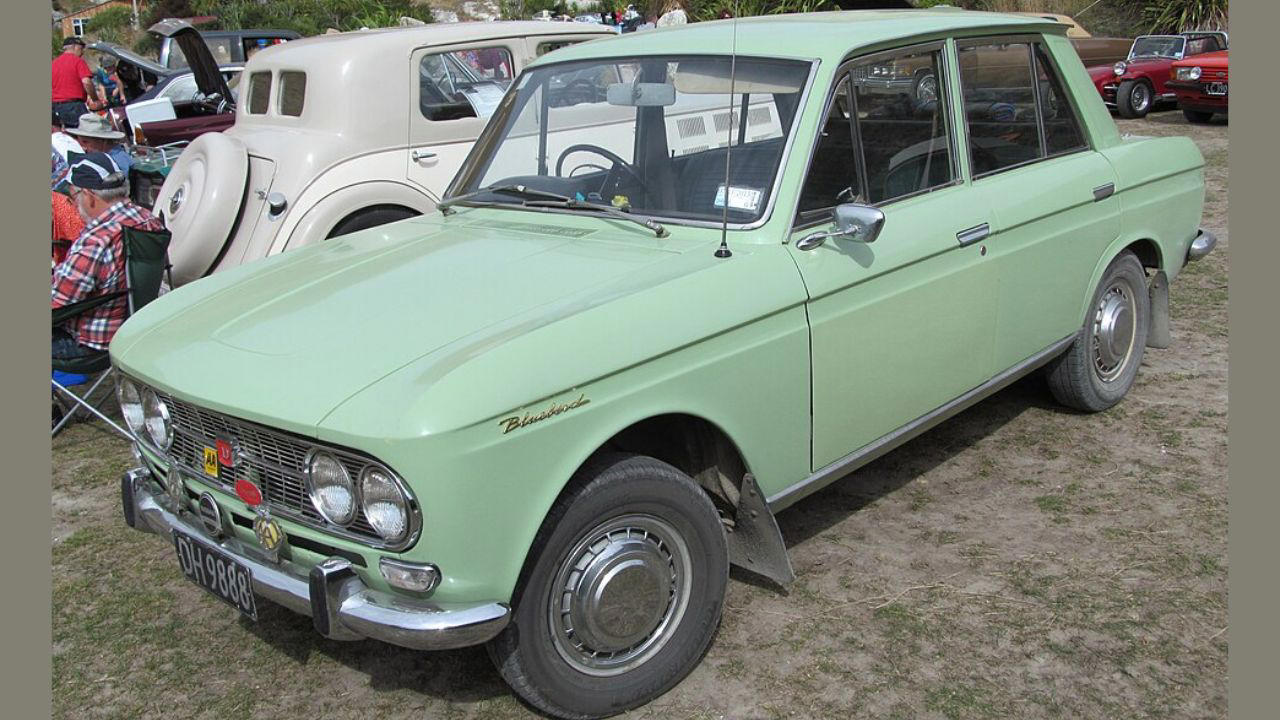
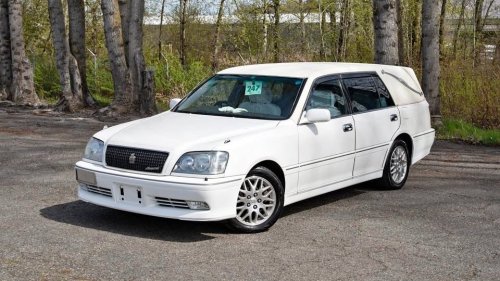
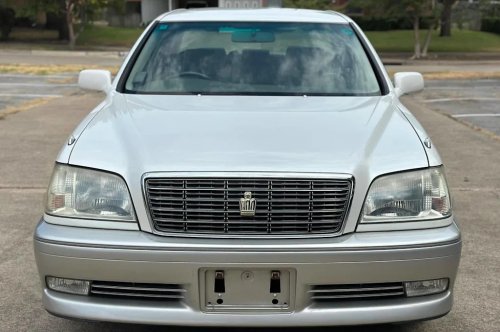
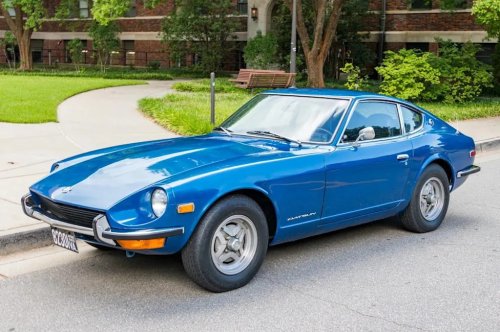
1967 Toyota Crown vs 1967 Datsun Bluebird one had the bigger long-term impactThe 1960s did not just bring Japanese cars to American streets; they set the template for how Japan would compete with Detroit and Europe for decades. Few nameplates capture that turning point better than the 1967 Toyota Crown and the 1967 Datsun Bluebird, later known worldwide through its famous 510 series. One chased respect as a formal sedan, the other chased volume as a sharp, affordable family car, and only one approach ended up reshaping the global market. Both cars mattered in their moment, yet their legacies diverged. The Crown helped establish Japanese engineering credibility, while the Bluebird 510 quietly wrote the rulebook for the modern compact. Measured by long-term influence on how cars are designed, sold, and raced, the lighter, cheaper Datsun had the broader impact. The Toyota Crown’s early gamble on America The Toyota Crown arrived as one of Japan’s first serious attempts at a full-size sedan, aimed at executives and government fleets at home and at middle-class buyers abroad. Company histories describe how the early generations built Toyota’s confidence, with the model evolving into what later marketing would call a “living legend” and one of the longest-running nameplates in the company’s portfolio, a status highlighted in official Toyota Crown retrospectives. In the United States, the story was more complicated. The Crown was among the first Japanese passenger cars officially sold in the market, often cited in dealer and enthusiast histories as a trailblazer that predated the flood of later imports. One dealership account notes how the model line gradually grew from a modest sedan into a broad family of body styles, with each generation adding refinements to the Toyota Crown model story. Yet the car’s early American outing exposed the limits of sending a relatively heavy, modestly powered sedan into a country built on freeways and long distances. Period analysis of the S40 generation, produced from the early 1960s through 1967, describes a car that was sturdier and more refined than its predecessor but still tuned for Japan’s slower roads. A detailed look at the 1962 to 1967 S40 generation points out that while styling grew more formal and engines gained displacement, the chassis and gearing left the Crown feeling strained at sustained highway speeds, a mismatch that dogged the 1962–67 S40 Crown in North America. Inside Japan, the Crown thrived as a symbol of status. A separate historical overview of the nameplate’s evolution describes how the Second and Third Generations of the Crown, covering roughly 1962 to 1971, pushed the car further upmarket with more elegant design, better interiors, and upgraded engines, cementing its role as a default choice for senior managers and officials in Japan. That domestic prestige mattered to Toyota’s identity and helped justify continued investment in the line. For American buyers in 1967, however, the Crown’s positioning as a near full-size sedan with a small engine and a relatively high price placed it in a difficult gap. It was more expensive than emerging compacts from Europe and Japan, yet less powerful and less roomy than many domestic sedans. Enthusiast commentary from long-time observers, including those who trace the model’s “crowning glory” across decades, often frames the early U.S. Crowns as noble but commercially limited experiments that taught Toyota how to read foreign markets rather than as sales successes in their own right, a view echoed in independent Crown historiography. How the Crown shaped Toyota’s long game Even if the 1967 Crown did not conquer American freeways, its influence inside Toyota was significant. Company and enthusiast histories describe the Crown as a laboratory for engineering and for understanding export expectations. The model’s struggles at sustained high speeds exposed the need for stronger engines, better cooling, and more robust automatic transmissions for overseas duty, lessons that informed later sedans and crossovers in Toyota’s global lineup. At home, the Crown’s status as a senior executive car, described in detail in analyses of the Toyota Crown Evolution, created a halo effect. The car’s reputation for durability and quiet comfort helped lift the perceived quality of the entire brand. As Toyota added more models beneath it, from compacts to family wagons, the Crown served as a benchmark for what a Japanese flagship could be, much as large American sedans once did for their manufacturers. By the late 1960s, the Crown’s engineering path also nudged Toyota toward more modern unibody construction, improved independent suspension layouts, and better corrosion protection. These upgrades arrived gradually, but the flagship’s need to satisfy demanding customers gave engineers a mandate to innovate. Later generations would pioneer features like advanced automatic climate control and sophisticated driver aids in the Japanese market, technologies that eventually filtered down to more affordable models. Yet the Crown’s influence remained relatively narrow. It primarily shaped Toyota’s internal standards and Japan’s domestic expectations for an executive sedan. Outside Asia, its presence was patchy. A retrospective focused on the Crown’s early American years notes that after the initial experiment as one of America’s first Japanese sedans, Toyota shifted attention to smaller, more export-friendly models that could compete on price and fuel economy. That pivot limited the Crown’s visibility in key export markets and, by extension, its direct impact on global car culture. For all its prestige, the Crown did not define the template for the modern compact or midsize family car. It did not become the go-to choice for private import buyers in Europe, nor did it dominate motorsport. Its impact was real but concentrated, a car that shaped Toyota’s strategy and Japan’s executive segment more than it shaped the broader global market. The 1967 Datsun Bluebird 510 arrives Where the Crown aimed for status, the Datsun Bluebird 510 aimed for reach. The Bluebird line had been a mainstay of Nissan’s export push since the late 1950s, but the redesign that arrived around 1967 transformed it into a true global contender. A detailed model history of the 1967 to 1971 Datsun Bluebird 510 describes how the car was sold in North America as a four-door sedan, a two-door sedan, and a five-door wagon, with rear-wheel drive and engines ranging from 1.3 to 1.6 liters, a layout that gave it both practicality and performance potential. One enthusiast account of the car’s development stresses that The Datsun 510 was made as an international car with a variety of world markets in mind. When first introduced at the Tokyo Motor Show, the project brief was not just to satisfy Japanese families, but to create a platform that could be adapted for Europe, North America, and other regions. That global intent is spelled out in a community history that describes how The Datsun 510 was designed for multiple markets from the start. In export form, the Bluebird 510 combined boxy, contemporary styling with independent rear suspension in many versions, a technical advantage over some rivals that still relied on simpler live axles. A separate overview of the 1967 to 1971 Bluebird notes that the 510 or some variation of it was offered in North America for several years before its redesign in 1967, but that the new generation sharpened the formula with cleaner lines and more capable engines, a shift described in detail in the 1967–1971 Bluebird 510 profile. Production data from a long view of the Nissan Bluebird story lists the Nissan Bluebird YLN 706 (510) as running from 1967 to 72, with body styles that included 2 and 4 door sedans, a 5 door wagon, and a 2 door coupé, all with front engine and rear drive and a range of 1296, 1428, 1595, and 17 hundred class engines. That breadth of configurations, captured in the Nissan Bluebird retrospective, underlined Nissan’s intent to cover as many customer needs as possible with one core platform. The Bluebird 510 also carried different badges depending on the market. A regional history from Datsun India recalls that In September of 1968, the Datsun Bluebird 510, also known as the Datsun Sedan and Wagon or Datsun1600, became a landmark product for the brand in that region, reinforcing how a single engineering package could be tailored for local tastes, a point illustrated in the in September of model summary. How the Bluebird 510 rewrote the compact playbook The Bluebird 510’s long-term impact came from the way it blended affordability, engineering sophistication, and motorsport credibility. In North America, the car arrived just as fuel economy and value were becoming more salient, yet before the oil shocks that would later accelerate the shift to small imports. The 510 offered four-door practicality and a spacious trunk in a footprint much smaller than typical American sedans, with engines that delivered adequate performance and strong mileage. Independent rear suspension in many models gave the 510 a handling edge that enthusiasts quickly noticed. In club racing and rallying, lightly modified Bluebirds proved capable of beating larger, more powerful cars, and their success helped cement the idea that a family sedan could also be a serious driver’s car. That motorsport pedigree fed directly into the car’s reputation and encouraged tuners and grassroots racers to adopt it as a platform, a pattern that would later repeat with other Japanese compacts. Globally, the 510’s flexible platform allowed Nissan to tailor equipment and engines to local regulations and incomes. In some markets, the car was sold with smaller 1296 or 1428 cc engines to keep taxes low, while others received the 1595 cc unit or later upgrades. The ability to scale the same basic car across such a range of displacements and trims helped Nissan manage costs and simplify parts logistics, a strategy that many later global compacts would emulate. The Bluebird line’s longevity underscores its influence. The same long-term history that lists the YLN 706 (510) generation from 1967 to 72 also traces how the Bluebird nameplate continued for decades after the 510 left production, becoming a backbone of Nissan’s sedan range. That continuity depended in part on the 510’s success in establishing the Bluebird as a trusted, value-oriented choice for families and fleets. By contrast, the Crown remained a more specialized product. Toyota’s global compact and midsize strategy would ultimately revolve around other nameplates, while Nissan could build on the Bluebird’s momentum as it developed successors and regional variants. The 510’s role as a volume seller in key export markets gave it a direct hand in shaping what many buyers expected from a small sedan: four doors, rear-wheel drive or later front-wheel drive layouts, efficient engines, and a mix of comfort and agility. Which car left the deeper mark? Comparing the 1967 Toyota Crown with the 1967 Datsun Bluebird 510 highlights two different kinds of influence. The Crown helped Toyota define its identity as a maker of refined, durable sedans for executives and officials, especially in Japan. The model’s evolution through the Second and Third Generations, documented in official and enthusiast histories, pushed Toyota to improve engineering quality, develop more sophisticated comfort features, and think seriously about export expectations, as illustrated in the Second and Third overview. More from Fast Lane Only Unboxing the WWII Jeep in a Crate 15 rare Chevys collectors are quietly buying 10 underrated V8s still worth hunting down Police notice this before you even roll window down