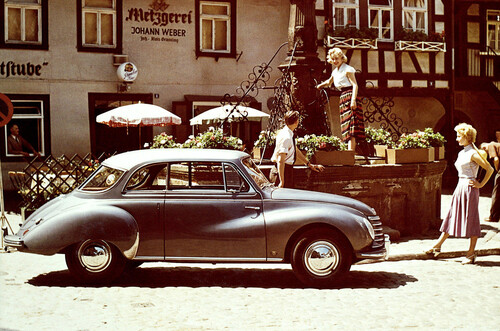
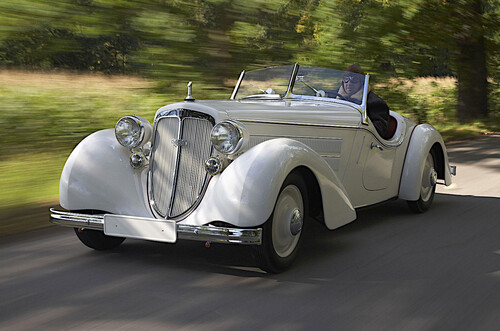
You’ve probably never heard of the 1957 Wartburg 311 and it followed its own rules entirelyThe Wartburg 311 is one of those cars that quietly rewrites expectations without ever becoming a household name. Built in East Germany in the late 1950s and early 1960s, it combined prewar mechanical roots, surprisingly elegant styling and a defiantly unconventional engine layout. For many enthusiasts, it has remained a forgotten outlier that refused to follow Western norms, yet it still fascinates anyone who discovers how completely it played by its own rules. A car from behind the Iron Curtain, styled for the open road The Wartburg 311 was produced by the East German manufacturer VEB Automobilwerk Eisenach, a state-owned company that carried on car production in Eisenach after the Second World War. The model designation 311 followed a naming tradition inherited from BMW, whose Eisenach-built passenger cars had used three-digit codes that began with a 3, and the new Wartburg kept that pattern as it entered series production in the mid 1950s. According to Wartburg 311, the basic architecture came from a prewar Auto Union design acquired from the Zwickau based group, yet the body that sat on top was thoroughly modern for its time. Contemporary accounts describe the Wartburg 311 as a small car, but even that label is contested by people who know it well. One enthusiast summary notes that the Wartburg 311 is a small car produced in East Germany by VEB Automobilwerk Eisenach in the mid 50, based on the IFA F9 and EMW 309, and that nearly 290k vehicles were eventually built, before adding the pointed aside that it was not that small. That assessment appears in a detailed post on VEB Automobilwerk Eisenach, which also stresses the link to IFA engineering and the sheer production volume that the 311 quietly achieved. Visually, the Wartburg 311 stood apart from many other Eastern Bloc cars of its era. Rather than a boxy, utilitarian shell, it wore rounded fenders, a low beltline and an almost American sense of flow in its side profile. The styling drew on contemporary Western trends without copying any one brand, giving the 311 a distinctive presence that still looks unusual in photographs from clubs such as Era Of Classics, where a vivid orange example appears as a bright survivor of East German design culture. That same group highlights the Wartburg as a forgotten gem of East German automotive history, a description that fits the car’s blend of obscurity and charm. Under the skin, a stubbornly different machine If the Wartburg 311 looked broadly in step with 1950s fashion, its mechanical layout went in a very different direction. A detailed overview shared in a classic car group explains that the 311 featured front drive, a watercooled 1 liter two stroke 3 cylinder inline engine that produced around 50 to 55 hp. That summary, which appears in a discussion of East German car, underlines how unconventional the Wartburg was compared with many Western contemporaries that relied on four stroke engines and rear wheel drive. The two stroke layout meant the 311 used a fuel and oil mixture and produced a distinctive exhaust note along with a noticeable haze, something that later enthusiasts have described as part of its character. The front wheel drive configuration, combined with a relatively light body, gave the car a different balance on the road from the rear driven sedans that dominated much of Europe at the time. While exact performance figures vary by source, the quoted 50 to 55 hp from a 1 liter engine put the Wartburg in the same general power bracket as several Western family cars, even if it achieved that output with a very different technology set. Mechanically, the 311 also carried over elements from the IFA F9, itself derived from prewar Auto Union concepts. The Wikipedia entry on the Zwickau Auto Union heritage explains that the basic chassis concept, including the longitudinal engine and transmission layout, traced back to that earlier design. Yet the Wartburg 311 wrapped those inherited components in a body that looked completely of its own time, which added to the sense that the car was straddling two eras at once. Enthusiast driving impressions reinforce this unusual character. In a video piece, Jason Torchinsky, identified on screen as Jason Torchinsky, is shown driving what is described in captions as a Warird 311 in a cemetery in Los Angeles, bringing the East German sedan into a very different context from its original roads. That clip, available on Jason Torchinsky, shows the 311 moving with a kind of light, slightly offbeat energy that matches its specification on paper. Body styles that broke out of the sedan mold One reason the Wartburg 311 still attracts attention from classic car communities is the variety of body styles that VEB Automobilwerk Eisenach managed to create on a relatively simple platform. Alongside the standard four door sedan, there were estates, pickups, and a series of more adventurous variants that pushed the design in unexpected directions. The most admired of these is the Wartburg 311 Coupé. Enthusiast posts describe how The Wartburg 311 Coup was built from 1957 to 1965 and how, from 1959, the bodies of the 311 Coup were manufactured in Dresden rather than in Eisenach. One detailed account notes that until that change, the bodies had been produced elsewhere, and that the touring coupé is still regarded as one of the most beautiful Eastern Bloc cars. That praise appears in a feature shared by Amazing Classic Cars that focuses on Wartburg 311 Coup and its enduring reputation. Another source, which looks at a specific 1963 example, refers to Wartburg model 311 1000 from year 1963 and repeats that The Wartburg 311 is a car produced by East German car manufacturer VEB Automobilwerk Eise. That description appears in a club post about Wartburg model 311, which also confirms that the 311 was produced from 1956 to 1965. That production span gave the factory time to experiment with versions such as the Camping Limousine and the Bellevue prototype, both of which took the car into more specialized territory. The Wartburg 311 Bellevue, described as a prototype from 1957, is particularly striking in period photographs. Enthusiast material from a September discussion notes that the camping limousine corresponded to a completely new conception at the time, with light flooded windows up to the roof area and large openings that gave passengers an almost panoramic view. That description appears in a post about the Wartburg 311 Bellevue, which highlights how far the designers were willing to stretch the basic sedan template. Later posts from a November discussion of the Bellevue prototype repeat the same core idea, again emphasizing the Light flooded windows and the way the car blurred the line between a limousine and a camper. That willingness to experiment with body shapes, from the sleek Coup to the glassy camping limousine, shows how the Wartburg 311 platform became a canvas for ideas that did not always fit the usual East German stereotype of purely functional transport. Production, legacy and the view from reunified Germany Across its production life, the Wartburg 311 built a quiet but significant presence on East German roads. Different sources converge on the idea that production ran from 1956 to 1965 and that nearly 290k vehicles were assembled, a figure that appears in the same classic car post that describes the model as a small car produced in East Germany by VEB Automobilwerk Eisenach in the mid 50. That volume made the 311 a common sight in its home market, even if it remained rare in the West. Another enthusiast summary, shared in a group focused on Wartburg history, states that The Wartburg 311 Produced from 1956 to 1965 was an East German automobile manufactured by Automobilwerke Eis and goes on to describe the steering wheel and other interior details. That description, which appears in a discussion of The Wartburg Produced, reinforces the idea that the 311 became a defining product for the Eisenach plant in that decade. The Wikipedia entry on the Wartburg 311 explains that the model eventually gave way to the more angular 353, which continued production in the Eisenach main plant into the 1970s. That transition marked a shift from the rounded, almost American influenced styling of the 311 to a more squared off, practical look that better matched the design language of later Eastern Bloc cars. Yet the earlier car has retained a stronger emotional pull for many enthusiasts, in part because of its unusual mix of elegance and mechanical quirkiness. After German reunification, the Eisenach facility that had produced the Wartburg 311 and its successors faced a difficult adjustment. A detailed history in a classic car group notes that the plant, often referred to as AWE, was eventually liquidated after reunification, ending a long chapter of East German car production. That account appears in a post on front drive history, which connects the Wartburg’s technical story to the broader economic and political shifts that eventually closed its factory. Today, surviving Wartburg 311s appear at classic car meets and in online groups that treat them as rare, characterful survivors. A post from Era Of Classics, for example, shares images of a Wartburg 311 finished in a vibrant orange, describing it as a forgotten gem of East German automotive history and celebrating its presence in a modern setting. That kind of attention has helped move the car from obscurity toward cult status, especially among enthusiasts who seek out vehicles that took a different path from mainstream Western brands. Why the Wartburg 311 still matters Part of the Wartburg 311’s appeal lies in how thoroughly it refused to conform. It was built in a planned economy, yet it carried styling cues that would not have looked out of place on a Western boulevard. It relied on a two stroke three cylinder engine at a time when most rivals were moving to four stroke designs, yet its quoted 50 to 55 hp from a 1 liter unit kept it competitive enough for everyday use. It shared prewar Auto Union roots, yet its Coup and Bellevue variants looked forward to a more optimistic, glassy future. The car also serves as a reminder that innovation did not stop at the Iron Curtain. The camping limousine concept behind the Bellevue prototype, with its Light flooded windows and large openings, anticipated later trends in recreational vehicles and panoramic glass roofs. The touring Coup, praised in multiple sources as one of the most beautiful Eastern Bloc designs, showed that VEB Automobilwerk Eisenach and its partners in Dresden could produce genuinely elegant shapes even within tight economic constraints. For collectors and historians, the Wartburg 311 offers a compact case study in how politics, inherited technology and local creativity can combine in unexpected ways. Its production history, from the mid 50 start under VEB control to the eventual shift to the 353 and the later liquidation of AWE after reunification, maps directly onto key chapters of East German industrial history. Its survival in clubs, videos and enthusiast posts ensures that the 311 is no longer just a background detail in old street scenes, but a subject of active appreciation. More from Fast Lane Only Unboxing the WWII Jeep in a Crate 15 rare Chevys collectors are quietly buying 10 underrated V8s still worth hunting down Police notice this before you even roll window down The post You’ve probably never heard of the 1957 Wartburg 311 and it followed its own rules entirely appeared first on FAST LANE ONLY.