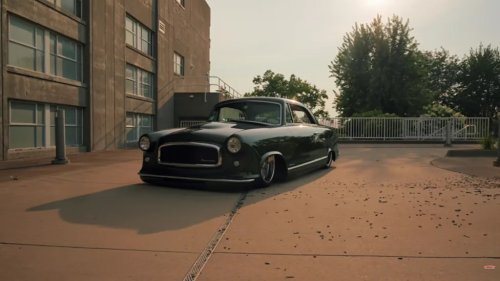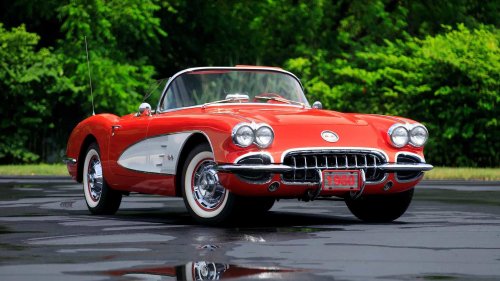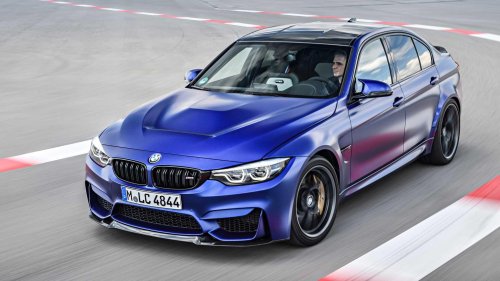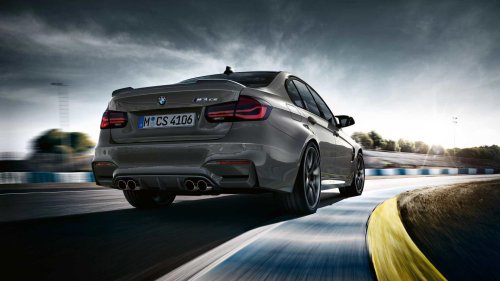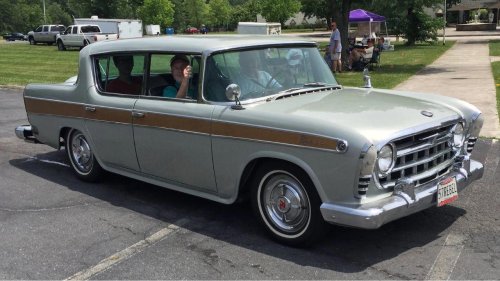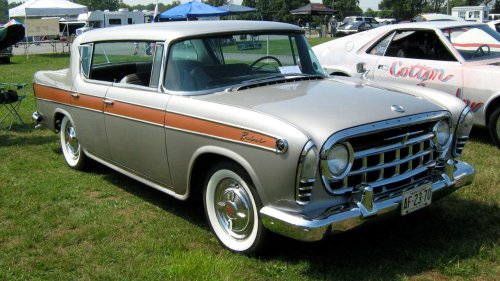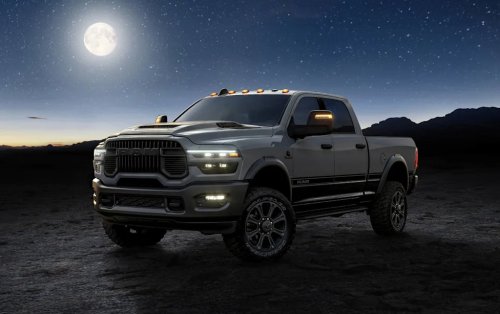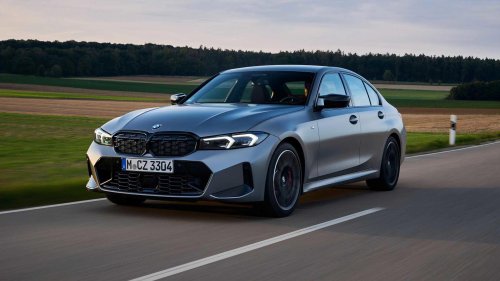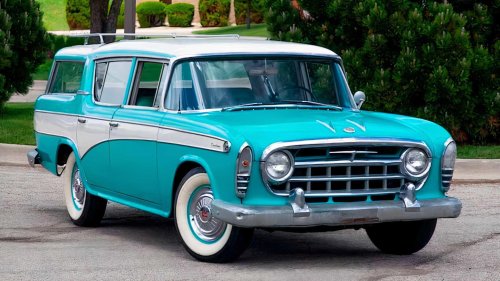
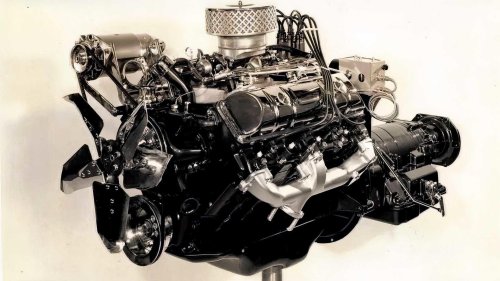
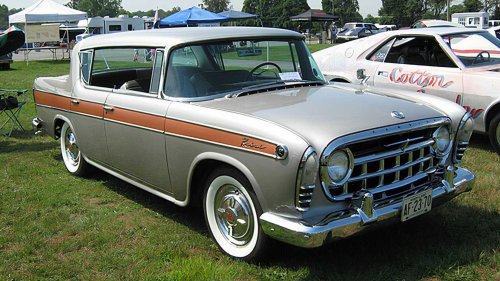
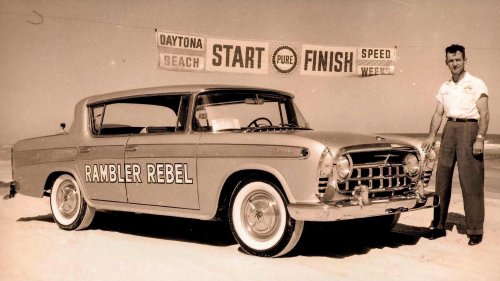
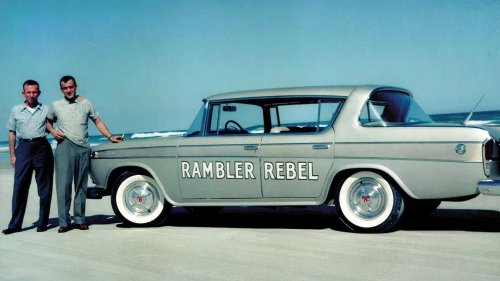



















The Chevy Corvette is the be-all and end-all of 1950s American performance cars. As far as domestically made competitors go, it really was in a league of its own for the entirety of the decade. At least, that’s the narrative we’ve all agreed to for as long as the Corvette’s been around. The truth of the matter is just a bit more complicated. That is, if you’re willing to be open minded. This is the story of a '50s American sports car lost to history and one that really should be better celebrated. A Brand-New Automaker Versus The Big 3 Mecum To be an AMC engineer in the late 1950s was to be a part of an utterly disruptive force in the American auto industry. Formed in 1954 as an amalgam of Nash-Kelvinator and the Hudson Motor Car Company, AMC existed outside of the established American “Big 3” bubble formed by GM, Ford, and Chrysler. Headquartered near Detroit with its primary production plant in the scrappy city of Kenosha, Wisconsin, there was plenty of latent potential within the scrappy upstart. Under the leadership of future US Presidential Candidate Mitt Romney’s father, George Romney, AMC positioned itself as a reasonable and affordable alternative to the Big 3 hierarchy.Most offerings were modest for the time. Little runabouts like the Nash-derived Metropolitan compact, the mid-size Statesman, the family-hauling Ambassador, and the badge-engineered Hudson Hornet made for a compelling lineup for something sewn out of two once separate companies. But AMC didn’t pick any of these to sneakily turn into a sleeper sports car. Instead, that honor went to a platform almost cutesy in appearance – something that gave no inkling whatsoever that what lurked beneath the hood could nearly keep pace with a Corvette.Its wheelbase was minuscule, barely over 100 inches without the continental tire kit you could option with it. It shared a front-engine, rear-drive platform with the Rambler Six introduced in 1957 but featured its own unique body shell that could only be described as '50s-funky. But what made AMC’s stealth sports car special was, of course, under the hood. The V8 Problem, An Issue Not Easily Solved Credit: AMC (Now Owned by Stellantis) Being ramshackled together from two completely different automakers brought a unique set of challenges for AMC. Chief among them? That would be how to keep up in the rapidly developing arms race revolving around that all-American paradigm, a flagship V8. Legacy powertrains sufficed in the short term post-launch. But what about after the Nash and Hudson brands went defunct after 1957? That was a trickier matter to juggle.For a time, AMC turned to Packard to fill the void with their 320-cubic-inch V8, the same found in the Clipper’s Deluxe and Super trims. Because transmissions that could handle all that V8 torque were hard to come by, AMC was forced to buy Packard's finicky Ultramatic units as well. Of course, anyone in the know would tell you Packard was in the midst of its own death convulsions around the mid-to-late '50s. Now unceremoniously merged with Studebaker, Packard wouldn’t make it much past the end of the decade.Not to mention, Packard famously sent AMC V8s with lower compression than engines built for their own stock. So the legend says, Packard was afraid lighter AMC cars would be substantially faster than their own cars. That meant the only viable path forward was for AMC to design and build their own halo engine, and that was no easy feat for a fresh-faced OEM. 1957 Rambler Rebel: An Adorable Face With A Screaming Engine CZmarlin/Wikimedia Commons To speed up development, AMC's lead engineer and former Kaiser-Frazer leading man, David Potter, ported a design he'd sketched at his prior position over to his new digs. Kaiser-Frazer famously ran out of money before they could implement Potter's design, and that allowed AMC to finish the design as their own intellectual property. Its first iteration, a 250-cubic-inch block with a meager two-barrel carburetor and 190 horsepower, was fairly average for the day. From there, the path to a Corvette-chasing sleeper was clear, and the answer started by boring out the block to a healthy 327 cubic inches.It was as close to a Skunkworks-grade automotive project as a non Big-3-aligned American automaker could muster at the time. But AMC engineers were giggling to themselves for a different reason because the vehicle pegged to carry the new engine for the first time was downright ridiculous. One would think that AMC would’ve picked a low-slung sports coupe. Maybe something with a body made of fiberglass and an optional rag-top, the perfect Yin to the Corvette’s Yang. But no, they picked a four-door, five-seater hardtop sedan and called it the Rambler Rebel.Why? Because George Romney championed the family grocery hauler and school run machine as the pinnacle of automotive refinement, not sports cars. Romney famously decried his Big 3 competition as "gas guzzling dinosaurs" in public speaking appearances and marketing campaigns for AMC. In short, he’d rather see something sensible get the fancy engine every day of the week. Space Age Tech, But A Decade Too Soon Credit: AMC (Now owned by Stellantis) It’d be wrong to claim the Rambler Rebel’s 327 V8 was just a stroked 250. Where the smaller engine used conventional hydraulic lifters, the big flagship used mechanical (solid) lifters. This allowed for rev-happy camshaft profiles once impossible with smaller, less robust powertrains. With beefy 9.5:1 compression and a standard Carter four-barrel carburetor, 255 horsepower was easily achievable. It might not sound like much today, but at a time when the US Interstate System was still in its infancy, that was plenty fast for most people.But for those that wanted even more power, or even to just drive the latest and greatest in automotive technology, AMC’s party piece was truly historic. Using a state-of-the-art Bendix Electrojector electronic fuel injection(EFI) system, a series of vacuum tubes and transistors in the trunk, not a carburetor, fed a carefully calculated stream of fuel and air through the 327's combustion chamber.Using similar technology to what’s found in room-sized vintage IBM mainframes, Bendix’s Electrojector EFI made AMC’s prized engine volumenometrically precise on a scale seldom seen south of a fighter plane. Well, at least when it worked. In practice, the system was notoriously big on brains but lacking in reliability.Items as mundane as incoming radio signals could dramatically alter the Electrojector’s ability to deliver fuel accurately. Like modern EVs, these early EFI systems were notoriously terrible in the deep cold. Considering AMC built cars in places like Michigan and Wisconsin, that made EFI’s effectiveness dubious. With that said, when things were working as they should, it’s said these EFI Rebels could put down 288 horsepower and sprint from zero to 60 in around seven seconds. The Charger Hellcat Formula Almost 60 Years Early Credit: AMC (Now Owned by Stellantis) By comparison, the 1957 Corvette with a 283-cubic-inch V8 and simpler mechanical fuel injection (MFI) could do the same sprint just under half a second faster. Have we stressed enough that the EFI Rambler Rebel could seat five? We really can't convey in words how mind-boggling it was to see something you could fit a family's worth of suitcases in on a road trip come close to being as quick as America's favorite sports car.As rare as it is for modern sedans like Chargers and M3s to encroach on genuine supercar performance, it was effectively unheard of in 1957. That alone should’ve been enough to make the EFI Rambler Rebel a smash hit, but the hard facts of reality kept production figures to around 15 or so test units. All the rest came with four-barrel carbs, and all EFI units are rumored to have been converted back to four-barrels before sale. Meanwhile, the Rebel would undergo the first of at least four comprehensive model refreshes in 1958, continuing to do so until 1969.Sources: Hemmings