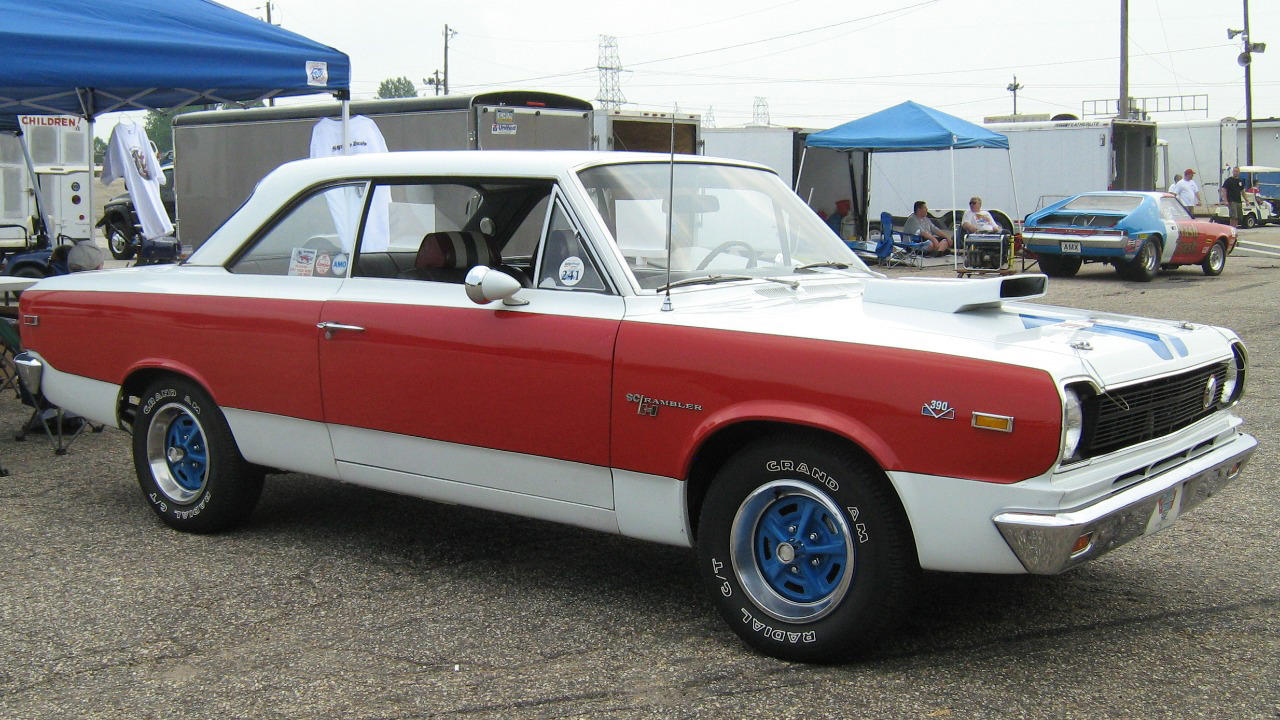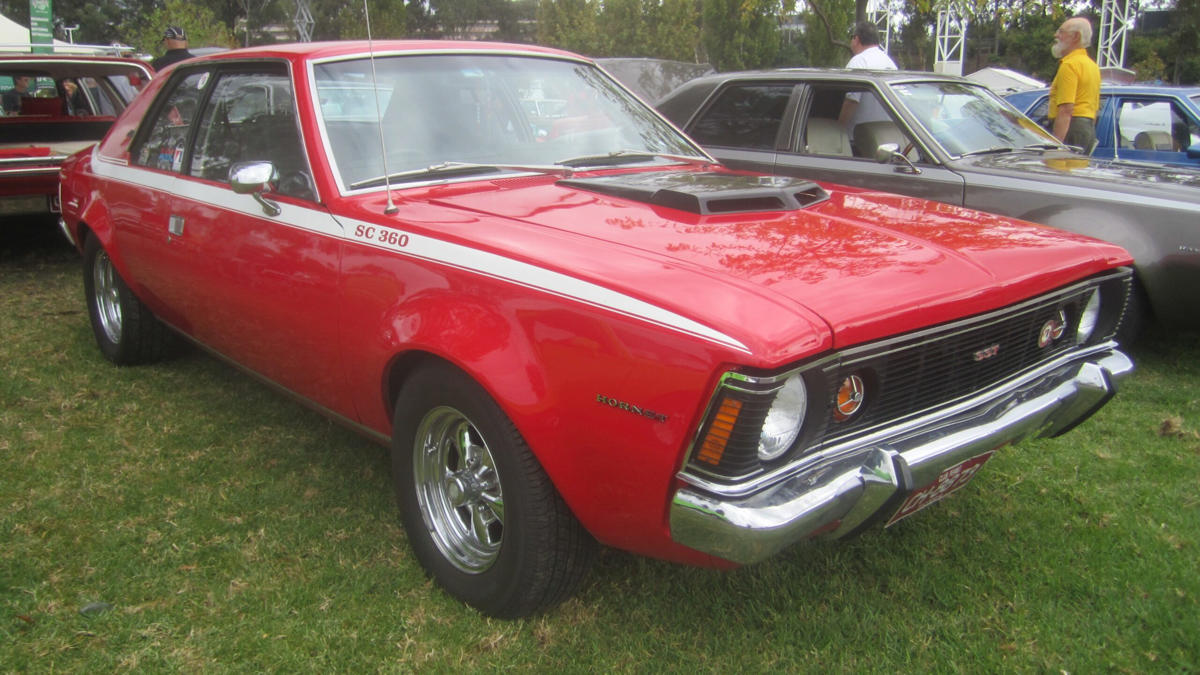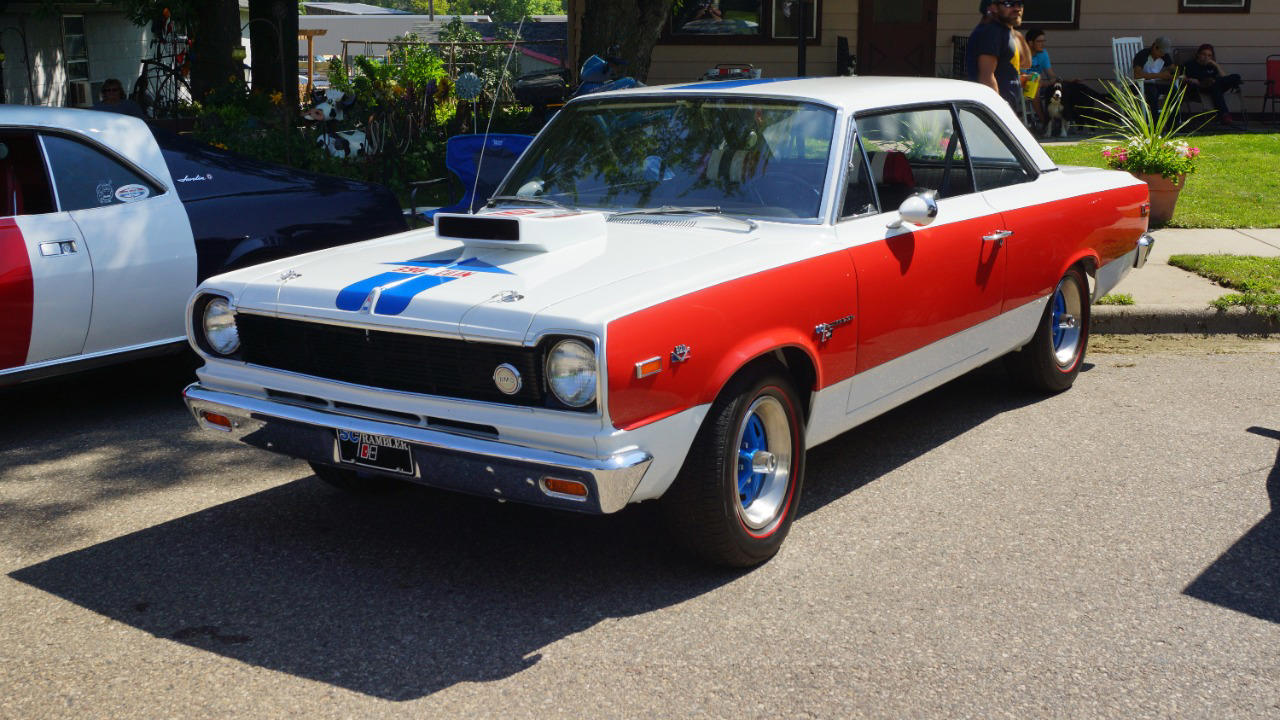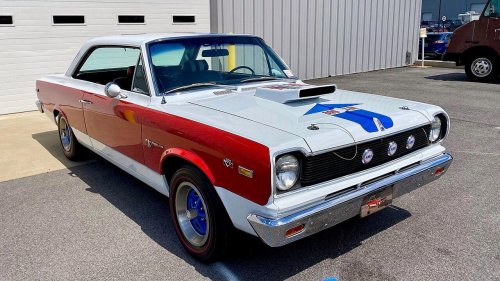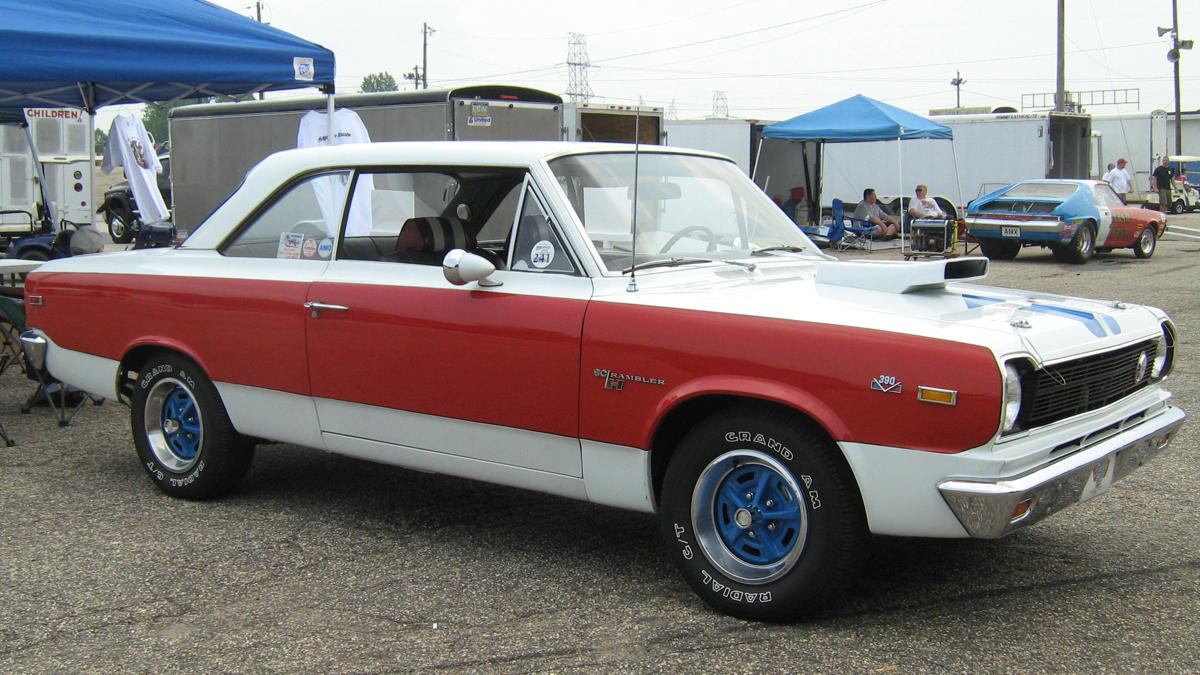






















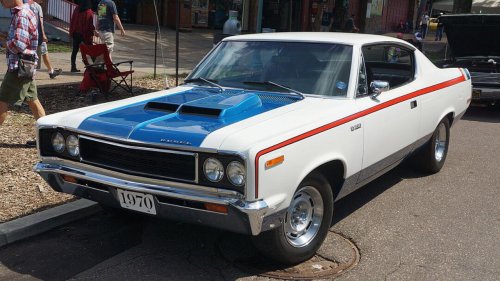
The 1969 AMC SC/Rambler arrived as a compact economy car stuffed with big-engine bravado, a short-wheelbase package that could embarrass larger, more glamorous muscle machines. Built in limited numbers and marketed with almost cheeky aggression, it turned the humble Rambler American into one of the most memorable straight-line performers of its era. More than half a century later, its blend of modest size and serious speed still fascinates enthusiasts and helps define American Motors Corporation at its boldest. What happened American Motors Corporation entered the late 1960s as the smallest of Detroit’s major carmakers, with a reputation built more on thrift than on quarter-mile times. The Rambler American had been the company’s sensible compact, aimed at families and budget buyers who valued low purchase price and good fuel economy. By 1969, however, the muscle car boom was in full swing, and AMC leadership wanted a headline-grabbing performance model that could shift public perception almost overnight. The answer was the 1969 AMC SC/Rambler, a collaboration with Hurst that took the lightweight Rambler American shell and paired it with AMC’s 390 cubic inch V8, a four-barrel carburetor, and a 4-speed manual transmission with a Hurst shifter. Period figures credit the 390 with roughly 315 horsepower, strong output for a compact body that weighed significantly less than a typical intermediate muscle car. Engineers also added a functional ram-air hood scoop, heavy-duty suspension, front disc brakes, and a 3.54 or 3.91 rear axle ratio, all aimed at turning a basic compact into a serious drag strip threat. Visually, the SC/Rambler made no attempt to blend in. The most famous configuration wore a red, white, and blue paint scheme with wild side graphics, a hood scoop that announced its intentions, and steel wheels with wide tires that filled the modest wheel arches. Even the more subdued versions still carried bold striping and SC/Rambler identification that left little doubt about the car’s mission. The combination of compact dimensions and extroverted styling made the car look almost cartoonish, yet that visual drama matched its performance. Production numbers were low, with roughly 1,512 examples built for that single model year. That scarcity, combined with the car’s distinctive appearance and strong acceleration, helped it gain cult status over time. Surviving examples became prized, and some owners have invested heavily in restorations that bring the car back to as-delivered condition. One fully restored SC/Rambler was documented roaring back to life, with its 390 V8 and ram-air scoop again turning a once-economy shell into a track-ready compact, a story that highlights how much passion still surrounds this model among dedicated SC/Rambler enthusiasts. The SC/Rambler did not exist in isolation within AMC’s lineup. It arrived in the same rough period that produced the Javelin pony car and the two-seat AMX, part of a broader push to show that AMC could build more than practical commuters. Later retrospectives on the company’s history regularly place the SC/Rambler alongside these headline models when listing the most significant vehicles from the brand’s seventy-year run, treating it as a key example of how AMC turned limited resources into distinctive performance cars. Why it matters The SC/Rambler mattered first because it proved that raw speed did not require a full-size footprint. Muscle cars of the era typically rode on intermediate or larger platforms, with long wheelbases and generous overhangs. By comparison, the Rambler American platform was short and narrow, which kept weight down and gave the SC/Rambler a power-to-weight ratio that rivaled or beat many bigger-name competitors. Contemporary tests recorded quarter-mile times in the low to mid 14-second range, strong performance for a car that started life as an economy compact. That formula, big V8 in a small car, foreshadowed later American performance trends. The idea would reappear in other AMC products, such as the early 1970s Hornet-based performance models. Enthusiast coverage of the AMC Hornet SC/360, for example, has described that car as an underrated American performance machine, again built on a compact chassis with a strong V8 and aimed at value-conscious buyers who wanted speed without the size or cost of a full-blown intermediate muscle car. The Hornet SC/360 carried forward the same philosophy that made the SC/Rambler special, turning an everyday compact into an underrated performer. Within AMC’s own story, the SC/Rambler also signaled a shift in attitude. The company had long marketed itself as the sensible alternative to the Big Three, with advertising that leaned into practicality and value. Building a loud, graphics-heavy drag car on its most modest platform showed a willingness to gamble on image. It gave AMC dealers a halo model that could draw younger buyers into showrooms, even if those buyers ultimately drove away in more conventional Ramblers or Javelins. The car’s influence can be seen in the AMC performance models that followed. In 1970, the company launched the Rebel Machine, a mid-size muscle car that again featured patriotic graphics, a high-output 390 V8, and a focus on quarter-mile performance. The Rebel Machine, and later the performance-tuned Matador, extended AMC’s muscle program into the early 1970s. Coverage of those cars has traced a direct line from the SC/Rambler to the Rebel Machine and on to the Matador, treating them as a family of factory hot rods that put AMC on the same drag strip as more famous rivals from other brands. The 1970 Rebel and 1971 Matador, both offered in high-performance form, have been described as part of a wave of AMC Machine models that kept the company in the muscle conversation even as the market began to change. The SC/Rambler’s importance is not only historical. In the current collector market, the car occupies a niche that blends rarity, visual drama, and genuine performance credentials. It does not command the same prices as some of the era’s most famous big-block Chevrolets or Mopars, yet its limited production and unique story have helped it gain value and respect among enthusiasts who focus on American Motors. The car’s connection to Hurst, its one-year-only status, and its unmistakable paint scheme all add to its appeal. For many fans, the SC/Rambler also represents a certain underdog spirit. American Motors never had the budgets or marketing reach of its larger competitors, but it used clever engineering and bold styling to punch above its weight. The decision to base such a high-profile performance car on the Rambler American, instead of a larger and more glamorous platform, reinforced that identity. It suggested that speed and fun were not reserved for buyers of big, expensive cars. From a design perspective, the SC/Rambler’s compact footprint with oversized graphics also anticipated later trends in performance branding. The idea of using bold stripes, contrasting colors, and aggressive hood treatments on relatively small cars would return in various forms, from 1970s compacts to modern hot hatches. The SC/Rambler’s look may seem extreme, yet it fits within a longer lineage of small cars that use visual theatrics to signal big performance. The car’s continued presence at shows and in restoration stories keeps that legacy alive. When a fully restored SC/Rambler appears at a drag strip or cruise night, it often draws attention from people who have never seen one in person. That visibility helps preserve interest in AMC’s broader catalog, including the Javelin, AMX, Rebel Machine, Hornet SC/360, and Matador performance variants. Enthusiast lists that celebrate seven decades of AMC history almost always include the SC/Rambler as a defining moment for the brand, a compact that proved speed could come in an unexpected package. What to watch next Looking ahead, the SC/Rambler’s story raises several questions about how compact performance and underdog brands are treated in the collector world. Values for rare American Motors models have generally trailed those of the most famous muscle cars, but interest has been rising as enthusiasts search for distinctive alternatives. The SC/Rambler, with its limited production and unmistakable identity, is well positioned to benefit from that shift. Future restoration projects will likely play a key role in shaping perception. Many SC/Ramblers were driven hard in period, used as budget drag cars or street racers, and not all survived in restorable condition. The cars that do receive full restorations often require extensive metal work, careful sourcing of period-correct parts, and meticulous recreation of the original graphics. Each high-profile restoration that returns an SC/Rambler to stock or near-stock form helps document the car’s details and raises awareness among younger enthusiasts who may know AMC only through secondhand stories. The broader AMC performance family will also continue to shape how the SC/Rambler is remembered. As more attention goes to cars like the Rebel Machine, the Hornet SC/360, and the Matador performance models, the SC/Rambler’s role as an early standard-bearer becomes clearer. Enthusiast coverage that groups these cars together as part of AMC’s muscle era reinforces the idea that the company had a coherent performance strategy rather than a handful of isolated experiments. That narrative, in turn, can influence which cars collectors seek out and how they prioritize restorations. There is also a cultural angle. The SC/Rambler speaks to a recurring theme in American car culture, the appeal of taking something ordinary and making it unexpectedly quick. Modern tuners do this with compact imports and small domestic cars, adding turbochargers and suspension upgrades to create sleepers. The SC/Rambler was not a sleeper in appearance, yet it followed the same mechanical logic: start with a small, light car, then add a strong engine and supportive hardware. As interest in classic compacts grows, the SC/Rambler offers a historical reference point for that philosophy. For car historians and enthusiasts, paying attention to how the SC/Rambler is presented in museums, auctions, and media will offer clues about its evolving status. If more major collections begin to feature the car alongside better-known muscle models, that will signal a shift in recognition. Likewise, if auction results show sustained growth in prices for well-documented examples, it will suggest that the market is catching up to the car’s significance. Finally, the SC/Rambler’s legacy may influence how future compact performance cars are marketed and remembered. Automakers today face different constraints, with emissions regulations, safety standards, and electrification shaping product plans. Yet the core idea that a small car can deliver big thrills remains powerful. The 1969 SC/Rambler demonstrated that a company with limited resources could create an icon by combining an existing compact platform with a strong engine, distinctive styling, and a clear performance mission. As enthusiasts look back at the muscle era for inspiration, that formula continues to resonate, and the compact AMC that ran with the big dogs stands as one of the clearest expressions of speed in a small package. More from Fast Lane Only Unboxing the WWII Jeep in a Crate 15 rare Chevys collectors are quietly buying 10 underrated V8s still worth hunting down Police notice this before you even roll window down The post Even though it was compact, the 1969 AMC SC/Rambler stood out with its strong speed appeared first on FAST LANE ONLY.