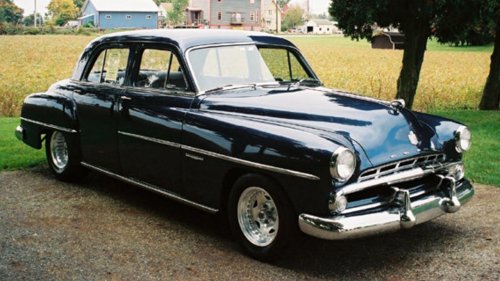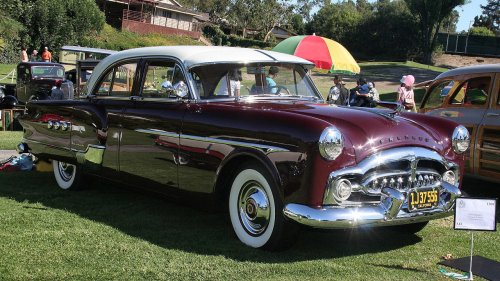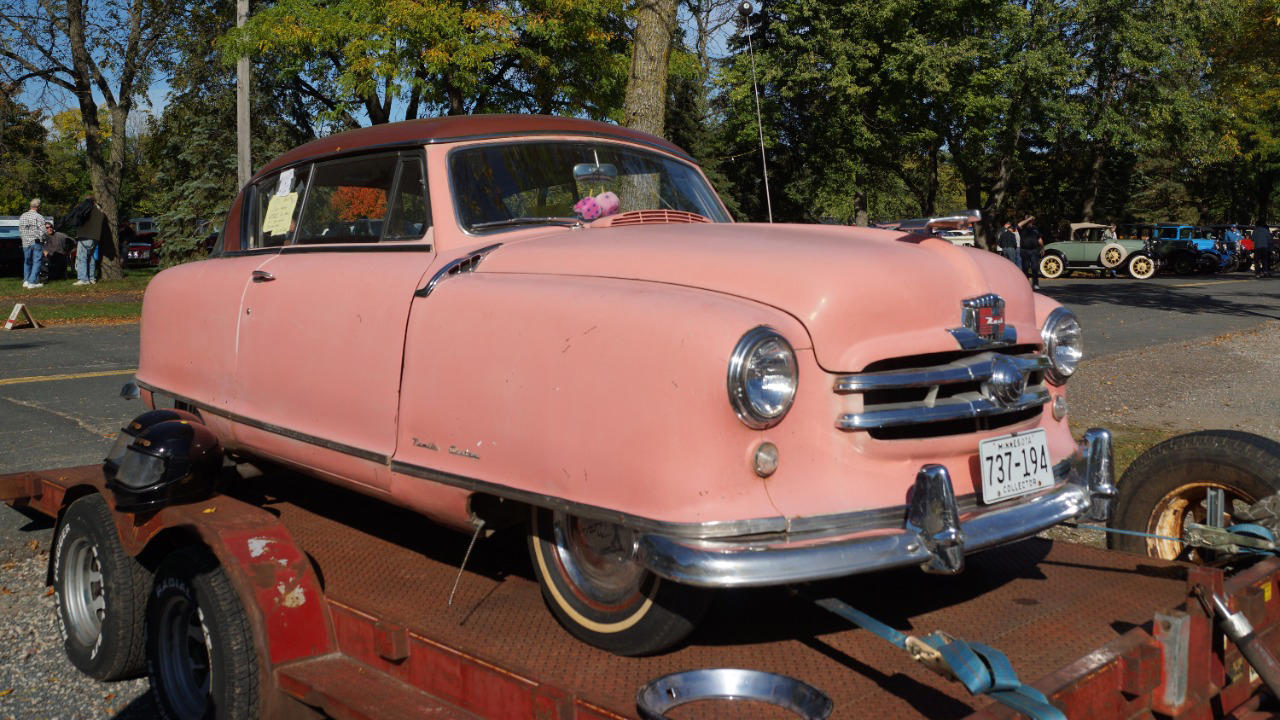



















The 1951 Nash Rambler arrived in a United States that still equated automotive success with chrome, cylinders, and sheer size, yet it dared to argue that comfort and style could come in a smaller package. Instead of chasing the horsepower race, it treated compact dimensions as a feature, not a compromise, and invited drivers to rethink what a “real” American car could be. I see that moment as a quiet but pivotal bet on compact thinking, one that still echoes in the way we talk about efficiency and design today. Setting the stage for a smaller American car By the early 1950s, American roads were dominated by long, heavy sedans that wore their prosperity on their sheet metal. Against that backdrop, the decision by Nash Motors to introduce a smaller car was not just a product move, it was a challenge to the era’s automotive culture. The company had already launched the Nash Rambler in the middle of the 1950 model year, and by 1951 it was leaning into the idea that a compact could be aspirational rather than apologetic, a car you chose because you wanted it, not because you had to settle. What strikes me is how deliberately Nash framed this shift. Instead of pitching the Rambler as a stripped-down economy box, the company treated it as a premium compact, a car that could hold its own in comfort and finish even as it took up less space on the street. The original Nash Rambler was introduced on 13 April 1950, and it was engineered with a shorter wheelbase and lighter body than the company’s full-size models, yet it carried over the same basic mechanicals and a level of trim that signaled it belonged in polite company, not just in the bargain basement of the showroom floor, as detailed in the history of the Nash Rambler. Why Nash bet on compact thinking Image Credit: Greg Gjerdingen from Willmar, USA – CC BY 2.0/Wiki Commons When I look at the 1951 Nash Rambler, I see a company reading the tea leaves of postwar America and deciding that not every driver wanted a land yacht. Urban congestion was rising, parking was tightening, and household budgets were starting to feel the pinch of running big, thirsty cars. Nash Motors responded by betting that a smaller, more efficient car could still feel like a reward, not a sacrifice, and that there was room in the market for a compact that did not apologize for its size. That bet was grounded in a clear product vision. Nash Motors debuted its Nash Rambler as an upmarket two-door convertible that was much smaller and lighter than the company’s traditional offerings, yet it still used a robust inline engine and a well-finished interior, a combination that made the car feel substantial without being bulky. The company’s decision to keep the Rambler’s mechanicals familiar while shrinking the footprint showed a careful balance between innovation and reassurance, a strategy that is evident in the way Nash Motors positioned the car as both modern and approachable. Designing a compact that did not feel cheap What makes the 1951 Nash Rambler so compelling to me is how thoroughly it rejected the idea that small had to mean spartan. The car’s designers leaned into a rounded, almost European profile, with integrated fenders and a tidy footprint that made it easy to maneuver and park. Inside, the Rambler offered a level of upholstery, trim, and equipment that would have looked at home in a larger, more expensive car, signaling that buyers were not being punished for choosing a compact. That approach paid off in the way the public responded. Contemporary accounts describe how buyers gravitated toward Nash’s “fancy small car,” appreciating that it felt more polished than other early 1950s compacts that tried to compete on price alone. The public really liked Nash’s nicer compact, preferring it to rivals that cut deeper corners, and that enthusiasm helped the Rambler stand out in a field that would soon include cars like the Hudson Jet in 1953, a contrast that becomes clear when you look at how the public really liked Nash’s decision to prioritize quality over bare-bones austerity. America’s first modern compact, by design As I trace the Rambler’s story, it is hard to miss how ambitious Nash’s goals were for such a modestly sized car. The Rambler was intended to be America’s first modern, economical, compact car, something unlike anything else on the domestic market at the time. That meant more than just shrinking the body; it meant designing a vehicle that could deliver real fuel savings, easier parking, and practical versatility while still feeling like a full-fledged family car. One of the most telling details is how the Rambler’s interior was engineered to stretch its usefulness. The car’s seats could be folded to create a flat surface that functioned as a bed for the family, a clever solution that turned a compact footprint into a flexible living space on wheels. That kind of thinking shows how Nash tried to make every inch of the car work harder, and it underscores why The Rambler is often described as a deliberate attempt to redefine what an American family car could be, a point that comes through clearly in accounts of how The Rambler was intended to be America’s first modern, economical, compact car. The legacy of a mostly forgotten pioneer Looking back from today, I am struck by how quietly the 1951 Nash Rambler has slipped from popular memory, even as its core ideas have become mainstream. Modern crossovers and compact sedans routinely promise efficiency, maneuverability, and clever packaging, yet the car that first tried to sell Americans on a smaller, smarter footprint rarely gets a mention outside enthusiast circles. In that sense, the Rambler feels like a pioneer that cleared a path others would later walk more confidently. Yet the influence is still there if you know where to look. The way the Rambler combined a shorter wheelbase, lighter construction, and full-size comfort anticipated the formula that later compacts and subcompacts would refine, from early imports to domestic small cars that finally embraced efficiency as a selling point. When I think about the 1951 Nash Rambler, I see more than a quirky footnote; I see an early, earnest attempt to convince America that less metal could still deliver a full measure of satisfaction, a compact idea that arrived ahead of its time but never quite lost its relevance. More from Fast Lane Only: 10 underrated V8s still worth hunting down Police notice this before you even roll window down