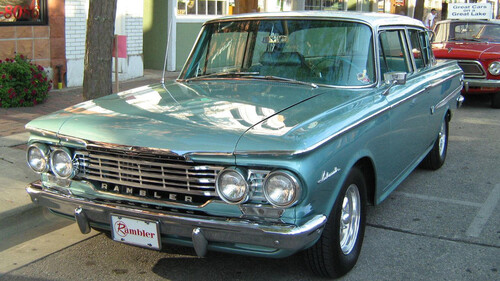
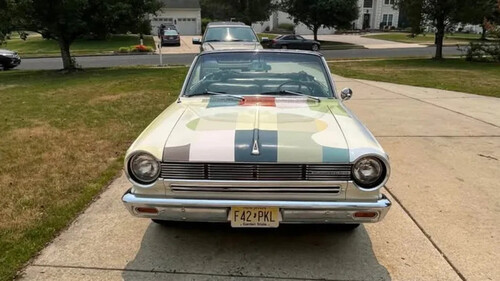
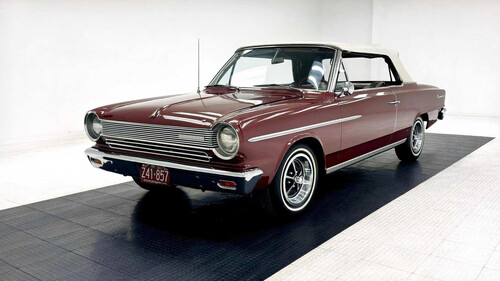
The 1963 Rambler Classic didn’t chase trends and somehow stood apartThe 1963 Rambler Classic arrived in a market crowded with chrome, tailfins, and horsepower one-upmanship, yet it chose a quieter path. With clean lines, honest proportions, and a focus on practicality, it sidestepped the flash of Detroit fashion and still managed to stand apart. More than sixty years later, that restraint looks less like compromise and more like a confident statement about what a family car could be. The car that made “sensible” interesting By 1963, American Motors Corporation was fighting for space against much larger rivals, and the Rambler Classic became its central weapon. The second generation of the model was completely redesigned for that year, with new bodywork on a 112 inch wheelbase that aimed for efficient size rather than sheer bulk, according to period descriptions of the Rambler Classic. The car was sized between Detroit’s traditional compacts and intermediates, an in-between strategy that let AMC offer generous interior room without the driveway-filling footprint of full-size sedans. That focus on rational packaging quickly paid off. The Classic series became AMC’s best-selling line during its 1961 to 1966 run, with the 1963 models playing a major role in that momentum. Contemporary commentary framed the car as a smart choice for families and especially for young people, with one account recalling that The Classic helped normalize “dating boys who drove Ramblers” rather than only big-brand V8s, a cultural shift captured in later reflections on The Classic. In an era when image often trumped practicality, the Classic made sensibility feel aspirational. Clean, no-nonsense styling in a loud decade Styling is where the 1963 Rambler Classic most obviously refused to chase trends. The body sides carried subtle sculpturing instead of deep scallops or wild creases, and the roofline was upright and glassy rather than low and brooding. A later description of the car praised its “clean, no-nonsense styling” that stood out in a “sea of chrome-heavy giants,” a phrase that has been repeated in enthusiast circles when discussing the Rambler Classic and its Car of the Year recognition. The Classic looked modern without being aggressive, a car that tried to blend into daily life rather than dominate it. That restraint extended to ornamentation. Where rivals loaded on grilles, fins, and side spears, the Rambler’s designers put emphasis on proportion and glass area. The car featured curved side glass, a feature that period literature highlighted as a technical and visual advance. Company brochures described “New Curved Glass Side Windows” that improved appearance and cabin space, along with “New Easy” entry, as part of a broader pitch that RAMBLER was presenting “a dramatic advance in construction, quality and style for 1963,” language preserved in the factory foldout that begins on Page 2. The design message was clear: refinement and usability mattered more than decoration. The result is a car that today reads as quietly handsome rather than dated. The simple grille, straight beltline, and generous glass give it a lightness missing from many period competitors. In an age when styling excess often dates a car, the Classic’s decision to stay out of the fashion race is a key reason it still feels contemporary. Engineering upgrades beneath the modest sheet metal The 1963 redesign was not just a new skin on an old structure. AMC reworked its unitized body platform in significant ways, with period analysis describing the changes as “more than a simple restyling” and emphasizing that the makeover included substantial upgrades to AMC’s unit-construction platform, which enthusiasts later summarized as “63 m” when discussing the scale of the changes to the chassis and running gear in coverage of More of AMC’s engineering. The wheelbase was stretched to 112 inches, and the structure was revised for better ride and durability, decisions that would matter for years because the underlying platform stayed in production through 1978. Under the hood, the Classic used AMC’s inline six as its core powerplant, but that engine could be paired with a variety of transmissions. Contemporary technical write-ups point out that the 1963 Classic could be ordered with a three-speed manual, an overdrive unit, or the Flash-O-Matic automatic supplied by Bor, with some later versions of the platform eventually accommodating the Ambassador 327 CID V8 and even forming the basis of the all-new American Motors Rebel, according to detailed discussions of the Flash and Matic options from Bor. This flexibility reflected AMC’s need to cover a wide range of buyers with a single architecture, from thrifty commuters to customers who still wanted six-cylinder power with automatic convenience. The engineering focus extended to everyday usability. The new AMC cars incorporated numerous solutions aimed at comfort and build quality. Among these was curved side glass, promoted as one of the earliest uses of such glazing in a popular-price car, which allowed better fitting of the doors and reduced wind noise according to later descriptions of the AMC Classic 660. The company’s marketing framed these touches as proof that a modestly sized sedan could feel refined without stepping into luxury pricing. Neither compact nor intermediate, but something in between One of the most intriguing aspects of the 1963 Rambler Classic is how it fit into the market’s size classes. Later analysis has argued that the car was “more of a compact than an intermediate,” pointing out that its dimensions and weight were closer to smaller cars even as AMC promoted it as a step up in comfort, a perspective laid out in assessments of how the 1963 Rambler Classic compared with rivals. The decision to keep the car relatively compact had long-term consequences, because the same platform was stretched and adapted for more than a decade and a half. That in-between status was both strength and weakness. On one hand, the Classic offered big-car comfort in a footprint easier to park and more efficient to run. On the other, some buyers saw it as neither fish nor fowl, especially as competitors launched larger intermediates with more flamboyant styling and V8 power. Later critics have described the Classic as a “reasonably successful design” that nevertheless had some weaknesses, including a body that looked more upright and conservative than most of its competitors, an assessment that framed the car’s restrained appearance as both asset and liability and concluded that, however, it was out-flashed by most rivals in showroom appeal, a point made in retrospective reviews of the Classic. In hindsight, that conservatism is exactly what gives the car its charm. Car of the Year without acting like one Despite its modest image, the 1963 Rambler Classic did not go unnoticed. Contemporary coverage has linked the 1963 Rambler with Car of the Year honors from Motor Trend, with enthusiasts later highlighting how the Rambler Classic earned that recognition for its combination of packaging efficiency, engineering improvements, and value in a crowded field of larger, more ostentatious cars, a story that surfaces repeatedly in discussions of the Car of the award. In a market obsessed with status, a relatively plain sedan from a smaller company managed to claim one of the industry’s most visible trophies. That accolade did not turn the Classic into a halo car in the traditional sense. There were no special badges shouting about the prize, no sudden pivot to flashy trim packages. Instead, the award validated AMC’s strategy of focusing on rational virtues, signaling that a car did not have to be the biggest or the most powerful to be judged the best. The recognition also helped cement the Classic’s reputation as the car that proved AMC’s approach could compete on merit, not just on price. Variants that quietly expanded the formula Within the 1963 range, AMC offered several body styles and trims, but even the rarer versions stayed aligned with the car’s understated character. The 2-door sedan, for example, was built in relatively small numbers and has become a minor cult favorite among enthusiasts. One account of a survivor car notes that “not many of these” were built and praises how original examples still show the crisp lines and honest detailing that defined the 1963 Rambler Classic. Even in two-door form, the Classic did not pretend to be a muscle car; it remained a sensible coupe for buyers who preferred fewer doors but still valued practicality. Wagon variants extended that thinking into family duty. With the same straightforward styling and efficient packaging, they offered a more compact alternative to the massive full-size wagons that dominated American suburbs. The shared platform meant that engineering upgrades such as the revised unit body and curved glass benefited every body style. Rather than using variants to chase niche trends, AMC used them to broaden the reach of a single, coherent idea about what a modern family car should be. How enthusiasts remember it now Enthusiast memory of the 1963 Classic tends to center on its honesty. Social media posts describing the car often return to the phrase “clean, no-nonsense styling” and emphasize how it stood out among more flamboyant contemporaries, as in one widely shared description of the 1963 Rambler Classic that praises its restrained looks, solid construction, and ease of ownership. Owners and fans frequently highlight the car’s comfortable ride, simple mechanicals, and the way it seems to shrink around the driver compared with the full-size sedans of the era. That affection extends beyond nostalgia. For younger enthusiasts used to modern crossovers, the Classic’s upright greenhouse and thin pillars offer a visibility and sense of light that feels almost exotic. The combination of compact exterior and roomy interior aligns neatly with current concerns about urban space and efficiency. In that sense, the car’s original positioning as “more of a compact than an intermediate” has aged well, turning what once looked like a compromise into a forward-looking choice. Why its restraint matters now Seen from 2026, the 1963 Rambler Classic looks less like an outlier and more like an early sign of where mainstream cars would eventually head. Its emphasis on packaging, fuel economy, and build quality anticipated later waves of downsizing and rationalization in the 1970s and 1980s. The fact that the platform introduced in 1963 remained in production through 1978, as documented in later analyses of the platform, underlines how sound the basic engineering was. At the same time, the Classic highlights the limits of understatement in a market that often rewards spectacle. AMC’s restrained design and focus on value won awards and loyal customers, but it could not match the marketing muscle or product breadth of Detroit’s giants. Later critiques that describe the car as “reasonably successful” yet visually conservative capture that tension. The 1963 Classic succeeded on its own terms, but those terms were not always aligned with a culture that equated excitement with excess. More from Fast Lane Only Unboxing the WWII Jeep in a Crate 15 rare Chevys collectors are quietly buying 10 underrated V8s still worth hunting down Police notice this before you even roll window down