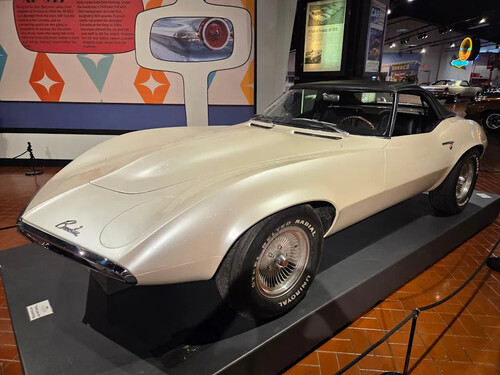
The 1963 Buick Riviera showed up with a design no one else was buildingThe 1963 Buick Riviera did not simply join an existing crowd of American luxury coupes. It arrived with a crisp, European-influenced shape and a tightly edited interior that looked like nothing else in Detroit showrooms. Designers and executives set out to build a different kind of personal luxury car, and the result still reads as a concept brought to life rather than just another model year. Jay Leno has described the 63 Riviera as the car that reset styling expectations for American manufacturers, a view echoed by owners who still share Jan photos and stories of their cars more than sixty years later. The shape, the stance and the way Buick wrapped performance in restraint all helped the Riviera feel like a one-car design revolution. The concept that escaped the studio Long before customers saw a Buick badge on it, the Riviera existed as a pure styling exercise. The car that reached showrooms in 1963 began as a Bill Mitchell concept created to explore a new kind of American grand tourer. Mitchell wanted to merge the presence of a high-end luxury sedan with the taut proportions of a sports coupe, a goal documented in accounts of how Buick’s iconic 1963 started life in the design studios. The concept did not have Buick written on it at first. Internal debate at General Motors pitted divisions against each other as they all eyed this sleek proposal. At one stage Cadillac and Chevrolet both had claims on the project, a tug of war that later commentators describe when they explain how Buick eventually received the Lasal-based idea and turned it into the Riviera after Cadillac and Chevrolet and Cadillac leadership passed on it. A video analysis of the GM Lasal concept traces how that aborted 1963 LaSalle proposal became the basis for Buick’s new coupe. Within GM, the car also reflected a broader push to answer European influences. Harley Earl and Bill Mitchell studied the European grand tourers that were defining taste for wealthy drivers. Reports on the Riviera’s origins describe how Harley Earl and looked at Ferraris and Maseratis and decided that America needed its own version of that long-hood, short-deck, high-speed luxury formula. They wanted a car that could sit next to a Ferrari or Maserati in a driveway and not look out of place, yet still feel unmistakably American. One Facebook discussion of the car’s history notes that the 1963 Buick Riviera was conceived as an American Rolls Royce, a phrase that captures the ambition behind the project. Designers around Bill Mitchell at General Motors did not just want a sporty coupe. They wanted a car that could carry the gravitas of a Rolls while also fitting into the American graffiti era of drive-ins and highway cruising, something that is spelled out in coverage of the American Rolls Royce. The design research did not stop at one clay model. Enthusiast discussions reference how the LaSalle-inspired theme even touched an early Corvair prototype, a detail mentioned in a thread where Jeff Clark It and Theodore Such trade notes about how GM experimented with the name and look across different platforms. That conversation about the prototype work underlines how seriously GM treated the Riviera’s styling language before it settled into production form. A shape that made Detroit look old By the time the Riviera reached showrooms, the rest of Detroit had grown used to heavy chrome, fins and busy surfaces. The new Buick cut through that clutter with sharp lines, a low roof and a stance that looked ready to sprint. Commentators who study the First Generation Buick Riviera describe it as a car that made some Cadillac designs look suddenly dated, a point reinforced in a Design Analysis that highlights how Cadillac’s own styling boom ironically opened space for Buick to take a more restrained path. From the front, the 1963 Riviera presented a clean, almost architectural face. The grille stretched wide but stayed low, framed by quad headlamps that sat in simple bezels instead of ornate pods. The sides were nearly unadorned, with a crisp shoulder line that ran from the front fender to the tail and only a subtle fender sweep to break the tension. Over the rear wheels, the roof tapered into a formal C-pillar that gave the car a distinctive profile without resorting to tailfins. One enthusiast description of the 1963 Buick Riviera calls it “pretty unquestionably one of the best looking designs of the early to mid 1960s,” a judgment that reflects how cleanly the car stood apart from its peers. That assessment appears in a video focused on Buick Riviera facts, where the host repeatedly emphasizes how the Riviera really did not look like anything else on American roads at the time. The body proportions did much of the work. The long hood signaled serious power, while the short rear deck and tight overhangs gave the car a planted, almost European stance. Yet the detailing remained American in its confidence. The wheel arches were slightly squared off, the beltline sat at a comfortable height and the glass area felt generous rather than slit-like. It was a car that could project speed without intimidating its driver. Even the instrument panel reflected that philosophy. Buick engineers rejected the 120 m speedometer from the Electra and instead specified a unit that read to 140 m, a change documented in a technical overview of the 1963 model. That decision, described by the Riviera Owners Association when They compare the Riv to the Electra, shows how the car’s performance intent was baked into its gauges as well as its sheetmetal. The association’s evolution notes also point out how the interior color choices and trim reinforced that understated performance message. Inside, a cockpit for American grand touring The exterior may get most of the attention, but the Interior of the 1963 Riviera carried the same sense of intention. Contemporary descriptions highlight high quality materials, a driver-focused layout and generous space for four adults. A social media post that contrasts early and late Rivieras calls the 1963 cabin “equally impressive,” with spacious seating and a dashboard that wraps subtly around the driver, details that appear in a breakdown of the Riviera Interior. Buick aimed the Riviera at buyers who wanted to cross states at speed rather than carve racetracks. That meant wide, supportive front buckets, a substantial center console and controls that fell easily to hand. The materials leaned toward wood and bright metal rather than flashy plastic, another nod to the Rolls Royce inspiration that designers had in mind. Even the steering wheel and instrument cowl had a measured elegance that looked more European than typical Detroit fare. Survivor cars show how well that formula aged. One garage-kept example with about 41,000 miles still carries its original upholstery and trim, and photos of that car reveal how restrained the color palette was compared with some contemporaries. Another barn find, described as an extremely original 1963 Buick Rivieria, retains silver leather and factory finishes that underline how carefully Buick curated textures and tones. That car appears in a post that calls it a great example of how Buick’s luxury coupe left the factory. The driving position also reflected the car’s performance ambitions. The 140 m speedometer sat directly in front of the driver, flanked by clear auxiliary gauges rather than stylized pods. The console shifter, when specified, gave the driver a more engaged feel than a column selector. All of it combined to create a cockpit that signaled long-distance speed rather than boulevard posing. Mechanical substance behind the style Design might have been the headline, but Buick knew that a car with this presence needed serious hardware. Period specifications and later write-ups describe big block V8 power, robust automatic transmissions and suspension tuning that favored stability at high speed. The Riviera did not chase the raw aggression of a muscle car, yet it delivered the kind of effortless torque that allowed drivers to cruise well above legal limits without strain. Enthusiast videos that revisit the 1963 Buick Riviera often emphasize this blend of elegance and muscle. One presenter, introducing a feature on the model as “the Cadillac that never was,” talks about sliding into “pure elegance with muscle under the hood,” a phrase that captures how the car straddled categories. That description appears in a clip focused on the Buick Riviera and its place in GM history. Owners today still prize that balance. A 1963 Buick Riviera photographed at a Barrett Jackson auction in Scottsdale, Arizona, for example, drew attention precisely because it combined original styling with the factory performance package. The photographer who shared that car online noted that 1963 was the debut year for the Riviera and that its body was not shared with any other GM model, a point made clear in a post about the unique Buick Riviera. That exclusivity mattered. In an era when platform sharing often produced lookalike cars across divisions, the Riviera’s stand-alone body and carefully tuned chassis gave buyers a sense that they were getting something genuinely special. The car’s engineering did not scream for attention, but it delivered a composed, confident drive that matched the promise of its styling. From American Rolls Royce to custom canvas Because the 1963 Riviera arrived with such a strong visual identity, it quickly became a favorite canvas for customizers. One of the most famous examples is the Villa Riviera, a heavily modified car By George Barris. Built originally as George’s personal custom, the Villa Riviera started with a brand-new car supplied by Buick Motor Division and then underwent a series of dramatic changes that amplified its already striking form. Enthusiast groups still share images of the Villa Riviera and recount how deeply it influenced later custom work. Custom builders have also created pickup conversions and other radical interpretations that start with the Riviera’s coupe body. A design review of a 1963 pickup conversion, for instance, points out how the original roofline and front clip were so strong that they could support dramatic modifications without losing their identity. The same review emphasizes that the 1963 Riviera body was unique within GM, which made it especially attractive to builders who wanted a distinctive base. Yet even when customized, the car’s core personality tends to shine through. The long hood, the formal roof, the crisp fender lines and the restrained use of chrome all survive in most conversions. That resilience speaks to the clarity of the original design. When a shape is this well resolved, it can handle wild paint, shaved trim or even structural changes and still read instantly as a Riviera. Some commentators argue that certain customs even improve on the factory formula. A feature on a car nicknamed “The One Buick didn’t Build” makes that case explicitly, suggesting that clever modifications can sharpen an already iconic profile. The story of that car, which begins with the line “1963 Riviera… The One Buick didn’t Build,” shows how owners feel free to experiment because the original template is so strong. The piece about Riviera customs captures that spirit. How the Riviera reset expectations The impact of the 1963 Buick Riviera goes beyond its own production run. Design historians often place it in the context of a broader shift in Detroit during the mid 1960s, when carmakers such as General Motors, Ford and Chrysler began pushing boundaries with bolder, more cohesive designs. A discussion of concept cars from that period notes how, by the mid decade, Detroit was embracing an era of luxury, performance and style that owed much to early experiments like the Riviera. That trend is summarized in a post that opens with “By the mid 1960s, Detroit’s carmakers, including General Motors, Ford, and Chrysler,” and then traces how those companies responded to changing tastes, as seen in the Detroit design overview. The Riviera also helped define the idea of the personal luxury coupe, a segment that would blossom later in the decade. By offering a car that was neither a traditional full-size sedan nor a stripped-down sports car, Buick showed that buyers were willing to pay for style, comfort and performance in a single package. The car’s success encouraged other divisions and competitors to pursue similar formulas. At the same time, the Riviera’s styling restraint pushed against Detroit’s tendency toward excess. Where some contemporaries added more chrome and fussier lines each year, the Riviera stayed relatively clean throughout its first generation. That discipline influenced later GM designs that sought to combine drama with simplicity rather than piling on ornamentation. Jay Leno’s comment that the 63 Riviera set a new style standard for American cars captures that shift neatly. Owners who share Shots of their cars in online groups often echo that sentiment, pointing out how the Riviera still looks modern in a way that many contemporaries do not. A Facebook post that collects 1963 Riviera images credits the car with setting a new style standard and notes that it was Buick’s first unique Riviera model, not a rebadged version of another GM product. Video commentators who revisit the car decades later also stress its lasting influence. One clip that focuses on “Facts and Trivia about the 1963 Buick Riviera” suggests that the Riviera really helped define what a personal luxury car could be in the early to mid 1960s. The host repeatedly refers to the Buick Riviera and the Riviera as touchstones for discussions about later American coupes, reinforcing how this single model shaped expectations for style and presence. That perspective comes through clearly in the Buick Riviera trivia segment. Why it still matters Today, when collectors talk about design purity, the 1963 Buick Riviera often enters the conversation alongside European icons. Its mix of American Rolls Royce ambition and American graffiti attitude gives it a dual identity that still feels fresh. The car manages to be glamorous without being gaudy, powerful without shouting about it and luxurious without drifting into excess. That balance is why the Riviera continues to inspire restorations, customs and careful preservation efforts. Barn find stories about rare colors such as Willow Mist, shared through links that trace back to Discovered posts about a Buick Rivieria, show how excited enthusiasts become when they uncover an original example. Those threads, which often point back to rare Riviera finds, underline how desirable original specification cars remain. More from Fast Lane Only Unboxing the WWII Jeep in a Crate 15 rare Chevys collectors are quietly buying 10 underrated V8s still worth hunting down Police notice this before you even roll window down The post The 1963 Buick Riviera showed up with a design no one else was building appeared first on FAST LANE ONLY.