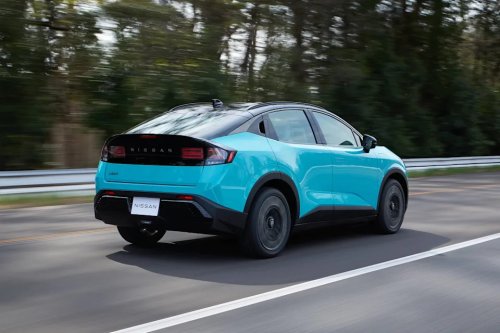
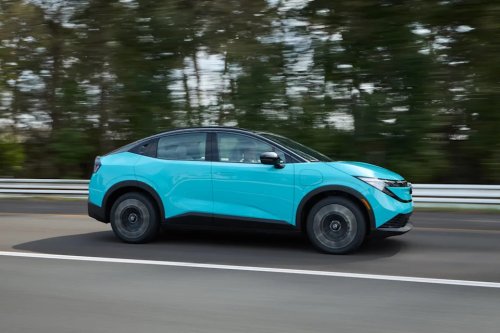
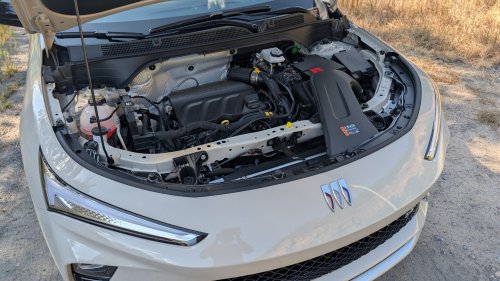
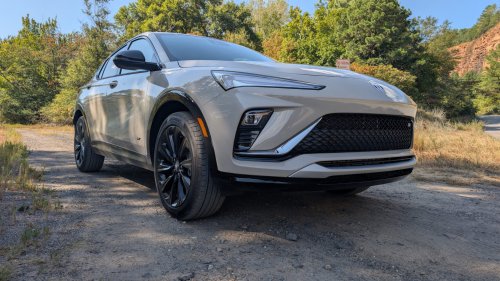
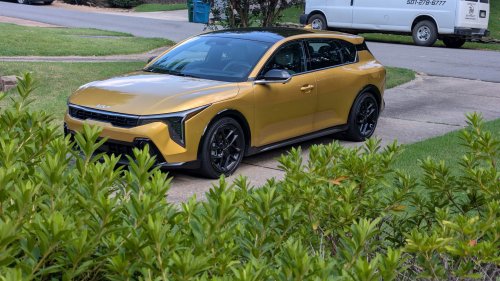
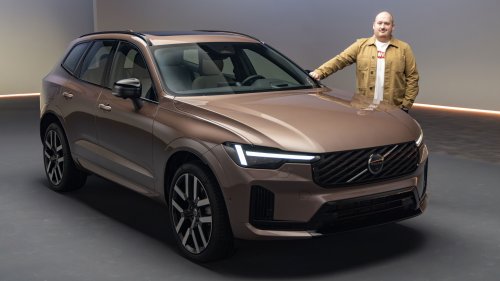
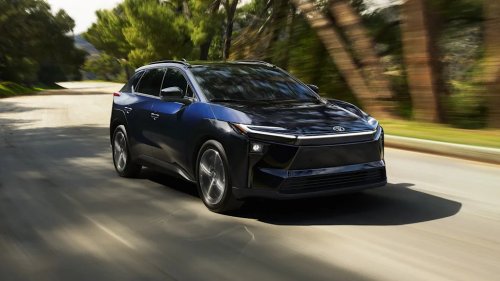
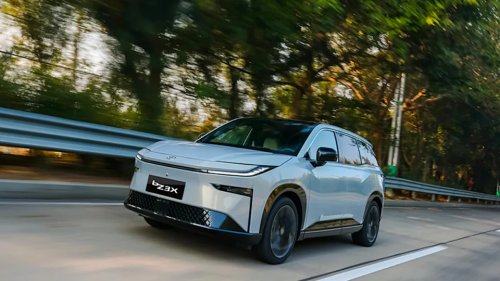
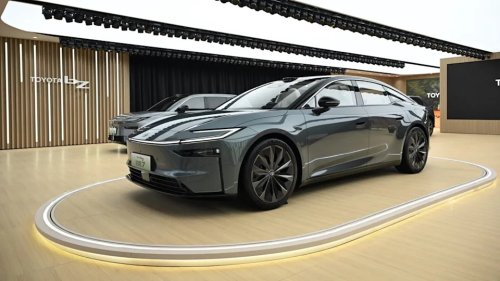
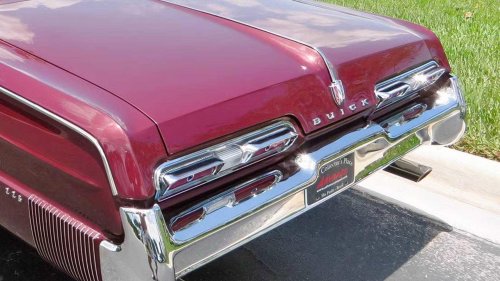
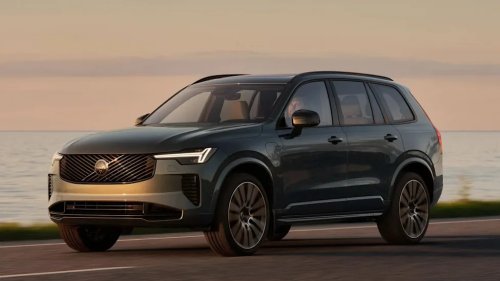
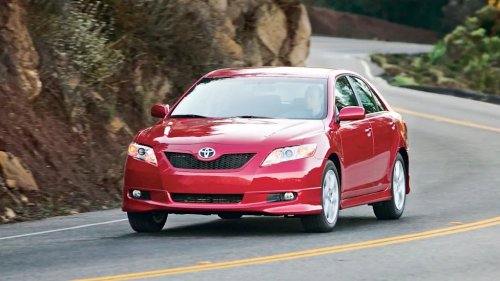
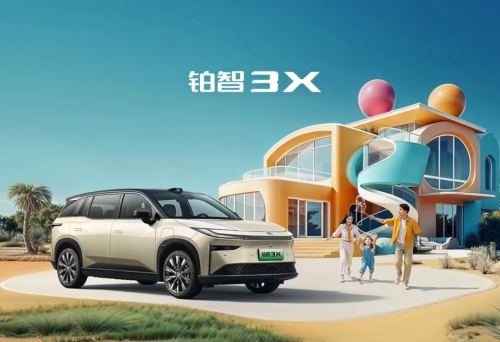
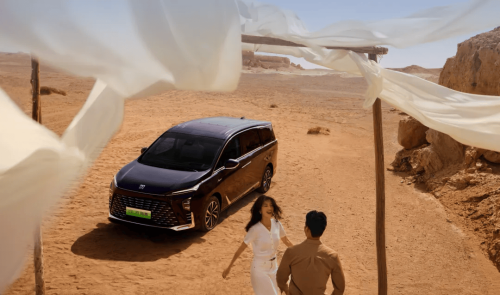
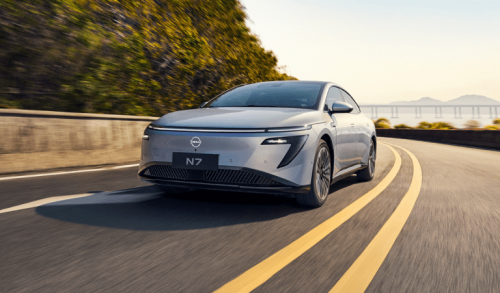
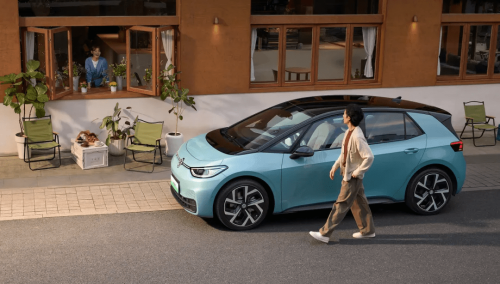
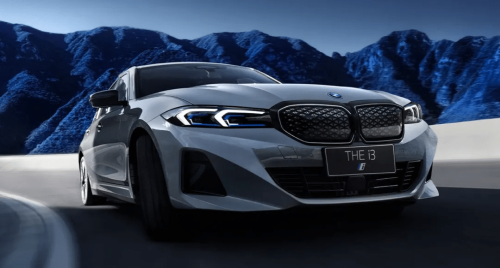
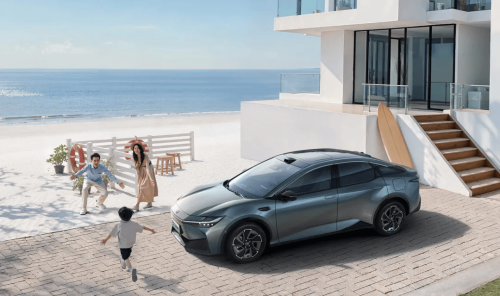
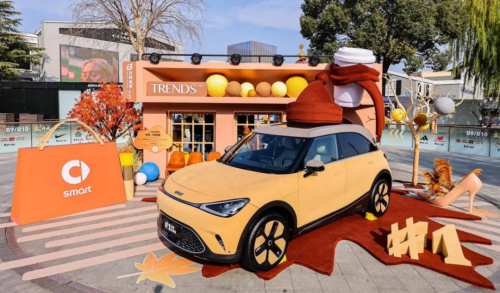
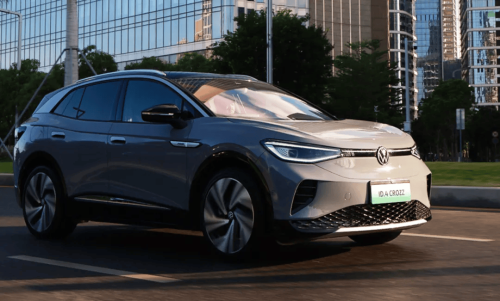
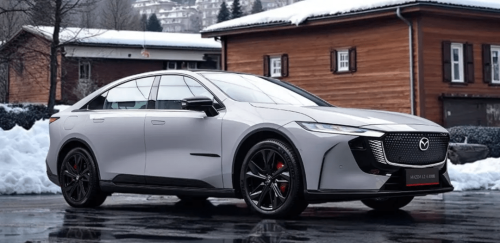
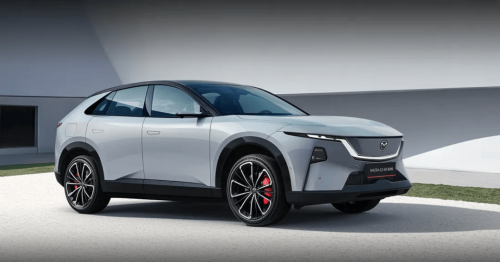
China’s NEV market in 2025 saw intense competition, particularly among joint venture automakers like Toyota and Nissan. China’s auto market competition in 2025 has largely come to a close. As a series of key data points are released, shifts that defined the Chinese passenger-car market over the past year are becoming clearer. Looking first at competition among domestic automakers, Geely Group’s rapid transformation and surge in sales position it as a potential heavyweight alongside BYD. Among startups, Leapmotor overtook Li Auto to become the annual sales leader, gradually widening its lead over peers and hinting at a new market structure marked by “one dominant player with several strong followers.” But this is not the full picture of competition in China’s auto market. For joint-venture automakers, 2025 was also a pivotal year. A new “Joint Venture 2.0” model gained momentum, with brands including Toyota, Nissan and Volvo rolling out new products deeply integrated with local technologies. After a year of execution, has the “Joint Venture 2.0” model proven effective? And have these sweeping reforms helped pull some joint ventures back from the brink? Part of the answer can be found in the 10 best-selling joint-venture new-energy vehicles of 2025. No. 1: Toyota bZ3X According to data from the China Passenger Car Association, Toyota bZ3X posted total sales of 70,007 units in 2025, making it the top-selling new-energy vehicle among joint-venture brands. The model’s peak came in October and November 2025, when monthly sales each exceeded 10,000 units. Sales eased somewhat in December to 7,219 units, but it still stood out as the best performer among JV-branded NEVs. bZ3X officially began deliveries in early March 2025, with prices ranging from RMB 109,800 to RMB 159,800 ($15,372–22,372). In terms of design, bZ3X largely follows the family styling of Toyota’s earlier bZ series. Its core electrification systems and chassis architecture, however, are sourced from GAC Group. Some third-party sources even suggest that bZ3X shares its platform with the GAC Aion’s new-generation Aion V. These claims point to a broader reality: bZ3X is a product defined primarily around Chinese market demand and local technological capabilities, making it fundamentally different from other bZ-branded models. This distinction is especially evident in assisted driving. bZ3X was among the earlier joint-venture models to adopt Momenta’s driver-assistance solution, enabling high-speed navigation assist and building a solid reputation for intelligent features. Overall, as a textbook example of the “Joint Venture 2.0” approach, bZ3X’s rise to the top of the JV NEV sales chart adds credibility to the strategy. That said, Toyota’s strong brand recognition and extensive dealer network in China clearly give it an edge over other joint ventures. Combined with subtle differences in product positioning, other brands pursuing a similar “Joint Venture 2.0” path have not achieved sales results on par with GAC Toyota. No. 2: Buick GL8 PHEV The second-ranked model is the Buick GL8 plug-in hybrid, which sold 4,614 units in December and 55,281 units for the full year. GL8 remains SAIC-GM Buick’s “anchor product.” Thanks to its strong reputation and stable customer base, it has consistently delivered dependable sales since entering the Chinese market. In recent years, Buick has expanded the GL8 lineup beyond a single model, adding multiple derivatives such as the GL8 Firstland, Onshore Business and Land-based Business Class. Both the Firstland and Onshore Business offer versions equipped with the “Zhenlong” PHEV system, and the CPCA aggregates sales of these derivatives. Briefly, the “Zhenlong” PHEV system delivers more than 1,400 km of combined range. The “Zhenlong PHEV Pro” version on the GL8 Firstland, with a larger 34.8 kWh battery, offers up to 202 km of pure-electric range. The GL8 PHEV lineup also shows clear signs of learning from domestic competitors, with some variants adding second-row ceiling-mounted screens, rear-seat entertainment displays, and L2+ driver-assistance systems. The rapid rise of domestic NEV MPVs such as the Denza D9 and Voyah Dreamer has posed a serious challenge to traditional MPVs. Against this backdrop, the introduction of PHEV variants and a suite of intelligent comfort features signals GL8’s response to shifting market demand. Although it did not top the JV NEV rankings, annual sales of about 55,000 units already account for roughly half of total GL8 volume. By comparison, the gasoline GL8 sold around 56,000 units over the same period. From this perspective, launching the PHEV version was arguably one of the GL8 lineup’s most decisive moves in 2025. No. 3: Nissan N7 The third best-selling joint-venture NEV in 2025 was the widely discussed Nissan N7. It sold 1,925 units in December and 45,382 units for the full year. As Nissan’s most important launch of 2025, the N7 generated significant attention throughout its marketing cycle. Sales peaked in August at 10,148 units before trending downward. With the newer N6 now on the market, the N7 may be entering a quieter phase. Reportedly, the Nissan N7 was led entirely by Nissan’s Huadu-based team, following extensive research into local Chinese market needs. As a result, the N7’s design language differs markedly from previous Nissan models and aligns more closely with mainstream Chinese tastes. In terms of features, it offers items such as an in-car refrigerator and sofa-style seating at lower price points—rare among comparable models—alongside mainstream-level cockpit intelligence and driver assistance. In look and feel, it is not far removed from products offered by Chinese EV startups. However, viewed over the full year, the Nissan N7 failed to translate its strong value proposition into sustained sales momentum. Put another way, while it borrowed heavily from domestic NEV product logic, it did not establish a distinctive brand memory point of its own. With Nissan’s brand appeal weakening relative to other joint ventures, consumers may ask what uniquely justifies choosing the N7 over similarly priced domestic NEVs. Rebuilding brand appeal through products is likely one of the key missions for Nissan’s newly promoted N6. No. 4: Volkswagen ID.3 Volkswagen’s ID.3 can be described as a “long runner” in the market. In 2025, it still recorded annual sales of 38,737 units, ranking fourth among joint-venture NEVs. In absolute terms, however, annual sales below 40,000 units—averaging just over 3,000 units per month—signal a sharp decline in ID.3’s appeal in China. In 2024, ID.3 was the top-selling JV NEV, with annual sales reaching 93,000 units. In 2025, ID.3 faced intense competition from domestic rivals in the same segment, such as NIO’s firefly and Leapmotor’s Lafa5, each posting monthly sales of around 7,000 units and putting significant pressure on Volkswagen. In response, ID.3 introduced the “Smart Edition” in 2025, featuring infotainment upgrades. Core electrification systems and exterior design, however, remained unchanged. This meant that ID.3’s overall competitiveness began to lag behind domestic alternatives. As the “premium small car” segment offers more choices, incumbent models face the risk of falling behind if they fail to evolve. Looking ahead to 2026, with competition intensifying and no replacement announced for ID.3, further sales decline appears likely. No. 5: BMW i3 It may come as a surprise that the BMW i3, built on the CLAR platform, ranked fifth among joint-venture NEVs in 2025. In reality, the BMW i3’s situation closely mirrors that of the Volkswagen ID.3: a high ranking but relatively modest absolute sales. Full-year sales totaled 23,369 units, with December sales at just 1,259 units. This performance is understandable. First, the current all-electric i3 is not based on a dedicated EV platform, as it must accommodate internal-combustion design constraints, resulting in compromises in interior space and drivetrain efficiency. Second, BMW has officially confirmed that new i3 and iX3 models based on the all-electric Neue Klasse platform will debut in 2026. Many prospective buyers are therefore holding off, waiting for next-generation products. In this context, the current i3’s ability to achieve these sales figures despite weaker product fundamentals merits closer examination. On one hand, BMW’s brand appeal and the 3 Series’ overall size and interior space remain competitive. On the other, the current i3 has long been offered with substantial discounts. Although list prices exceed RMB 350,000 ($49,000), transaction prices often fall below RMB 200,000 ($28,000). As a result, the i3’s current sales performance is largely disconnected from its product experience, suggesting that annual sales of around 23,000 units may already be near its ceiling. For the next-generation i3 to become a volume driver, BMW will need not only to rebuild its reputation through improved experience, but also to overcome the entrenched perception shaped by steep discounting of the current model. No. 6: Toyota bZ3 The more “pure-blooded” bZ3 posted sales of 22,606 units in 2025, ranking sixth among joint-venture NEVs. The bZ3 has been in the Chinese market for some time and got off to a difficult start, failing to become the cornerstone of Toyota’s NEV lineup in China. Even so, its fate has been far better than that of the bZ4X, which entered China earlier but is now effectively discontinued, with just two units sold in 2025. Its GAC sibling, the bZ4X, recorded only 1,325 units for the year. On Dec. 31, 2025, Toyota launched the 2026 bZ3 with minor exterior and interior tweaks and, more importantly, a reduced price range of RMB 109,800–159,800 ($15,372–22,372). Notably, the RMB 129,800 ($18,172) Pro version marks a turning point by adding lidar, while the top-spec Max version adopts the Momenta 5.0 driver-assistance system—a major leap compared with the 2024 model. Combined with CLTC-rated range of 500–610 km, the upgraded bZ3’s core experience is now broadly on par with similarly priced domestic and “Joint Venture 2.0” NEV sedans. However, since entering China, bZ3 has been oriented mainly toward the B2B market and is widely used as a ride-hailing or taxi vehicle in southern regions. This market positioning has diluted its product image, and the experience upgrades may not be comprehensive enough, both of which could constrain its future performance. No. 7: smart #1 In 2024, smart #1 ranked ninth among joint-venture NEVs with annual sales of 22,970 units. One year later, it climbed to seventh place, but sales slipped to 20,836 units. Notably, smart #1 also received a mid-cycle update in 2025. Yet additions such as new color options, improved comfort and intelligent features, along with better range and acceleration, had limited impact on sales. Like the Volkswagen ID.3, the “premium small car” positioning of smart #1 came under heavy pressure from domestic brands in 2025, as multiple competitors emerged in the same niche, sharply fragmenting market share. At the same time, since entering the Chinese market in June 2022, smart #1 has not undergone a major generational update, offering consumers little sense of novelty. Heading into 2026, smart’s strategy emphasizes launching larger models and expanding overseas, with no upgrade plan announced for smart #1. As competition intensifies, pressure on the model is likely to increase further. No. 8: Volkswagen ID.4 CROZZ After selling 37,491 units and ranking fifth in 2024, Volkswagen ID.4 CROZZ saw sales fall to 20,513 units in 2025, dropping to eighth place. As one of the earliest joint-venture NEVs in China, ID.4 CROZZ’s competitiveness has long relied on Volkswagen’s brand halo and its first-mover advantage. Although FAW-Volkswagen launched the 2026 ID.4 CROZZ in August 2025, updates were minimal, largely limited to minor battery parameter tweaks, with no price reduction. Against this backdrop, unless the ID.4 lineup undergoes a comprehensive overhaul or full generational replacement, further sales erosion appears likely in 2026—mirroring the fate of SAIC Volkswagen’s ID.4X and ID.6, which have already dropped out of the top ten and been marginalized. No. 9: Mazda EZ-6 The last two spots in the top ten both went to Mazda. Ninth place was claimed by the EZ-6, with annual sales of 18,387 units. Mazda EZ-6 introduced its 2026 update in November 2025. The most notable change was a price cut of RMB 15,000–20,000 ($2,100–2,800), while exterior design and features remained largely unchanged. Both BEV and EREV versions continue to be offered. Since its launch in 2024, EZ-6 has carried high expectations as Changan Mazda’s first NEV sedan. Backed by Changan Automobile, it offers competitive electrification, space and overall configuration within its price band. However, in terms of absolute sales, its first full year fell short of 20,000 units—an underwhelming result. Compared with other “Joint Venture 2.0” products such as bZ3X and Nissan N7, the gap is evident. A key weakness lies in intelligence. As one of the earliest JV NEVs built around local supply chains, EZ-6 lacks a high-level driver-assistance system. If it were to adopt solutions such as Huawei Qiankun ADS SE—used by Changan’s own brands like the Deepal S07—sales could potentially reach a higher tier. On the positive side, entering the JV NEV top ten within a year of launch is still an unexpected gain for Mazda, whose presence in the NEV market had previously been close to zero. EZ-6 represents a meaningful breakthrough. No. 10: Mazda EZ-60 As foreshadowed above, the final spot on the JV NEV top ten also went to Mazda, and to the EZ-60, which has been on the market for less than six months. Launched in September 2025, EZ-60 sold 14,382 units in under half a year, outperforming models such as BMW iX1, ID.4X and Volvo XC70 to secure a top-ten position. On Jan. 1, 2026, EZ-60 introduced its 2026 lineup, adding Pro and Max trims, each available in both EREV and BEV versions, priced from RMB 150,900 to RMB 166,900 ($21,126–23,366). The earlier 2025 models remain on sale, starting at RMB 119,900 ($16,786). Considering launch timing and monthly sales, EZ-60 has shown stronger market appeal than the earlier EZ-6. Its higher specification helps, with features such as head-up display, zero-gravity seats and adjustable suspension offered on some trims, making it highly competitive among joint-venture SUVs priced around RMB 150,000 ($21,000). The drawback is similar to EZ-6: the absence of advanced driver-assistance systems, which may deter part of its target audience. Overall, current sales performance is sufficient to demonstrate that the “Joint Venture 2.0” product philosophy offers tangible advantages in market competition, enabling traditional joint ventures to rapidly grow NEV market share. Viewed across the full year, 2025 can be considered a breakthrough year for “Joint Venture 2.0.” Once Toyota, Nissan and Mazda rolled out corresponding products, sales accelerated quickly, with some models even emerging as segment leaders. Buoyed by these results, joint-venture automakers are likely to continue pursuing the “Joint Venture 2.0” strategy, with more products built on Chinese technologies and product philosophies expected to follow.



















 +49 others